Bonding Force
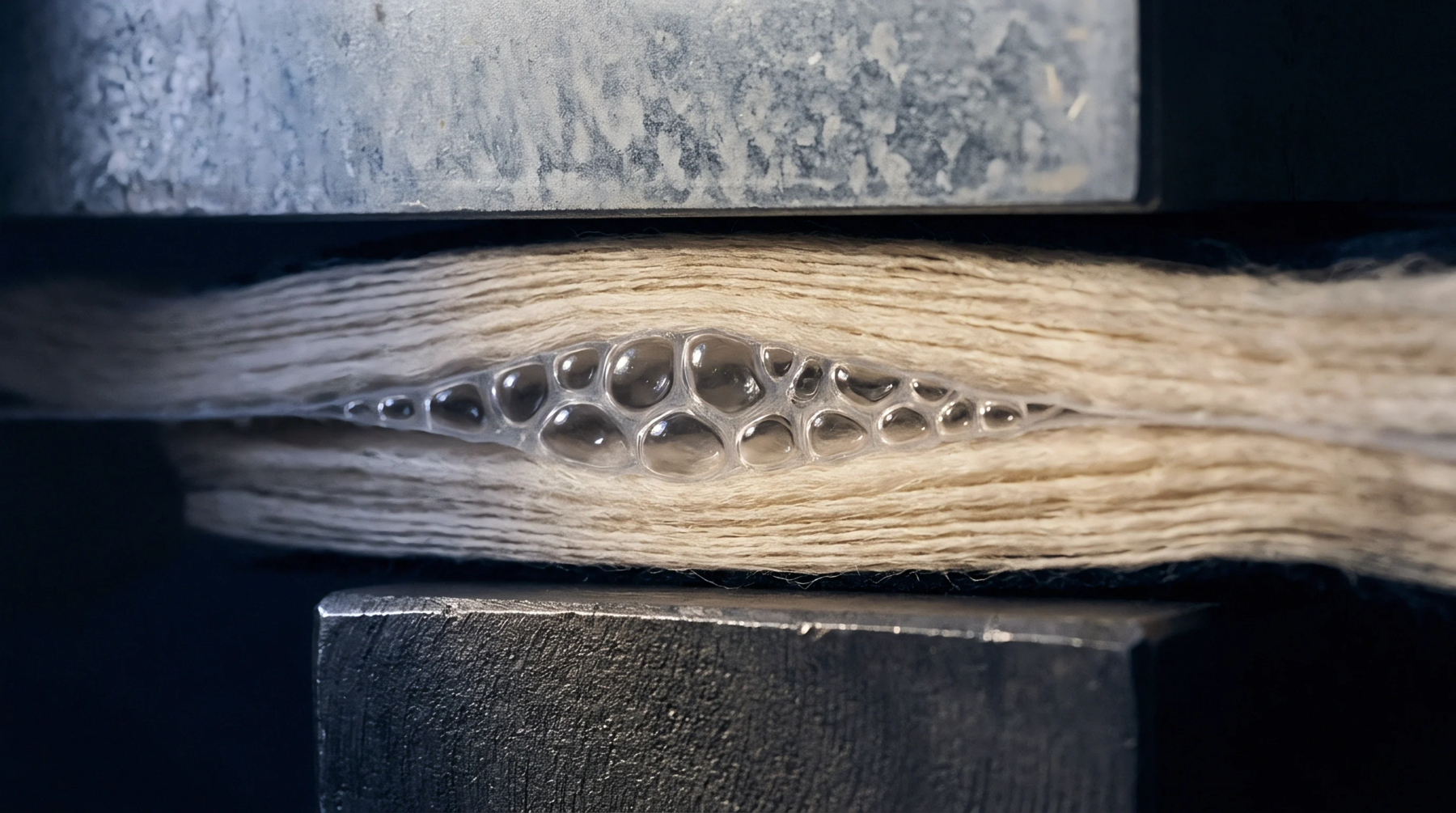
Mechanical resistance quantifies the maximum load a material sustains when subjected to forces acting in opposite directions across the plane of the bonded surfaces. Adhesive shear strength identifies this threshold as the specific force required to cause a failure within the joint between two layers. Textile composites and laminated technical fabrics rely on this metric to verify that layers remain joined under tension or mechanical stress.
The value remains constant for a specific substrate configuration unless thermal exposure or chemical saturation modifies the interface.
Testing Parameter
Standardized laboratory equipment applies a force perpendicular to the longitudinal axis of the bonded test pieces. Adhesive shear strength reports the maximum peak load divided by the total area of the overlap. Consistent test results depend on the controlled preparation of the overlap zone and the speed of the jaw separation during the pull cycle.
Rapid separation yields higher resistance values in viscoelastic polymers, while slow pull rates allow the material to deform and flow.
Production Constraint
Laminating plants maintain specific environmental conditions to prevent fluctuations in the bonding cycle. adhesive shear strength requires clean surfaces free from dust and sizing agents to reach optimal capacity. Insufficient surface preparation allows for voids between the layers that reduce the effective area of the bond. Manufacturers verify these metrics through periodic destructive testing of samples removed from the start and end of each production batch.
Mechanical Consequence
High values indicate a stable laminate capable of enduring significant mechanical loading without delamination or slippage. Adhesive shear strength defines the upper limit of structural integrity for coated materials used in high stress applications. Failure to meet these criteria results in internal layer separation that renders the textile component unfit for its designated engineering purpose.