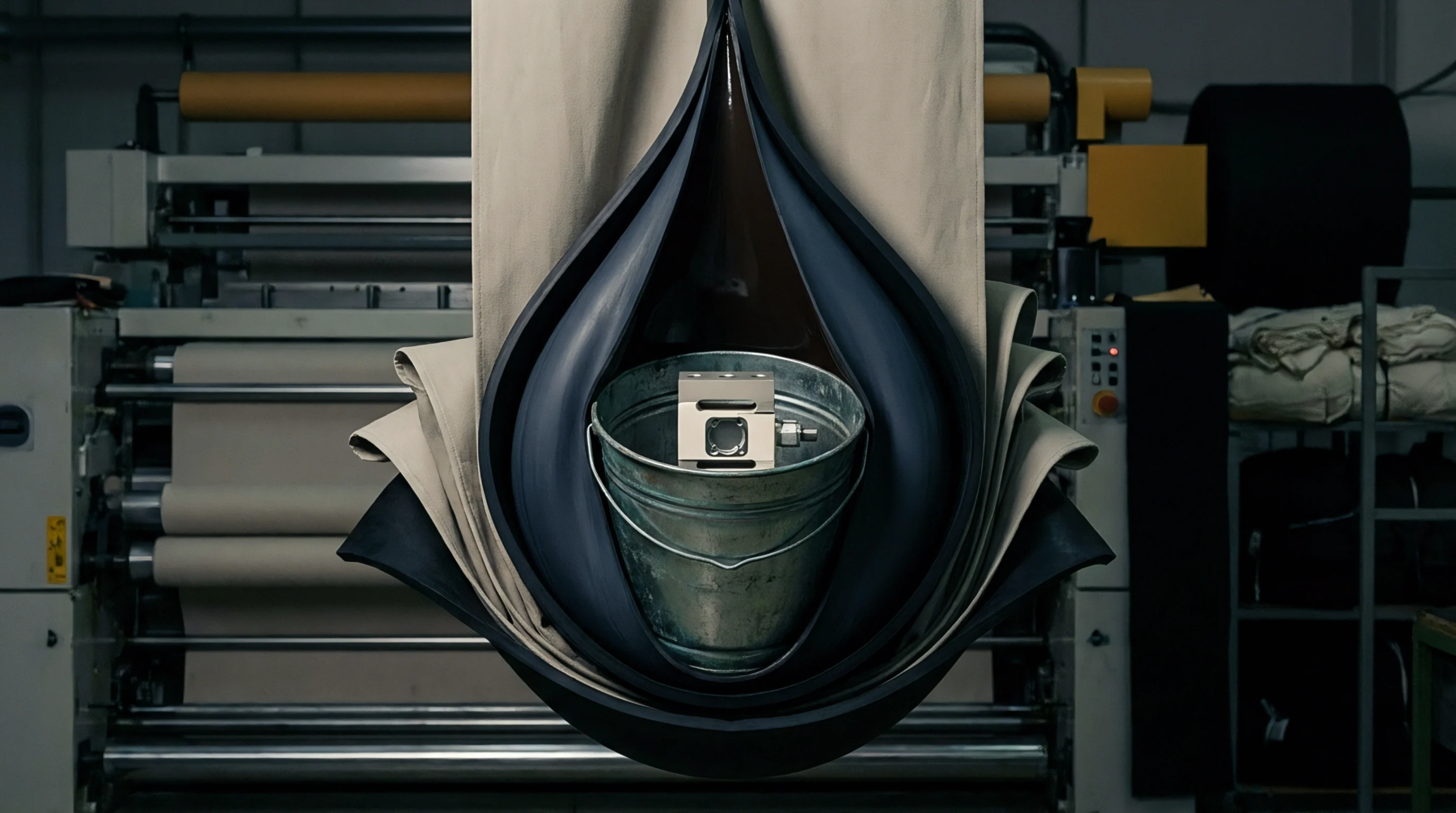
Manufacturing Mechanism
Textile production utilizes a structural technique involving the mechanical insertion of a central filament through a sheath of staple fibres during the creation of yarn. Core spun fabric weaving integrates these specialized filaments to produce textiles with specific elastic or high-tenacity properties. The process requires tension controls on the central feed to ensure the fibre coating remains uniform before the yarn enters the loom.
Precise synchronization between the spinning frame and the shed geometry prevents the sheath from slipping or thinning under the mechanical stress of warp and weft crossing. Uniformity in this production phase dictates the overall tactile quality and dimensional stability of the resulting cloth.
Technical Specification
The tensile strength of a finished textile often depends upon the ratio between the continuous filament and the external fibre jacket. Engineers verify this physical characteristic by subjecting sample lengths to elongation tests that isolate the core performance from the surrounding material. Deviation from standard diameter parameters suggests improper alignment during the spinning operation.
Accurate measurement at this stage identifies potential weaknesses before the material reaches the commercial garment manufacturing environment.
Production Verification
Lab analysts examine the cross section of yarns to confirm that the central component remains shielded throughout the structural matrix. Optical inspection reveals if the core filament protrudes or if the outer fibre coverage lacks sufficient density for durable garment construction. Such assessments guard against quality loss in bulk shipments.
Consistent coverage confirms the manufacturer maintained sufficient tension during the spinning phase.
Material Performance
Enhanced elasticity results from the integration of synthetic elastomers into the inner axis of the yarn while maintaining a natural touch on the surface of the final product. Fabrics created through this method provide superior recovery after physical deformation compared to traditional staple yarns. These goods sustain their shape better during frequent washing cycles.
The structural integrity of the yarn prevents premature bagging in tight fitting apparel applications.