Elastane Core Yarn Morphological Changes during Wet Mechanical Processing
Wet mechanical tension strips elastane spin finishes and forces core slippage, requiring thermal heat setting at controlled overfeed to restore elastic recovery.

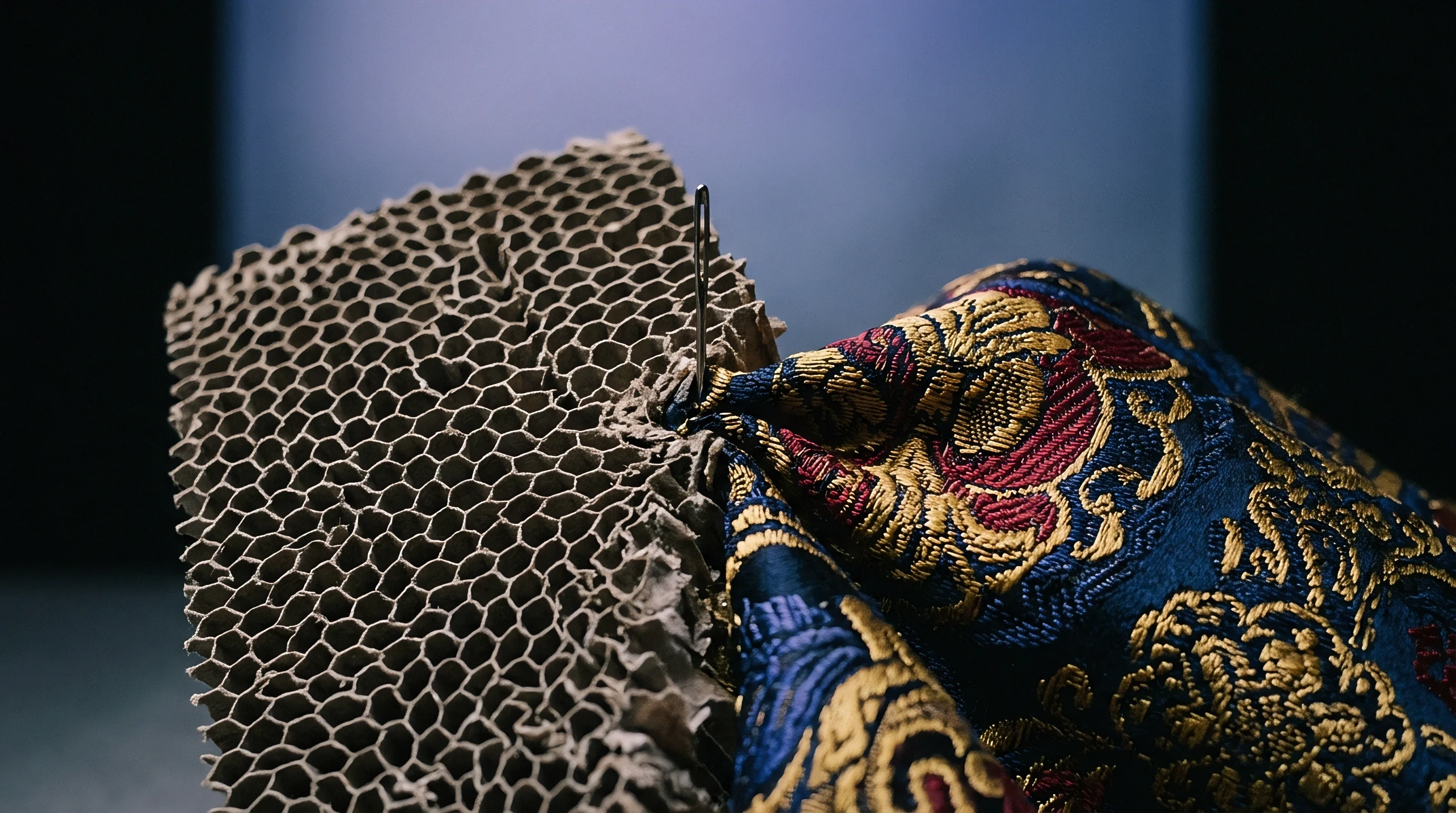
Strand
Continuous elastomeric filaments enter the spinning zone under controlled mechanical stretch to yield elastic core-spun structures. The structural stability of these yarns depends on the physical entrapment of the stretched elastane core within a sheath of staple fibers or textured filament filaments. Ring spinning, air-jet wrapping, and rotor spinning deploy distinct mechanical vectors to build this protective mantle.
Ring-spun core yarns deliver high cohesion because real twist binds the outer staple fibers directly around the extended synthetic core. Air-covered stretch yarns rely on intermittent air-jet intermingling nodes to tack the sheath texturized filament to the polyurethane filament core. Rotor core-spun systems introduce the core thread into the rotor groove, creating a unique structural wrapping angle.
Core-spun configurations exhibit varying susceptibility to mechanical disturbance when exposed to wet processing stresses.
Pre-drafting ratio defines the initial physical state of the elastane filament prior to yarn formation. Spinners apply a mechanical draft factor ranging from 2.8x to 4.2x to the elastane filament as it feeds into the front roller delivery system. Tension breaks the sheath.
Higher draft ratios reduce the linear density of the core filament while increasing its elastic potential energy. A 44 dtex elastane core drafted at 3.5x operates at an effective linear density of approximately 12.6 dtex inside the unrelaxed greige yarn. This stored mechanical strain creates an immediate drive toward thermal contraction once the yarn encounters aqueous environments.
When staple fiber sheaths lack sufficient mechanical friction to constrain the core, localized stress imbalances develop along the strand axis.
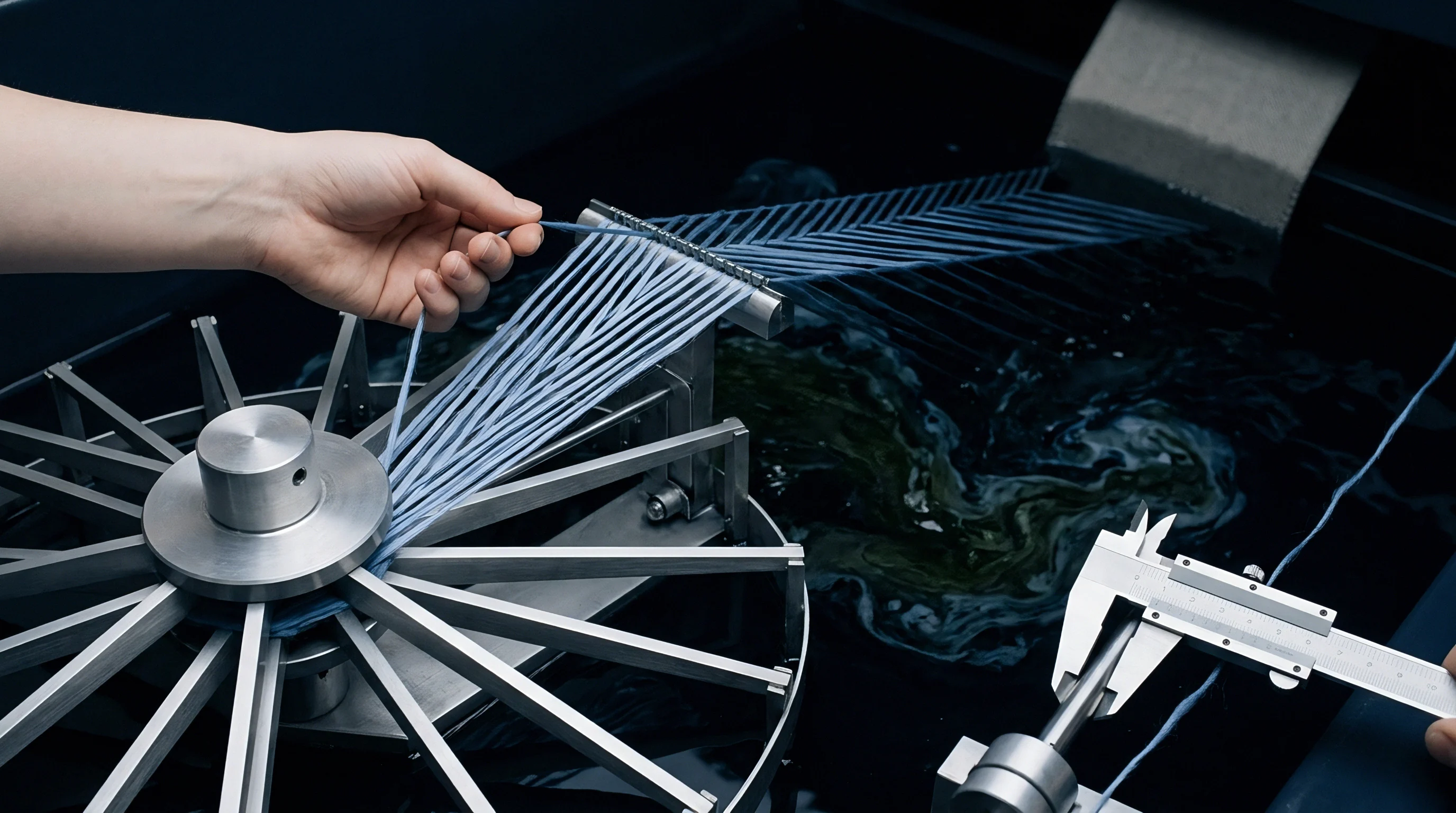
Elastane Core Insertion and Pre Drafting Mechanics
Filament feeding systems regulate the extension factor of synthetic polyurethane continuous tow prior to twist insertion. Driven positive feeder rollers sync directly with the front drafting rollers of the ring spinning frame to establish exact draft ratios. Improper tension settings at this point introduce short-period draft periodicities.
Draft drive slippage shifts the core centration within the staple fiber bundle. Off-center cores reduce the radial distance between the elastane thread and the yarn outer perimeter. Core centration determines the physical thickness of the protective staple fiber layer surrounding the elastane strand.
Dual-core spinning technology combines an elastane filament with a semi-rigid multiconstituent filament, such as polybutylene terephthalate or elastomultiester, wrapped by a staple fiber sheath. The semi-rigid component acts as a structural strain limiter. Draft drives recovery.
During yarn stretch, the elastane filament provides high instantaneous recovery at low loads, while the companion semi-rigid filament engages at higher extension levels to absorb mechanical strain. This multi-component arrangement alters the internal stress distribution during downstream wet mechanical processing. Greige dual-core yarns exhibit lower propensity for structural core slippage compared to single-core elastane yarns of equivalent linear density.
Sheath Geometry in Ring Air Jet and Rotor Systems
Staple fibers wrap around the stretched synthetic filament during ring spinning to form a protective textile mantle. High twist multiples increase radial compression, forcing sheath fibers into intimate contact with the polyurethane filament surface. Mechanical friction between the staple fiber surfaces and the elastane filament locks the assembly together.
In air-jet covered yarns, continuous filament texturized yarn wraps the elastane core without real twist, depending entirely on air-entangled tacking points spaced every few millimetres. Rotor spinning embeds the core within a matrix of twist-wrapper fibers, creating a looser outer sheath with higher void fraction.
Yarn spinners frequently cite variations in raw polyurethane filament viscosity when delivery reels exhibit erratic core retraction during subsequent wet finishing steps.
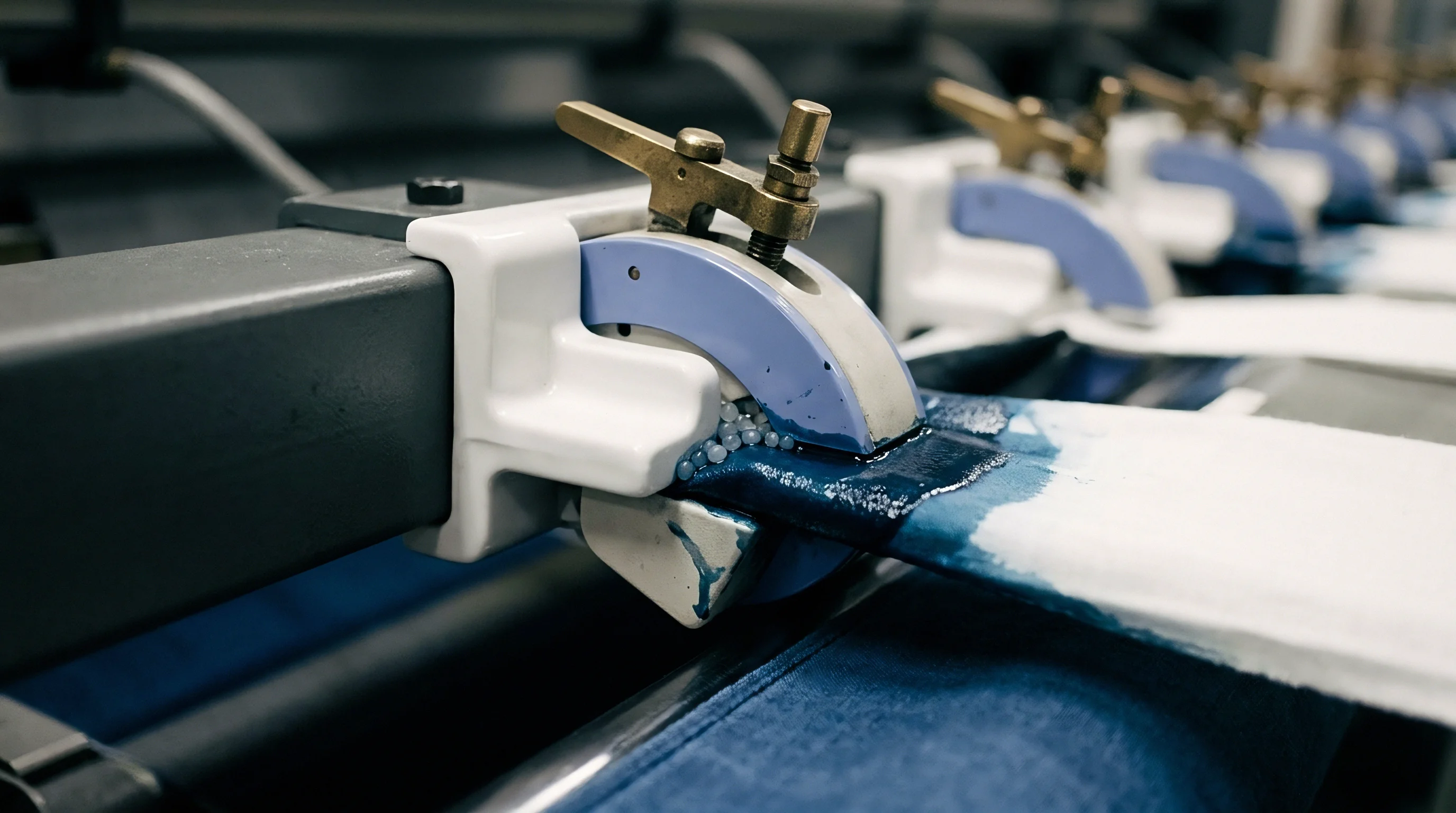
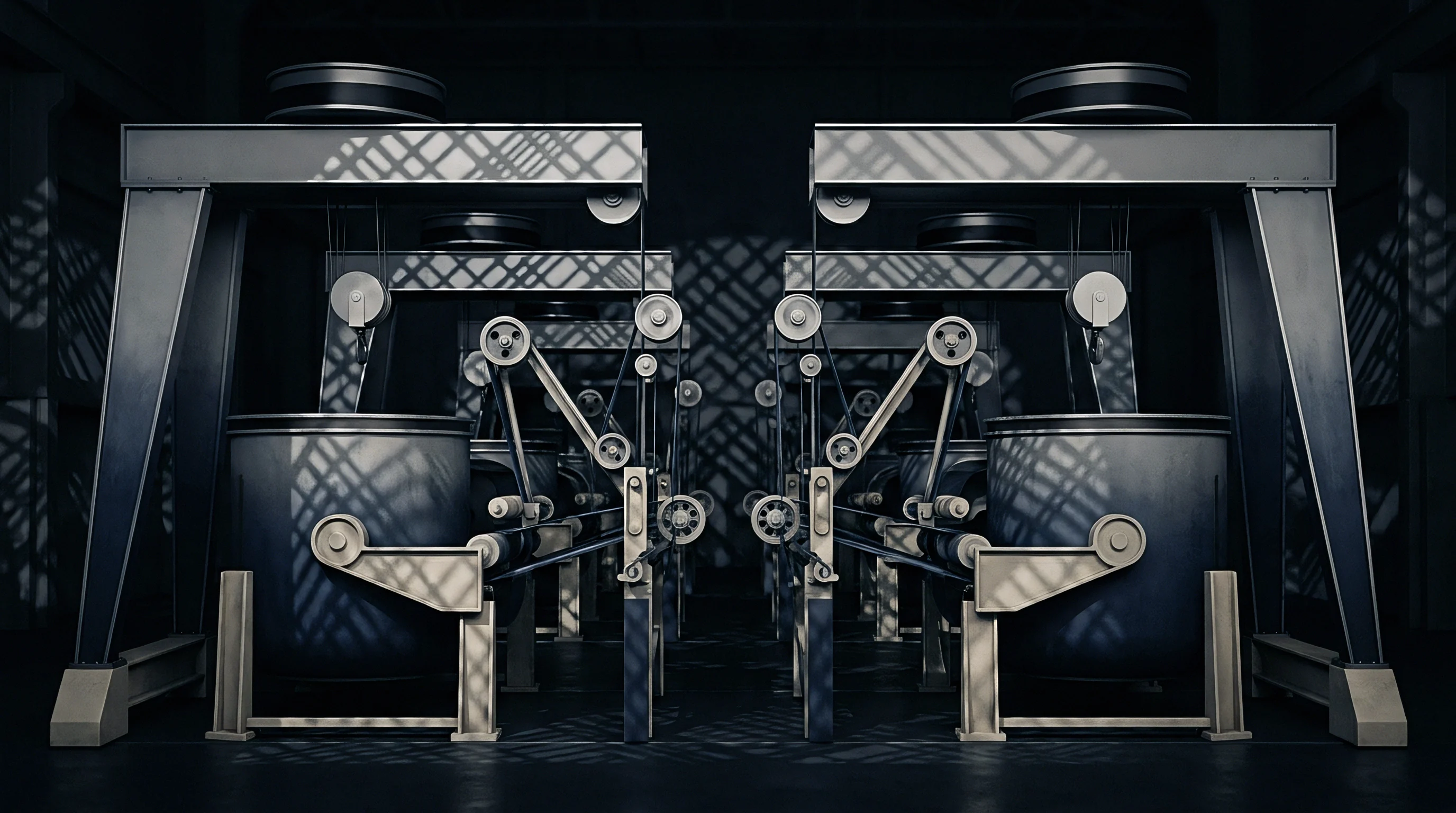
Hydration
Water entry into the polymer matrix breaks secondary bonds between non-crystalline polymer chains during low-temperature scouring. Aqueous baths act as plasticizers within the polyurethane core structure. Elastane consists of alternating block copolymers, where soft amorphous polyether or polyester segments provide elasticity and hard aromatic diisocyanate segments form crystalline physical crosslinks.
Water molecules penetrate the amorphous soft segments, lowering the effective glass transition temperature. This plasticization increases molecular chain mobility, permitting strain relaxation at temperatures significantly below the dry melting point of the soft blocks.
Aquatic exposure alters the frictional coefficients governing the sheath-to-core interface. Greige elastane core yarns carry spin finishes composed of mineral oils, silicone derivatives, and emulsifiers added during filament extrusion and spinning. These lubricants reduce yarn-to-guide friction during mechanical processing.
Scouring removes lubricants. Wet mechanical scouring at 60 degrees Celsius in an alkaline bath containing non-ionic surfactants strips these spin finishes from the core surface. Removal of the lubricant layer increases yarn-on-yarn and sheath-on-core friction, altering how mechanical forces redistribute through the yarn cross-section during rope dyeing.
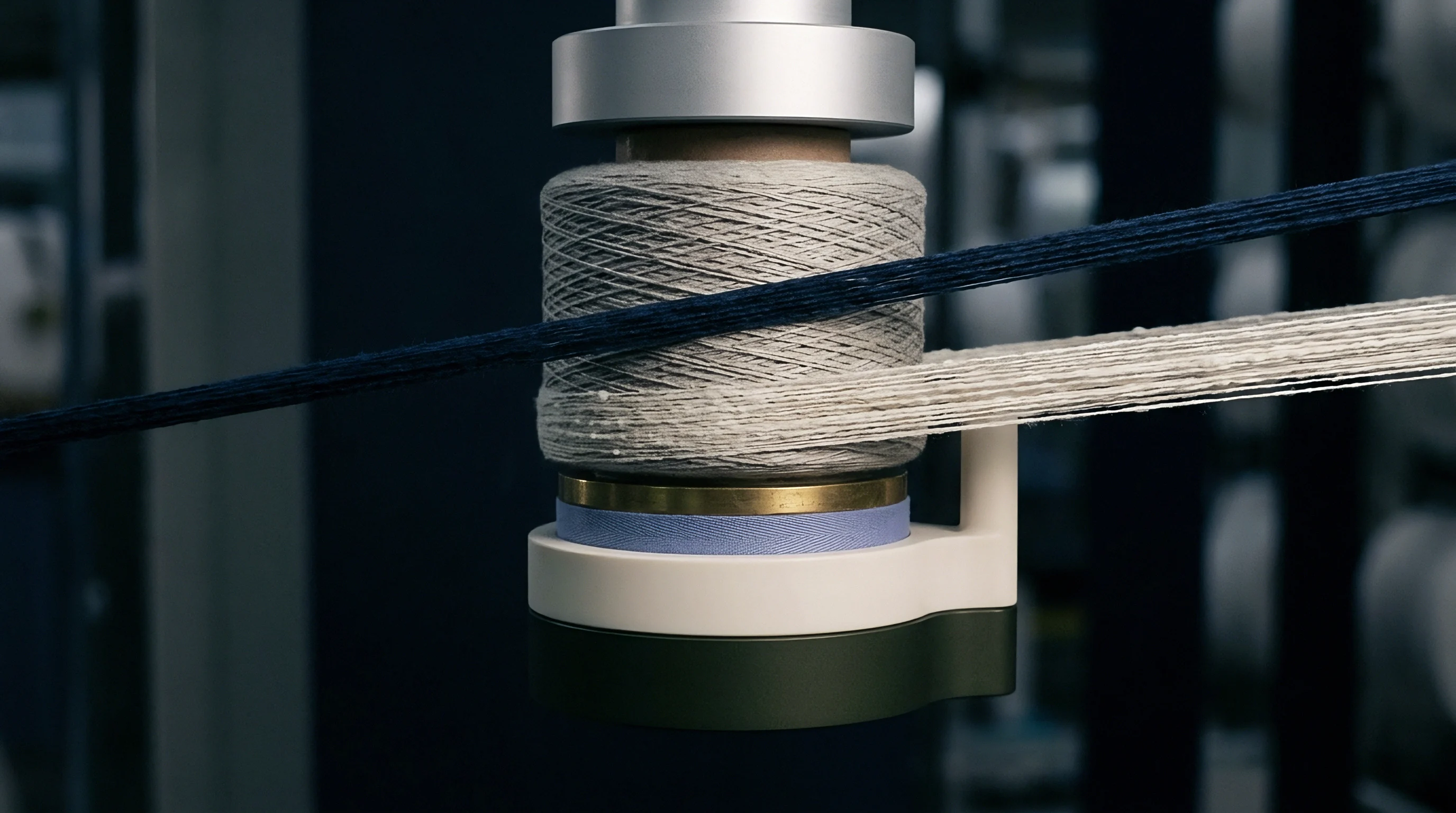
Aqueous Solvating Effects on Polyurethane Segments
Liquid baths at elevated temperatures disrupt hydrogen bonding within the hard blocks of the elastomeric filament. In high-temperature wet processing, such as polyester jet dyeing at 130 degrees Celsius, the combination of thermal energy and hydraulic force accelerates soft segment mobility. Polyether-based elastanes display greater hydrolytic stability in boiling water compared to polyester-based variants.
Polyester-based polyurethane cores suffer ester link cleavage when exposed to prolonged alkaline scouring at pH values above 11.0. Hydrolysis reduces the molecular weight of the soft segments, causing a permanent decline in tensile recovery power.
Thermal gradients within the wet processing vessel dictate the rate of polymer relaxation. Cold water bath entry causes minimal swelling, maintaining the greige mechanical equilibrium. As liquor temperature escalates past 80 degrees Celsius, the elastane core attempts to shrink longitudinally to release the mechanical tension imparted during spinning pre-drafting.
If the yarn is restrained by fabric structural geometry, internal tension escalates. This thermal-hydro stress building leads to molecular realignment, where amorphous chains shift into lower-energy conformational states, permanently resetting the yarn unstrained length.
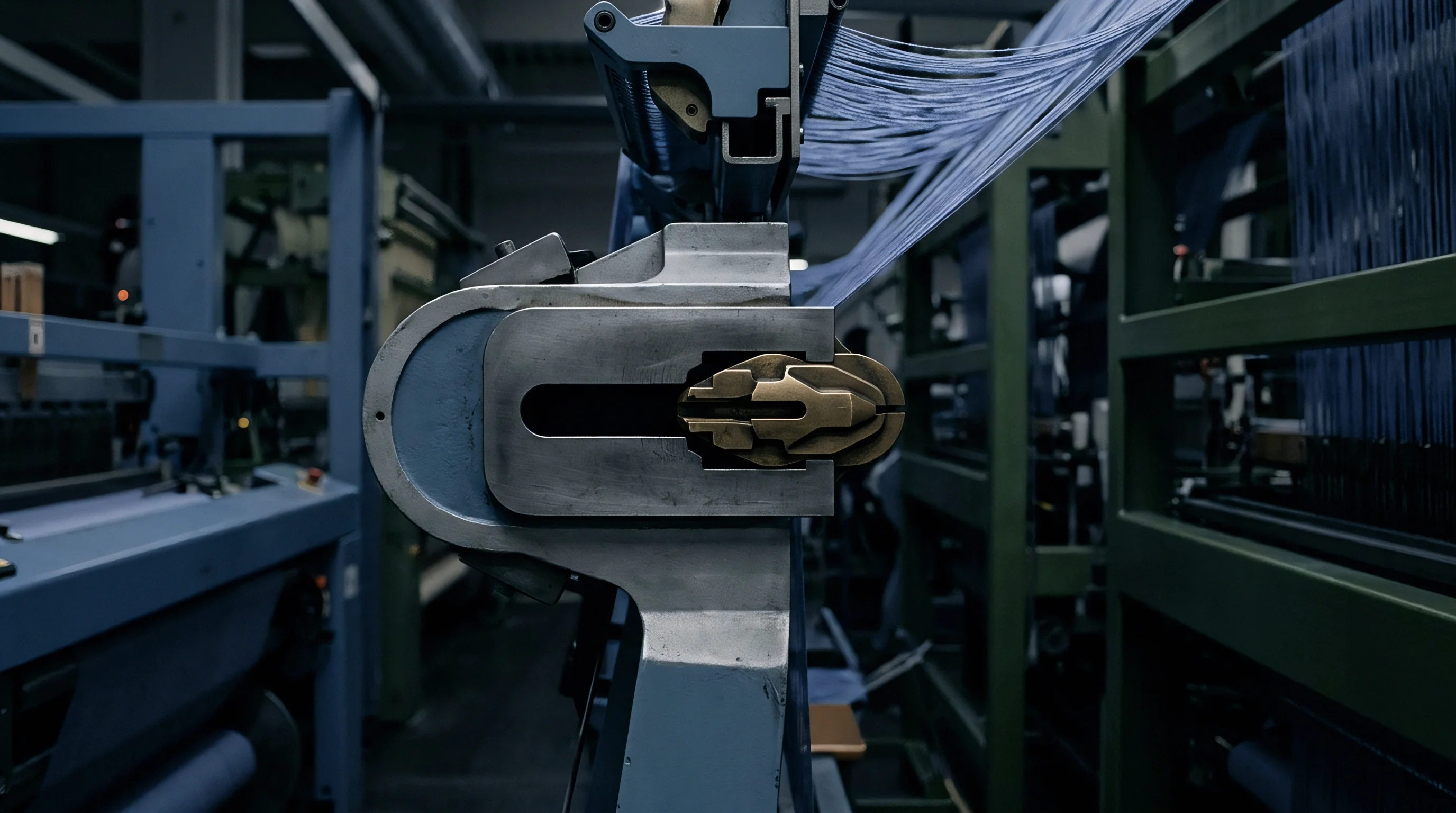
Spin Finish Extraction and Friction Shift
Surfactant formulations strip lubricating silicone oil coatings from the synthetic core during hot scouring. Solvent scouring or heavy alkaline emulsification lowers residual oil content below 0.2 percent by weight of total yarn. Strip rates depend on bath temperature, liquor ratio, and surfactant chemistry.
The removal of surface lubricants converts the smooth elastane interface into a high-friction polymer wall against the inner sheath fibers.
| Yarn Architecture | Scouring Phase (60°C Aqueous) | Jet Dyeing Phase (98°C-130°C Wet Mechanical) | Stenter Setting Phase (185°C-195°C Dry Heat) |
|---|---|---|---|
| Ring Core-Spun (Cotton Sheath) | Spin finish removal; moderate swelling of cotton sheath; initial core retraction force generation. | Sheath fiber compaction; high interfacial friction; localized core necking under rope tension. | Hard segment hydrogen bond reform; sheath stress relaxation; permanent dimensional setting. |
| Air-Covered (Polyester Sheath) | Rapid emulsification of silicone finish; high core mobility between entanglement nodes. | Node displacement under hydraulic shear; core migration toward loop apexes. | Polyester sheath crystallization; thermal lock of intermingled node geometry. |
| Rotor Core-Spun (Viscose Sheath) | High swelling of regenerated cellulose; loss of sheath structural rigidity. | Sheath fiber sliding; core retraction within empty yarn core spaces; severe grin-through risk. | Moderate setting response; residual bulk compaction; lower elastic recovery force. |
| Dual-Core (Cotton/T400 Sheath) | Differential core relaxation; T400 strain-limiter prevents excessive elastane shrinkage. | Balanced tension distribution; minimal necking; high resistance to jet shear forces. | Synergistic heat setting; dual-component thermal stabilization; high recovery power retained. |
Friction shifts alter mechanical stress transfer between the outer cover and inner elastic element. High interfacial friction restricts the sliding of staple fibers along the core, stabilizing yarn structure against longitudinal shear. Conversely, incomplete finish removal leaves non-uniform lubricant patches along the core length.
Variations in local friction coefficient cause uneven structural response when the yarn undergoes mechanical stretching during jet dyeing machine passages.
A 10 percent increase in jet nozzle pressure at 130 degrees Celsius elevates elastane core slippage by 18 percent in ring-spun cotton yarns.
Higher liquor circulation velocities always increase the likelihood of internal core migration when synthetic filaments lack adequate pre-setting.
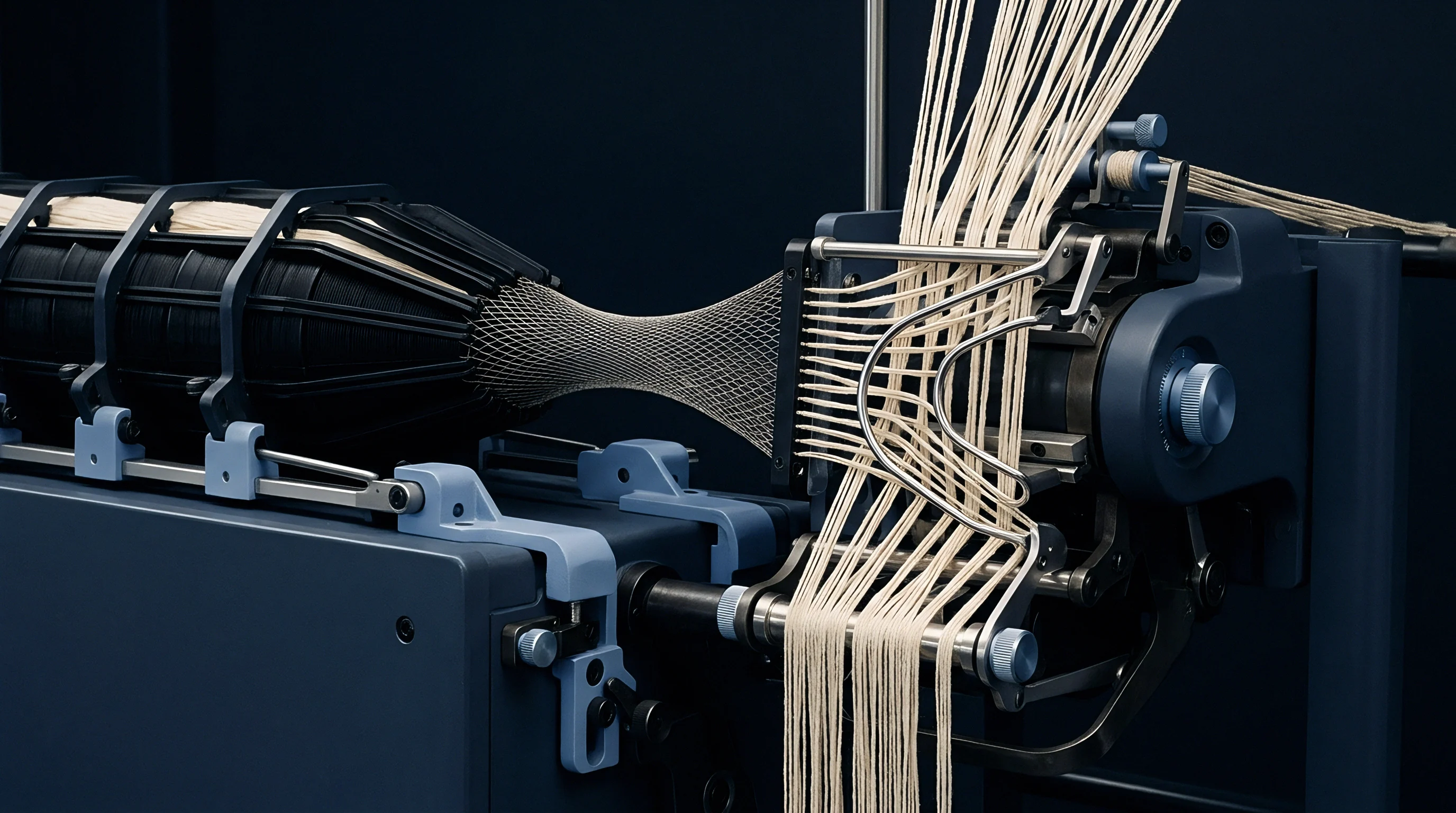
Necking
Localized reduction of cross-sectional area occurs when mechanical draw forces exceed the yield threshold of the internal elastic thread. During wet processing, fabrics encounter significant longitudinal tension generated by liquor flow, winch drive rollers, and fabric transport systems. Mechanical strain applied to a wet, plasticized elastane core causes non-uniform drawing along its axis.
The core filament yields at weak points, creating thin segments termed necking zones. Yield drops immediately. Necking zones display reduced diameter and elevated local orientation, altering the stretch and recovery dynamics of the resulting yarn.
Interfacial shear between the staple fiber sheath and the elastane core drives morphological breakdown. Hydrodynamic forces in jet dyeing nozzles flex and twist the wet fabric rope. Friction creates voids.
When the external mechanical pull on the yarn exceeds the internal frictional holding force between sheath and core, the outer fibers slide relative to the core. This sheath-core slip results in cumulative displacement, gathering staple fibers into dense clusters while leaving sections of the core filament thinly covered or completely exposed.

What Triggers Sheath Core Disconnection under Jet Tension?
Mechanical forces inside hydraulic dyeing vessels pull the outer staple fiber assembly away from the stretched synthetic filament. Jet nozzle acceleration exposes fabric ropes to rapid speed changes, generating transient tension spikes up to 3.5 Newtons per end. Liquor flow forces draw.
If the yarn twist multiplier is insufficient, outer fibers lack the radial compression required to clamp the core during high-shear bath passages. The continuous elastane core pulls backward relative to the surrounding staple mantle.
Core slip distance escalates with processing time and jet cycle iterations. A fabric rope running through a jet dyeing vessel completes 100 to 300 circulation cycles during a typical dyeing program. Repeated mechanical impacts at the jet nozzle strip the sheath incrementally.
The elastane filament contracts toward areas of lower mechanical constraint, producing short regions of core-less sheath yarn alternating with dense core-packed zones. This structural defect manifests in finished goods as length-direction stretch variations and surface cockling.
Micro Cavitation and Core Retraction Dynamics
Interfacial gaps develop between the synthetic core and surrounding staple fibers when wet mechanical strain forces phase separation. Elastane is hydrophobic, whereas cellulosic sheath fibers absorb water and expand radially. Swelling of the cotton sheath increases yarn outer diameter while enlarging the internal cavity occupied by the elastane thread.
The polyurethane filament, operating under longitudinal tension, narrows via Poisson contraction. This opposite dimensional shift creates microscopic voids at the polymer interface, reducing mechanical contact area and degrading shear stress transfer.
Core retraction occurs when elastic tension snaps the necked synthetic filament back into the yarn matrix during wet stress relaxation. The thinned core recoils, pulling away from seam margins or cut edges. In unconstrained wet processing, retraction forces can shrink greige fabric dimensions by 25 to 40 percent in the course or weft directions.
Unbalanced retraction causes elastane filaments to break through the outer fiber wall, generating visible surface loops known commercially as elastane grin-through.
- Sheath Core Decoupling Mechanical shear in jet nozzles strips the outer staple fiber sleeve from the elastic core, creating localized bare patches.
- Filament Necking Non-uniform longitudinal tension causes permanent localized cross-sectional thinning along the polyurethane thread.
- Core Retraction Thermal shock in unconstrained wet baths prompts the stretched synthetic filament to snap back, producing empty yarn sheaths at package ends.
- Interfacial Cavitation Hydrophobic differences between synthetic cores and hydrophilic sheaths create internal microscopic voids that trap dyeing auxiliaries.
- Grin Through Disruption Retracted or thinned elastomeric filaments allow the synthetic core to pop through the staple fiber cover to form visible surface loops.
Specification clauses matching ISO 20932-1 require five wash cycles before measuring unrecovered elongation to prevent commercial rejection.
Uncontrolled mechanical draw during rope dyeing produces permanent fabric skewing, uneven stretch recovery, and irreversible shade streaks across bulk rolls.
Hysteresis
Mechanical energy loss during cyclical loading increases significantly after aqueous heat exposure. Greige elastane core yarns exhibit low hysteresis loss under ambient dry conditions, recovering up to 96 percent of applied strain. Exposure to wet mechanical stress alters the load-elongation curve.
Thermal-hydro relaxation dissipates stored elastic energy by breaking physical hydrogen crosslinks within the polyurethane hard segments. Steam unlocks crystallinity. The altered polymer structure requires lower force to extend initially, but exhibits higher unrecovered elongation, known as permanent set, following release of strain.
Structural hysteresis changes alter the elastic performance metrics of finished fabrics. When a core-spun fabric undergoes cyclic extension in a jet vessel, the stress-strain curve shifts downward and to the right. Retractive force at 30 percent elongation declines over repeated wet mechanical cycles.
Modulus loss alters drape. Lower retractive force reduces fabric holding power, leading to bagging and dimensional instability during garment wear. Unrecovered elongation accumulation increases fabric width beyond target specifications unless corrected during thermal setting.

Thermal Hydro Stress Relaxation and Modulus Decay
Continuous mechanical extension at temperatures above ninety degrees Celsius forces soft polymer chains into unrecoverable conformational changes. Hard blocks resist draw. When thermal energy disrupts the hard domain crosslinks, the polyurethane polymer chains slide past one another under external tension.
This molecular slippage converts elastic strain into plastic deformation. The degree of plastic deformation correlates directly with bath temperature, dwell duration, and mechanical extension magnitude.
Modulus decay follows an exponential degradation path during hot wet processing. A 44 dtex elastane core subjected to 100 degrees Celsius wet processing under 20 percent mechanical strain loses up to 35 percent of its initial retractive force within 30 minutes. The decay rate accelerates in the presence of alkaline scouring agents or carriers used in dyeing.
Polyurethane soft segments undergo reorientation, stabilizing the stretched state and diminishing the elastic driving force required to snap the yarn back to its initial length.
Recrystallization Kinetics during Stenter Heat Setting
Hot air chambers operating between 188 and 192 degrees Celsius reform hard segment hydrogen bonds to lock in yarn memory. Stenter heat setting melts residual non-uniform crystalline domains, allowing polymer chains to relax residual stresses built up during wet mechanical processing. Upon cooling below 60 degrees Celsius, hard blocks recrystallize into new physical crosslinks aligned with the heat-set dimensions.
Overfeed prevents shrinkage. Proper stenter settings stabilize both the elastane core and the surrounding synthetic or natural fiber matrix.
| Processing State | Applied Strain (%) | Unrecovered Elongation (%) | Retractive Force at 30% Stretch (cN/tex) | Hysteresis Energy Loss (%) |
|---|---|---|---|---|
| Greige Yarn (Unprocessed) | 50 | 3.1 | 0.85 | 12.4 |
| Scoured (60°C Alkaline) | 50 | 5.8 | 0.68 | 19.8 |
| Jet Dyed (130°C High Tension) | 50 | 11.4 | 0.42 | 34.2 |
| Jet Dyed (130°C Low Tension) | 50 | 7.2 | 0.59 | 24.6 |
| Heat Set (190°C with 22% Overfeed) | 50 | 4.2 | 0.78 | 15.1 |
Consider a 40-tonne batch of 300 gsm cotton elastane denim yarn processed under two distinct jet dyeing tension profiles: low tension (1.2 bar nozzle pressure, 180 m/min liquor speed) versus high tension (2.5 bar nozzle pressure, 260 m/min liquor speed). Under the low-tension profile, elastane unrecovered elongation remains at 4.2 percent after heat setting at 190 degrees Celsius with 18 percent overfeed. Under high tension, mechanical necking increases unrecovered elongation to 9.8 percent, driving total width loss to 12 percent beyond target specification.
This performance gap illustrates the permanent impact of wet mechanical shear stress prior to stenter stabilization.
Excessive mechanical draft during wet scouring strips protective lubricants before thermal setting stabilizes the polyurethane core.
Whether low-temperature chemical setting agents can permanently stabilize polyurethane hard segments without high-temperature stenter dwell remains an open question for technical dyers.
Recalibration
Dyehouse processing parameters undergo systematic readjustment when converting core spinning technologies to protect fabric width. Mechanical tensions across all wet processing machinery require precise calibration to account for altered yarn morphology. Winch speeds, jet nozzle diameters, liquor flow rates, and roll-to-roll draft ratios must operate within narrower operating windows when handling stretch fabrics.
Fastness drops under heat. Over-tensioning wet elastane core yarns causes unrecoverable structural damage, while under-tensioning leads to fabric rope tangling and uneven dyeing.
Machine route selection dictates the financial landed cost per metre of stretch fabric. Processing core-spun fabrics on high-tension jig dyeing machines yields poor stretch recovery and high dimensional instability due to continuous longitudinal pulling. Converting the production route to low-tension soft-flow jet dyeing machines or continuous open-width pad-batch lines preserves core elastic memory.
Low-tension equipment carries higher hourly operating costs and requires longer cycle times, but eliminates downstream fabric rejections and garment distortion issues.
Stenter Overfeed and Dimensional Stabilization
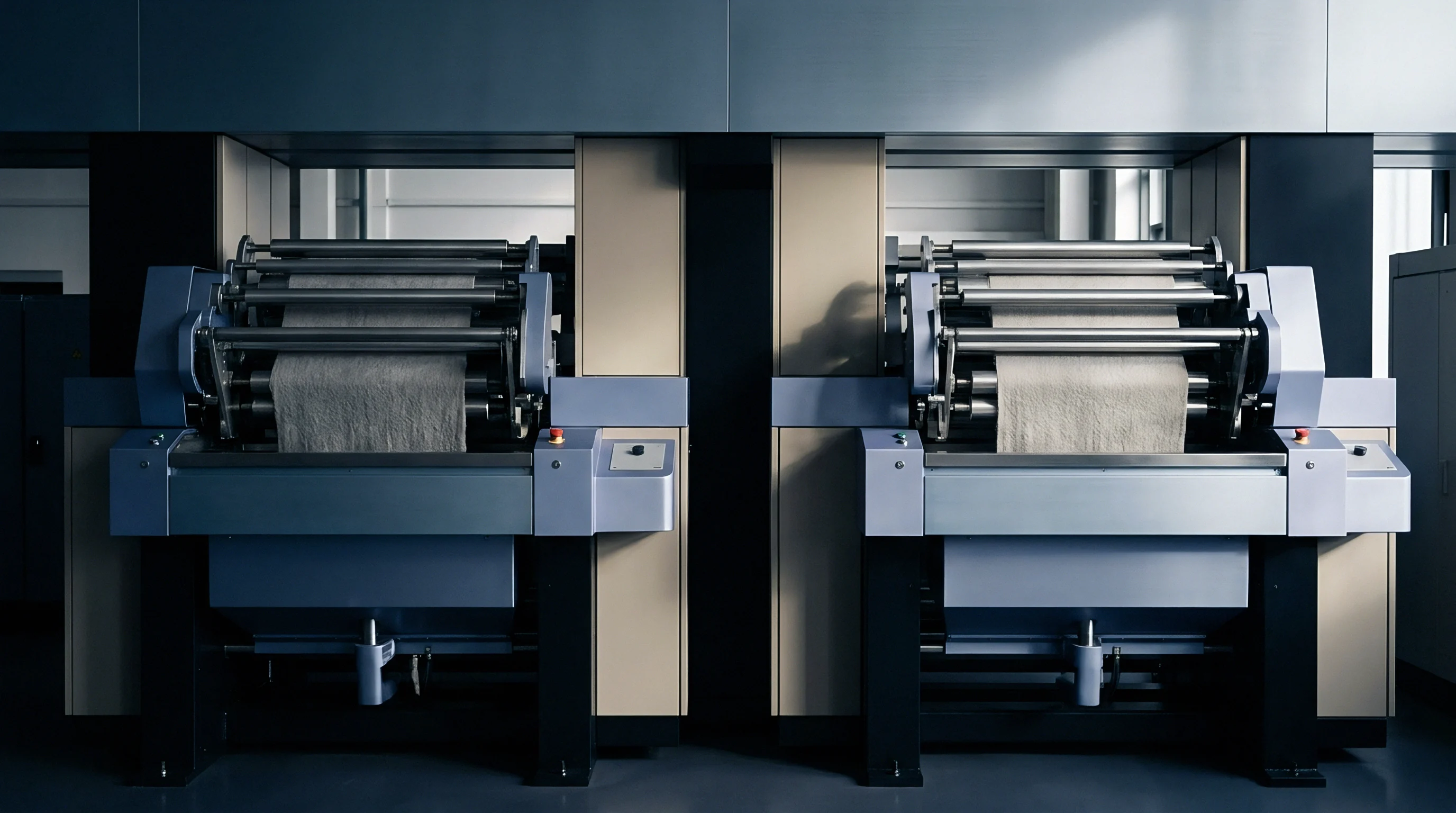
Positive fabric delivery into pin chains compensates for longitudinal yarn contraction during thermal setting. Stenters must apply overfeed ratios between 15 percent and 30 percent, depending on greige yarn draft and fabric construction tightness. Overfeed feeds excess length into the heating zone, allowing the elastane core to contract fully to its relaxed thermal state while width is held by pin chains.
This mechanical balance stabilizes mass per unit area and ensures compliance with targeted finished fabric weights.
| Production Route Type | Rope Tension Level (N) | Stenter Overfeed (%) | Finished Width Yield (%) | Landed Cost Factor (EUR/m) |
|---|---|---|---|---|
| High-Tension Jet / Standard Stenter | 4.5 – 6.0 | +8 to +12 | 84.2 | 2.15 |
| Low-Tension Soft-Flow / Pin Stenter | 1.5 – 2.5 | +18 to +25 | 96.8 | 2.48 |
| Continuous Pad-Batch / Equalized Stenter | 0.8 – 1.2 | +15 to +22 | 98.5 | 2.62 |
| Open-Width Washing / Relaxed Drying | 0.5 – 1.0 | +25 to +35 | 99.1 | 2.85 |
Dyehouse technical managers configure machine sequences to validate fabric quality before releasing bulk commercial volumes.
- Submit ten metres of greige fabric to laboratory scouring at sixty degrees Celsius to determine initial lubricant extraction rates and yarn shrinkage.
- Run high-temperature mock dyeing in a laboratory jet machine at target liquor ratio and maximum mechanical pump speed to measure morphological core slippage.
- Process sample rolls through a pin stenter at three distinct overfeed levels while measuring finished fabric mass per unit area and elastic recovery under ISO 20932-1.
- Execute five wash-and-dry cycles according to ISO 6330 procedure 4N to confirm dimensional stability falls within plus or minus three percent.
- Inspect finished fabric on a four-point inspection frame under controlled tension to verify absence of core grin-through defects before releasing bulk production.
Commercial Route Qualification and Dossier Construction
Technical procurement teams build binding fabric specifications by defining allowable tolerances across every wet mechanical stage. Purchasing contracts for stretch fabrics specify greige yarn parameters, wet processing limits, and physical performance thresholds. Standardized dossiers incorporate test methods, sampling frequencies, and clear pass-fail criteria for elastic recovery and dimensional stability.
- Elastane Draft Ratio Core filament draft metrics specified off the spinning frame with a tolerance of plus or minus 0.10 units.
- Residual Lubricant Content Spin finish residue limits capped below 0.30 percent by weight following wet scouring to ensure consistent dye uptake.
- Heat Setting Temperature Range Stenter chamber temperatures mandated between 188 degrees Celsius and 192 degrees Celsius for a dwell time of 35 seconds.
- Maximum Jet Nozzle Pressure Hydraulic pump pressure restricted to 1.8 bar to prevent mechanical shear stress from causing sheath-core separation.
Wet processing temperature differentials alter the core-to-sheath migration velocity across different spinning technologies.
Technical purchase orders incorporating ISO 20932-1 test standards with a maximum allowable five percent unrecovered elongation obligate the mill to replace fabric lots failing dimensional stability checks.