Void Fraction
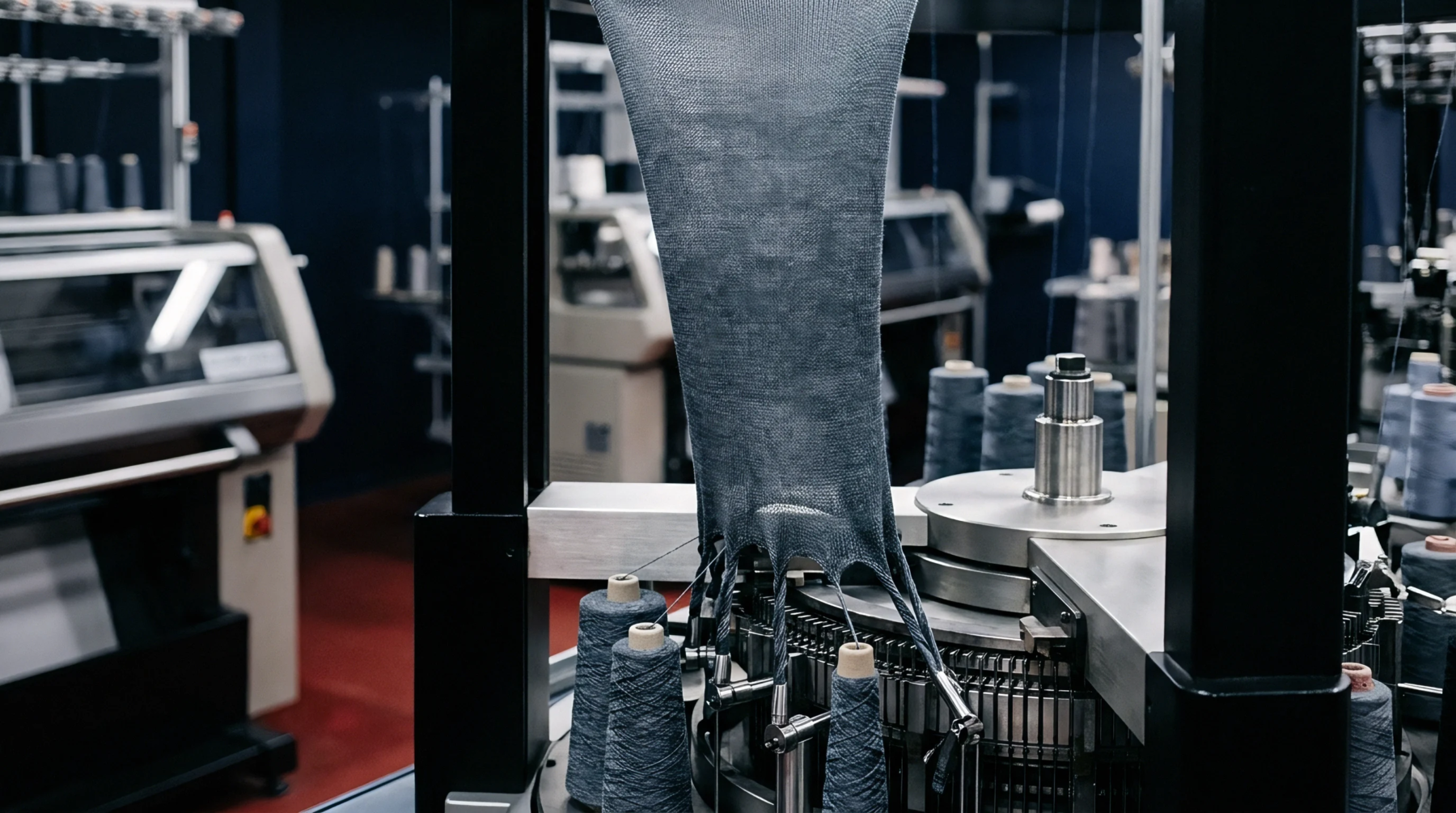
Physical volume measurements in textile physics calculate the ratio of void space to the total volume occupied by a yarn and fabric assembly. Evaluating fabric porosity requires determining both the total bulk volume of the textile substrate and the solid fibre volume calculated from fibre density values. Higher values indicate a larger proportion of open air pockets between intersecting yarns, whereas lower values describe densely packed structures.
The measurement applies to woven and knitted structures up to the boundary where full polymer coatings eliminate inter-yarn voids.
Pore Distribution
Aperture sizing dictates fluid and gas transport through the open network. Microscopic pores inside the yarn bundle restrict capillary flow, while macroscopic voids between warp and weft yarns allow rapid fluid transmission.
Permeability Link
Aerodynamic resistance drops non-linearly as inter-yarn spaces expand across the fabric architecture. Mills control thread density, pick insertion rates and yarn twist levels during manufacturing to adjust void dimensions. High porosity structures permit elevated air passage suitable for activewear, whereas tight structures limit air movement to enhance insulation in outerwear.
Lab technicians measure density changes after wet processing to track how yarn swelling reduces effective void area.
Structural Limit
Fabrication limits prevent unlimited void expansion without losing mechanical strength. Excessive spacing leads to yarn slippage and seam failure under tensile load. Testing confirms structural integrity before releasing bulk production lots to garment factories.