Equilibrium Lag
Physical phenomenon describing the lag between the change in atmospheric humidity and the resulting change in the moisture content of a textile fibre as it moves between wet and dry states. This means that a fabric will have a different weight if it reaches equilibrium by drying out than if it reaches it by absorbing moisture. For most natural fibres, the moisture content is always higher when the material is desorbing water from a saturated state compared to when it is adsorbing water from a bone-dry state.
This difference creates a loop in the graph of moisture regain versus relative humidity, which is known as the hysteresis cycle. Understanding this behavior is essential for accurate laboratory testing and commercial weight determination.
Sorption Path
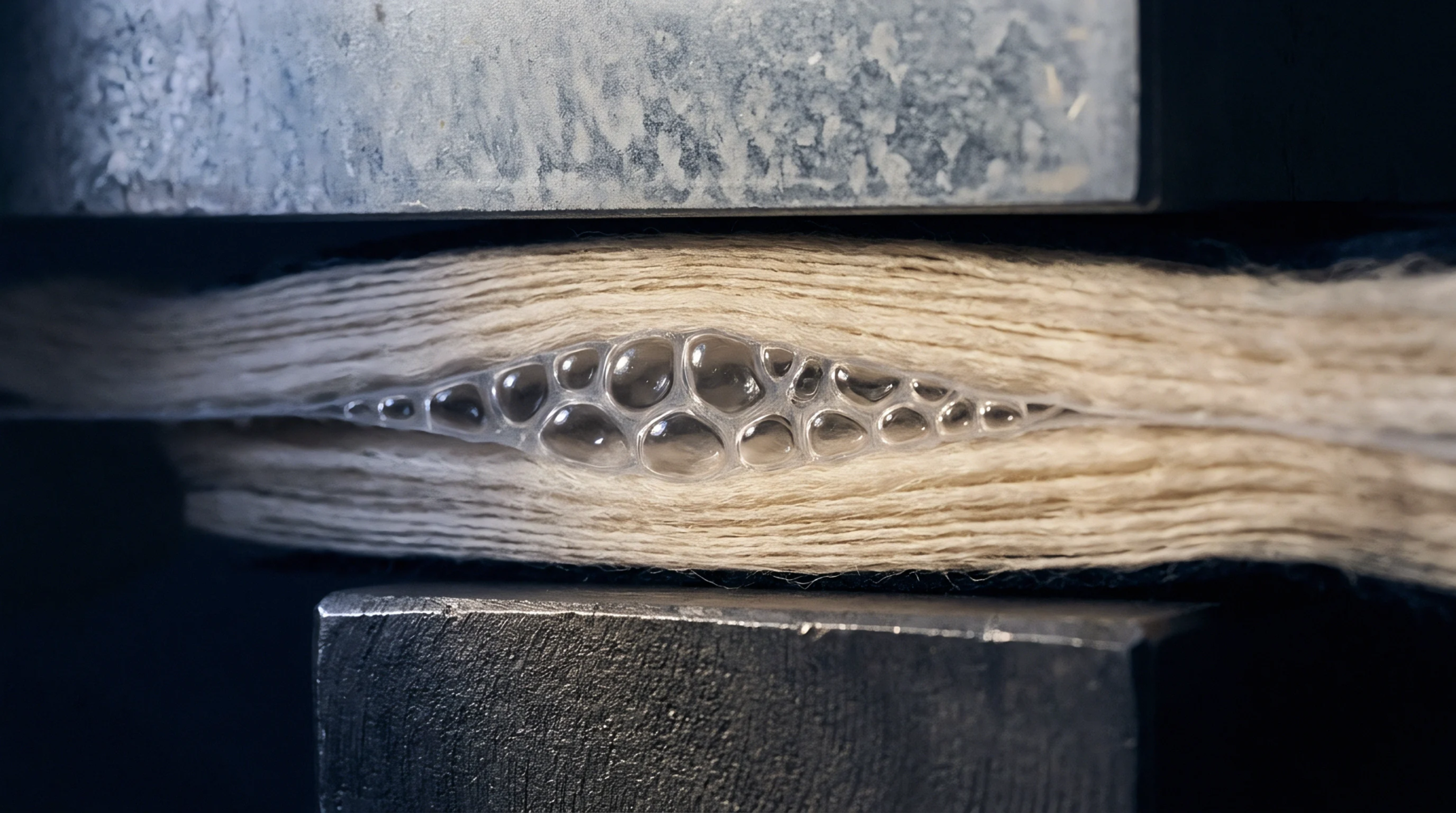
Internal structure of the fibre, particularly the arrangement of crystalline and amorphous regions, determines the extent of the lag. When a fibre is wet, the water molecules expand the polymer structure and occupy specific bonding sites within the amorphous zones. As the fibre dries, some of these sites remain occupied or the structure collapses in a way that traps small amounts of water, leading to a higher equilibrium moisture level.
Conversely, a very dry fibre has tightly packed polymer chains that initially resist the entry of new water molecules. This makes the adsorption process slower and results in a lower moisture level at the same relative humidity. The effect of hysteresis is most pronounced in highly absorbent fibres like wool and viscose.
Dimensional Stability
Variations in moisture content caused by this phenomenon directly impact the physical measurements of a piece of fabric. A garment that has dried out after being washed may have slightly different dimensions than one that has absorbed humidity from a damp environment, even if both end up at the same final humidity level. This can lead to inconsistencies in fit and appearance during the manufacturing and retail stages.
Cutting rooms in garment factories must allow fabric rolls to relax and reach a stable moisture state before processing to minimize these effects. If the material is cut while it is in a transitory moisture state, the resulting panels may shrink or expand unevenly. This behavior also affects the performance of certain finishes that rely on precise fibre dimensions for effective application.
Testing Reliability
Standardized laboratory procedures require that all textile samples be conditioned from a specific direction, usually from a dryer state toward a wetter one, to ensure repeatable results. By always approaching the equilibrium from the same side of the cycle, the influence of hysteresis is minimized and different labs can produce comparable data. If one lab tests a sample that was previously damp and another tests one that was previously dry, their results for moisture regain will never match.
This requirement is a foundational part of international testing standards like those from astm and iso. Quality control managers must enforce these conditioning protocols to avoid false failures in weight or strength tests. The consistency of these measurements is the basis for all technical specifications and commercial agreements in the textile industry.