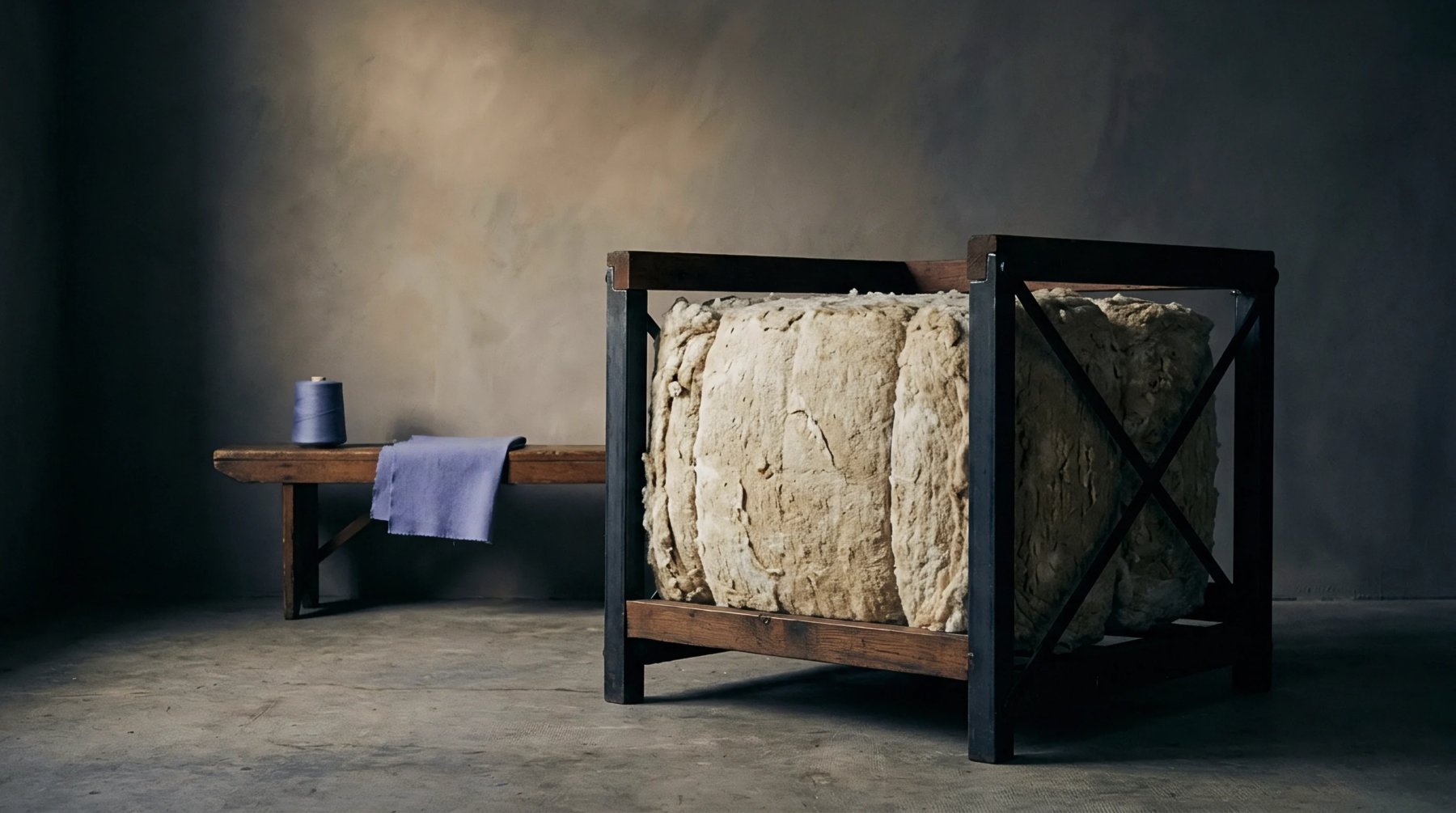
Determining Raw Cashmere Micron Profiles and Dehairing Yields
Determining raw cashmere value requires combined OFDA micron profiling and oven-dry yield mass balance testing to calculate true clean dehaired cost.
Hollow core configuration characterizes the presence of a discontinuous or continuous air filled central canal within the medulla of certain protein fibres which impacts the visual luster of the material. This medullation is most common in coarser wool types or hair from specialty animals where the cells in the center of the strand fail to fill completely during growth. The resulting cavity alters the path of light through the fibre, creating an opaque or white appearance that differs significantly from the translucent look of fully solid filaments.
It affects the perceived color depth because light is reflected from the internal surfaces rather than passing through to be absorbed by the internal pigment. The term identifies only the presence of this specific anatomical void.
Chemical absorption remains uneven in fibres with high levels of this condition because the central hollow does not provide the same structural binding sites as the surrounding solid cortex. When a batch contains a high percentage of fibres showing medullation, the resultant color often looks lighter or frosted because the dye molecules cannot penetrate the air filled center effectively. This causes problems during color matching when a technician compares a naturally medullated sample against a high quality solid filament standard.
Achieving a deep, rich shade requires either removing the affected fibres during sorting or using higher concentrations of dye to compensate for the light scatter. Manufacturers track this trait meticulously during the raw material intake to avoid surprises during the final processing stage.
Visual character of the fabric shifts toward a duller or more rugged look when high amounts of the hollow center structure are present in the yarn mix. While medullation is often viewed as a defect in high grade apparel wool, it provides beneficial insulation properties in carpets or heavy technical textiles due to the pockets of trapped air. These voids act as thermal barriers that reduce the rate of heat transfer through the cloth, making it suitable for functional winter wear.
The measure of this trait is typically done via cross sectional imaging or through a projector that counts the percentage of visible voids across a specific fiber group. High concentrations lead to a characteristic chalky white look in dark blue or black dyes.
Separation of material based on internal void frequency allows mills to produce different qualities of product from the same annual shear. Identifying medullation helps in categorizing the material into coarse or fine bins depending on the final target use for the garment factory. If the level is too high for a fine knit order, the fiber must be redirected into rugged woolens where the appearance variation is more easily hidden by heavy textures.
Quality assessment reports list the frequency of these occurrences as a key variable in the overall economic valuation of the stock. Controlling this presence ensures that visual standards for luxury items are maintained through consistent fiber selection. Final classification depends on micro-spectrophotometry results across the batch.
Determining raw cashmere value requires combined OFDA micron profiling and oven-dry yield mass balance testing to calculate true clean dehaired cost.
Expertise is a utility, not a secret. sentiention™ publishes its working knowledge as open reference: intelligence layer covering the materials it sources, the markets it enters, and the reference that serves both.