Elastic Relaxation
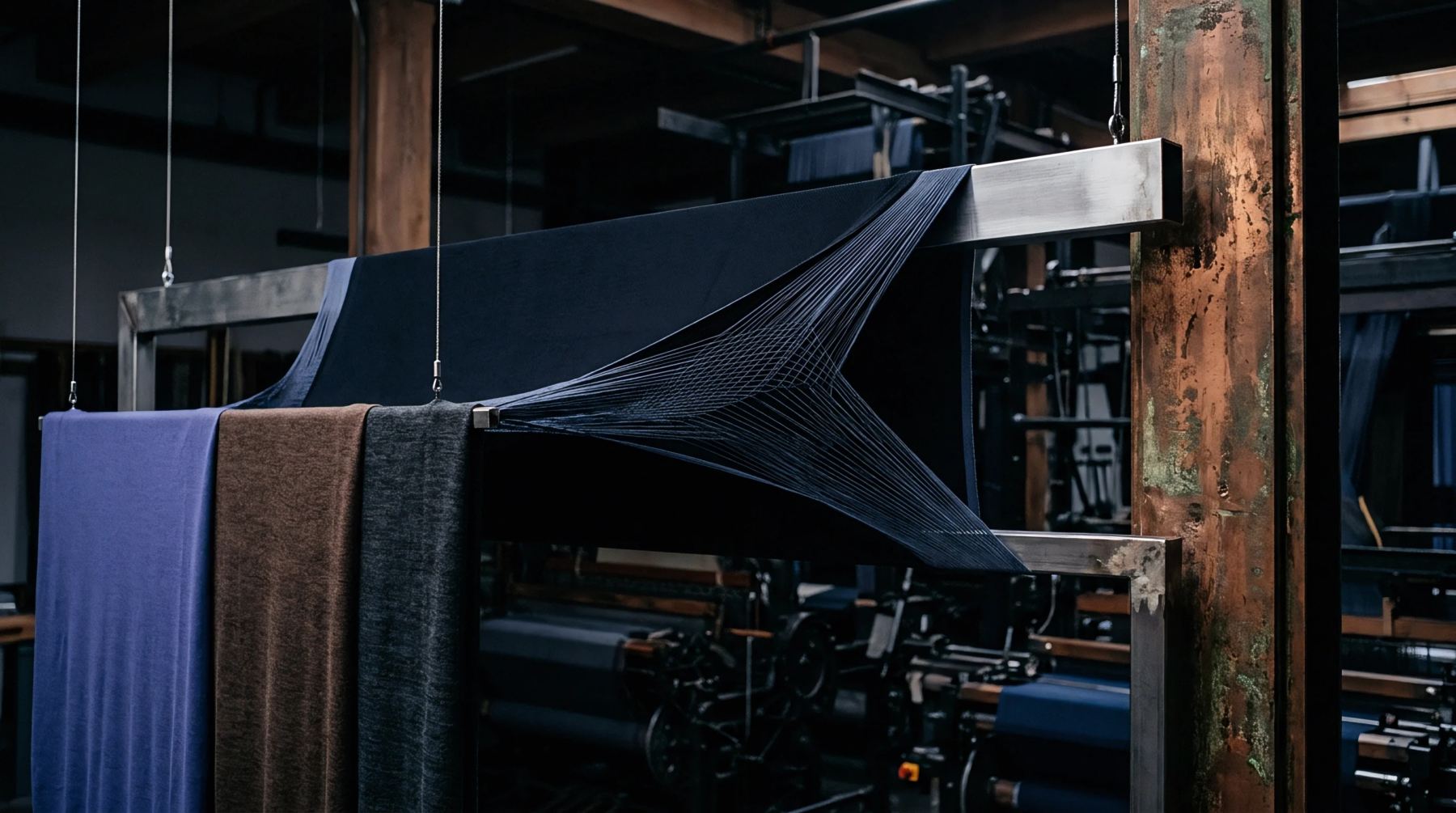
Dimensional reduction in fabric width occurring immediately when woven cloth is cut from loom tension represents the release of stored elastic stress in warp and weft yarns. Textile technicians measure off-loom width contraction to determine reed width requirements during loom setup. The measurement calculates the percentage difference between the width of warp threads in the reed and the relaxed grey fabric width on the roll.
Application applies to newly woven grey goods, ending once wet finishing or heat setting permanently fixes fabric dimensions.
Tension Release
High warp tension during weaving stretches weft yarns and keeps fabric extended laterally. Releasing cloth tension allows weft yarns to recoil, driving off-loom width contraction across the roll. Higher weft crimp levels increase the percentage of width contraction observed at the loom batcher.
Weave Influence
Densely packed weave constructions exhibit greater lateral shrinkage upon tension release than open weaves. Managing off-loom width contraction requires adjusting reed width settings to achieve desired finished cuttable widths. Weavers recalculate reed space when switching between plain and twill structures.
Stenter Allowance
Subsequent wet processing and stenter drying further alter fabric dimensions beyond initial relaxation. Factoring off-loom width contraction into mill plan layouts ensures greige fabric meets entry width parameters for finishing ranges. Inaccurate width predictions lead to narrow finished fabric rolls.