Fluid Pressure Regulation
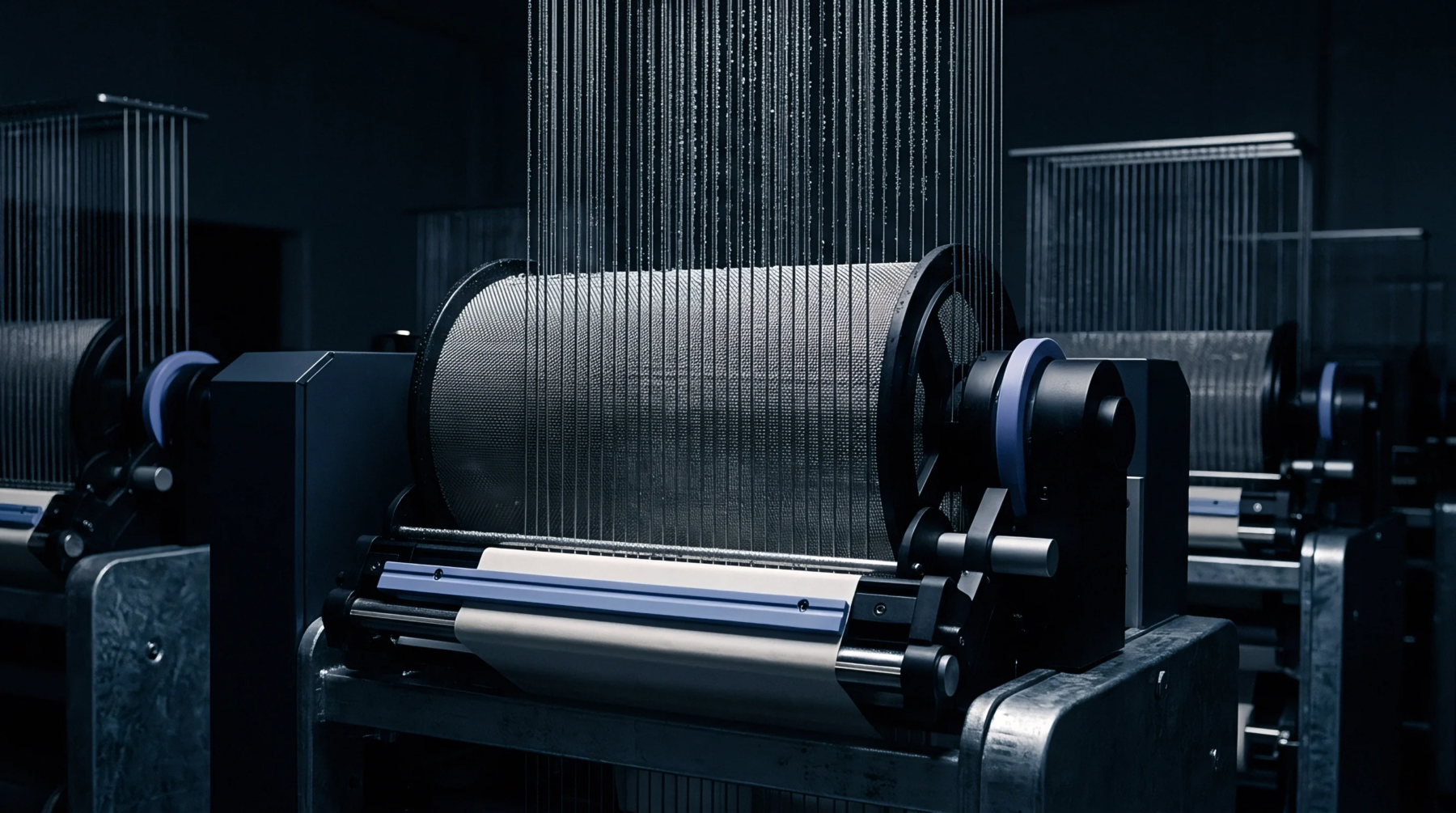
Fluid transfer during fabric finishing depends on the precise maintenance of nip forces between rollers to ensure even chemical application. Pad-mangle hydrodynamics governs the squeeze force balance and the resulting liquor uptake of the textile substrate as it moves through the bath. This mechanism dictates the uniformity of dye or resin penetration into the fibre structure, preventing density variations across the roll width.
Excess pressure forces liquid back into the bath, while insufficient force leads to uneven pickup and streaking. The system relies on the interplay between the roller hardness, the surface speed of the fabric, and the viscosity of the treatment solution.
Operational Variables
Rollers composed of rubber or synthetic elastomers deform under load to create a contact area that determines the duration of the squeeze effect. Pad-mangle hydrodynamics remains highly sensitive to the diameter of these rollers and the hardness measured in Shore A units. A wider nip zone allows for longer dwell times, which improves the saturation of the internal fibre matrix.
Smaller roller diameters increase the peak pressure intensity over a narrow area, which pushes liquid deep into the construction. Operators adjust the pneumatic loading on the roll ends to compensate for roller deflection that naturally occurs across the width of the machine.
Substrate Interaction
Fibres exhibit different swelling characteristics depending on their chemical composition and the amount of moisture they carry into the nip. Pad-mangle hydrodynamics forces the solution to displace air trapped within the yarn interstices. Natural fibres such as cotton require higher saturation pressures because their porous structure absorbs more liquid compared to hydrophobic synthetic filaments.
Synthetic materials resist the penetration of aqueous baths, so they rely on high nip velocities to achieve effective wetting. If the fabric density is high, the fluid displacement speed must be reduced to allow air to escape without causing localized flow turbulence that disrupts the finish.
Consistency Controls
Machine setups must account for the gradual degradation of roller surface uniformity due to sustained compression and chemical exposure. Pad-mangle hydrodynamics produces predictable results only when the roll crowns are ground to match the specific loading levels required for the fabric weight. Any deviation in the alignment of the top and bottom rollers causes a gradient in the wet pickup, leading to side to center shading.
Precise hydraulic control systems mitigate these mechanical errors by adjusting the pressure in real time. Reliable finish quality depends entirely on the stability of this pressure profile across the entire fabric width.