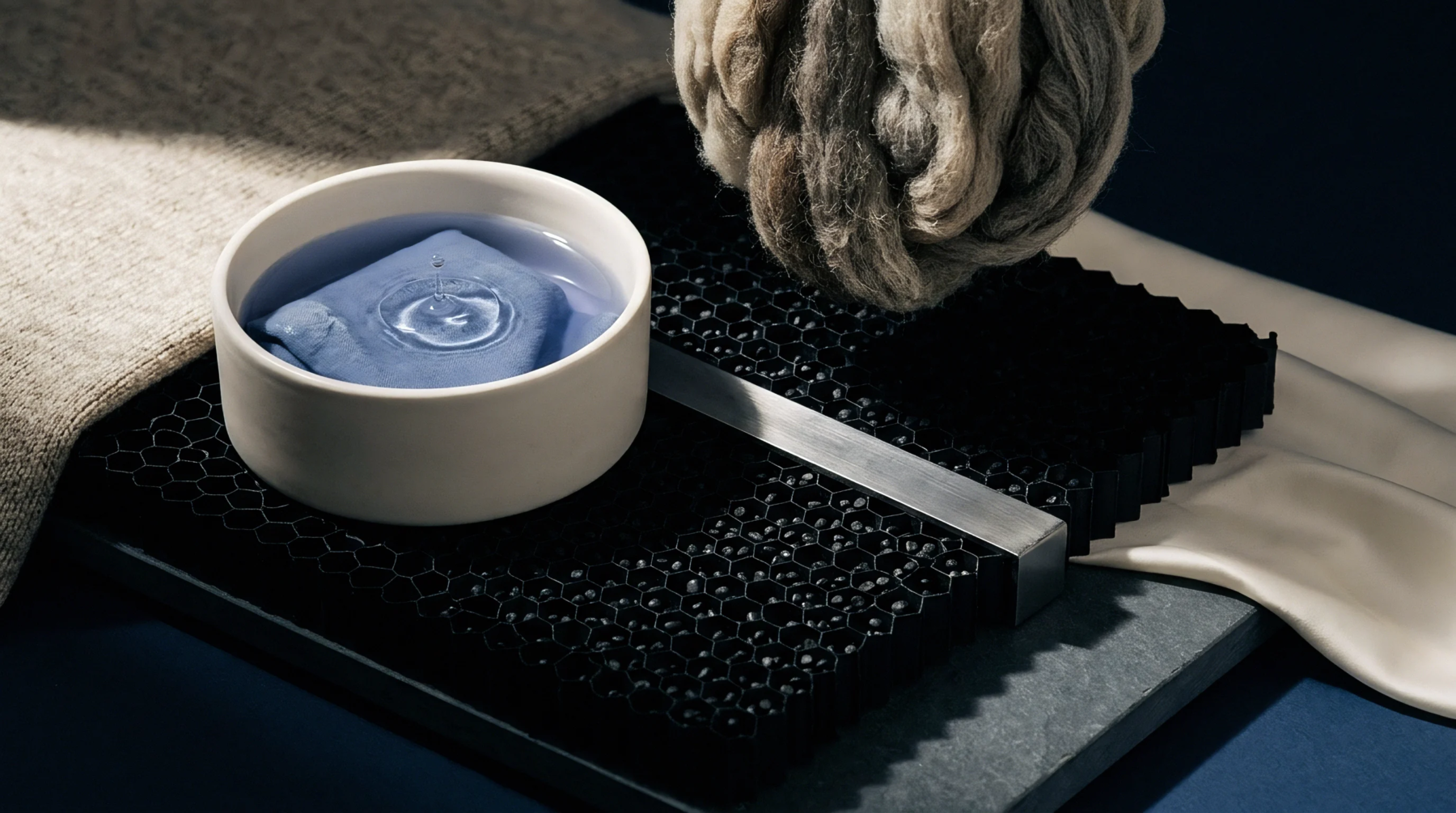
Colorant Class
Synthetic colorants formulated with electrophilic functional groups form covalent bonds with nucleophilic hydroxyl sites on cellulosic substrate polymers during alkaline exhaustion or fixation. A reactive dyestuff couples chromophore systems containing azo, anthraquinone or phthalocyanine structures directly to fiber molecules via chemical bonding rather than physical sorption. These covalent linkages yield washfastness properties that surpass direct or basic dyeings on cotton, linen, viscose and lyocell fabrics.
Dyeing stops building colour depth once fibre hydroxyl saturation occurs or when competing bath water molecules hydrolyse reactive groups. Unfixed hydrolysed dye must be scrubbed out completely during subsequent soaping stages.
Fixation Chemistry
Chemical structures of commercial reactive ranges depend predominantly on vinyl sulphone, dichlorotriazine or chlorotriazine anchor groups. The reactive dyestuff enters cotton fibres under neutral salt conditions through ionic exhaustion, where sodium sulphate or sodium chloride drives the negatively charged dye molecules toward cellulose. Adding sodium carbonate raises bath pH above ten, activating cellulose hydroxyl groups into cellulosate anions while converting precursor groups into reactive vinyl sulphone forms.
An irreversible nucleophilic addition or substitution reaction creates a covalent ether or ester bridge between dye and glucoside units. Bath temperature governs reaction kinetics, with cold-brand dichlorotriazines reacting at forty degrees Celsius and vinyl sulphones requiring sixty degrees.
Processing Routine
Bulk dyeing inside soft-flow jets, jiggers or continuous pad-steam ranges demands strict control over bath parameters to maximize dye-fibre reaction yields. Hydrolysis represents an unavoidable parallel pathway wherein water molecules react with electrophilic groups, creating non-reactive dye forms that sit loose inside yarn structures. Mills conduct multi-stage hot rinses followed by boiling wash-offs with polymeric washing agents to clear this hydrolysed fraction.
If unfixed reactive dyestuff lingers within yarn cores, finished piece goods fail ISO 105-C06 washfastness and ISO 105-E04 perspiration testing through severe staining on adjacent multifibre strips. Colorists balance alkali dosing curves to prevent abrupt fixation shocks that cause unlevelness and barré marks across knitted fabrics.
Performance Control
Quality inspectors evaluate strike rate, dye exhaustion percentage and final covalent fixation yield to assess dyestuff batch consistency. Cotton goods dyed with vinyl sulphone systems show vulnerability to acidic perspiration storage, which can cleave dye-fibre bonds over prolonged warehousing under humid heat. Bifunctional chemistries containing both chlorotriazine and vinyl sulphone groups improve fixation yields above eighty-five percent by offering two independent bonding vectors per chromophore molecule.
Mercerisation increases accessible cellulose hydroxyl groups, driving higher shade depths with reduced chemical consumption. Uniform reactive dyestuff fixation delivers bright hues and wash durability across global apparel supply chains.