Manufacturing Margin
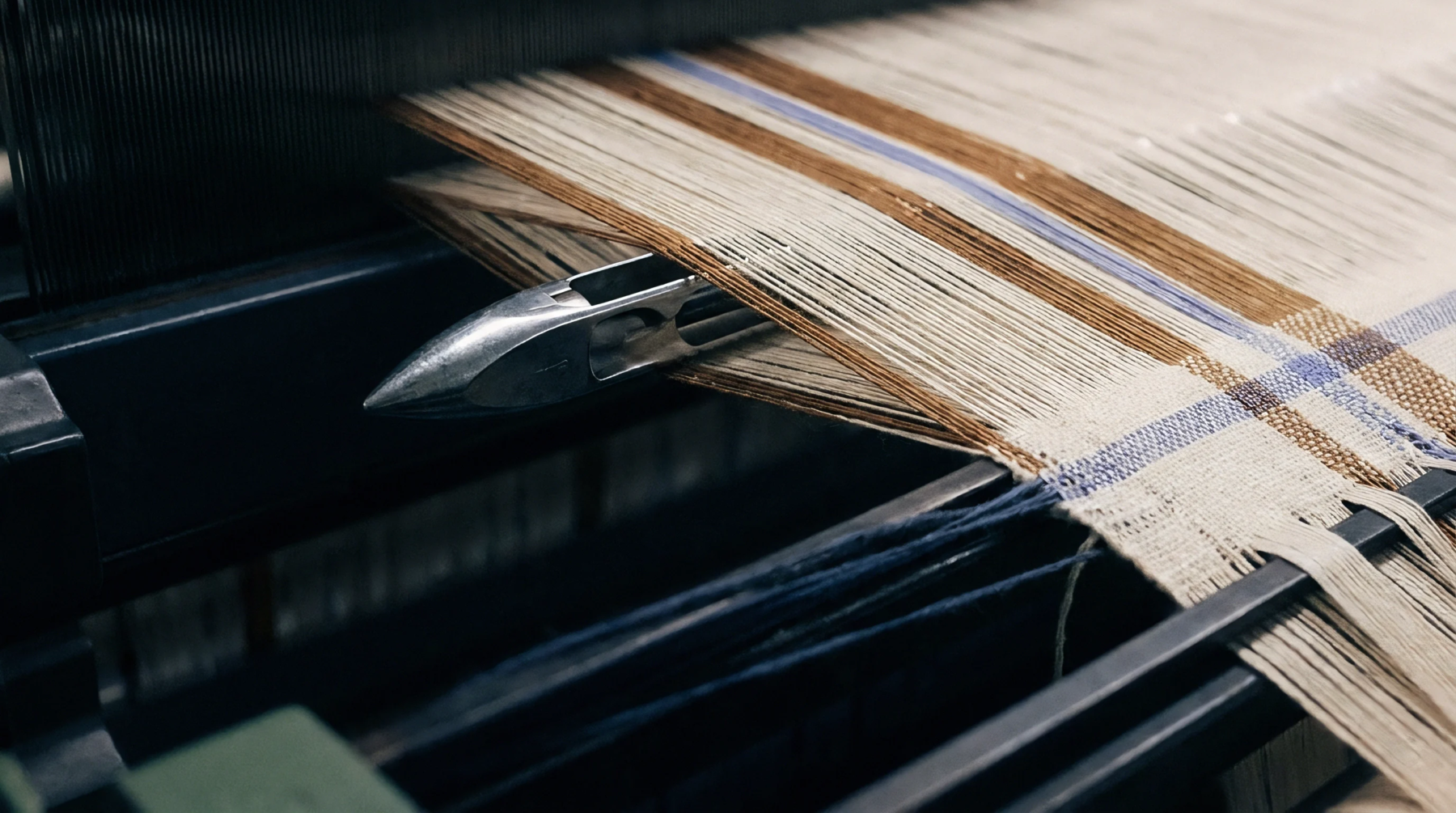
Unbound yarn margins originating from modern air jet or rapier production lines require immediate stabilization before fabric panels proceed to subsequent apparel assembly stages. Shuttleless loom selvage ends represent the untwisted or bonded fringe material created when continuous weft picks are cut at the machine edge during high speed fabrication. Industrial weaving facilities generate these loose borders along every linear metre of greige goods before thermal fusing or leno binding locks the constituent warp and weft intersections.
Commercial buyers inspect these perimeter zones strictly during initial mill audits to verify that tension anomalies do not propagate inward toward the main body of the textile.
Edge Stabilization
Production managers evaluate thermal melting behavior on thermoplastic filaments alongside chemical adhesive applications for natural yarns to secure these peripheral threads permanently. Standard pneumatic insertion systems project yarn picks across the open shed without traditional wooden carriers, leaving raw cut extremities exposed to fraying unless side heaters or auxiliary leno threads immobilize the final warp columns. Garment manufacturers reject shipments exhibiting loose boundary threads because unstable perimeters unravel rapidly during automated cutting table operations and pattern grading.
Industrial testing laboratories measure tensile strength across the finished edge to confirm that lateral stress does not exceed threshold limits established by standard quality agreements.
Tension Variance
Mechanical pull variations along the outer boundary arise when bobbin feed rates fluctuate or pneumatic tucking devices fail to insert terminal yarn segments correctly into the succeeding shed. Automated sensors monitor optical density at the border continuously to detect missing picks or excessive loop formation before large batches proceed to wet processing departments. Weaving technicians adjust side cutter timing mechanisms precisely when microscopy reveals damaged filaments resulting from excessive blade friction or dull cutting edges during continuous runs.
Post Processing
Subsequent scouring, dyeing and finishing operations exert severe mechanical agitation upon greige borders, demanding complete structural integrity from every terminal yarn before chemical baths begin. Dyehouse operators reject improperly stabilized fabric margins because loose perimeter fibers detach during agitation and clog filtration equipment or deposit unwanted lint onto adjacent textile surfaces. Final quality inspectors verify perimeter density against approved reference standards prior to releasing rolled fabric inventory to apparel contractors for commercial production.