Production Preparation
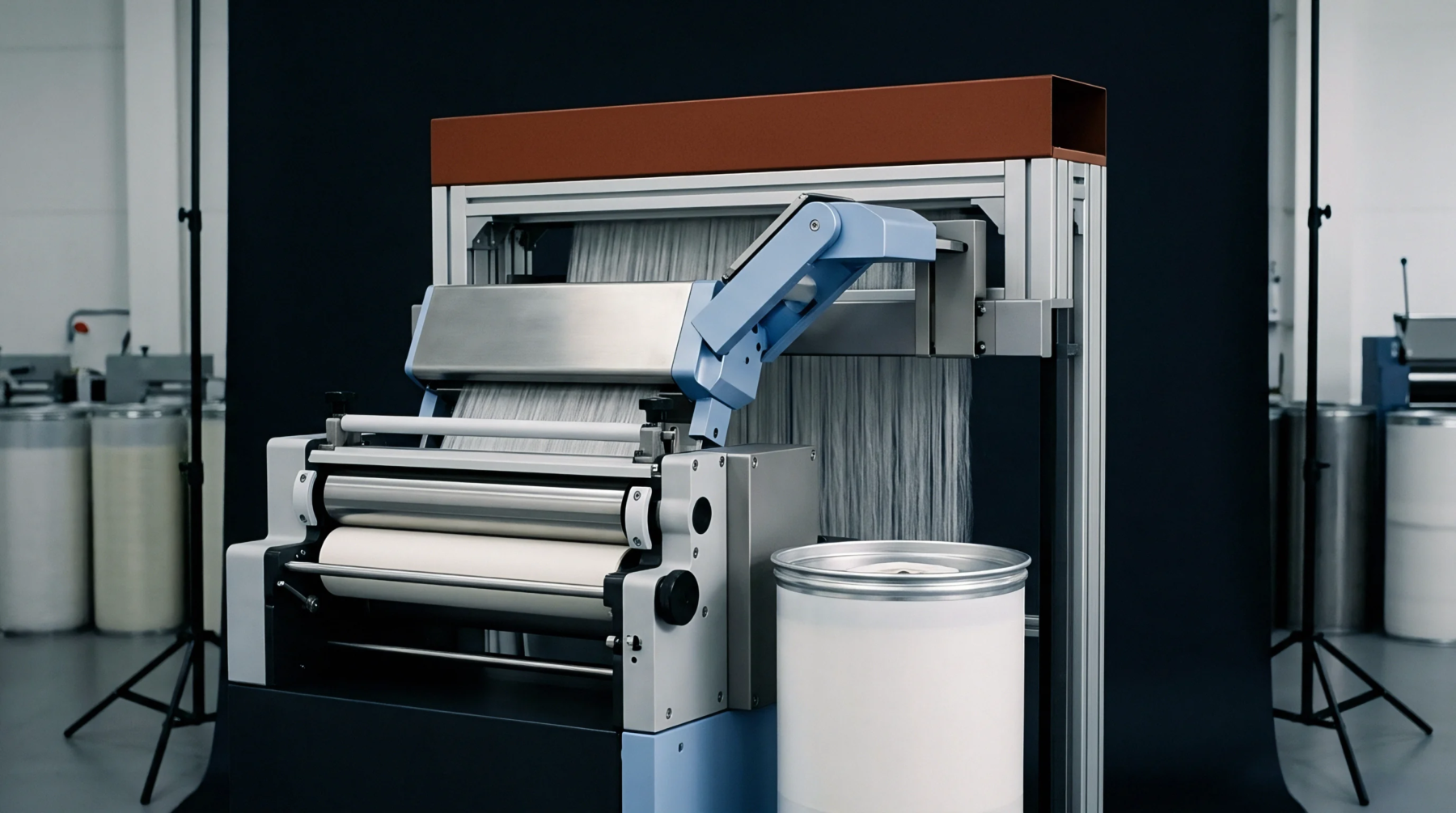
Parallel alignment of thousands of individual textile filaments onto a singular flanged cylinder occurs during this stage of the manufacturing cycle. Warp beaming organizes these yarns into a dense, uniform sheet by winding them under regulated tension from the creel to the beam barrel. Tension variance during this process results in uneven shedding or breakage during the subsequent knitting or power loom operation.
The machine monitors both the total length of the wound material and the density of the package to prevent soft spots or edge collapse. Uniformity at this stage dictates the efficiency of all downstream mechanical fabric construction.
Tension Management
Consistent load application prevents the stretching of synthetic polymers or the breakage of delicate natural staples during the transfer. Automated braking systems on the creel provide a counterforce to the beam motor which maintains constant yarn speed regardless of the changing diameter on the cylinder. Digital sensors detect individual strand breakage and immediately stop the rotation to allow for manual knotting or splice repair.
Each stop creates a potential location for density variation if the operator fails to reset the tension correctly upon restart. Correct calibration of these electromagnetic brakes reduces the likelihood of barre or streaks in the final output.
Package Geometry
Precision in the winding pattern ensures the barrel fills symmetrically from flange to flange without creating ridges or loose edges. The traverse mechanism oscillates to distribute the yarn width evenly across the surface while the press roller compacts the layers to maximize the total quantity on the beam. Proper compaction keeps the outer layers from collapsing into the voids beneath during transit or storage in the warehouse.
High density packaging decreases the frequency of machine stops by increasing the operational time between beam replacements on the loom. A well formed beam sustains its structure under the pressure of several tons of cumulative winding force.
Quality Verification
Inspection of the finished unit identifies defects before the component reaches the production line. Technicians measure the diameter and weight of the completed beam to calculate the exact yardage contained within the wrap. Deviations from the target weight indicate either inconsistent yarn count or excessive tension that may trigger a rejection of the entire lot.
Verification occurs through laser measurement of the cylinder profile to confirm that the package presents a perfectly level surface. Accurate preparation of this foundation is the technical basis for defect-free fabric production.