Interlacing Span Dimension
The physical distance a warp or weft yarn bridges across orthogonal threads without interlacing defines a primary architectural parameter of woven fabrics. Known in textile construction as weave float length, this structural metric depends on the weaving draft and peg plan applied on the loom. A plain weave maintains a float length of one, alternating under and over every intersecting thread across the warp and weft.
Satin, twill and jacquard constructions introduce longer float spans, allowing yarns to traverse three, four, seven or more orthogonal threads before diving below the opposite yarn system.
Surface Friction Modifications
Longer yarn floats present uninterrupted, planar fiber spans that alter the physical hand and mechanical attributes of the fabric. Floats diminish boundary inter-yarn friction, giving satins and twills their smooth tactile hand, heightened drapeability and high surface luster. However, these unanchored spans reduce fabric structural stability by allowing yarns to shift laterally under minimal mechanical force.
Short-float textiles, such as tightly set poplins and canvas, display high internal friction and hold their yarn positions firmly under shear stress. Long floats leave the structure vulnerable to yarn snagging and surface abrasion when rubbed against rough objects.
Cut Edge Vulnerability
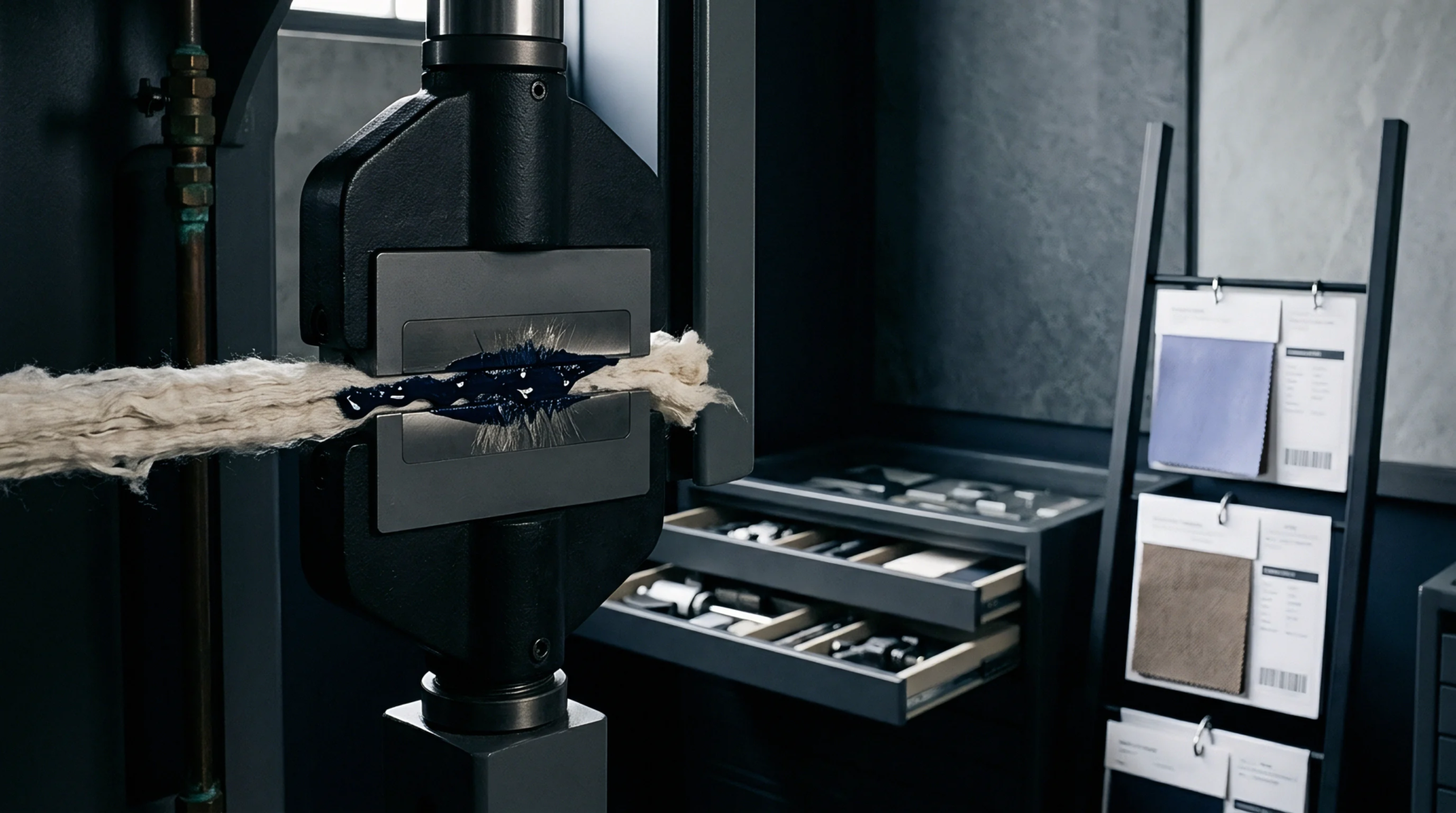
Mechanical specimen cutting exposes the structural vulnerability of fabrics engineered with extended float architectures. When cutting dies slice through long yarn floats, the severed yarn tails lose all lateral mechanical support up to their distant anchoring interlacings. Edge shedding and unraveling escalate rapidly along specimens extracted from high-float fabrics.
Tension tests, tear tests and gravimetric swatch cuts on such fabrics display ragged, fraying boundaries that shed mass and distort nominal sample areas. Laboratory technicians handle long-float specimens with great care, often employing wider border raveling allowances to preserve test gauge dimensions.
Performance Property Balance
Textile product developers match float lengths to intended functional performance requirements. Upholstery fabrics designed for high commercial wear restrict float lengths to prevent surface snagging under friction testing. In contrast, technical filtration fabrics manipulate float lengths to control air permeability and particulate retention across industrial cycles.
Long floats also enhance tear strength by enabling adjacent yarns to bunch together under applied force, sharing the mechanical load across a wider band. Structural float parameters are verified during pick-glass inspection to ensure adherence to technical design sheets.