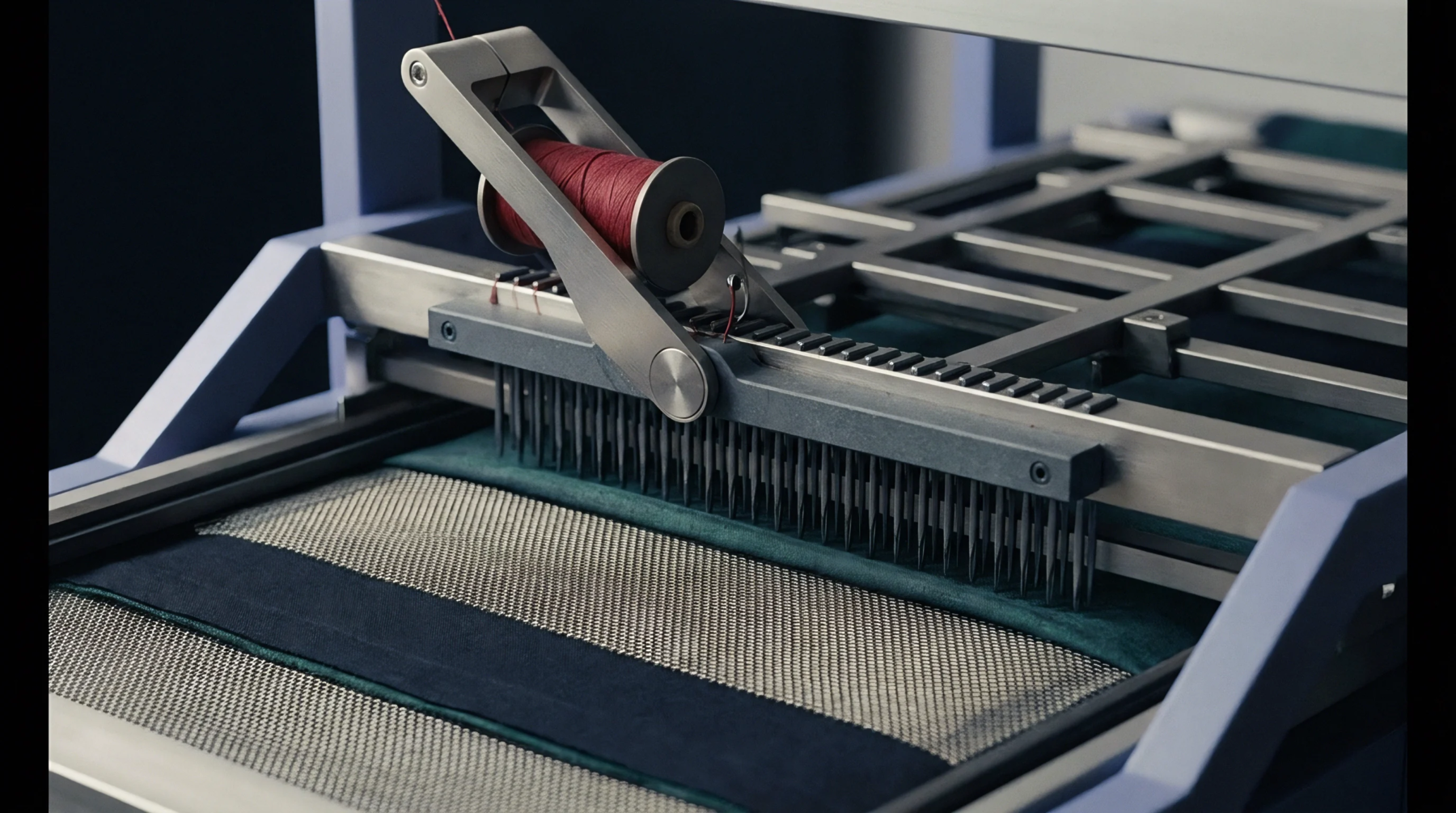
Greige Thread Density Influence on Wet Fabric Relaxation
Greige thread density limits wet fabric relaxation by establishing inter-yarn friction boundaries that block yarn swelling and crimp interchange during finishing.
Dimensional changes occurring when individual fibers expand upon contact with water or steam alter the porosity and thickness of woven or knitted structures. This physical response, known as yarn cross sectional swelling, is particularly significant for natural fibers like cotton and wool which have a high affinity for moisture. When these fibers absorb water, they increase in diameter much more than they increase in length.
This lateral expansion causes the yarns to become thicker, which in turn reduces the space between the interlacing points in the fabric. The result is a tighter, more compact material with lower air permeability. Understanding this behavior is essential for predicting the shrinkage and the final appearance of the fabric after laundering.
It is a fundamental property that influences the performance of many apparel textiles.
The mechanism of yarn cross sectional swelling is driven by the penetration of water molecules into the crystalline and amorphous regions of the polymer. As water is absorbed, it breaks the internal bonds and pushes the molecular chains apart, causing the fiber to bulge outward. In a yarn made of many fibers, this expansion is cumulative.
The total diameter of the yarn can increase by as much as twenty or thirty percent for some materials. This change is not permanent, as the yarn will usually return to its original size once it is dried. However, if the yarn is held in a tight weave, the swelling can create permanent stresses that lead to fabric distortion or pilling.
Finishing plants use steam and water to intentionally trigger this swelling during processes like milling or fulling. This helps to create a denser, warmer fabric by closing up the gaps in the structure. The degree of swelling depends on the temperature of the water and the chemical finishes present on the fiber surface.
Laboratory tests measure this change by comparing the yarn diameter under a microscope in both wet and dry states.
The effect of yarn cross sectional swelling on the finished cloth is most visible in the reduced transparency and increased thickness of the material. This is why some fabrics feel much heavier and stiffer when they are wet. In technical textiles like canvas or umbrella cloth, this expansion is used to make the fabric waterproof.
As the yarns swell, they seal the holes between the warp and the weft, preventing water from leaking through.
Manufacturers must account for this dimensional change when designing fabrics to ensure they do not become too tight or too small after the first wash. If the yarn cross sectional swelling is not considered, the garment may shrink beyond the acceptable tolerance. This leads to customer complaints and high return rates.
Quality control teams test the swelling behavior of new yarn types to determine their suitability for specific products. Reliable data on fiber expansion helps to maintain the quality and consistency of the final garment. Understanding these physical changes is a requirement for successful textile engineering.
Greige thread density limits wet fabric relaxation by establishing inter-yarn friction boundaries that block yarn swelling and crimp interchange during finishing.
Expertise is a utility, not a secret. sentiention™ publishes its working knowledge as open reference: intelligence layer covering the materials it sources, the markets it enters, and the reference that serves both.