Chemical Impregnation and Tension Control in Continuous Yarn Dyeing
Controlling continuous yarn dyeing relies on matched squeeze nip pressure and real-time tension zoning to secure uniform chemical uptake and yarn recovery.


Vat
Continuous yarn dyeing ranges rely on liquid immersion tanks to deliver dyes into the core of dense cellulose bundles. When thousands of individual ends pass through an aqueous dye bath at high operational speeds, the time available for fluid displacement inside the yarn structure drops to fractions of a second. Standard slasher or rope dyeing ranges execute continuous liquor application through a sequence of dip-and-squeeze cycles.
The primary mechanical objective during initial wetting involves forcing air out of the inter-fiber capillaries and replacing it with reduced dye liquor. Without complete air displacement, chemical uptake remains superficial, generating ring-dyed yarns with poor color fastness and high shade variance across the warp sheet.

Immersion Troughs and Liquid Displacement Mechanics
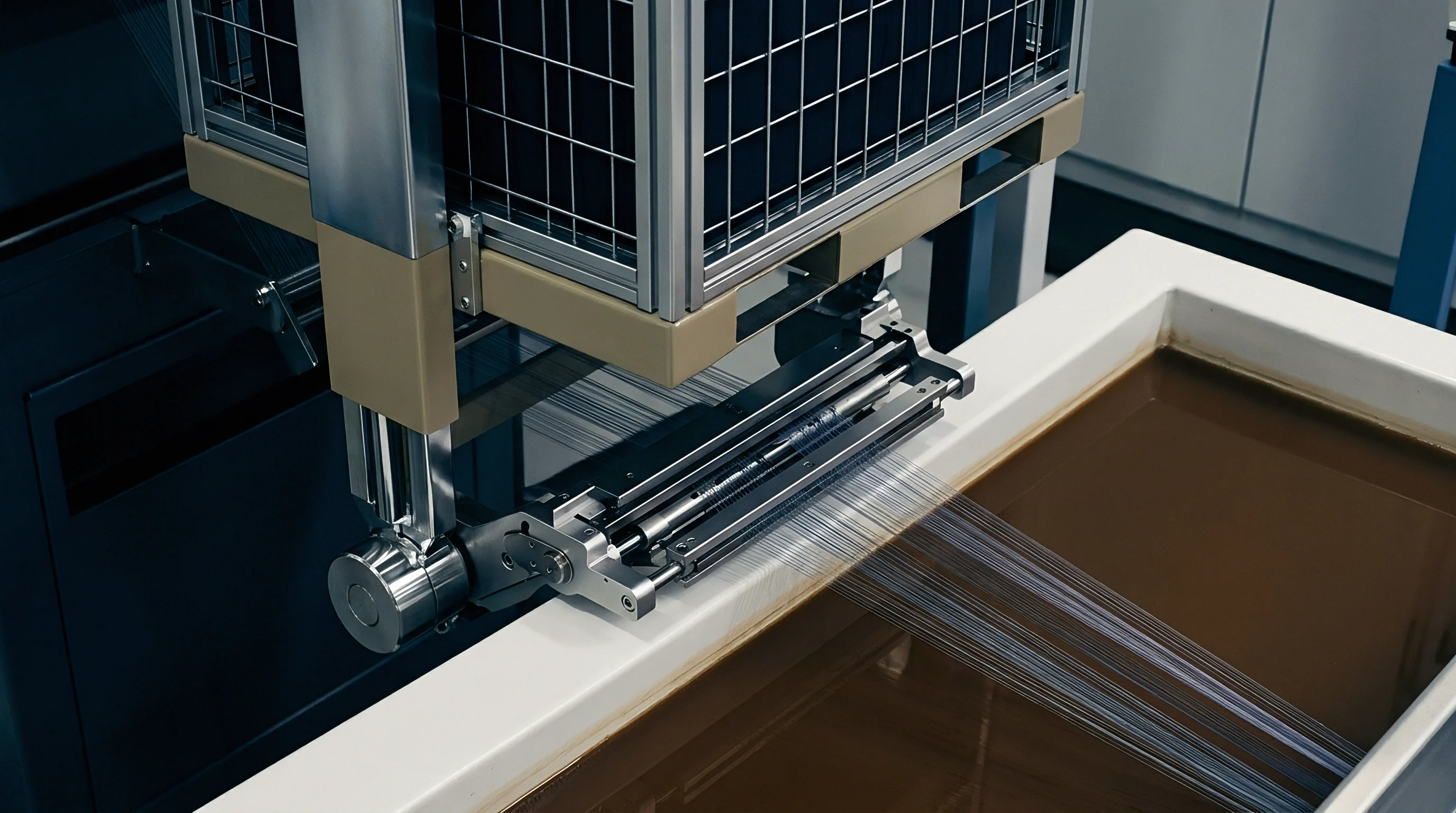
Continuous wet processing forces moving yarn sheets through bath channels at speeds reaching forty metres per minute. Fluid motion around the yarn bundle creates a boundary layer of static liquid that resists bath turnover. Submersion length within the trough, combined with yarn velocity, defines the dwell time during each dip.
A typical five-dip slasher range provides an immersion duration between 1.5 and 3.0 seconds per trough. Short immersion periods require aggressive chemical wetting agents to reduce surface tension below 30 mN/m, enabling rapid liquor ingress between individual cotton filaments.
High yarn speeds generate fluid drag that increases the dynamic boundary layer thickness. If the bath circulation rate does not match yarn throughput, localized chemical depletion occurs inside the nip entry area. Dyehouse practice maintains high bath recirculation rates, turning over total trough volume every two to four minutes.
Rapid circulation maintains stable concentration gradients, preventing shade fading from the outer edges to the center of the warp sheet.
Squeeze Roller Hardness and Nip Pressure
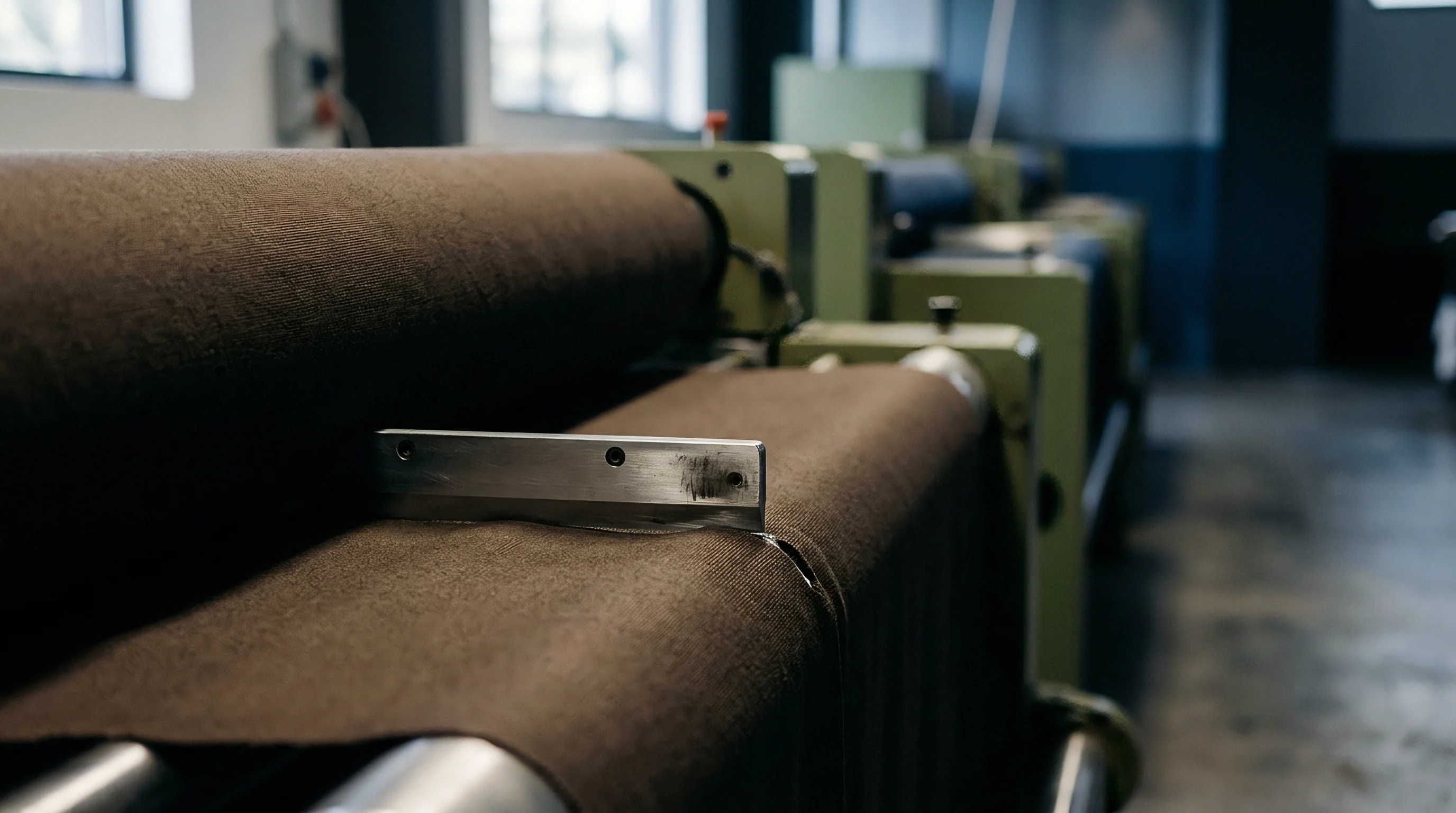
Mechanical extraction at the exit of each bath determines the final chemical pick-up percentage. Squeeze rolls utilize steel cores covered with synthetic elastomers, typically polyurethane or nitrile rubber. Elastomer durometer hardness, measured on the Shore A scale, directly controls the contact footprint area under load.
Soft roll coverings between 65 and 70 Shore A deform significantly under applied pressure, creating a wide nip footprint. This broad contact area extends the duration of compressive stress on the yarn, forcing chemical liquor deeper into the core structure while maintaining gentle extraction.
Harder roll coverings between 80 and 85 Shore A yield a narrow contact line, applying peak compressive force over a shorter distance. High localized stress strips surface liquor effectively, lowering wet pick-up from 80 percent down to 60 percent on ring-spun cotton. High extraction limits wet-on-wet dilution in subsequent dye boxes, but excessive nip pressure risks flattening yarn roundness.
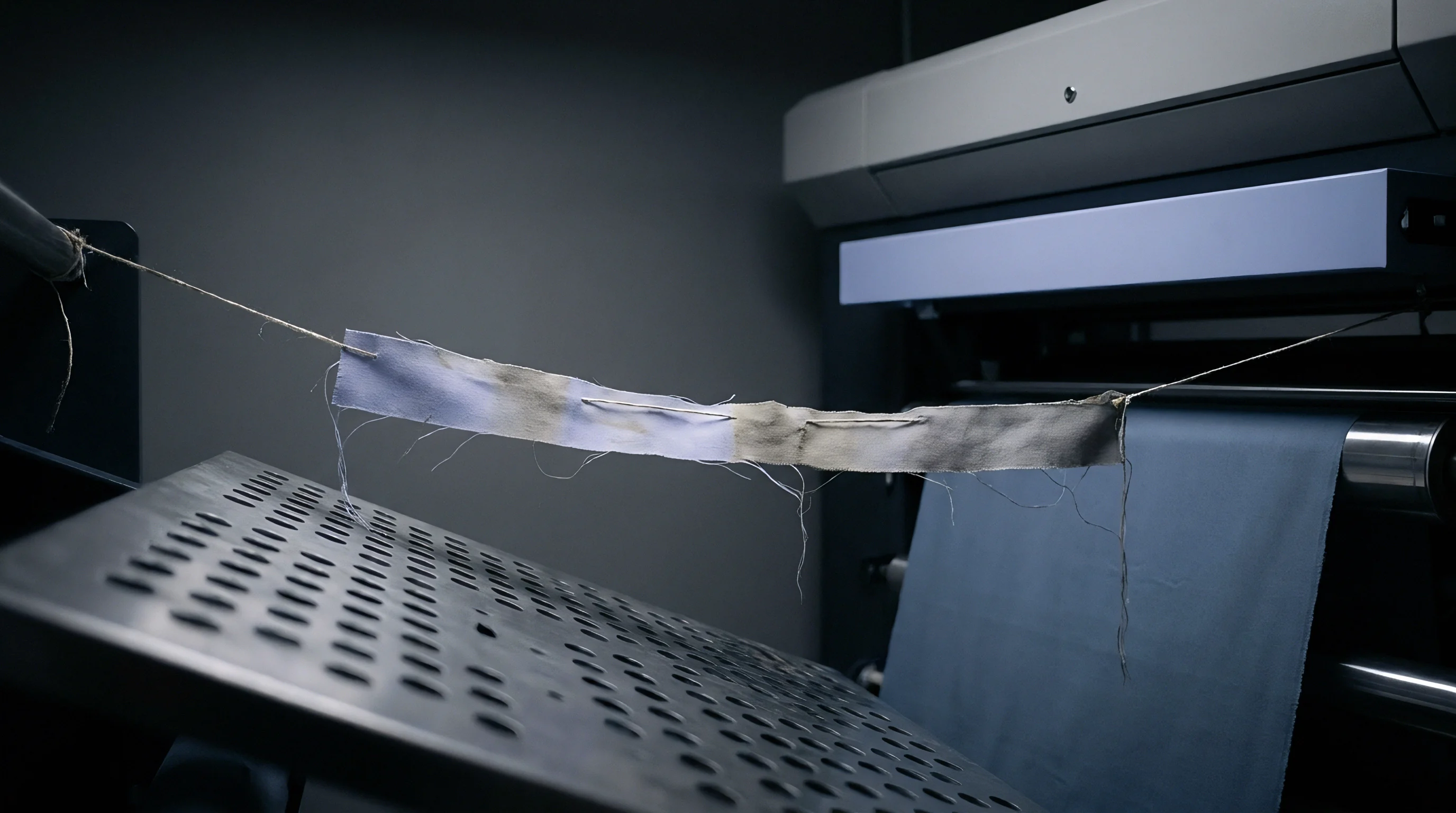
Flattened yarns alter light reflection, causing artificial shade variations during visual inspection in standard light boxes under D65 illuminants.
| Roll Covering Hardness (Shore A) | Applied Line Pressure (kN/m) | Contact Nip Width (mm) | Cotton Yarn Wet Pick-Up (%) | Liquor Penetration Index (0-10) |
|---|---|---|---|---|
| 65 Shore A | 15 | 22 | 82 | 8.5 |
| 70 Shore A | 20 | 18 | 76 | 8.0 |
| 78 Shore A | 25 | 14 | 68 | 6.8 |
| 85 Shore A | 30 | 10 | 59 | 5.2 |
Uncontrolled variation in liquor extraction compromises down-stream thermal fixation and chemical reduction balance across bulk lots. Deviations in wet pick-up across the warp sheet manifest as structural defect patterns during subsequent processing steps.
- Edge-to-Center Wetness Gradients occur when squeeze rolls flex under hydraulic pressure, yielding higher moisture levels in the center than at the edges.
- Yarn Flattening Deformation develops under excessive linear nip forces exceeding 35 kN/m, altering yarn cross-sectional symmetry and frictional coefficients.
- Channeling Fluid Bypass emerges when non-uniform yarn sheet density creates low-resistance pathways, leaving isolated yarn bundles under-impregnated.
- Subsurface Air Trapping results from insufficient immersion dwell time below 1.2 seconds, trapping microscopic air pockets within ring-spun yarn cores.
Failing to maintain uniform squeeze extraction across the working width forces mills to accept wide color variation bands, resulting in high re-reeling costs, customer chargebacks, and total batch rejections at garment washing facilities.
Kinetics
Chemical diffusion into the inner secondary wall of cotton fibers depends on dye substantivity and temperature. Continuous dyeing of cellulosic yarns with vat or reduced sulfur colors requires real-time control of bath reduction potential and alkalinity. Sodium dithionite acts as the dominant reducing agent for indigo and vat dyes, converting insoluble pigments into water-soluble leuco forms.
Oxidation-reduction potential (ORP) sensors installed directly in the liquor feed loop track chemical activity. Maintaining an ORP value between -750 mV and -850 mV guarantees complete dye reduction without accelerating thermal decomposition of the reducing agent.
Substantivity Controls in Continuous Reduction Baths
Continuous vat and sulfur dyeing require strict concentration maintenance of sodium dithionite and caustic soda. High dye substantivity accelerates bath exhaustion, stripping chemical dye molecules from the liquor faster than the solvent medium is absorbed by the moving yarn. This differential absorption creates a concentration drop along the machine axis.
To offset exhaustion, chemical dosing pumps supply concentrated replenishment liquor at rates exceeding the nominal wet pick-up ratio.
Caustic soda concentrations between 15 and 25 grams per litre stabilize the soluble phenolate form of reduced dyes. Lowering alkalinity below 12 grams per litre initiates premature crystallization of the leuco dye, causing speckled dye spots on the yarn surface. Conversely, excessive free alkali swells cotton fibers beyond structural limits, decreasing mechanical tensile strength and elevating yarn elongation inside the bath zones.
ISO 105-C06 wash fastness ratings drop by a full half-grade when yarn core oxidation remains incomplete during squeeze passes.
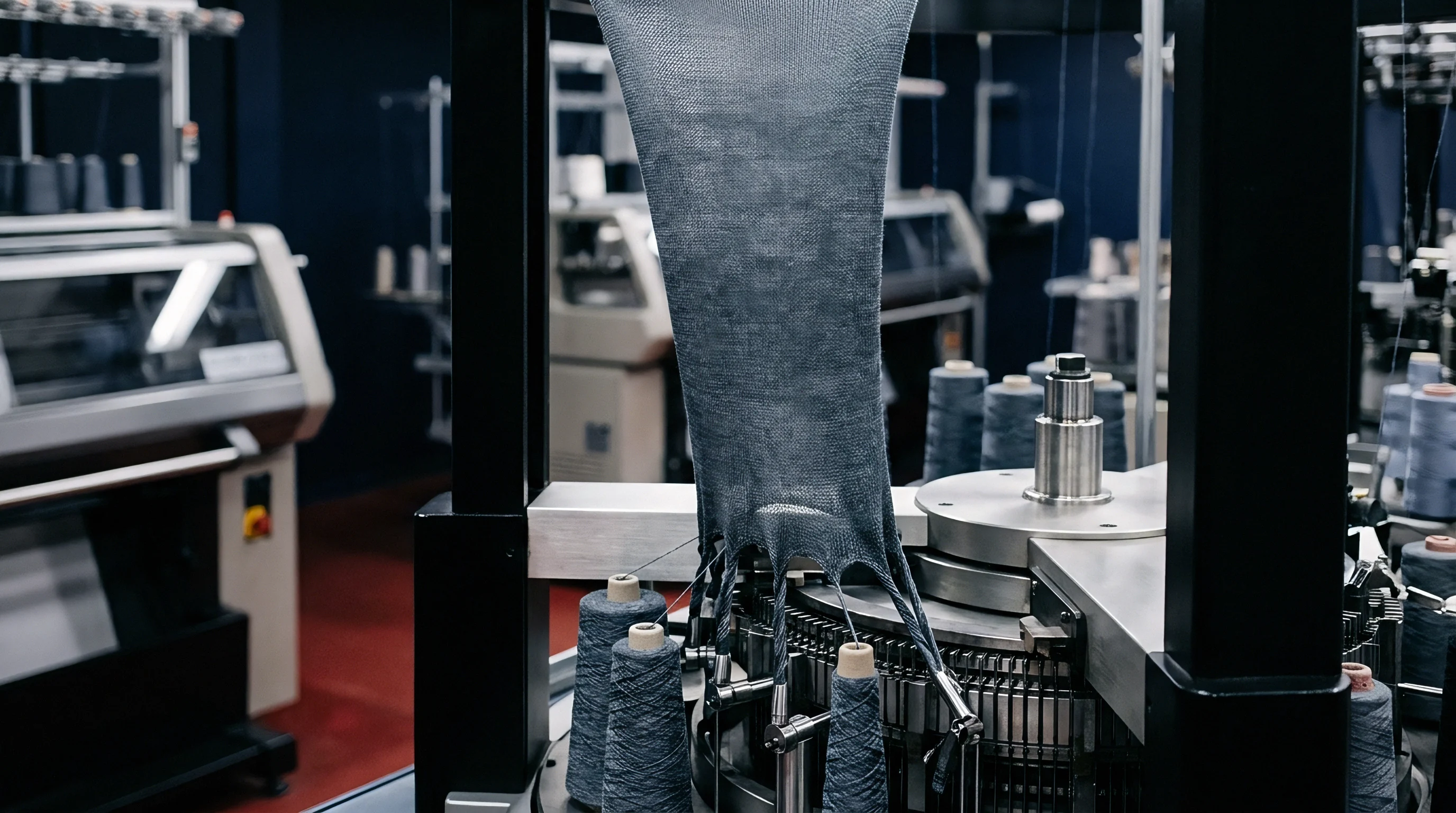
Oxidation Timing and Core Penetration Balance
Air skying passages convert the reduced leuco state of indigo into insoluble pigment within the yarn bundle. Upon exiting the final squeeze nip, damp yarns enter an elevated skying frame where oxygen exposure drives re-oxidation. Skying height and linear yarn speed determine oxidation dwell time, which standard practice sets between 45 and 60 seconds per pass.
Rapid oxidation fixes dye molecules on the outer perimeter of the yarn, producing a ring-dyed cross section essential for classic denim wash-down characteristics. Deep chemical penetration occurs when low-substantivity leuco dye diffuses inward during repeated brief immersions. Imbalance between chemical reduction potential and oxidation dwell time alters the ring-dyeing ratio, shifting the visual shade after commercial garment washing.
When continuous shade drift occurs during bulk runs, variations in raw cotton wax content or natural fiber micronaire disrupt uniform dye liquor uptake across the warp sheet.

Creel
Unwinding thousands of yarn packages simultaneously demands uniform physical resistance across the feeding rack. Warp yarn sheets for continuous dyeing contain between 3,000 and 6,000 individual ends pulled concurrently from creel bobbins. Tension differentials between individual yarn packages create slack ends or over-stretched threads.
Slack ends sag in the chemical troughs, causing yarn tangles and lap-ups around submerged guide rollers, while over-tensioned ends undergo structural deformation prior to chemical wetting.
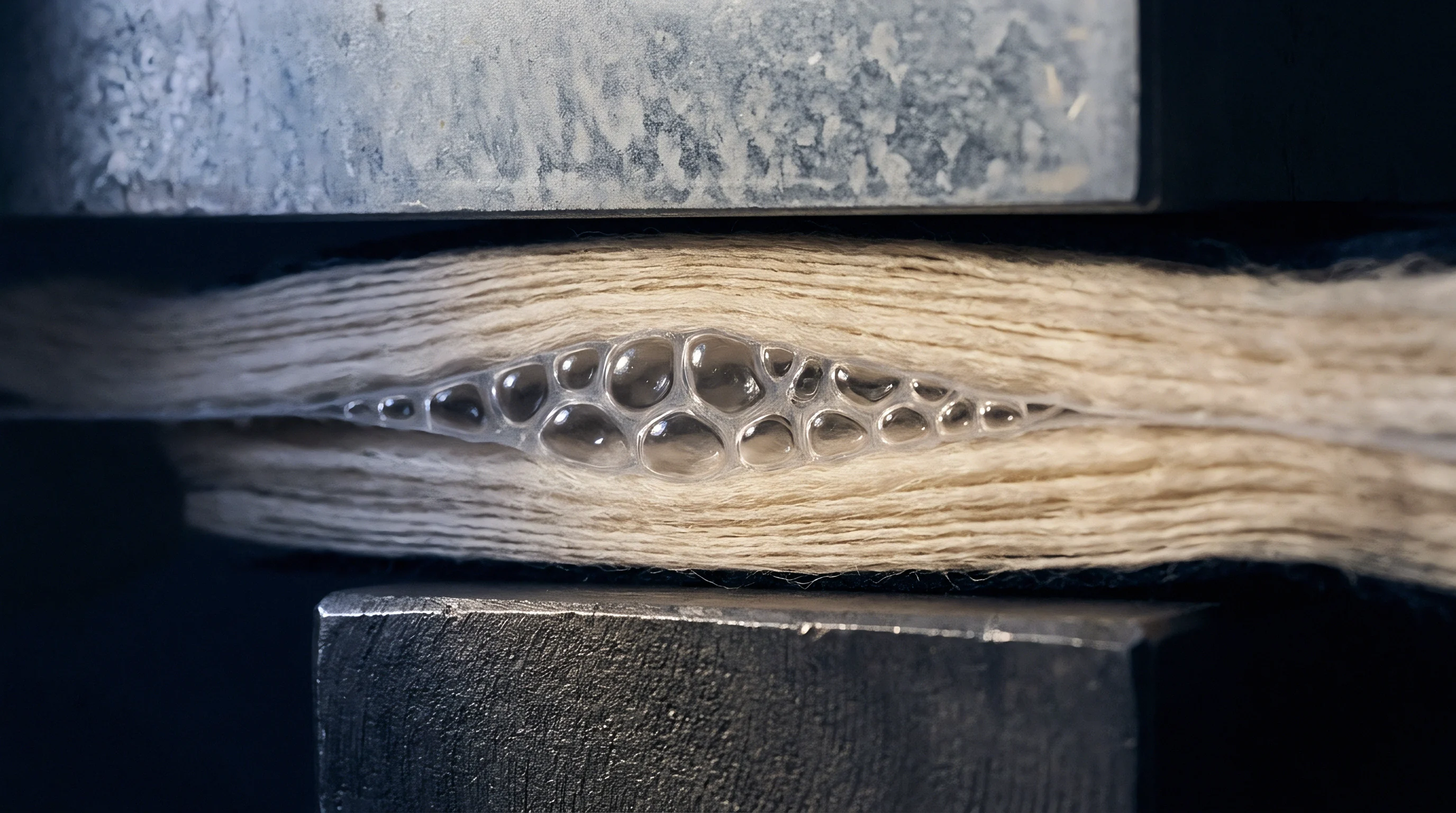
Warp Sheet Delivery and Tension Uniformity
Parallel yarn ends feeding from supply packages undergo varying friction depending on their position along the frame. Package unwinding balloon dynamics change constantly as yarn bobbin diameters decrease from full packages down to bare tubes. Passive disc tensioners or central electromagnetic braking units apply compensating force to maintain uniform thread line tension.
Creel friction accumulates along guide eyelets, ceramic thread guides, and comb dividers.
Outer yarn ends traveling over longer mechanical guide paths experience up to 40 percent higher tension than center ends if guide geometry lacks compensation. Variable tension yields non-uniform yarn diameters under load, creating streaks in the finished woven fabric. Load cells mounted on the headstock entry roll provide real-time feedback to main creel braking systems, dynamically adjusting holding torque as total creel package weight diminishes.
| Processing Zone | Mechanical Driver Boundaries | Target Tension Range (cN/tex) | Max Allowable Tension Variance (%) | Moisture State of Yarn |
|---|---|---|---|---|
| Zone 1: Unwinding | Creel Rack to Entry Pull Roll | 0.15 – 0.25 | ± 5.0 | Ambient Conditioned (65% RH) |
| Zone 2: Wet Impregnation | Entry Pull Roll to Squeeze Nip 1 | 0.08 – 0.12 | ± 3.0 | Fully Saturated / Chemical Bath |
| Zone 3: Air Oxidation | Squeeze Nip 1 to Skying Rollers | 0.10 – 0.14 | ± 4.0 | Damp Oxidizing (75% Wet Pick-Up) |
| Zone 4: Washing & Rinsing | Skying Exit to Final Nip | 0.12 – 0.16 | ± 3.5 | Fully Saturated Warm Water |
| Zone 5: Drying Cylinder | Final Squeeze to Beamer Headstock | 0.20 – 0.30 | ± 2.5 | Drying to Residual Target Moisture |
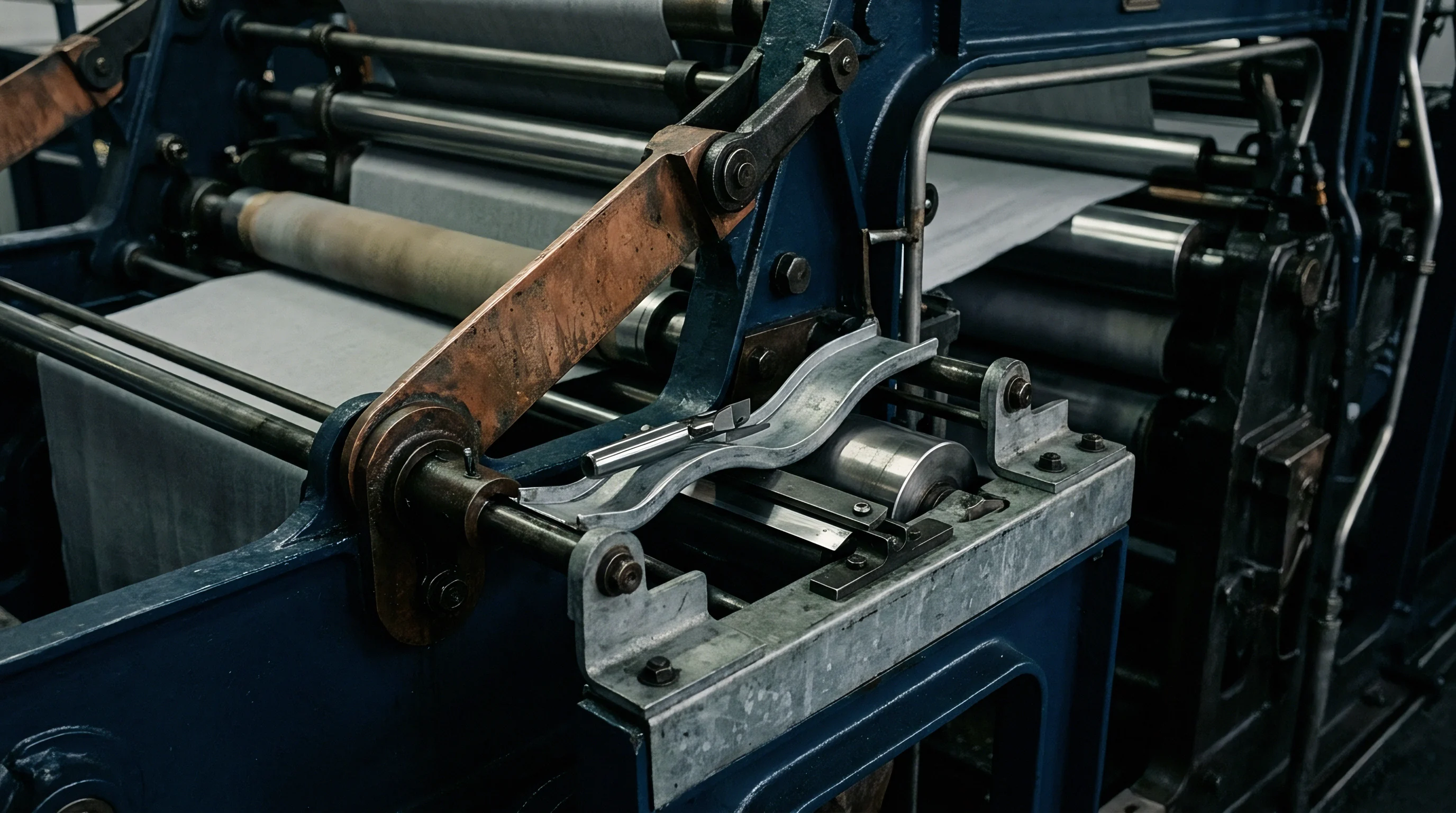
Can Creel Braking Prevent Wet End Snagging?
Electromagnetic particle brakes apply constant retarding torque to each package spindle as diameters diminish. Precise braking prevents package over-running during sudden machine slowdowns or emergency stops. Without synchronized creel braking, yarn momentum continues turning the package when the main drive decelerates, spilling yarn loops that catch on adjacent hardware when acceleration resumes.
Calibrating tension control across the unwinding section demands a systematic alignment sequence performed prior to running bulk warp sheets.
- Set initial mechanical friction disc weights according to yarn linear density, allocating lower mass for fine combed cotton counts.
- Thread individual yarn ends through ceramic eyelets, ensuring identical wrap angles across all thread guide bars.
- Zero the entry load cell transducer with the warp sheet lifted completely off the sensing roller.
- Engage central creel tension pneumatic pressure, increasing line force until total sheet tension matches the target cN/tex threshold.
- Execute a slow-speed inching pass while inspecting package balloon diameters, adjusting individual tension posts that display erratic yarn flutter.
Yarn sheet tension stability across creel delivery zones prevents individual end roll-overs during bath immersion.
Standard delivery contracts for continuous dyed warp beams incorporate strict clauses specifying that individual yarn tension across the beam width must remain within ±5 percent of nominated nominal values, granting buyers full right of rejection for non-compliant beams that generate weaving loom stops exceeding 1.5 stops per 100,000 metres woven.
Elongation
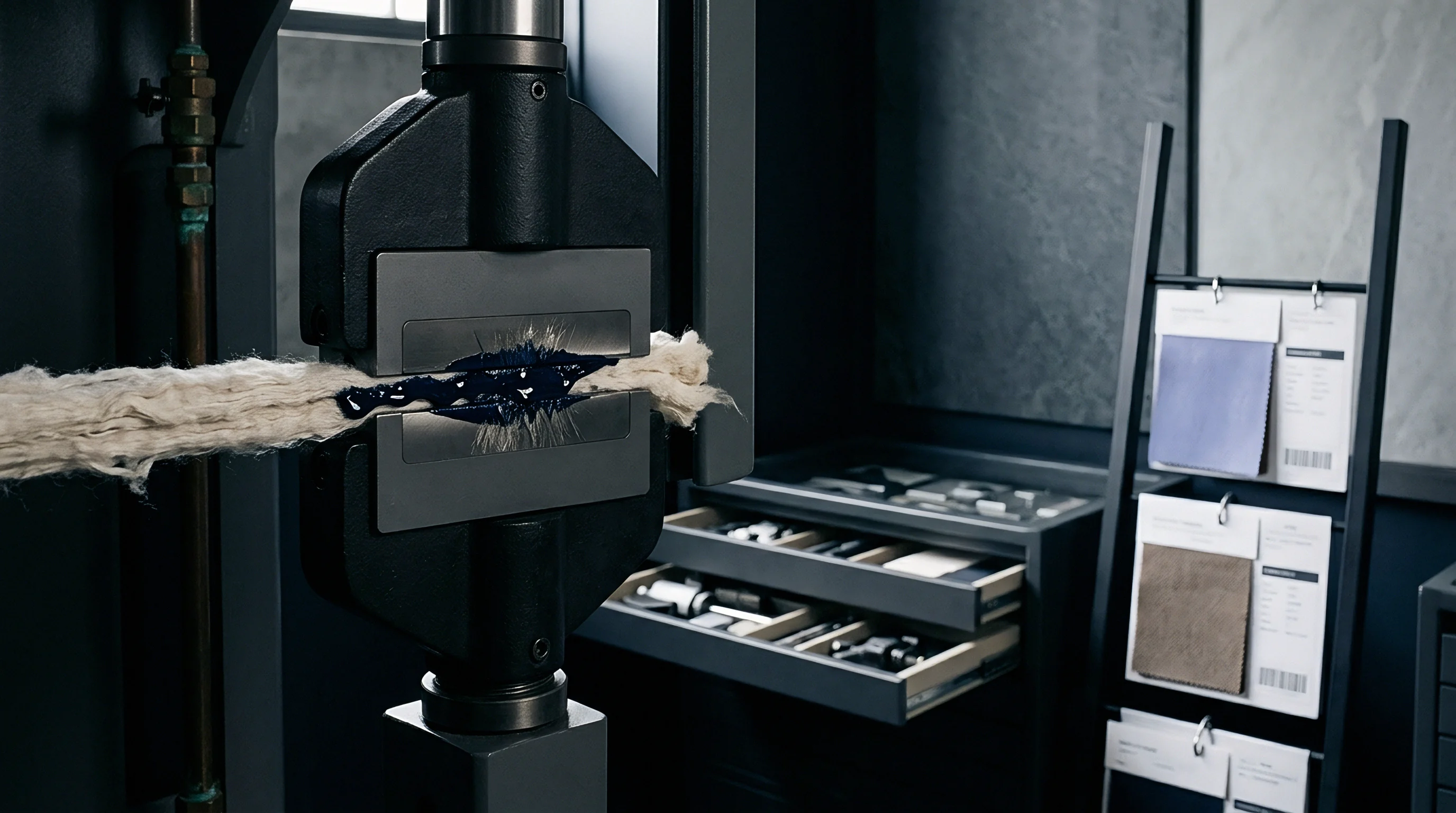
Wet cellulosic yarns exhibit a dramatic drop in tensile stiffness when saturated with aqueous solutions. Water molecules break inter-chain hydrogen bonds in amorphous regions, allowing cellulose microfibrils to slip under low tensile forces. Moisture-dependent modulus reduction makes yarn highly susceptible to irreversible mechanical stretching inside chemical impregnation tanks and washing units.
Damp Yarn Modulus and Viscoelastic Stretch
Water molecules disrupt hydrogen bonds between adjacent cellulose chains inside the amorphous regions of the fiber. This structural loosening causes cotton yarn tensile modulus to drop by 35 to 50 percent upon complete saturation. When tensile force acts on saturated yarn, elastic recovery disappears and plastic deformation begins at force levels far below dry yield points.
Cumulative draft across continuous wet processing boxes pulls out natural yarn crimp and elongates individual fibers. If draft exceeds the viscoelastic recovery threshold, yarn linear density thins permanently, reducing yarn tex count. Thinner yarn exhibits lower single-end breaking force, leading to elevated warp breakage rates during high-speed air-jet or rapier weaving.
Load Cell Integration across Wet Processing Zones
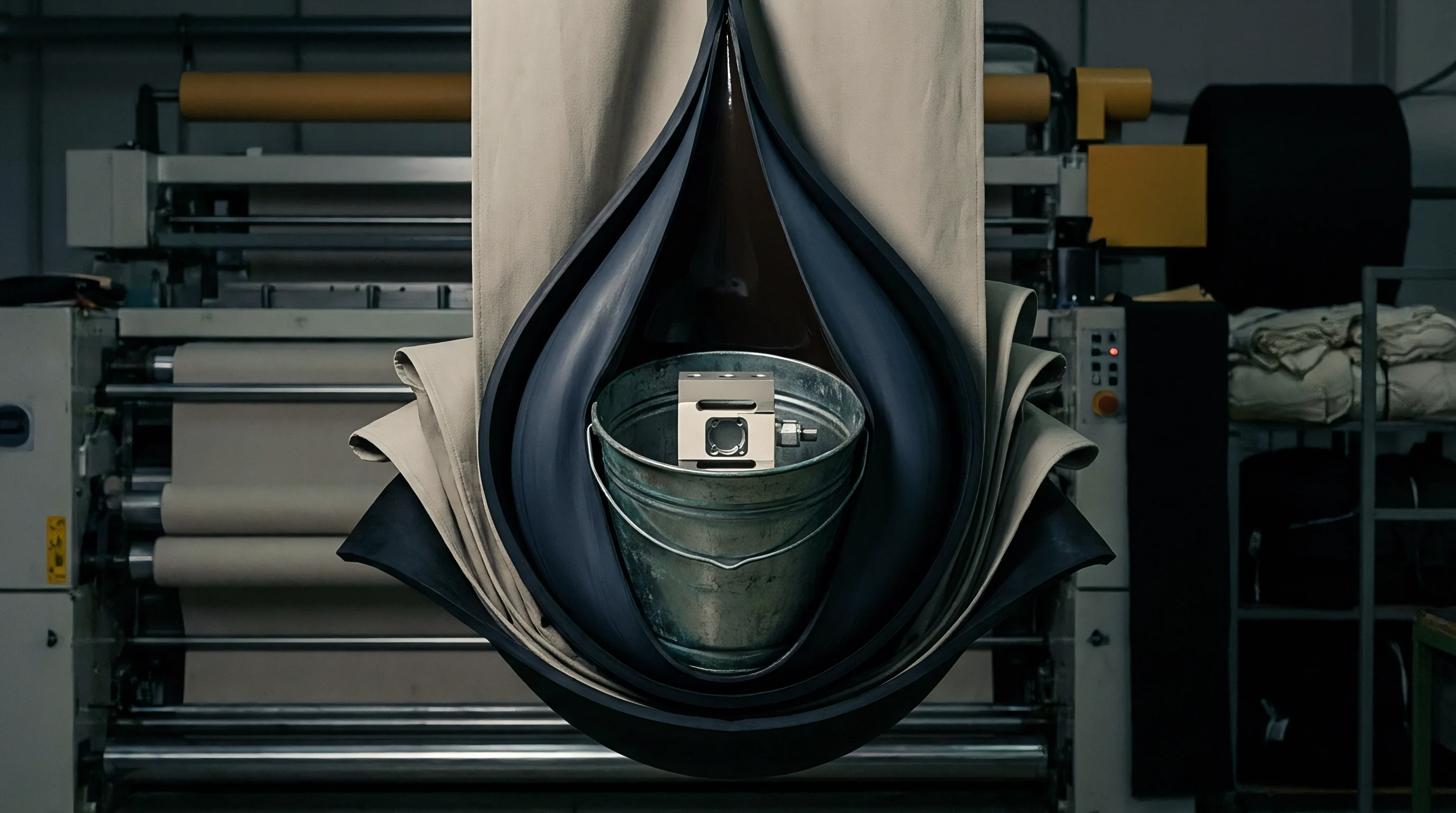
Driven rolls positioned between chemical boxes isolate individual sections of the continuous dyeing machine. Multi-motor drive systems driven by modern variable frequency inverters control roller surface speed precisely. Dead-weight or pneumatic dancer arms, alongside S-beam load cells, continuously monitor warp sheet tension between adjacent nip rolls.
Dynamic speed trim algorithms adjust roll frequency in real time, compensating for yarn length changes resulting from thermal expansion or chemical swelling.
Splitting the machine into independent drive zones prevents tension accumulation. Tension spikes originating in the creel do not transfer into the wet chemical baths if intermediate driven feed rolls isolate the warp sheet. Operating each wet box at near-zero tension (0.05 to 0.10 cN/tex) allows yarn fibers to relax during chemical penetration, preserving inherent fiber elasticity for subsequent sizing and weaving stages.

Structural Recovery and Elastic Limits
Exceeding the yield point of wet yarn causes irreversible structural lengthening. To analyze the mechanical impact of multi-zone tension mismanagement, consider a technical calculation tracing yarn properties across a continuous slasher dye range.
Assume a bulk order running a 100 percent ring-spun cotton warp sheet consisting of 4,500 ends with a nominal yarn count of 30 tex (Ne 19.7). Total dry warp sheet strength equals 540 kg-force at break, with a nominal dry elastic modulus of 450 cN/tex. The continuous range operates at 35 metres per minute across six wet processing boxes.
During operation, total machine draft across all wet zones is set at 3.2 percent stretch due to miscalibrated driven nip roll speeds, compared to a target maximum draft limit of 1.5 percent.
Under 3.2 percent cumulative draft, total length extension over a 5,000-metre warp set equals 160 metres of excess stretch. Wet yarn modulus in the caustic reduction bath drops to 220 cN/tex. The applied mechanical tension force required to sustain 3.2 percent elongation across the 4,500 ends calculates as:
Force = Total Ends × Modulus × Strain = 4,500 × 220 cN/tex × 0.032 = 31,680 N (approx 3,230 kg-force).
This high tensile load exceeds the wet elastic limit of the saturated cotton yarn (yield strain at 1.8 percent). Consequently, 1.4 percent of the applied stretch represents permanent plastic deformation. The resulting yarn linear density drops permanently from 30.0 tex down to 29.58 tex (Ne 20.0).
Single-end tensile testing according to ISO 13934-1 reveals a 12.5 percent reduction in mean breaking force (dropping from 420 cN down to 367 cN) and a 22 percent drop in residual elongation at break (falling from 6.8 percent down to 5.3 percent).
Exposing wet yarn to excessive draft permanently alters physical performance markers. These structural changes directly degrade fabric mechanical parameters.
- Linear Density Thinning reduces nominal yarn count from 30 tex down to 29.58 tex, causing warp-way light weight fabric deviations against customer specifications.
- Loss of Residual Elongation drops breaking elongation from 6.8 percent to 5.3 percent, drastically lowering impact resistance against dynamic shedding loads on the loom.
- Warp Streakiness develops when irregular tension distribution across individual nip rollers creates localized count variation across the warp sheet width.
- Increased Hairiness and Pilling occurs as surface fibers break under wet abrasion and protrude from the yarn core structure.
A wet cellulosic warp sheet stretched beyond two percent cumulative elongation experiences irreversible structural damage that degrades subsequent weaving efficiency.
Keep damp cellulosic warp tension below 0.12 cN/tex throughout all wet processing zones to preserve fiber elasticity.

Equilibrium
Continuous operations demand steady chemical concentration levels across runs lasting tens of thousands of metres. Bath equilibrium represents the balance point where chemical replenishment rates match the mass of chemical dye and auxiliary agents extracted by the moving yarn sheet. Maintaining equilibrium prevents tailing, a defect where shade darkness gradually decreases or increases from the start to the end of a production beam set.
Automated chemical dosing systems utilize real-time spectrophotometric analysis and flow-meter feedback to maintain steady-state bath chemistry.
Replenishment Dosing and Dye Concentration Profiles
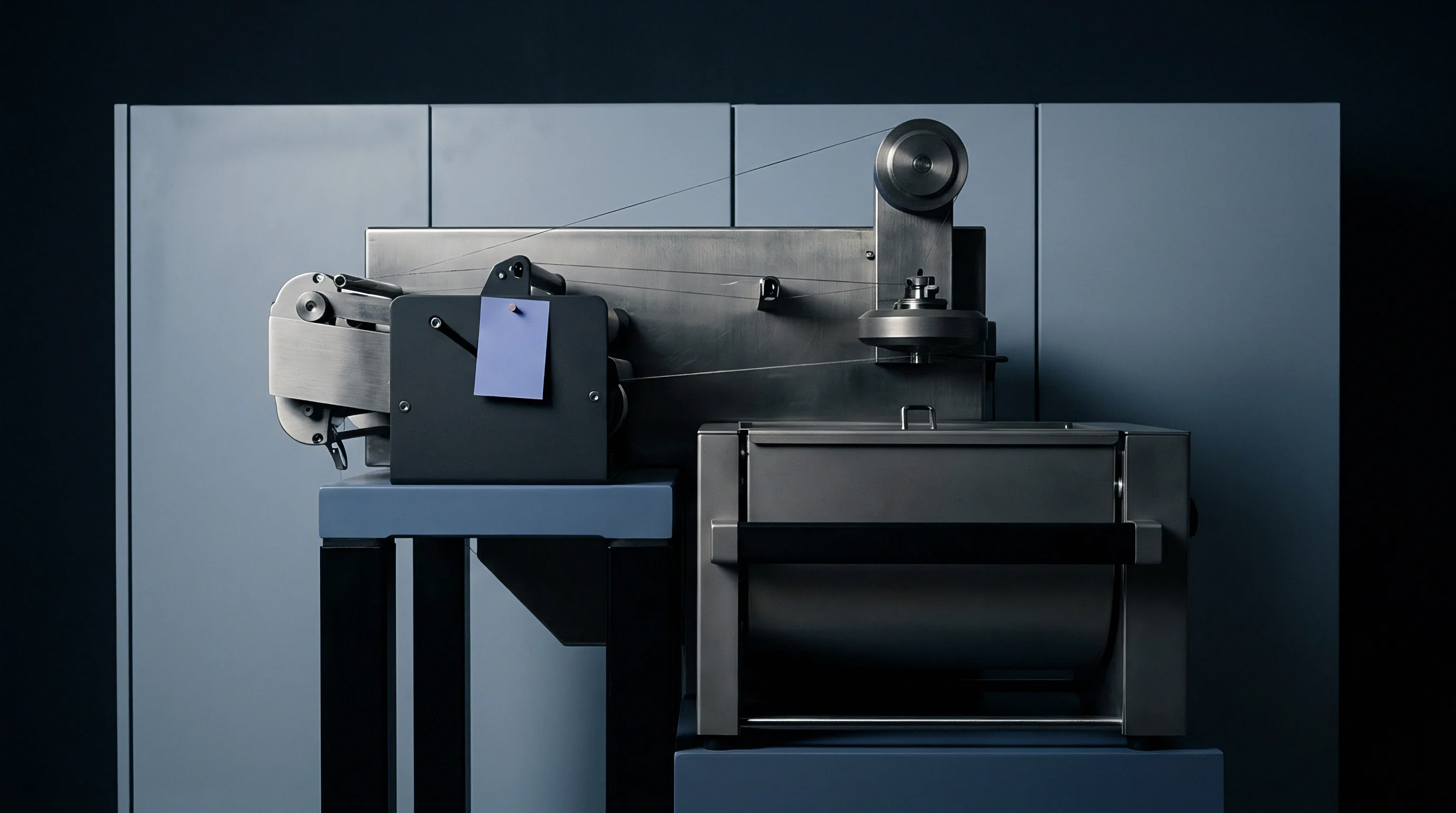
Automated liquor feed systems inject concentrated dye and reduction chemicals at rates proportional to yarn throughput. Chemical dosing calculations account for both liquor pick-up percentage and specific chemical exhaustion rates. Dye bath turnover rate dictates stability.
High bath volume increases chemical buffer capacity but delays machine response during shade adjustment interventions. Low-volume, compact troughs reduce chemical waste during style changes and enable rapid correction of shade deviations.
Online concentration monitoring utilizes continuous spectrophotometric flow cells to measure absorbance at specific dye wavelengths. When dye concentration drops below target thresholds, automated metering pumps increase feed rates of high-concentration stock solutions. Precise replenishment maintains bath concentration tolerances within ±2 percent of nominal formulas, ensuring identical shade depth across multi-day continuous production runs.
Shade Continuity Mechanics across Multi-Thousand Metre Runs
Batch to batch color consistency relies on keeping the bath absorption rate perfectly synchronized with chemical additions. Temperature variations alter bath equilibrium rapidly. Heating dye troughs with closed steam coils maintains bath temperatures within ±1.5°C of specified targets.
Fluid viscosity changes affect both boundary layer fluid dynamics and squeeze roller extraction performance.
| Parameter | Target Standard Setting | Operational Control Limit | Measurement Method / Instrument | Commercial Risk of Deviation |
|---|---|---|---|---|
| Redox Potential (ORP) | -800 mV | -760 mV to -840 mV | In-Line Pt-Ag/AgCl Combination Electrode | Insufficiency causes ring-dye oxidation failure |
| Caustic Soda (Alkalinity) | 20 g/L | 18 g/L to 22 g/L | Continuous Acid-Base Titration Flow Cell | Pre-crystallization of leuco dye; spot defects |
| Bath Temperature | 85°C | 83.5°C to 86.5°C | RTD Pt100 Thermal Sensor in Trough Recirculation | Viscosity change; wet pick-up variation |
| Warp Sheet Draft | 1.2% | 0.8% to 1.5% | Multi-Axis Optical Shaft Encoder Differential | Loss of yarn elasticity; high loom breakage rates |
| Shade Variance (Delta E) | Target Match | Delta E < 0.8 (CMC 2:1) | Inline Spectrophotometer (D65/TL84/A Illuminants) | Batch rejection; panel shade variation in garments |
Inline spectrophotometric tracking provides real-time concentration metrics, preventing cumulative shade drift across continuous warp production runs.
How far can automated dosing control squeeze nip adjustments before mechanical wear on dynamic roll seals invalidates real-time chemical replenishment calculations?