Continuous Pad Dyeing Interfacial Evaporation Control Mechanics
Precision control of interfacial evaporation in continuous pad dyeing requires matching mechanical dewatering with infrared pre-drying to eliminate dye migration.
Capillary
Continuous pad dyeing forces liquid dye solution into the interstices of woven or knitted structures under mechanical pressure. The pad nip sets the initial boundary condition. Right after the pad mangle, liquid occupies the void spaces between filaments and yarns, forming a continuous wet film across the fabric thickness.
Fluid transport inside this porous medium follows capillary gradients dictated by pore diameter, yarn structure, and surface tension. As wet fabric enters the drying zone, liquid evaporates from outer surfaces exposed to air, creating a pressure differential between surface fluid and the liquid reservoir inside the yarn core.
As surface water turns to vapor, capillary pressure draws fluid from the interior toward the outer boundaries. Liquid flow velocity depends directly on the surface evaporation rate and the square of the capillary pore radius. Fine-denier yarns and high-density woven constructions contain smaller inter-fiber capillaries that generate higher capillary pressures than coarse, open structures.
This fluid flux moves dissolved dye molecules and suspended pigment particles toward the surface, concentrating solute at the evaporation interface.
Liquor evaporation exceeding 1.2 grams per square metre per second at the pre-dryer inlet induces measurable particulate migration in woven cotton fabrics above 65 percent wet pick-up.
Substrate construction parameters determine how much mobile liquid is retained after padding. Wet pick-up percentage defines the total mass of liquor held relative to bone-dry fabric weight. High wet pick-up values increase free liquid volume in macro-pores between yarns, extending the window during which capillary transport stays active.
Lowering wet pick-up reduces macro-pore liquid volume, confining remaining liquor to micro-pores inside the yarn bundle where fluid movement meets higher hydraulic resistance.
| Substrate Construction | Mean Capillary Radius (microns) | Critical Moisture Content (percent) | Liquid Transport Velocity (mm/s) | Particulate Migration Risk Level |
|---|---|---|---|---|
| Cotton Woven Poplin (120 gsm) | 12.4 | 32 | 1.85 | High |
| Polyester-Cotton Twill 65/35 (220 gsm) | 18.1 | 26 | 2.40 | Severe |
| Microfiber Polyester Warp Knit (160 gsm) | 4.2 | 18 | 0.65 | Low |
| Linen Blend Plain Weave (190 gsm) | 28.5 | 38 | 3.10 | Critical |
Interfacial evaporation rates scale with surface air temperature, local relative humidity, and air velocity across the web. Rapid surface evaporation depletes the outer boundary layer faster than internal diffusion can replenish it, creating steep concentration gradients. Dye particles carried by convective flow accumulate at the evaporation front.
Uniform liquor pickup combined with low wet pick-up squeegee pressure establishes the baseline distribution required before thermal energy enters the web.

Migration
Dye molecules and insoluble pigment particles remain mobile within the liquid vehicle until drying reaches a critical moisture threshold. Particle movement along capillary paths redistributes colourants unevenly across the fabric cross-section and surface plane. The magnitude of this movement depends on dye molecule solubility, particle agglomeration size, liquor viscosity, and the evaporation rate at the interface.
Dye Solute Displacement Mechanics
Soluble reactive and acid dyes exist as individual molecules or small ionic clusters in the pad bath. Their small hydrodynamic radius allows them to move freely with evaporating water vectors until local saturation precipitates the dye onto the fiber surface. Insoluble disperse and vat dyes exist as dispersed solid particles held in suspension by surfactant systems.
Larger dye particles experience mechanical filtration within dense fiber networks, while smaller particles travel unhindered to the surface evaporation site.
Unequal evaporation between the top and bottom faces of the fabric web produces two-sidedness. When one face dries faster than the other, fluid flows preferentially toward the higher evaporation rate, carrying dye solids to that specific surface and creating severe shading. Similarly, velocity variations across the web width drive liquid toward regions of higher heat transfer, resulting in side-to-center shading profiles.

Rheological Control via Anti-Migration Polymeric Additives
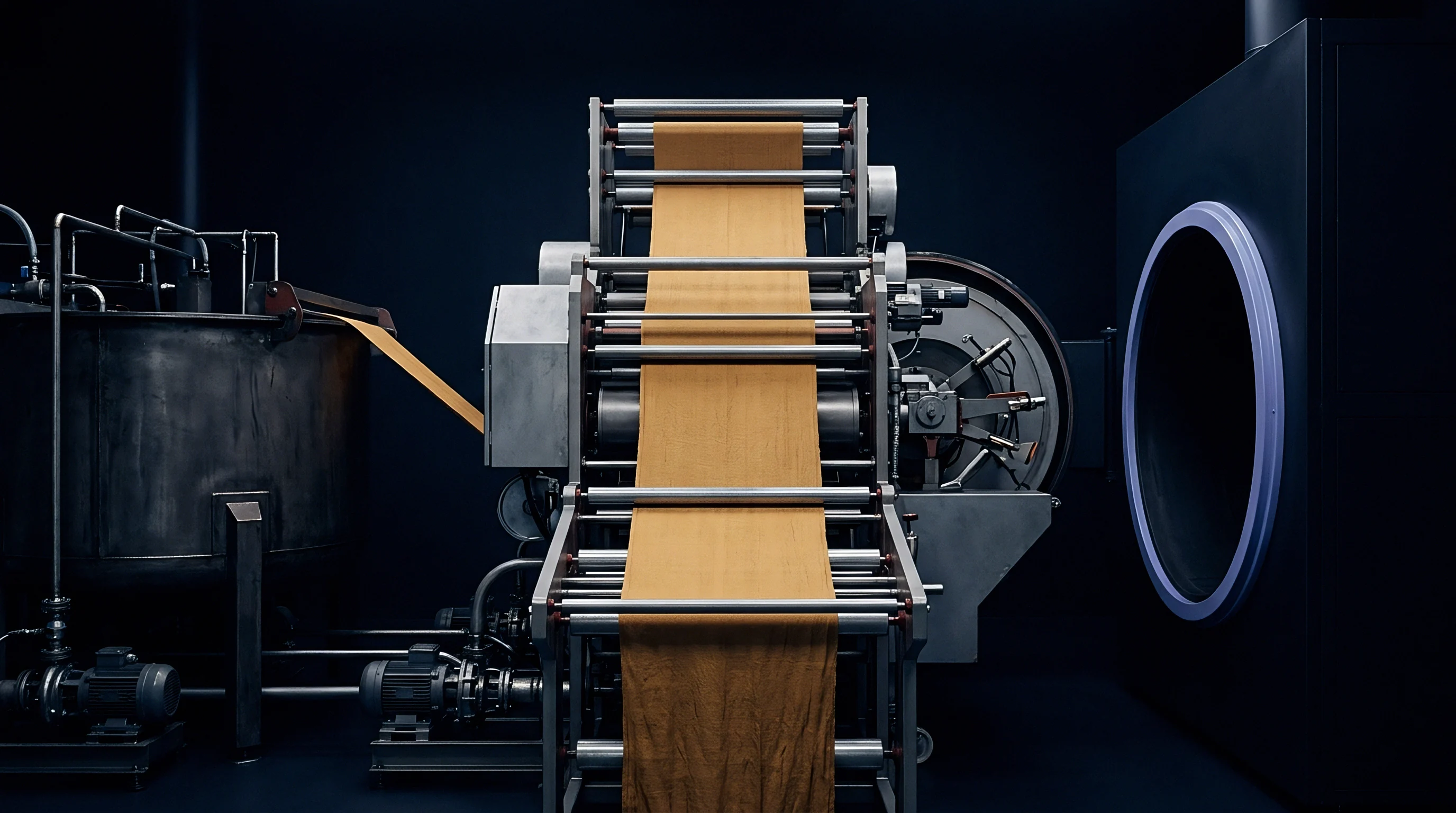
Dyehouses alter liquor rheology to inhibit fluid movement during early drying stages. Anti-migration agents, including sodium alginates, carboxymethyl cellulose, and synthetic polyacrylates, increase bath viscosity and introduce yield stress behavior. At rest or under low shear, the polymer network binds dye particles and resists capillary displacement while still allowing easy fluid delivery under high shear in the pad mangle.
Polymeric anti-migrants raise low-shear viscosity without impeding pad roll penetration during application. As water evaporates at the interface, the concentration of anti-migrant rises rapidly in the remaining liquid film. This concentration spike triggers structural gelation, locking dye particles in place before substantial displacement occurs.
Evaporation Rates and Intermediate Migration
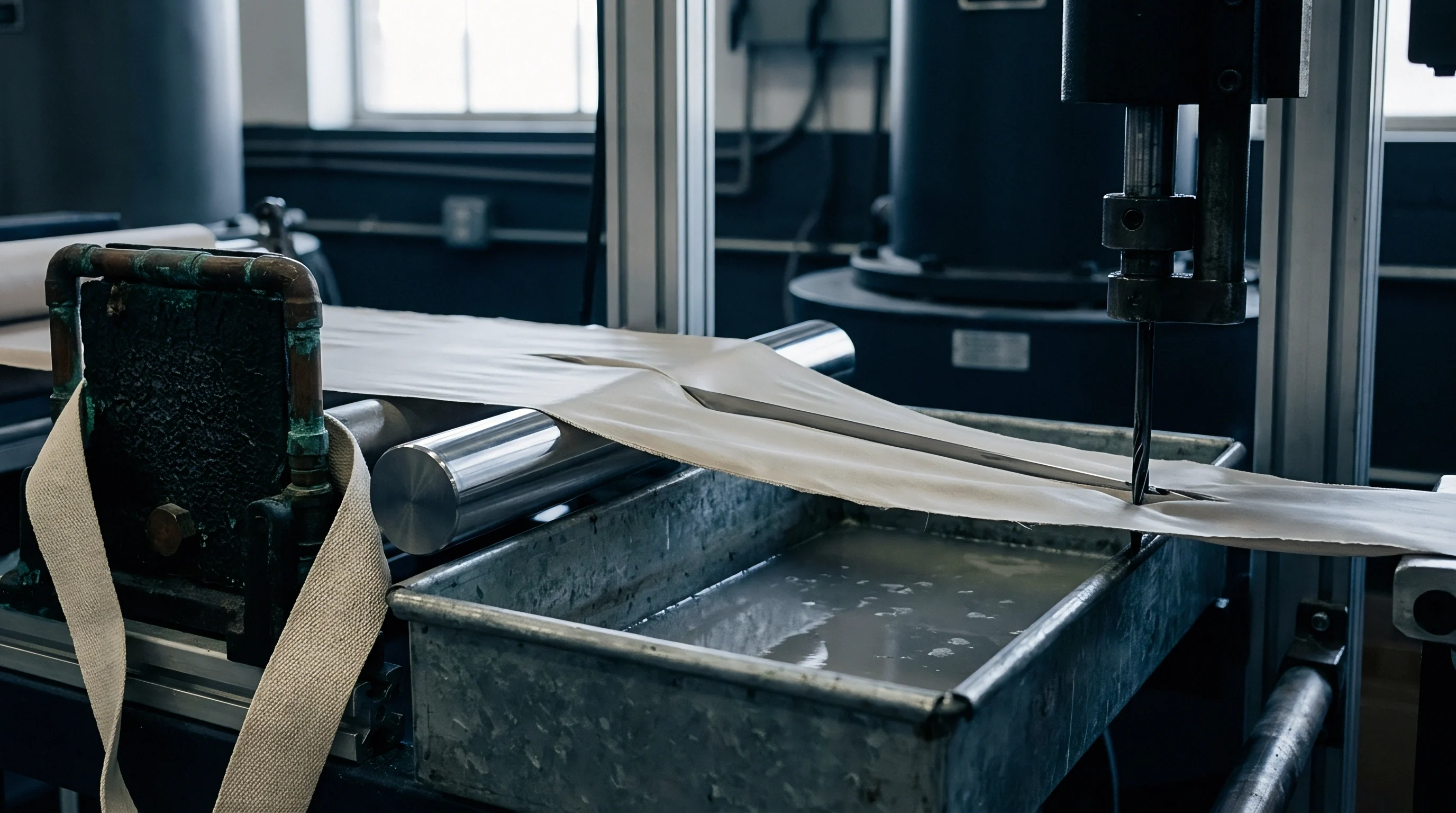
Evaporation rate dictates the duration of the critical drying phase. This critical phase represents the time required to reduce fabric moisture from initial wet pick-up down to the critical moisture content, typically between 25 and 35 percent residual moisture. Below this point, liquid continuity breaks within the capillary network, halting convective fluid transport.
Standard ISO 105-J03 color evaluation mandates a maximum delta E threshold of 0.8 across the full usable width of padded bulk goods.
- Side-to-center listing arises from uneven thermal energy distribution across the width of the heating zone, causing dye solids to accumulate near the web center.
- Face-to-back two-sidedness develops when convective air streams hit one side of the substrate faster than the opposite surface.
- Warp stripe streaking originates from localized variations in yarn structural density that accelerate fluid velocity along specific end counts.
- Surface frosting unlevelness occurs when particulate aggregates precipitate onto outer filament crowns prior to bath fixation.
Accelerating evaporation without stabilizing liquor rheology amplifies particulate accumulation at the surface. Maintaining controlled, low-evaporation conditions during initial moisture removal suppresses liquid transport vectors instead. Inadequate anti-migrant dosage can ruin an entire bulk run through unlevel shading across the usable roll width.

Radiation
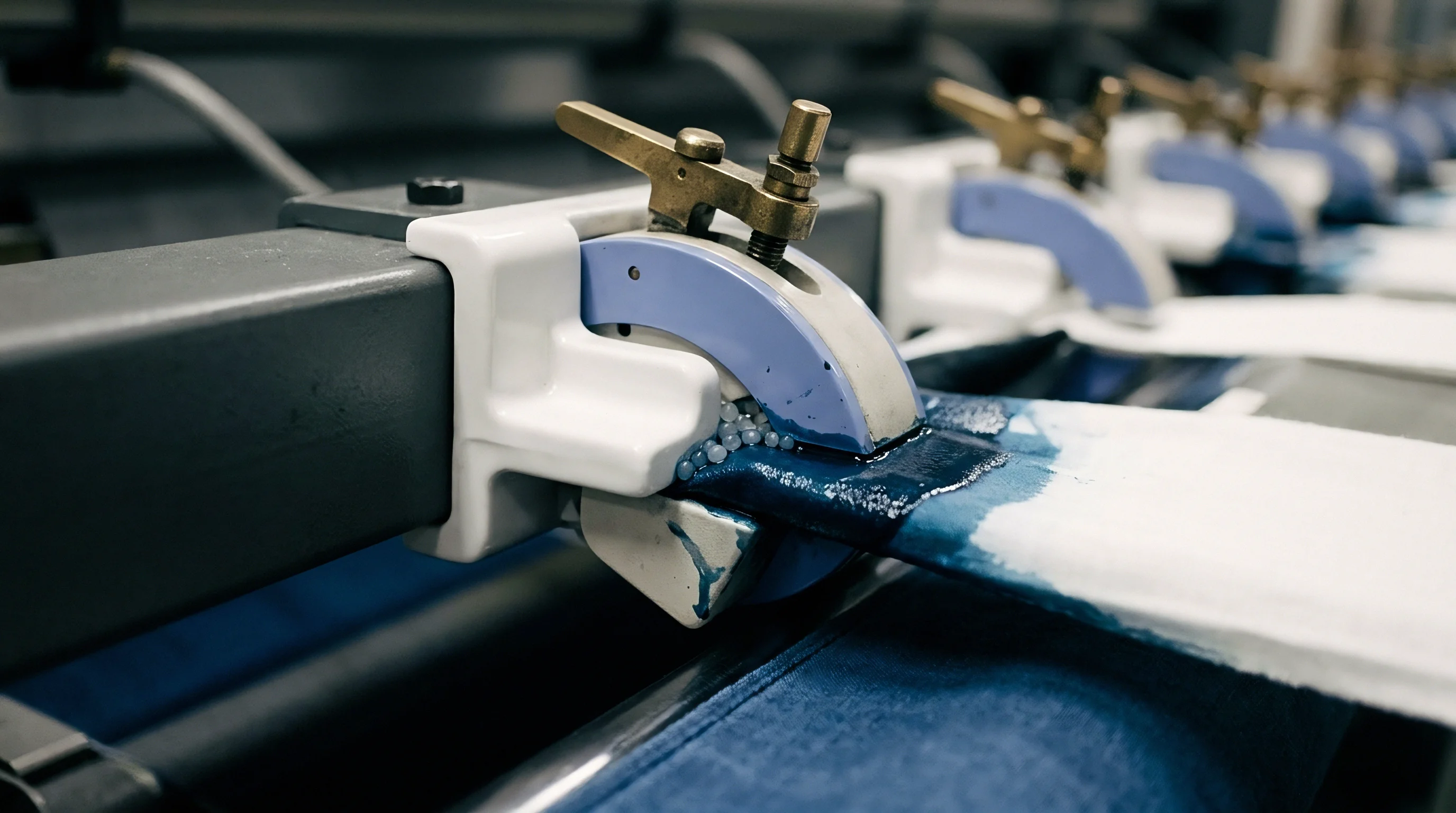
Non-contact thermal drying units apply electromagnetic energy directly to the water molecules suspended within the wet web. Infrared pre-drying systems transfer heat to the padded liquor without relying on turbulent convective air currents that physically disturb the liquid film. Absorbed radiant energy elevates internal liquor temperature uniformly, accelerating moisture vaporization throughout the fabric depth.
Electromagnetic Energy Absorption Profiles
Water exhibits strong electromagnetic absorption bands in the medium-wave infrared spectrum, specifically between 2.5 and 3.5 micrometres. Medium-wave gas infrared emitters generate radiant wavelengths matching these water absorption peaks. Energy transfers directly into the aqueous phase, causing molecular vibration and volumetric heating of the liquor without overheating the underlying textile substrate.
Short-wave infrared emitters operate at higher filament temperatures and peak wavelengths around 1.2 micrometres. Short-wave radiation penetrates deeper into dense textile structures, but a portion of the energy passes through light-weight fabrics unabsorbed. Heat reaches the wet core directly, and matching the emitter emission spectrum to the moisture absorption profile maximizes thermal conversion efficiency inside the wet zone.
| Emitter Configuration | Peak Wavelength Range (µm) | Energy Transfer Efficiency (%) | Evaporation Rate (g/m²·s) | Thermal Response Time (s) |
|---|---|---|---|---|
| Gas Premix Infrared Burners | 2.8 ~ 3.2 | 68 | 0.95 | 4.0 |
| Electric Short-Wave Tungsten Emitters | 1.0 ~ 1.4 | 52 | 1.45 | 1.0 |
| Electric Medium-Wave Carbon Emitters | 2.0 ~ 2.6 | 64 | 1.10 | 2.5 |
Intermediate Evaporation Zone Thermal Balancing
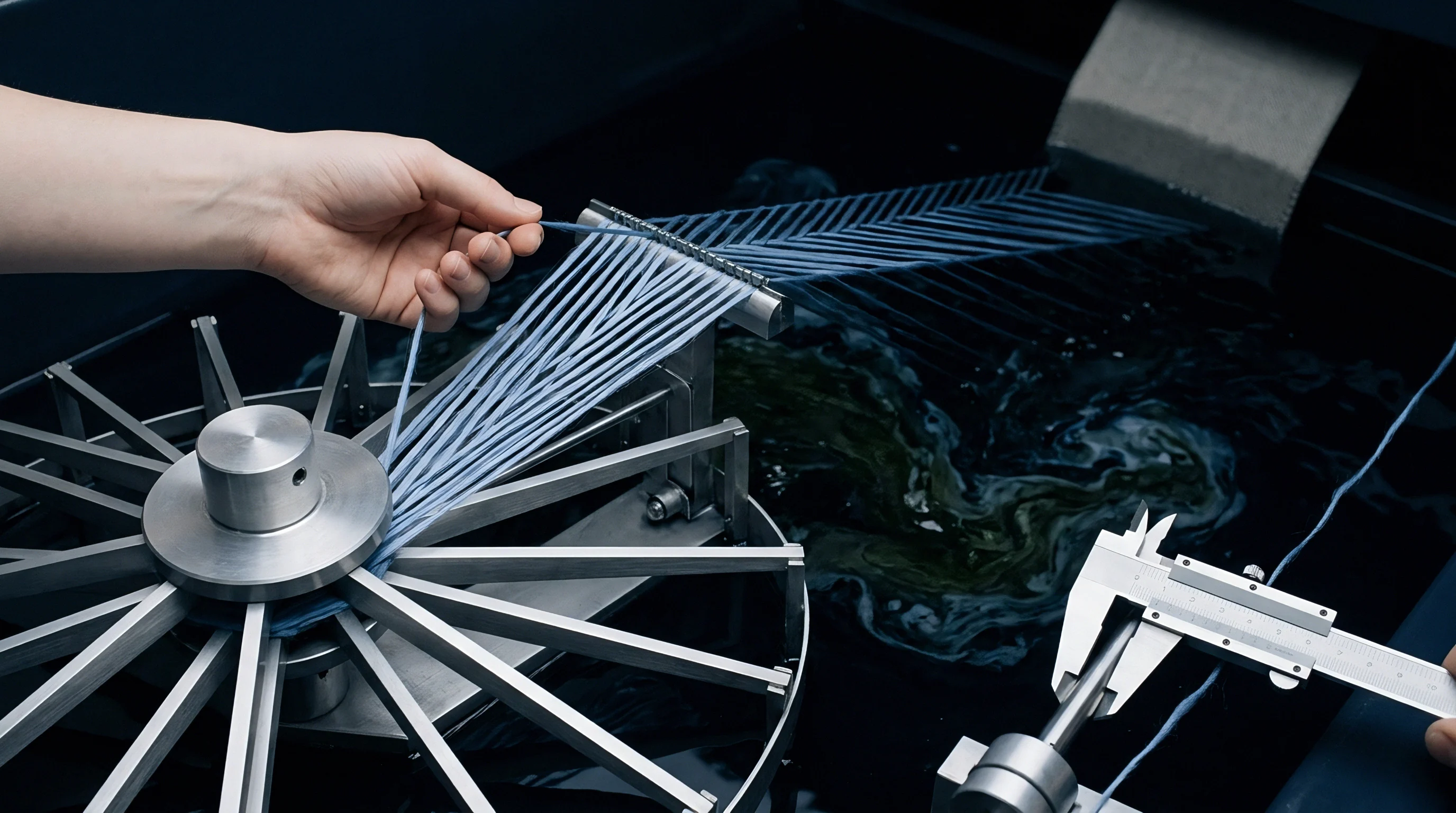
Infrared pre-drying units sit immediately after the pad mangle and before the hot flue or drying cylinders. Sensors measure surface exit enthalpy. The primary operational goal is evaporating 30 to 50 percent of the padded water content while fabric remains suspended in air without guide roll contact.
Uniform heat absorption across both fabric faces prevents differential fluid movement before the liquor reaches its critical moisture boundary.
Controlling the infrared pre-drying stage requires systematic calibration and adjustment across the line.
- Measure incoming fabric temperature and moisture content across five points of the web width using calibrated non-contact infrared pyrometers.
- Adjust pre-dryer emitter zone output to deliver uniform heat intensity matching the moisture absorption curve of the specific fibre blend.
- Regulate exhaust fan air velocity to maintain positive vapor extraction without creating turbulent air currents against the web surface.
- Verify that total water removal inside the non-contact zone reduces wet pick-up below thirty-five percent before the cloth enters mechanical contact rolls.
Edge-to-center shade variation stems from thermal air velocity imbalances inside the pre-dryer tunnel rather than incoming yarn tension fluctuations.
Enclosure
Drying chambers isolate the moving fabric web within controlled atmospheric conditions of temperature, air velocity, and absolute humidity. Hot flue dryers pass fabric continuously over upper and lower guide rollers inside an insulated housing. Controlling the micro-climate within this environment prevents surface skinning and suppresses boundary layer evaporation gradients during the secondary drying phase.
Boundary Vapor Pressure Maintenance
High air temperatures inside an uncontrolled enclosure cause rapid surface evaporation, precipitating early migration defects. Operating the drying chamber with elevated absolute humidity reduces the vapor pressure differential between the fabric surface and the surrounding air. Lowering this pressure gradient retards surface evaporation, allowing thermal energy to distribute evenly through the wet yarn bundle before rapid mass transfer begins.
Maintaining wet-bulb temperatures between 60 and 70 degrees Celsius establishes an equilibrium evaporation zone. Under these conditions, fabric surface temperature remains constant at the wet-bulb temperature as long as free water remains available for evaporation. Managing enclosure humidity preserves fluid continuity within the web ~ where the boundary layer thickens near selvedges ~ until anti-migrants complete their thermal gelation mechanism.
Air Nozzle Geometry and Velocity Gradients
Convective air distribution systems inside the drying chamber use slotted or perforated nozzles to deliver heated air onto the moving fabric web. High air velocity breaks down the stagnant boundary layer of water vapor, increasing the drying rate. Excessive air velocity applied to high-moisture fabric forces liquid movement across the weave structure.
Excessive air velocity at the entry of the hot flue disturbs the liquid film before thermal equilibrium forms across the web.
As pressure drops across the air nozzles, symmetrical nozzle geometry ensures identical air volumes impact both top and bottom fabric faces simultaneously, neutralizing convective forces that drive two-sidedness defects.
- Symmetrical nozzle alignment balances top and bottom air pressure to hold the fabric web centered between opposing ventilation ducts.
- Humidity sensor calibration maintains wet-bulb temperatures within two degrees of specified setpoints to slow initial surface desiccation.
- Variable speed exhaust control prevents cold air infiltration through entrance and exit slots of the drying chamber.
- Non-contact guide rollers support the web only after moisture levels drop below the critical particulate mobility limit.
Standard purchase specifications require continuous drying logs to show relative humidity variations under four percent across bulk dye lots, binding mills to full re-dye costs when thermal drift causes shade rejection.
Economics
Finishing line cost calculations balance energy consumption, chemical auxiliary additions, machine line speed, and scrap rates from shade off-standards. Controlling interfacial evaporation requires capital investment in precision drying machinery and recurring chemical expenditures for anti-migration polymers, as dye waste drives total finishing cost.
Energy and Yield Cost Dependencies
Thermal evaporation of water requires 2,260 kilojoules per kilogram at atmospheric pressure. Radiant infrared pre-drying carries higher electrical or gas energy costs per kilogram of evaporated water than convective hot flue drying. Because energy consumption scales with water load, applying high thermal inputs solely in an infrared zone increases finishing costs per metre.
Mechanical fluid removal prior to thermal drying offers significant economic benefits. Vacuum extraction systems reduce initial wet pick-up from 70 percent down to 45 percent on heavy woven structures, halting active capillary transport sooner. Removing this water mechanically eliminates thermal energy requirements during subsequent drying stages, lowering line operation costs while shrinking the window for dye migration.

Worked Production Run Economics
Consider a typical industrial processing run of 50,000 metres of 220 gsm cotton twill dyed with reactive dyes. Standard pad-dry operations using standard nip extraction achieve 70 percent wet pick-up, requiring the thermal removal of 154 grams of water per square metre. Adding a synthetic polyacrylate anti-migrant at 15 grams per litre costs $0.018 per fabric metre.
Standard thermal drying energy consumes $0.062 per metre, yielding a baseline finishing processing cost of $0.080 per metre with an off-standard shade rejection rate averaging 4.2 percent.
Integrating a high-efficiency vacuum extraction unit with gas infrared pre-drying reduces incoming wet pick-up to 48 percent prior to the hot flue. Evaporation mass drops to 105.6 grams of water per square metre. Chemical anti-migrant concentration reduces to 8 grams per litre due to diminished fluid mobility, lowering chemical additive costs to $0.009 per metre.
Vacuum mechanical energy adds $0.004 per metre, while total thermal energy consumption decreases to $0.041 per metre due to the reduced water load.
| Processing Configuration Parameters | Initial Wet Pick-Up (%) | Thermal Energy Cost (USD/m) | Chemical Additive Cost (USD/m) | Off-Standard Rejection Rate (%) | Total Landed Finishing Cost (USD/m) |
|---|---|---|---|---|---|
| Configuration A: Standard Nip + Hot Flue | 72 | 0.065 | 0.021 | 4.5 | 0.178 |
| Configuration B: Standard Nip + IR Pre-Dry + Hot Flue | 70 | 0.078 | 0.018 | 1.2 | 0.121 |
| Configuration C: Vacuum Extraction + IR + Hot Flue | 48 | 0.041 | 0.009 | 0.6 | 0.062 |
| Calculations based on 50,000 metre lot size, 220 gsm cotton twill, utility rate $0.12/kWh, substrate base gray fabric cost $1.80/m. Off-standard cost includes stripping, re-dyeing, and downgraded scrap allowances. | |||||
Implementation of high-efficiency mechanical dewatering combined with zoned radiant pre-drying cuts scrap losses from 4.2 percent to 0.6 percent. On a 50,000-metre production lot, this defect reduction saves 1,800 metres of fabric scrap valued at $1.80 per metre in raw substrate costs, yielding $3,240 in direct material savings. Net landed finishing cost decreases from $0.178 to $0.062 per metre, producing total savings of $5,800 per bulk production run.
Operational balance between mechanical moisture extraction, chemical yield stress modification, and thermal drying profiles determines both the visual levelness of the dyed substrate and the final landed cost per metre.