Optimizing Chemical Anti-Migrants and Infrared Pre-Drying for Continuous Dyeing
Optimizing pad liquor anti-migrants with 2.9-micron infrared pre-drying stabilizes dye particles, preventing side-center shading and face-to-back migration.
Drift
As heat transfers to wet cotton or synthetic fibers, liquid moving through woven yarns carries unfixed colorant toward the fabric surface. In continuous pad-dyeing, cloth leaves the pad mangle saturated with aqueous liquor containing dissolved dyes, disperse particles, wetting agents, and auxiliary chemicals. Rapid evaporation from the face and back surfaces inside the heated drying zone creates capillary flow from the yarn interior toward the outer boundary where vapor escapes.
Suspended dye molecules and insoluble particles travel along these channels, concentrating at surface contacts. This migration produces significant shade defects, including face-to-back shading, side-center-side variation, and end-to-end tone shifts.
Suspended insolubles and dissolved molecules move through water channels at speeds matching the rate of moisture loss. Dye migration velocity depends directly on substrate capillary structure, post-nip wet pick-up percentage, colorant particle size, and thermal evaporation rate. Heavy wovens made with tightly twisted ring-spun yarns hold large volumes of inter-yarn water, extending the liquid pathways that prolong migration during initial heating.
Higher wet pick-up expands the liquid film around individual fibers, lowering capillary resistance and pushing dye particles faster toward high-temperature evaporation zones. Disperse dye particles (0.2 to 2.0 microns) behave differently from fully solubilized reactive dyes: solubilized dyes move by ionic diffusion and bulk fluid flow, while disperse particles migrate mainly through hydrodynamic drag within the evaporating water stream.

Capillary Evaporation Mechanics
Heat applied to wet cloth triggers surface vapor formation, setting up a moisture gradient across the fabric cross-section. As the outer fiber layer dries first, capillary suction continuously draws water from the wetter core. In a conventional hot flue or cylinder dryer lacking intermediate pre-drying, high-velocity hot air striking the wet fabric generates steep thermal gradients.
Water evaporates at the surface faster than dye molecules can diffuse back inward, concentrating colorant on the crowns of surface yarns. This surface concentration changes light scattering and reflection, causing shade shifts and poor crock fastness. On polyester/cotton blends dyed with disperse and reactive mixtures, differing migration rates between the two dye classes cause two-sided shade variation and severe frosting on finished goods.
| Fabric Construction | Fiber Composition | Weight (gsm) | Pad Wet Pick-Up (%) | Migration Index (AATCC 140) | Shade Variation (DE ISO 105-J03) |
|---|---|---|---|---|---|
| Plain Weave Poplin | 100% Combed Cotton | 115 | 62 | 4.2 | 0.35 |
| 3/1 Left-Hand Twill | 65/35 Poly/Cotton | 240 | 68 | 2.1 | 1.28 |
| 2/2 Right-Hand Twill | 100% Ring-Spun Cotton | 310 | 75 | 1.6 | 1.85 |
| Canvas Duck | 100% Carded Cotton | 400 | 82 | 1.2 | 2.40 |
| Methods note: Migration Index rated 1 to 5, where 5 indicates zero dye migration under AATCC Test Method 140. DE values measured under Illuminant D65/10 deg. | |||||
Controlling liquid transport requires shortening the period of bulk water flow, starting with pad pickup at the squeeze rolls. As wet fabric pick-up drops from eighty percent down to thirty-five percent, the continuous liquid film around the fibers breaks into isolated capillary droplets. At this critical moisture threshold, fluid transport stops, locking suspended dye particles in place before convection currents or hot cylinder surfaces touch the web.
Engineering a continuous dyeing range relies on achieving this quick transition from a continuous liquid matrix to immobile moisture pockets; failing to halt fluid movement during initial evaporation causes un-level dye distribution that forces a complete strip and redye across the entire lot.
Pad liquor pick-up above sixty-five percent on 100% combed cotton poplin elevates migration velocity past acceptable thresholds during hot flue entry.

Chemistry
Polyelectrolytes in pad bath formulations alter water mobility by building an interconnected gel network within fiber interstices. Chemical anti-migrants modify the rheological behavior of the padded liquor without compromising dye solubility, dye-fiber affinity, or bath stability. Added at 10 to 30 grams per liter, these water-soluble polymers create a yield stress in the aqueous medium, raising low-shear viscosity enough to restrict capillary movement of dye particles during surface evaporation.
When heated, many modern anti-migrants undergo thermal gelation or structural flocculation, forming a pseudoplastic network that binds water and locks suspended dye particles in place before thermal convection disrupts shade uniformity.
Selecting an anti-migrant requires balancing its chemical structure against the ionic charge of the dye system, electrolyte sensitivity, and mechanical shear in the pad mangle trough. Commercial anti-migrants fall into three main polymer categories, each with distinct operational boundaries in continuous dyeing:
- Sodium Alginate Polysaccharides provide excellent bath stability and easy washing off in reactive dyeing, but exhibit shear thinning under high pad nip pressures and sensitivity to divalent calcium ions.
- Polyacrylate Copolymer Salts generate high viscosity at low active concentrations and form strong thermal gel structures, yet demand precise pH control between 7.5 and 8.5 to maintain optimum chain expansion.
- Modified Polyacrylamides yield high molecular weight networks capable of arresting heavy disperse dye particles in synthetic blend processing, though excessive dosage risks reducing color yield and causing padding speckiness.
Polymer Viscosity Modification
The rheological behavior of pad liquor across varying shear rates dictates both wetting efficiency at the nip and flow resistance during drying. Inside the pad trough and nip contact zone, shear rates exceed 10,000 reciprocal seconds, requiring low dynamic viscosity for rapid, uniform penetration into yarn centers. Once fabric exits the squeeze rolls, the shear rate drops near zero reciprocal seconds, allowing an optimized anti-migrant to recover high static viscosity and resist capillary suction.
Evaluating rheological performance involves sweeping viscosity across shear rates from 0.1 to 1000 s^-1 on a rotational viscometer. Anti-migrants with pronounced pseudoplastic behavior permit uniform padding at high line speeds while maximizing immobilization during drying. If mechanical shear in the pad pump circuit degrades the polymer structure, loss of structural viscosity leads to severe migration once wet cloth enters the drying zone.
Charge Interactions and Shear Stability
Anionic additives repel negatively charged disperse or reactive molecules, preventing premature agglomeration under high pad pressures. Non-ionic and anionic anti-migrants dominate continuous dyeing because they pair reliably with disperse, reactive, and vat colorants. Cationic anti-migrants precipitate immediately when mixed with anionic reactive dyes or sulfonated dispersing agents, ruling them out for standard pad baths.
Formulations must also tolerate heavy loads of inorganic salts like sodium sulfate or sodium chloride used in reactive pad-batch or pad-dry-thermosol processing.
Non-ionic sodium alginate binders maintain uniform viscosity under high pad nip shear better than un-modified synthetic polyacrylates.
Excessive anti-migrant dosing introduces distinct quality failures on the finishing floor. High polymer concentrations drive pad liquor viscosity above the penetration limit, leaving dye on the fabric surface instead of inside the yarn core. This surface ring-dyeing causes poor rub fastness, lower tensile strength utilization, and severe frosting under end-use mechanical abrasion.
While rheology modifiers are intended to eliminate shade variation, breakdown under high pad pressure frequently leads to shade defects in bulk runs.

Emitter
Medium-wave radiant heating at 2.2 to 3.2 microns matches the molecular resonance frequencies of water. Infrared pre-drying systems placed right after the pad mangle deliver non-contact thermal energy directly to the wet web, evaporating surface moisture without disruptive air velocity or mechanical contact. Output from IR elements interacts with moisture in the substrate, converting radiant energy into internal heat via rotational and vibrational excitation of O-H bonds.
This rapid transfer raises fabric temperature quickly, accelerating evaporation while anti-migrant chemistry holds dye particles in place.
Thermal efficiency depends on matching emitter output to water’s primary absorption bands near 1.4, 1.9, and 2.95 microns. Short-wave IR emitters running at high lamp temperatures peak around 1.2 microns; they penetrate deeply into wet fabric but show lower specific energy absorption by water. Medium-wave units operating between 800 and 1000 degrees Celsius produce peak emissions near 2.5 to 3.0 microns, aligning with water’s maximum absorption band and maximizing evaporation per kilowatt of input energy.
| Emitter Technology | Filament Temp (°C) | Peak Wavelength (µm) | Water Absorption Efficiency (%) | Response Time (s) | Evaporation Rate (kg/m²·h) |
|---|---|---|---|---|---|
| Short-Wave Tungsten Halogen | 2100 – 2400 | 1.1 – 1.4 | 35 – 45 | 1 – 2 | 22 – 28 |
| Fast Response Medium-Wave | 1400 – 1800 | 1.6 – 2.0 | 60 – 70 | 2 – 5 | 35 – 42 |
| Standard Medium-Wave Quartz | 800 – 1000 | 2.4 – 3.2 | 85 – 92 | 30 – 60 | 48 – 55 |
| Gas-Fired Catalytic IR | 450 – 600 | 4.0 – 6.0 | 70 – 78 | 120 – 300 | 30 – 38 |

Infrared Wavelength Selection
Selecting infrared hardware for continuous dyeing lines involves weighing electrical energy costs, warm-up response speed, and heat transfer efficiency. Electrical short-wave quartz lamps respond within seconds to control signals, making them suitable for ranges that stop frequently, as lamps can shut off instantly to prevent web burning. Standard medium-wave quartz tube emitters require longer response times but deliver superior moisture evaporation rates per square meter of emitter face.
Gas-fired catalytic infrared panels convert natural gas or propane into radiant heat via flameless catalytic oxidation, delivering cost-effective medium-to-long-wave thermal energy on high-capacity continuous lines without the precise air-ratio demands of open flame burners.
Operating gas-fired or electric IR pre-dryers requires maintaining a uniform distance ~ typically 100 to 200 millimeters ~ between the emitter face and the moving fabric web. Deviations in web tension or lateral flutter alter radiant intensity at the cloth, since energy density drops with the square of the distance. Air purge blowers built into the IR frame clear saturated boundary-layer vapor, preventing humidity buildup that suppresses continuous evaporation.
Radiative Energy Density
Applying targeted thermal flux across the web immobilizes the aqueous phase before fabric enters forced-air convection units. Pre-dryers must lower moisture from initial pad pick-up down to thirty or thirty-five percent wet pick-up. At this threshold, liquid mobility drops to zero, so fabric can enter hot flue dryers or contact cylinders without risk of migration.
Two-sided IR units with independent controls for face and back burners allow operators to balance evaporation across both sides of the sheet, correcting two-sided shade differences.
Shorter IR wavelengths penetrate deeply into wet yarn bundles while medium waves concentrate thermal energy at the moisture boundary.
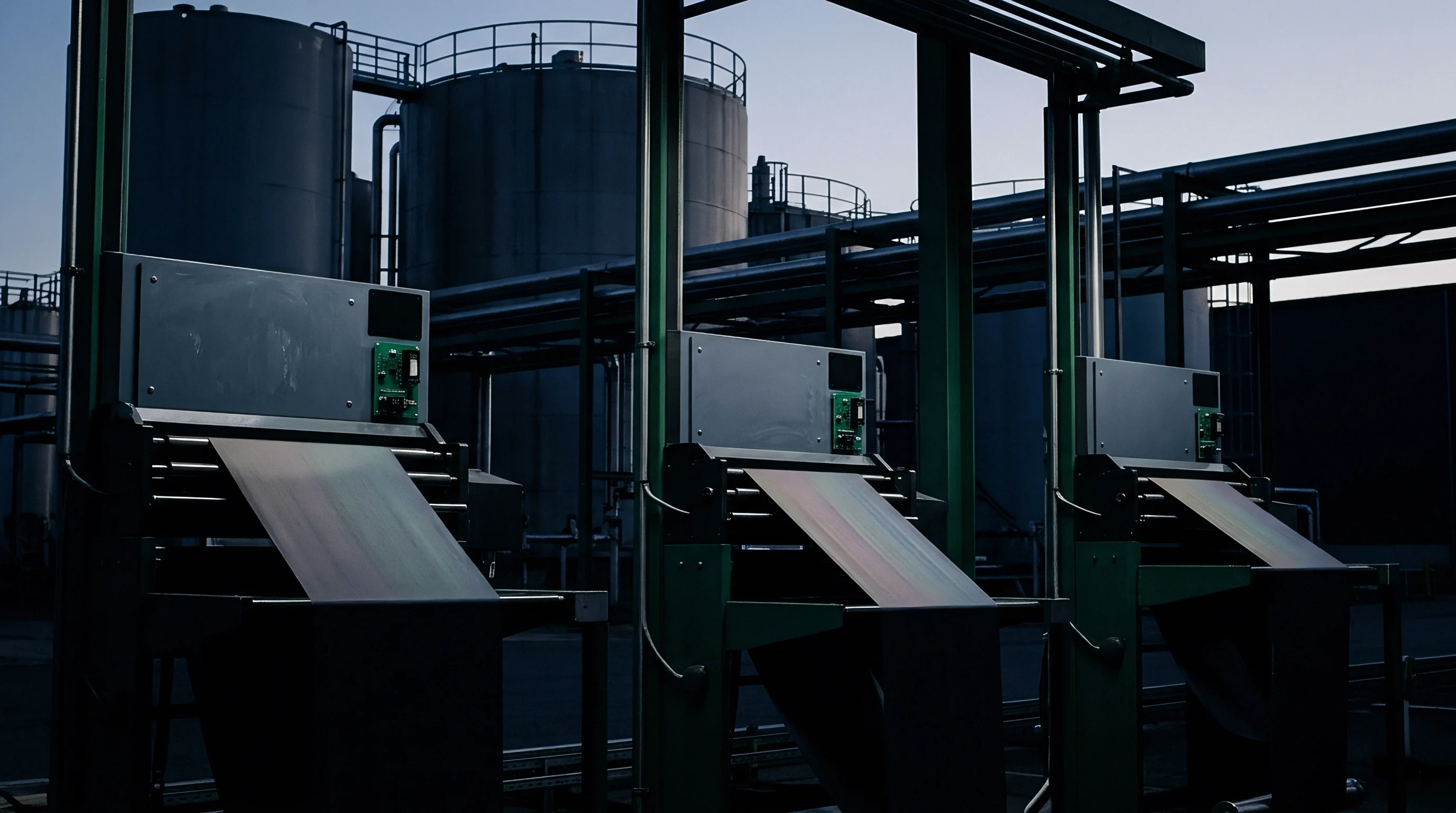
Safety systems must tie directly into line drive controls. Emergency stops, motion sensors, and mechanical burner retraction frames prevent web ignition during stoppages or outages. Placing pre-dryers close to the pad nip stabilizes dye transport before convection air hits the wet sheet.
- Fabric Speed Synchronization locks infrared burner power outputs directly to line tachometer signals, preventing fabric overheating during acceleration and deceleration cycles.
- Pneumatic Retraction Systems rotate or shift gas-fired panels ninety degrees away from the web path within 0.5 seconds of an emergency stop signal.
- Air Purge Monitoring verifies continuous positive air airflow through lamp enclosures to protect optical reflectors from chemical vapor condensation.
- Pyrometric Web Temperature Control modulates radiant energy flux based on non-contact infrared temperature sensors monitoring fabric exit temperature.
Control
Lowering residual wet pick-up to thirty percent before convection drying locks dye particles in place across the yarn cross-section. Balancing anti-migrant dosing with infrared radiant heating forms the foundation of modern continuous pad-dyeing control. Relying solely on chemical anti-migrants requires high concentrations that stiffen hand, raise costs, and build up on equipment.
Depending entirely on IR pre-drying consumes excessive power or gas and risks crusting the dye film. Combining moderate anti-migrant doses with targeted medium-wave IR achieves full particle immobilization at minimal overall cost.

Which Moisture Threshold Prevents Thermomigration before the Hot Flue?
Because fabric speed dictates residence time, moisture content exiting the infrared pre-dryer serves as the primary operational control variable. Wet pick-up must drop below the critical mobility point before the web enters the hot flue. For heavy woven cottons, this limit sits between 30 and 35 percent residual pick-up; for polyester/cotton blends, it ranges from 25 to 30 percent.
Running the pre-dryer below twenty percent moisture wastes energy, accelerates equipment wear, and risks heat-setting unfixed dyes.
Optimizing the combination of pad chemistry and radiant heat involves a structured, sequential calibration protocol on the production line.
- Determine the optimum pad nip pressure and roll hardness to establish the lowest achievable uniform wet pick-up across the left, center, and right side of the fabric web.
- Prepare lab pad baths with anti-migrant concentration steps ranging from 5 to 25 grams per liter, evaluating dynamic viscosity on a rotational viscometer to establish a target baseline.
- Pad sample swatches at bulk speed and process them through the IR pre-dryer while stepping infrared emitter power from forty percent to one hundred percent capacity in ten percent increments.
- Measure residual web moisture at the IR pre-dryer exit using non-contact microwave or high-frequency moisture sensors to map evaporation against power input.
- Evaluate dye migration on dried swatches under standard colorimetric test protocols to identify the minimum chemical and thermal inputs that achieve acceptable shade levelness.
AATCC Test Method 140 Evaluation
Laboratory assessment requires padding swatches through standard squeeze rolls and drying them to measure color distribution. Quantitative evaluation follows AATCC Test Method 140 or ISO 105-Z06. Under AATCC 140, a padded wet swatch is placed on a flat surface, covered partially by a watch glass, and dried under controlled ambient conditions.
Water evaporates only from the exposed outer area, driving dye particles toward the boundary of the covered zone. Spectrophotometric measurement of color strength (K/S under Illuminant D65) compares the shaded center to the migration edge to yield a Migration Index.
AATCC Test Method 140 evaluation rating below grade four mandates immediate pad bath reformulations and IR power recalibration.
A Migration Index of 5.0 indicates zero dye movement, while values below 3.0 point to severe migration that will show up as bulk shade defects. Plants typically target at least 4.2 for pale shades and 4.5 for deep navies and blacks. Online spectrophotometers installed at the exit of the thermosol or steam range monitor side-center-side color variation, allowing automated controls to adjust individual IR panel zones in real time.
Whether high-frequency microwave drying can match the directional control of gas-fired IR on heavy multi-fiber blends remains an open practical question.

Yield
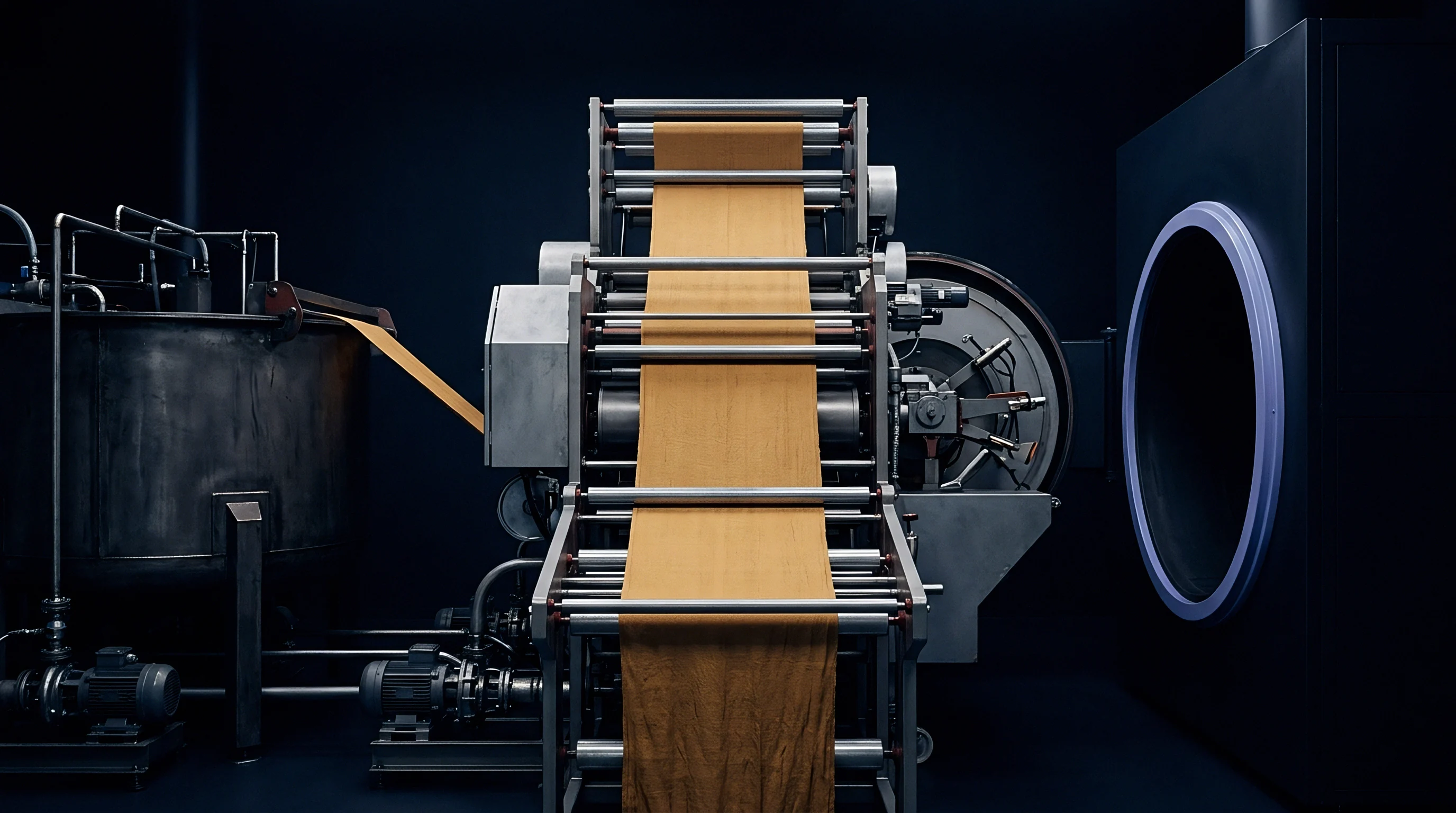
Calculating landed cost per finished meter requires weighing binder concentration against gas and electrical energy consumption. Process optimization improves commercial returns through lower reject rates, reduced chemical use, better energy efficiency, and higher line speeds. In high-volume plants processing 50,000 meters per day, off-shade goods and side-center-side variation represent the largest single financial drain.
Combining chemical anti-migrants with efficient IR pre-drying can lower first-pass shade rejection from market averages of 4.5 percent to under 0.8 percent.

Economic Balancing of Energy and Auxiliaries
Financial optimization balances the unit costs of chemical auxiliaries against the energy needed for evaporation. Chemical anti-migrants add direct liquid costs of 0.02 to 0.06 USD per linear meter, depending on polymer type and dosage. Operating gas-fired or electric IR pre-dryers adds another 0.015 to 0.04 USD per meter.
The objective is finding the crossover point where higher anti-migrant concentration permits lower IR power output without sacrificing shade levelness.
| Optimization Profile | Anti-Migrant Dose (g/L) | IR Dryer Power Output (%) | Chemical Cost (USD/m) | Energy Cost (USD/m) | Rejection Rate (%) | Total Cost Per Metre (USD) |
|---|---|---|---|---|---|---|
| Un-Optimized (High Chemistry) | 30.0 | 20 | 0.058 | 0.012 | 3.80 | 0.098 |
| Un-Optimized (High Thermal) | 5.0 | 100 | 0.011 | 0.048 | 2.90 | 0.082 |
| Balanced Optimization State | 12.5 | 60 | 0.026 | 0.024 | 0.60 | 0.054 |
| High-Speed Optimized Range | 15.0 | 75 | 0.031 | 0.029 | 0.45 | 0.063 |

Worked Calculation of Pre-Drying Costs
Consider a 240 gsm 65/35 polyester/cotton twill running at 50 meters per minute on a 1.8-meter working width range, with thermal inputs specified for heavy fabric. With initial pad pick-up at 68 percent and target exit moisture at 32 percent, total wet mass entering the range equals 21.6 kilograms per minute, containing 8.78 kilograms of water. Dropping pick-up to 32 percent requires evaporating 4.61 kilograms of water per minute, or 276.6 kilograms per hour.
Water has a latent heat of vaporization of 2,260 kilojoules per kilogram. Accounting for fabric heating and a 65 percent thermal efficiency for a medium-wave gas catalytic unit, required power input is 265 kilowatts. At a natural gas rate of 0.045 USD per kilowatt-hour, operating cost comes to 11.93 USD per hour.
Running at 3,000 meters per hour, energy costs 0.00398 USD per linear meter. Adding polyacrylate anti-migrant at 12 grams per liter (0.022 USD per meter liquor cost) brings total pre-drying cost to 0.02598 USD per finished meter.
Comparing this pre-drying expense against the cost of re-dyeing or discounting off-shade fabric underlines the payoff from automated pre-drying controls. A single rejected 5,000-meter lot creates material, labor, and schedule losses exceeding 15,000 USD. Monitoring moisture levels, bath rheology, and IR output secures process repeatability, protects margins, and maintains compliance with buyer shade standards.
Adding ISO 105-J03 color limits directly to greige contracts obligates suppliers to deliver uniform fabric before wet processing begins.