Resolving Atmospheric Carbon Dioxide Acidification Limits in Silicate Free Cold Pad Batch Systems
Enclosing silicate-free padded rolls in high-barrier film within ten minutes of winding prevents atmospheric carbon dioxide acidification and selvedge shade drift.

Kinetics
Atmospheric carbon dioxide gas dissolves into high-pH aqueous dye liquor thin films during the short air passage between padding rollers and batching frames. In silicate-free cold pad batch systems, the absence of high-viscosity liquid sodium silicate reduces physical film thickness on the moving fabric web, accelerating gas diffusion rates at the liquid-air interface. Carbon dioxide neutralizes free hydroxyl ions, forming carbonic acid which rapidly reacts with alkali species.
This loss of alkalinity destabilizes the chemical equilibrium required for cellulosate ion generation in cotton and regenerated cellulose fibers.
Carbon Dioxide Mass Transfer into Thin Films
Ambient gas absorption occurs at the exposed boundary of the wet fabric web during transit through unsealed equipment. Gas exchange rates depend heavily on ambient humidity, air movement velocity across the trough, and temperature. When padding liquor temperature stays between 18 and 22 degrees Celsius, gas solubility remains elevated compared to warm exhaust dyeing baths.
The rate of mass transfer of carbon dioxide into an unbuffered aqueous film obeys Fickian diffusion kinetics, where flux scales directly with the concentration gradient across the air-liquid boundary layer.
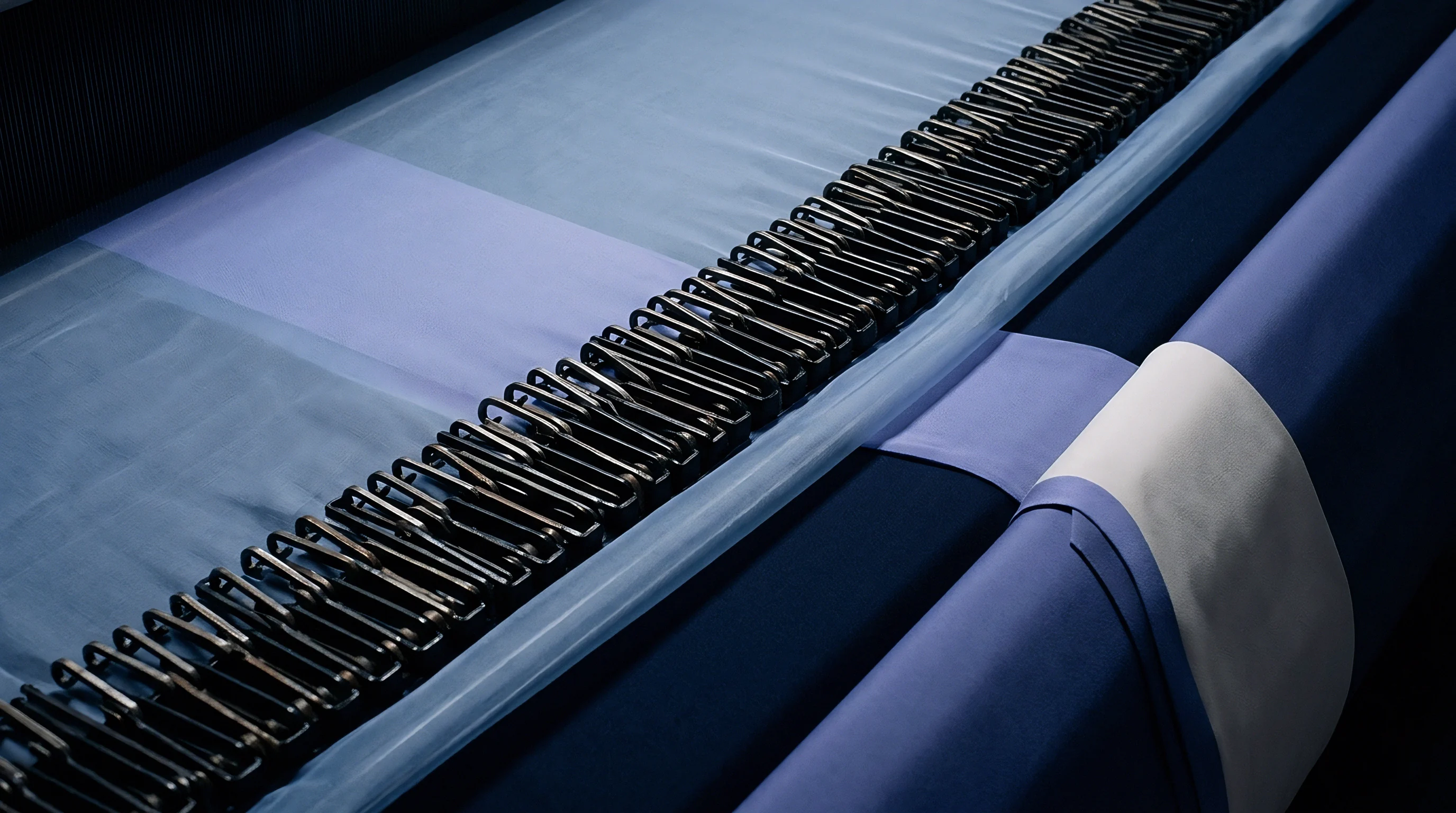
Fabric structure dictates the exposed surface area of the liquid film during transport to the A-frame winder. Open knit structures create micro-turbulences that pull air into the wet web structure. A lightweight woven poplin running at 40 metres per minute exposes its surface film to ambient air for 3 to 6 seconds between the nip roll squeeze and the batch winder.
During these seconds, ambient carbon dioxide at 400 to 450 parts per million reacts continuously with surface hydroxyls.
Padding cotton interlock at seventy percent pick-up under ambient air containing four hundred parts per million carbon dioxide drops surface pH from twelve point two to ten point eight within twelve minutes.
Hydroxide Depletion and Bicarbonate Conversion
Dissolved carbon dioxide reacts immediately with free hydroxyl ions present in caustic alkali dye formulations. The initial reaction produces bicarbonate ions, which subsequently consume additional hydroxyl ions to form carbonate species. As free hydroxyl concentration falls, overall solution pH decreases from an initial target of 12.0 to 12.5 down into the 10.0 to 10.5 range.
Reactive dyes engineered for cold batch application, including dichlorotriazine, vinylsulfone, and monofluorotriazine chemistries, depend on specific hydroxyl ion activities to nucleophilically activate cellulose hydroxyl groups.
When local pH drops below 11.0, the rate of nucleophilic substitution or addition between the reactive dye anchor and the cellulosic substrate decreases by an order of magnitude. Concurrently, unfixed dye molecules undergo competitive hydrolysis with water molecules. The hydrolyzed dye loses its reactive group permanently, remaining unbound in the fiber structure and unable to form covalent bonds with cellulose, resulting in severe shade loss, poor wash-fastness, and high shade variability between the roll core and exposed selvedges.
Failure to control atmospheric carbon dioxide diffusion into open pad troughs yields selvedge-to-center shade variation that invalidates bulk lot approvals at the cutting table.


Buffer
Traditional cold pad batch processing relies on heavy liquid sodium silicate additions to stabilize high alkalinity against ambient air interaction. Liquid sodium silicate forms a viscous gel network that acts as a physical barrier to gas diffusion while providing high titratable reserve alkalinity. Removing silicate eliminates equipment scaling and simplifies fabric washing-off, yet leaves the padded liquor vulnerable to rapid chemical neutralization.
Silicate-free systems replace this reserve with combinations of sodium hydroxide, sodium carbonate, and specialty organic buffer salts.
Silicate Free Alkali Chemistry and Titratable Capacity
Removing liquid sodium silicate requires alternative chemical combinations capable of supplying sufficient hydroxyl ion concentration for reactive dye coupling. Sodium carbonate alone cannot raise liquor pH above 11.5 at standard pad temperatures. Adding sodium hydroxide raises initial pH to 12.2 or 12.5, but unbuffered caustic soda possesses virtually zero titratable buffer capacity against acid inputs.
Small quantities of absorbed carbon dioxide neutralize caustic soda rapidly, causing sharp pH drops. Cold pad batch systems utilize mixed alkali formulations containing sodium hydroxide alongside high concentrations of sodium carbonate or organic potassium salts to build chemical resistance against acidification.
| Alkali System Type | Initial Pad Trough pH | pH After 15 Min Air Exposure | Titratable Alkalinity to pH 10.5 (mL 1N HCl) | Washing Off Efficiency Rating |
|---|---|---|---|---|
| Sodium Silicate (60 Be) + NaOH | 12.45 | 12.30 | 18.5 | Poor (High Scale Risk) |
| NaOH (50 Be) + Na2CO3 (Standard) | 12.20 | 10.65 | 6.2 | Excellent |
| NaOH + Na2CO3 + Polycarboxylate Buffer | 12.30 | 11.75 | 12.8 | Excellent |
| Potassium Carbonate + Organic Amine Salt | 12.10 | 11.50 | 11.0 | Good |
The failure modes observed in unbuffered silicate-free liquor films manifest as distinct processing defects during bulk production runs:
- Selvedge pale edges develop when exposed roll margins absorb air carbon dioxide, lowering local pH and halting reactive dye fixation before core execution completes.
- Head to tail shading occurs when pad trough residence time allows progressive acidification of the feed liquor during long continuous production runs.
- Increased washing off cycles result from high fractions of hydrolyzed dye created by low pH conditions, increasing water consumption in the washing range.
- Premature dye precipitation takes place when specific reactive dye molecules lose solubility as liquor pH drops below their critical stability threshold.

Substrate Specific Pick up and Liquor Retention
Fabric construction determines the liquid mass held per square metre after exiting the padding squeeze rolls. Woven poplin fabrics made from ring-spun combed cotton typically achieve uniform liquor pick-up between 60% and 68%. Heavy cotton interlock knits retain between 75% and 85% wet pick-up due to yarn twist structures and loop voids.
Viscose absorbs liquor faster than cotton, requiring careful nip pressure adjustments on regenerated cellulosic fibers to avoid surface liquor pooling. Higher wet pick-up increases total water volume per square metre, providing a larger absolute reservoir of dissolved alkali that slows the overall rate of pH decay.
Uneven squeeze roll pressure across the pad mangle creates lateral pick-up gradients, leaving selvedges dryer than the fabric center. Dryer edges contain less total alkali by weight, accelerating carbon dioxide acidification at the fabric margins. Maintaining pneumatic nip cylinder alignment within a 1.5% tolerance across the entire face width prevents localized pick-up depletion.
Silicate-free dye formulations mandate precise alkali buffer capacity to withstand transient air exposure in the pad trough.
Proprietary organic alkali blends are often presented as tolerant of open air exposure, yet unbuffered formulations remain susceptible to rapid neutralization and altered fixation kinetics.
Wrap
Enclosing padded fabric rolls immediately after winding halts gas exchange between atmospheric air and the wet cellulose web. Once the fabric completes winding onto the A-frame batcher, the outer layer and exposed roll faces remain vulnerable to carbon dioxide ingress and edge evaporation. Without mechanical isolation, the outer 15 to 30 metres of fabric suffer significant shade degradation.
The batch wrapping process serves as the primary barrier defense against atmospheric contamination during the 8 to 24 hour dwell period.
Barrier Film Selection and Application Engineering
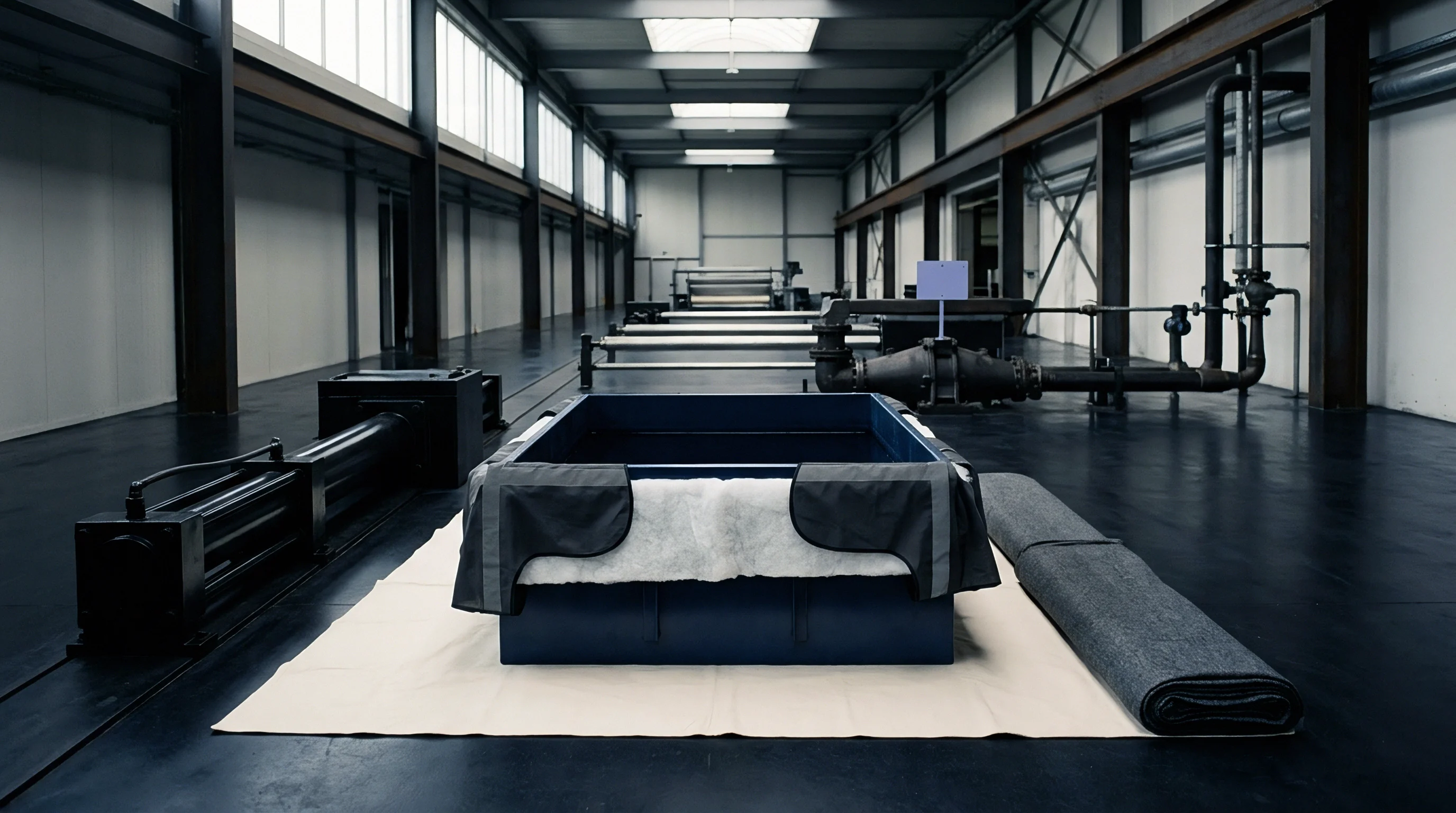
Polyethylene film thickness directly dictates oxygen and carbon dioxide gas transmission rates into the batch core during rotation. Low-density polyethylene film with a minimum thickness of 80 micrometres prevents gas diffusion when applied tightly across the roll circumference. Film layers must overlap by at least 50% across the fabric width to eliminate air channels, while securing the side faces requires specialized circular end-caps or tight spiral wrapping extending past the selvedges.
Atmospheric carbon dioxide enters through small gaps in plastic covers, driven by temperature changes and air movement within the dyehouse batching hall. Automated wrapping stations apply film under constant mechanical tension, driving trapped air pockets out from between film layers.
- Position the completed A-frame batching roll inside the automated wrapping station within 5 minutes of padding completion.
- Engage primary roll rotation at 3 revolutions per minute while applying 80 micrometre low-density polyethylene film under continuous lateral mechanical tension.
- Overlap each circumferential film spiral by 60 percent across the entire face width of the fabric roll.
- Apply semi-rigid polyethylene side-disc caps over both exposed roll faces, securing outer edges with continuous adhesive barrier tape.
- Transfer the wrapped batch roll immediately to a temperature-controlled rotation station operating at 20 to 24 degrees Celsius.

Batch Station Rotation and Environmental Isolation
A-frame rotation mechanisms keep wet dye liquor distributed evenly while preventing gravitational sag during the dwell cycle. Rotation speeds between 1.5 and 2.5 revolutions per minute prevent liquor accumulation at the bottom of the roll. If rotation stops, gravity pulls unattached dye liquor downward, causing severe side-to-side shade listing.
Environmental conditions in the batch storage area must remain constant throughout the fixation period.
Ambient room temperature fluctuations alter the rate of dye fixation and chemical reaction kinetics inside the wrapped batch. Storing batch rolls near open factory doors or heat sources creates thermal gradients across the roll width. Thermal gradients induce moisture migration toward cooler zones, diluting alkali concentrations and enhancing atmospheric carbon dioxide sensitivity along outer roll edges.
Polyethylene batch film applied without edge tension permits atmospheric gas exchange across outer roll windings.
Tightly sealed barrier films applied immediately after padding preserve core liquor alkalinity across extended dwell periods.

Verification
Measuring liquor stability across bulk production requires precise analytical methods applied at multiple points in the dyeing sequence. Relying solely on pad trough pH measurements provides incomplete visibility into boundary layer degradation occurring during dwell. Technologists utilize direct surface pH measurement, titratable reserve alkalinity assays, and spectrophotometric color difference evaluations across fabric width profiles to verify silicate-free processing stability.

Does Surface Ph Mapping Detect Edge Acidification?
Flat surface electrodes pressed directly against damp fabric provide immediate readings of chemical neutralization prior to washing off. Sampling requires taking measurements at 5-centimetre intervals from the left selvedge, across the center, to the right selvedge immediately after unwrapping the batch roll. A pH drop greater than 0.3 units at the selvedge relative to the center indicates atmospheric carbon dioxide penetration during batching.
Standard color difference protocols evaluate shade consistency using CIE L a b coordinates under D65 and TL84 illuminants. Testing samples cut across the entire width verifies that reactive dye fixation reached uniform yield across both edges and core sections.
| Sampling Position Across Fabric Face | Surface pH (Sealed Batch) | Surface pH (Unsealed Edge) | Delta E (Sealed vs Center) | Delta E (Unsealed vs Center) |
|---|---|---|---|---|
| Left Selvedge (0 cm) | 12.15 | 10.35 | 0.22 | 1.85 (Off-Shade) |
| Left Inner (20 cm) | 12.20 | 11.80 | 0.10 | 0.65 (Borderline) |
| Center (80 cm) | 12.20 | 12.15 | 0.00 (Ref) | 0.00 (Ref) |
| Right Inner (140 cm) | 12.18 | 11.75 | 0.12 | 0.70 (Borderline) |
| Right Selvedge (160 cm) | 12.12 | 10.28 | 0.25 | 1.92 (Off-Shade) |

Spectrophotometric Fastness Evaluation across Roll Width
Color difference measurements taken across selvedges and center cuts reveal fixation discrepancies caused by atmospheric interaction. Spectrophotometric analysis performed according to ISO 105-J03 calculates total color difference values under target illuminants. When carbon dioxide degrades surface pH, reactive dye fixation decreases, yielding lighter, less saturated shades along affected areas.
Color fastness testing to domestic laundering under ISO 105-C06 demonstrates whether unfixed dye fractions were properly removed during washing off. Poorly fixated dyes caused by edge acidification wash out during laundering, creating severe fastness failures in end-use garments. Inspecting lab dips and bulk production swatches under light box conditions using standard illuminants catches metameric shade shifts caused by partial dye hydrolysis.
Dyehouse technical teams apply standardized checklists to qualify cold pad batch production lots prior to bulk cutting release:
- Target surface pH verification confirms that damp web readings remain within 12.0 to 12.4 across all sampling points prior to batching.
- Buffer reserve titration verifies that pad liquor requires at least 12.0 millilitres of 1N hydrochloric acid to reach pH 10.5 per 100 millilitres of liquor.
- Edge-to-center delta E audit mandates that color variance across fabric width stays below 0.5 CIELAB units under D65 illuminant.
- Washing off fastness validation ensures staining grades on multi-fiber strip meet or exceed grade 4.0 under ISO 105-C06 method A2S.
Compliance with ISO 105-C06 commercial laundering standards demands color fastness ratings of four or higher across both selvedges and center cuts.
Whether online optical sensors can measure real-time pH degradation across moving fabric webs before batching remains an open question for dyehouse automation engineers.

Arithmetic
Quantifying financial performance in silicate-free dye application requires balancing raw chemical costs against scrap generation from shade defects. Liquid sodium silicate represents an inexpensive chemical base, but introduces significant indirect maintenance and utility costs due to machine scaling, elevated wash water consumption, and effluent treatment charges. Silicate-free systems increase initial chemical formulation expenditures while lowering operational downtime and energy consumption during post-dye washing ranges.

Chemical Consumption and Buffer Dosing Costs
Formulating alkali feed solutions with sodium carbonate and sodium hydroxide changes the unit cost per thousand litres of padded liquor. Standard silicate recipes utilize 100 to 120 grams of liquid sodium silicate per litre alongside small amounts of caustic soda. Silicate-free formulations require 20 to 35 grams per litre of dense sodium carbonate, 5 to 12 grams per litre of sodium hydroxide, and 5 to 15 grams per litre of proprietary organic alkali buffers to match the titratable reserve of silicate systems.
| Cost Component / Metric | Sodium Silicate Standard Route | Standard Silicate-Free (Unbuffered) | Engineered Silicate-Free (Buffered + Wrapped) |
|---|---|---|---|
| Alkali Chemical Cost per 1,000 L | $85.00 | $110.00 | $165.00 |
| Washing Range Energy & Water per 1,000 m | $140.00 | $75.00 | $75.00 |
| Average Selvedge Scrap Rate (%) | 1.2% | 4.5% | 0.3% |
| Fabric Scrap Cost (at $3.50/m) | $420.00 | $1,575.00 | $105.00 |
| Total Wet Processing Cost per 10,000 m | $2,250.00 | $2,570.00 | $1,700.00 |

Scrap Risk and Re Dye Yield Modeling
Processing five thousand metres of cotton interlock with unsealed roll edges results in selvedge shade trimming and lost fabric margin. If edge acidification ruins 5 centimetres along both selvedges of a 160-centimetre wide fabric, usable garment cutting width drops by 6.25%. Trimming ruined edges adds waste costs that exceed the savings gained by eliminating silicate chemistry.
Consider a 10,000-metre production lot of 200 gsm combed cotton knit fabric priced at $3.50 per finished metre. Operating an unbuffered silicate-free system with inadequate barrier wrapping results in a 4.5% scrap rate due to pale selvedges and head-to-tail shade variance. This failure generates $1,575.00 in direct material losses.
Investing in high-performance organic buffer chemistries and automated stretch-wrapping equipment increases recipe costs by $800.00 per batch, but reduces scrap rates to 0.3%. The net operating saving equals $670.00 per 10,000 metres while ensuring customer shade compliance.
Standard fabric purchase agreements insert a maximum allowable shade variance of delta E point six across roll width, shifting financial liability for unfixated selvedge scrap directly to the dyeing mill.

Dossier
Procurement documentation establishes clear chemical controls and processing parameters for mills operating silicate-free cold pad batch lines. Sourcing practices must incorporate strict wet-processing criteria directly into standard purchase orders to prevent sub-contracted dyehouses from compromising on alkali buffering or batch barrier wrapping. Explicit qualification rules minimize commercial risk and establish clear technical accountability between fabric converters, dyeing facilities, and apparel buyers.

Mandatory Technical Clauses for Mill Audits
Audit frameworks evaluate pad trough dwell volumes, barrier film wrapping equipment, and titration logbooks during facility qualification. Mills must demonstrate automated dosing pump accuracy, ensuring dye and alkali streams mix at precise 4:1 volumetric ratios immediately prior to pad trough delivery. Trough dwell volumes must not exceed 15 litres for standard 1.8-metre width padding mangles, preventing extended chemical residence times that encourage atmospheric carbon dioxide dissolution.
Factory audits verify the presence of dedicated batch rotation bays equipped with continuous environmental monitoring. Temperature logs must confirm storage hall ambient conditions remain between 18 and 24 degrees Celsius without direct sunlight exposure. Wrapping stations must utilize dual-layer film dispensers capable of applying side-disc protection before outer spiral wrapping takes place.

Standard Operating Tolerances for Cold Batching
Quality control criteria bound acceptable variance for liquor temperature, web pick-up percentage, and batch rotation duration. Wet pick-up tolerances must stay within plus or minus 2.5% of target values across the left, center, and right sections of the squeeze rollers. Batch rotation duration must be specified based on reactive dye group reactivity, capping maximum dwell times at 24 hours to prevent boundary layer degradation.
Incoming fabric inspection procedures mandate cut-out swatches taken from the head, middle, and tail of every batch roll. Spectrophotometric scanning across five width points confirms shade uniformity prior to garment marker laying. When the finishing floor enforces strict barrier wrapping and titratable buffer thresholds, cold pad batch dyeing delivers consistent shade depth without the maintenance overhead of silicate chemistry.