Rheological Optimization of Polyelectrolytes for Radiant Textile Drying Systems
Optimizing polyelectrolyte yield stress above 4.5 pascals prevents radiant heat dye migration and locks liquid distribution across high-speed stenter lines.

Charge
Synthetic polyelectrolytes in aqueous liquor formulations consist of long-chain polyacrylic acid derivatives or copolymerized acrylamide salts that ionize upon dissolution. The dissociation of carboxylate groups along the polymer backbone creates a electrostatic field, forcing the coiled macromolecules to expand through intra-chain repulsion. This physical uncoiling increases the hydrodynamic volume of the polymer chain, causing a sharp rise in low-shear viscosity even at active solids concentrations below 1.5 percent by weight.
In textile padding applications preceding radiant drying units, the charge density of these polyelectrolytes dictates both the solubility threshold and the binding affinity toward dissolved dye ions.
Anionic polyacrylates generate negative surface potentials that prevent premature agglomeration when blended with direct or reactive dyes carrying sulfonate functional groups. Dissolution behavior remains sensitive to the total ionic strength of the padding bath. Polyvalent cations such as calcium or magnesium present in soft water supplies screen the carboxylate charges, collapsing the extended polymer conformation back into a dense globular state.
Viscosity collapses under thermal stress. The loss of hydrodynamic volume reduces the resting viscosity of the liquor, accelerating migration of dissolved dye molecules toward the fabric face as water evaporates under radiant heating.

Anionic Polyacrylate Networks in Liquid Application
Formulating thickener packages for continuous pad-dry operations requires balancing ionic repulsion against chemical compatibility. Highly charged anionic polyelectrolytes resist salt addition up to a critical ionic concentration, beyond which coil shrinkage alters the fluid flow regime. Laboratory verification of polyelectrolyte performance relies on measuring Brookfield viscosity across a range of ionic strengths, utilizing spindle speeds from 0.5 to 100 revolutions per minute to map the flow curve.
When ionic screening occurs, the fluid transitions from non-Newtonian pseudoplastic flow toward linear viscous behavior, destroying its capacity to prevent capillary migration during the initial phase of radiant heating.
| Polyelectrolyte Class | Charge Density (meq/g) | Solids Content (%) | Viscosity at 1 s⁻¹ (mPa·s) | Shear Thinning Index (η₁/η₁₀₀) |
|---|---|---|---|---|
| Fully Neutralized Polyacrylate | 4.8 | 1.2 | 18,500 | 14.2 |
| Partially Neutralized Polyacrylate | 3.1 | 1.5 | 12,200 | 9.8 |
| Hydrophobically Modified Alkali-Swallable Polymer | 2.2 | 2.0 | 8,900 | 6.1 |
| Cationic Copolymer Polyacrylamide | -1.8 | 1.8 | 6,400 | 4.3 |
Ionic Interaction with Direct and Reactive Dyes
Reactive dye baths contain high concentrations of sodium chloride or sodium sulfate to force dye exhaustion onto cellulosic fibers during fixing. In continuous padding lines where dyestuff and polyelectrolyte are padded together prior to infrared pre-drying, these electrolyte salts suppress the electrostatic field of the thickener. The reduced gel strength allows dyestuff particles to transport alongside water vapor currents created by radiant emitters.
Selecting synthetic polyelectrolytes with cross-linked backbones mitigates ionic collapse, maintaining yield stress despite background electrolyte concentrations reaching 80 grams per liter.
Chemical suppliers frequently explain batch migration defects by asserting that factory water hardness fluctuated beyond the specified raw material boundary during compound preparation.


Rheology
Flow characteristics of aqueous padding liquors determine whether an applied chemical film stays uniform across the textile face or bleeds into structural voids. Synthetic polyelectrolyte solutions exhibit pronounced shear-thinning behavior, characterized by high viscosity under low-shear rest conditions and low viscosity when subjected to high shear rates inside a padding mangle nip. Under mechanical nip pressures ranging from 0.2 to 0.5 megapascals, the fluid experiences shear rates exceeding 10,000 reciprocal seconds, allowing rapid distribution across yarn interstices.
The key operational requirement lies in the rate of structural recovery once the fabric exits the nip and enters the radiant drying zone.
Yield Stress Dynamics under High Shear Strain
The transition from high-shear application to low-shear drying demands a precise yield stress threshold. If the fluid lacks sufficient yield stress, gravity and surface tension pull the liquid film into the valleys of the fabric weave, creating localized shade variations across warp and weft intersections. Capillary forces drive dye migration.
Yield stress values measured via steady-state flow curves must exceed 4.5 pascals at 25 degrees Celsius to lock dye molecules in place before radiant heat initiates bulk solvent evaporation. Polyelectrolytes with high molecular weights between 3 million and 8 million Daltons generate robust structural networks that resist thermal breakdown during the first ten seconds of infrared exposure.
Yield stress thresholds above five pascals prevent liquid transport between core yarn filaments during thermal evaporation.
Viscoelastic Recovery during Radiant Heating
Resting viscosity after shearing controls the boundary layer dynamics of the wet chemical film. As radiant infrared emitters transfer energy into the wet web, liquid temperature rises rapidly toward the boiling point of water, reducing solvent viscosity. High thermal energy input accelerates structural breakdown of the polyelectrolyte network if the storage modulus G’ falls below the loss modulus G”.
Viscoelastic measurements using oscillatory shear rheometry demonstrate that optimized polyacrylate systems maintain G’ dominance up to 85 degrees Celsius, preserving spatial distribution while water vapor escapes from the fabric matrix.
- Capillary Migration Splitting occurs when the polyelectrolyte storage modulus collapses under heat, driving dyestuff toward the illuminated fabric surface.
- Shear Thinning Breakdown manifests inside the pad nip when excessive polymer chain branching prevents instant structural recovery upon exit.
- Viscoelastic Slump takes place in heavy continuous woven builds when low yield stress allows gravity to pool liquid on the lower fabric face during horizontal transit.
- Thermal Syneresis releases entrapped water molecules prematurely from the polymer gel network, causing localized streakiness under high-intensity radiant flux.
Low shear rates promote leveling. Polyelectrolyte formulations that recover 90 percent of their baseline storage modulus within two seconds of nip release prevent shade variations across wide-width fabric runs.


Substrate
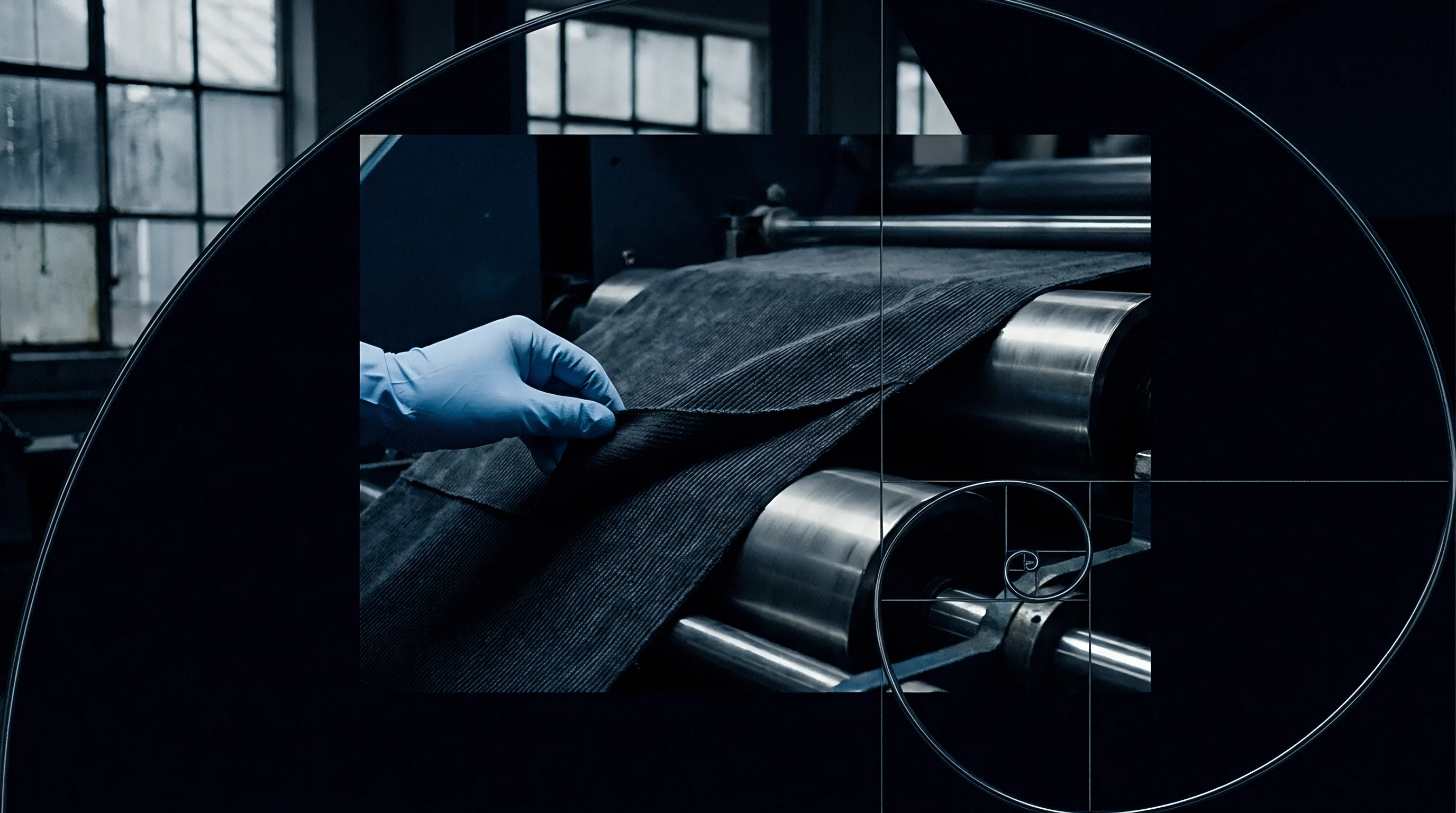
Physical properties of raw woven and knitted textiles dictate how rapidly an applied polyelectrolyte liquor penetrates yarn bundles under radiant thermal exposure. Dense woven poplins with cover factors above 0.85 present restricted inter-yarn channels, forcing the liquid chemical film to remain primarily on the fabric face. Open single-jersey knits permit deep internal liquid penetration, redistributing the polymer network across both face and back loops.
The ratio of capillary suction force to polyelectrolyte yield stress dictates whether radiant heating causes surface skinning or uniform cross-sectional drying.
Woven Sett and Porosity Constraints
Fabric structural metrics including ends per inch, picks per inch, and yarn twist multiplier govern the volume of free water held in structural pores. High-density cotton duck weaves carrying 110 ends per inch and 60 picks per inch retain substantial water within intra-yarn capillaries. When exposed to short-wave infrared radiation, steam generation within these tight capillaries generates internal pressure gradients.
If the surface polyelectrolyte film dries into an impermeable barrier before internal steam escapes, micro-blistering tears the polymer layer, leading to uneven dye fastness and localized color loss.
ISO 105-X12 evaluation requires dry rubbing fastness to achieve Grade 4.0 or higher across all dyed production lots.
| Fabric Construction | Fiber Composition | Weight (g/m²) | Air Permeability (mm/s) | Penetration Depth Ratio (%) |
|---|---|---|---|---|
| 3/1 Twill Weave | 100% Cotton | 260 | 145 | 42 |
| Plain Weave Poplin | 65/35 Poly/Cotton | 115 | 380 | 68 |
| 1×1 Rib Knit | 100% Combed Cotton | 180 | 820 | 85 |
| Ripstop Canvas | 100% Polyamide 6,6 | 310 | 85 | 28 |
Capillary Transport across Fiber Interfaces
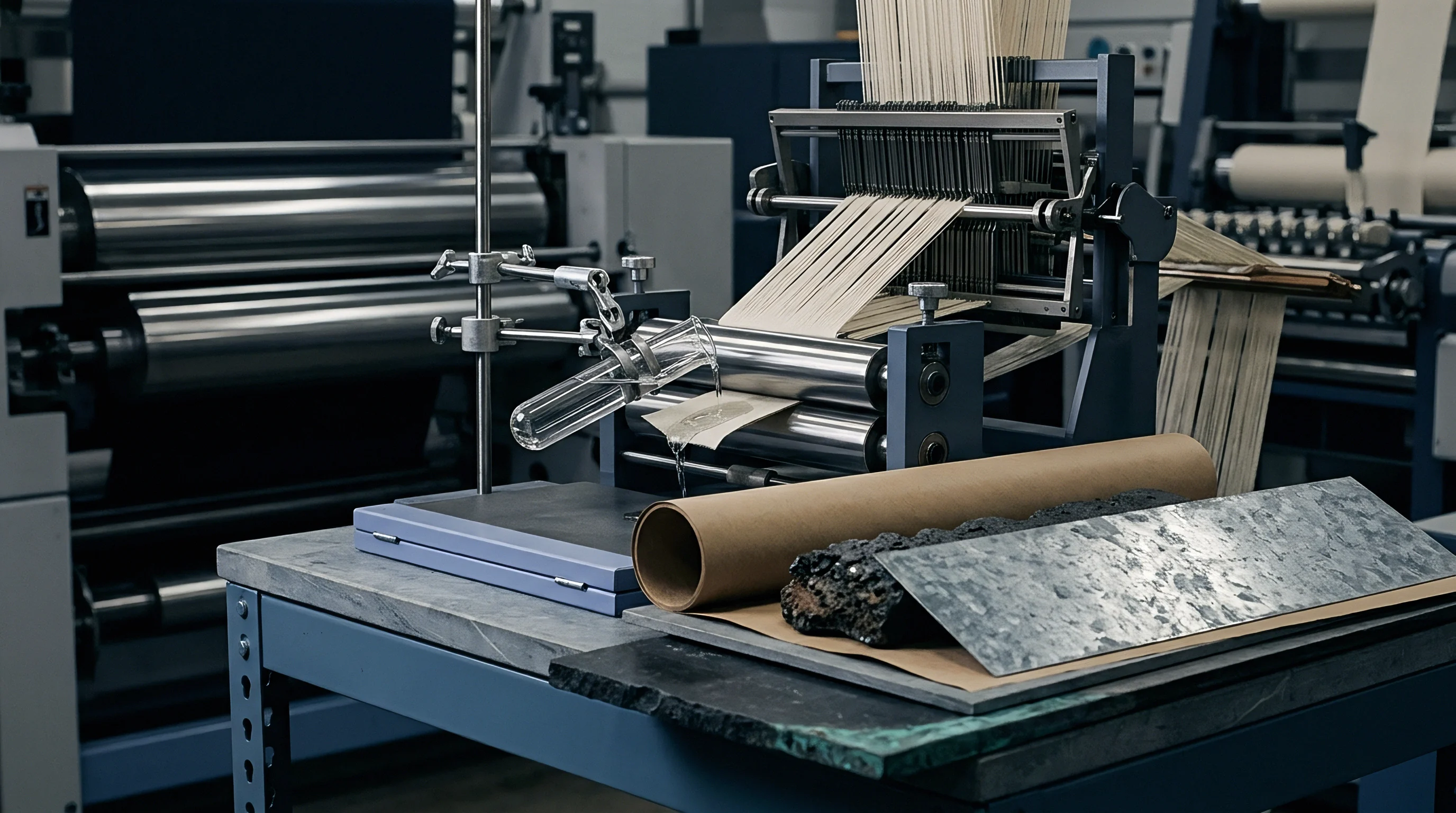
Synthetic fibers such as polyester and polyamide exhibit lower moisture regain than cellulosic fibers, altering the contact angle between the polyelectrolyte liquor and the filament surface. Lower contact angles enhance chemical spreading, demanding higher thickener yield stress to prevent uncontrolled edge bleeding. Blended fabrics composed of polyester and cotton require polyelectrolyte systems capable of stabilizing both hydrophobic synthetic surfaces and hydrophilic natural fibers simultaneously under rapid thermal evaporation profiles.
- Measure greige fabric air permeability according to ISO 9237 prior to padding liquor formulation.
- Adjust polyelectrolyte active solids ratio to compensate for low structural density in open knit constructions.
- Verify liquor pickup percentage across left, center, and right side swatches using ISO 3801 mass determination.
- Set radiant emitter wavelengths to match the water absorption peak at 2.95 micrometers.
Standard purchase agreements stipulate that wet processing shade variation across bulk production runs must not exceed an ISO 105-A02 Gray Scale rating of 4.0 between center-to-edge cut swatches.

Stenter
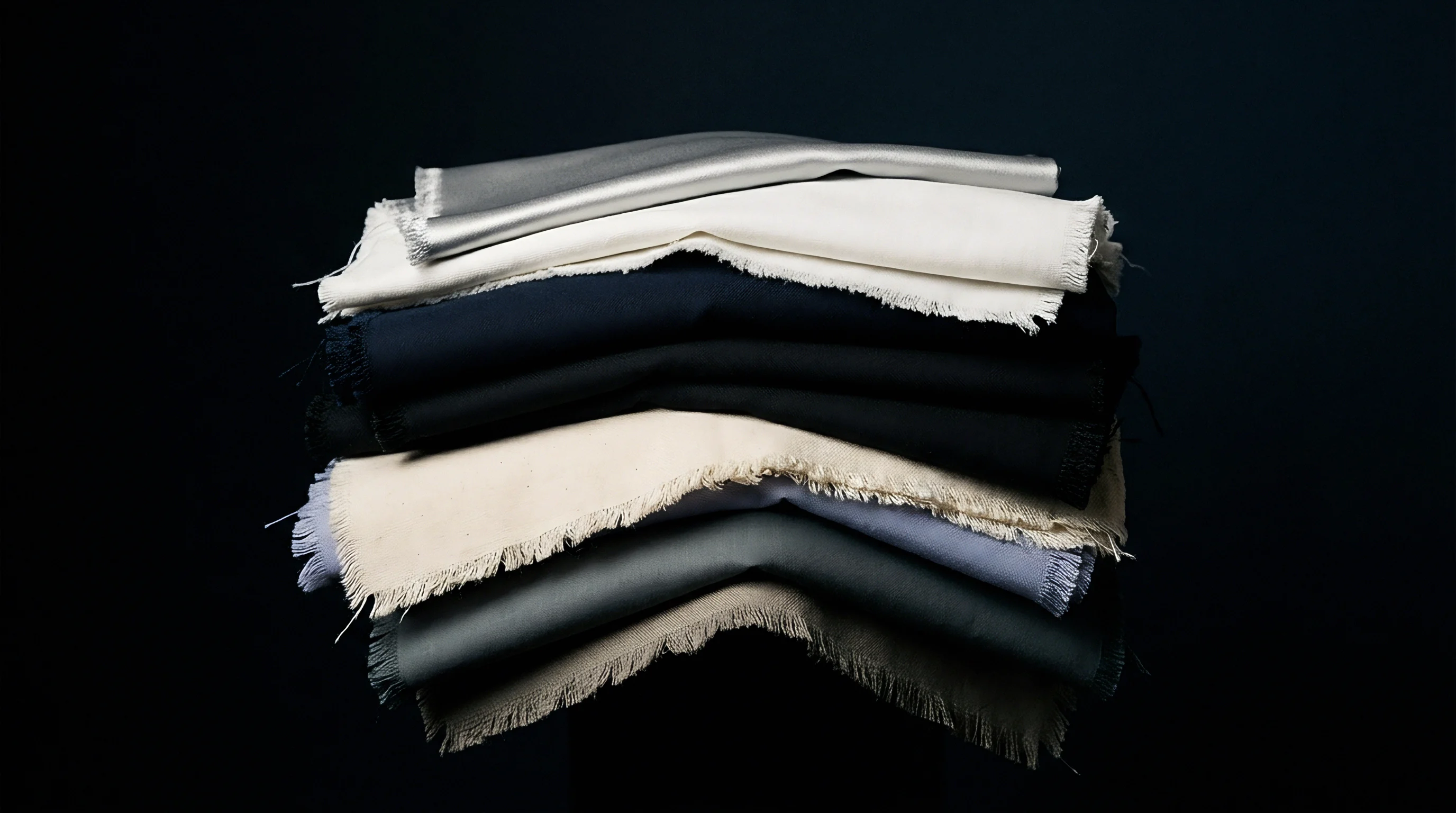
Infrared drying units transfer energy through electromagnetic radiation directly to water molecules within the wet chemical film without relying on convective air contact. Medium-wave emitters operating between 2.0 and 4.0 micrometers align with the OH-bond stretch absorption bands of water, generating instantaneous volumetric heating. The rapid temperature rise speeds liquid evaporation, but it also induces steep viscosity drops inside the polyelectrolyte gel layer.
Radiant heat speeds initial evaporation. Managing line speed against radiant emitter intensity determines whether the polymer reaches its immobilization point smoothly or suffers thermal degradation.
Medium Wave Infrared Emitter Efficiency
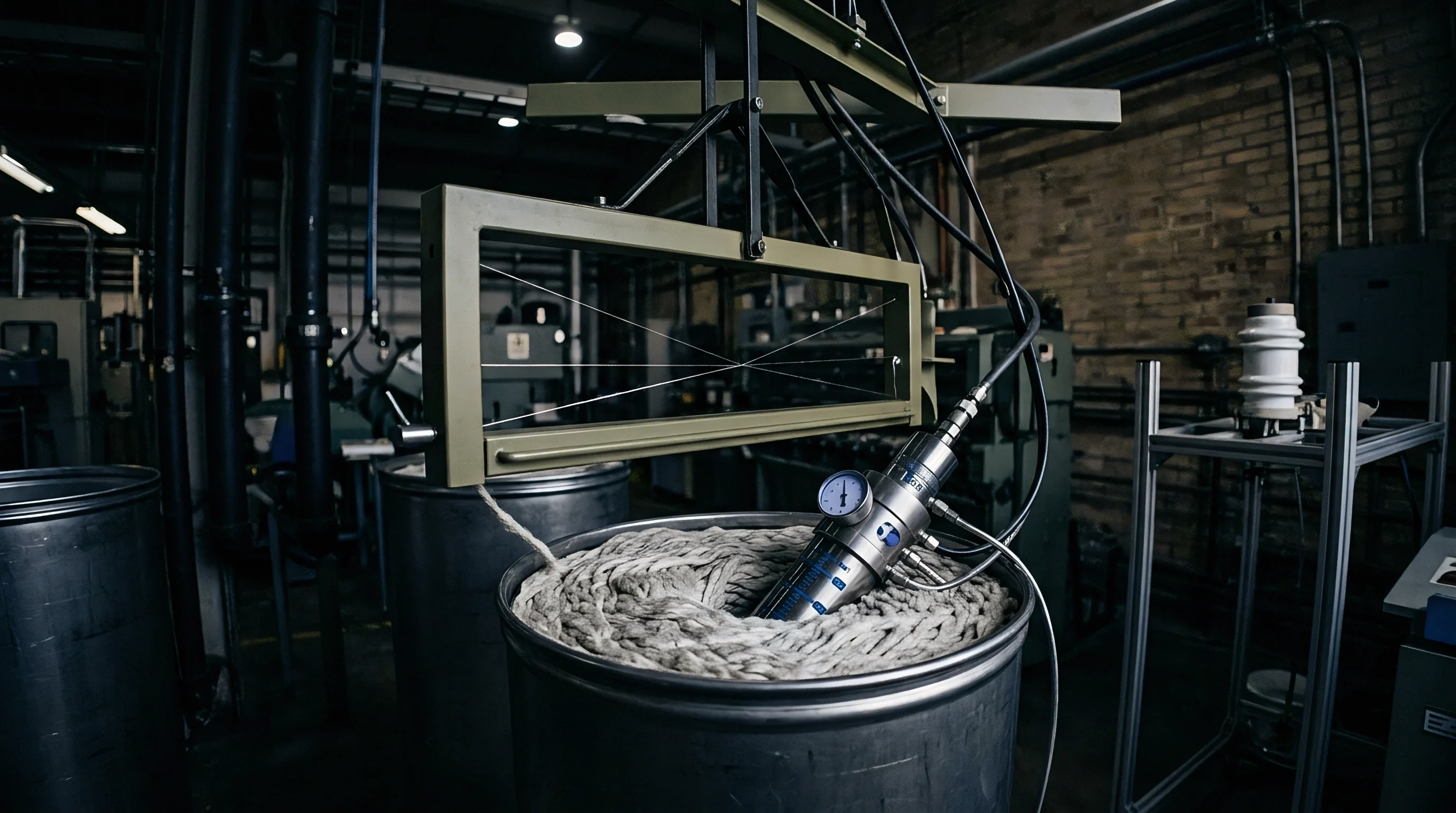
Gas-fired and electric infrared panels differ in spectral emission characteristics and thermal response times. Medium-wave gas catalytic emitters supply peak energy at 3.0 micrometers, penetrating deep into thick fabric structures to evaporate water without scorching the surface fibers. Electric short-wave halogen emitters deliver higher energy density at 1.2 micrometers, heating surface water rapidly while leaving internal yarn cores cool.
Padders exert non-uniform nip pressure. Selecting the correct radiant source depends on fabric mass, wet pickup percentage, and polyelectrolyte thermal stability limits.
Consider a continuous dyeing line processing a 140 gram per square meter woven cotton fabric at a line speed of 45 meters per minute. The padder applies an aqueous liquor containing 1.5 percent anionic polyacrylates with a target wet pickup of 65 percent. Water mass entering the infrared pre-drying zone equals 40.95 kilograms per minute.
Evaporating 50 percent of this water content to reach the polymer immobilization point demands an thermal energy input of 46.3 kilowatts, assuming a latent heat of vaporization of 2,260 kilojoules per kilogram. Operating four 15-kilowatt medium-wave electric infrared emitters at 77 percent electrical efficiency delivers 46.2 kilowatts of radiant power to the moving web. Water evaporates from the surface.
Under these precise parameters, the liquid surface temperature reaches 82 degrees Celsius within 2.1 seconds of exposure, driving the polyelectrolyte film to its gel point before directional migration occurs.
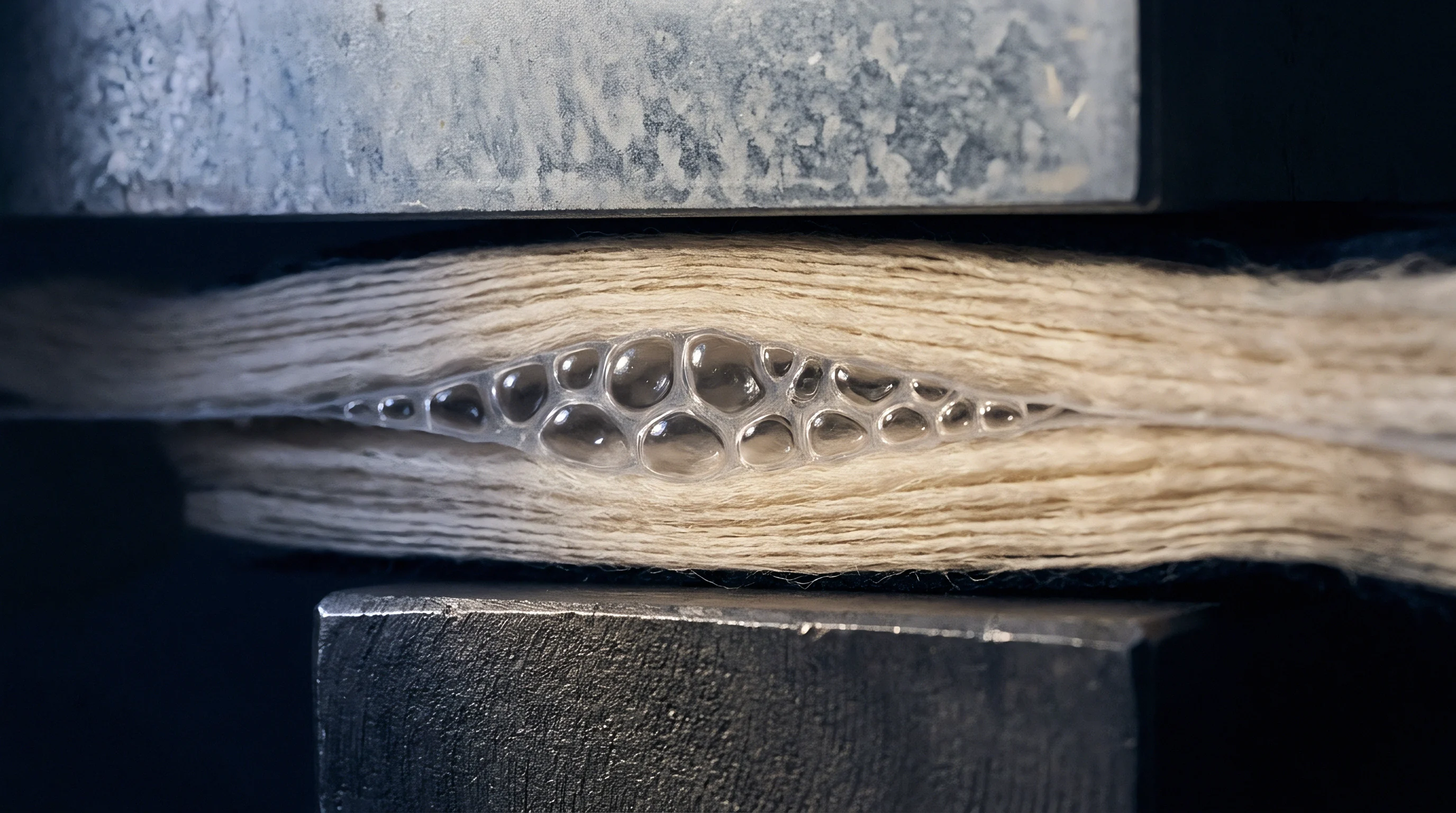
Immobilization Point Gelation Kinetics
The immobilization point marks the precise moisture threshold where the polyelectrolyte concentration increases to a degree that liquid flow ceases. Below this water content, dye particles can no longer migrate through the fiber network. Cross-linking locks the gel phase.
Achieving rapid gelation requires polyelectrolytes that form high-viscosity hydrogels at solids concentrations as low as 3.5 percent. Retarding the evaporation rate leads to extended liquid mobility windows, promoting face-to-back dye transport under high radiant thermal flux.
Radiant emitter field power densities exceeding 35 kilowatts per square meter force rapid surface skinning on polyelectrolyte films.

Does Synthetic Thickener Charge Alter Radiance Absorption?
Polymer ionic charge alters the hydrogen-bonding network of surrounding water molecules, shifting the infrared absorption spectrum of the padded chemical film. Highly ionized polyacrylates structure adjacent water molecules into rigid solvation shells, slightly narrowing the OH-vibrational band near 3.0 micrometers. This spectroscopic shift modifies the radiant energy absorption efficiency by up to 6 percent compared to pure water.
Adjusting emitter output profiles to match these modified absorption spectra ensures optimal energy transfer without wasting electrical or gas power.
| Emitter Zone Configuration | Peak Wavelength (µm) | Power Density (kW/m²) | Fabric Speed (m/min) | Target Moisture Exit (%) |
|---|---|---|---|---|
| Electric Short-Wave Halogen | 1.2 | 45 | 60 | 35 |
| Gas-Fired Catalytic Medium-Wave | 3.2 | 22 | 40 | 28 |
| Electric Carbon Medium-Wave | 2.6 | 30 | 50 | 30 |
| Combined IR and Convective Jet | 2.8 | 38 | 65 | 20 |
| Data recorded at 65 percent initial wet pickup on 100 percent cotton 3/1 twill substrate. Test protocol references ISO 11092 thermal resistance and drying rate profiles. | ||||
Failure to balance radiant heat input against polyelectrolyte gelation kinetics leads to irreversible pigment migration, yielding rejected bulk rolls that fail color uniformity tolerances and swell mill scrap costs.
Throughput
Production speed across wet processing lines balances the thermal energy input of radiant drying zones against the chemical cost of synthetic thickener additions. Increasing stenter line speeds from 30 to 60 meters per minute reduces dwell time within infrared zones, requiring higher radiant emitter power or increased polyelectrolyte active solids to prevent dye migration. High solids content increases yield.
Sourcing managers must evaluate the landed cost per meter, factoring in energy consumption rates, chemical formulation prices, and potential rework penalties arising from migration defects.
Energy Surcharges and Line Speed Balancing
Operating gas catalytic or electric infrared drying arrays incurs substantial utility expenditures that scale directly with line speed and moisture removal targets. Formulating padding liquors with optimized polyelectrolytes allows mills to operate at higher initial wet pickup values without risking dye migration, lowering the required evaporation duty in subsequent convective drying zones. Tension skews the yarn geometry.
Dyeing faults increase rework costs. Savings realized from higher production throughput offset the higher unit cost of synthetic polyacrylate thickeners compared to crude natural alginates.
Formulating liquors with high-yield-stress polyacrylates permits line speed increases up to 25 percent without inducing migration defects.
Commercial Sourcing Dossier Requirements
Technical qualification of a textile finishing line demands a dossier specifying the complete chemical and mechanical parameters used during bulk production trials. Sourcing practices must enforce strict material specifications that link polyelectrolyte chemical structures to measurable physical performance limits. Evaporation rates govern line velocity.
Excessive heat degrades polymer chains.
- Polymer Active Solids Ratio must be verified by dry mass analysis according to ISO 3251 to confirm active chemical concentration.
- Viscoelastic Rest Recovery Rate must show minimum 85 percent storage modulus recovery within three seconds post-shearing on a cone-and-plate rheometer.
- Evaporative Energy Efficiency Index must map kilowatt-hour consumption per kilogram of water evaporated inside the infrared drying zone.
- Migration Fastness Margin must meet minimum Grade 4.5 on the ISO 105-A02 scale across three consecutive bulk production lots.
Commercial contracts governing continuous wet processing orders define strict cost penalties for non-conforming goods. When bulk lots exhibit side-to-center shade listing due to improper rheological optimization, the buyer retains the right to reject the shipment or deduct the full cost of re-dyeing operations from the final converter invoice.