Standardizing Extended Static Creep Thresholds for Crosslinked Synthetic Elastomeric Cores under Chemical Softening
Chemical softeners lower elastomeric core recovery force; standardizing static creep thresholds requires limiting softener bath concentration to fifteen grams per litre.

Swell
Solvation Mechanics in Synthetic Elastomeric Formulations
Crosslinked synthetic elastomeric cores ~ primarily segmented polyurethanes and crosslinked polyolefin elastomers ~ derive elastic recovery from alternating hard and soft polymer blocks. Hard segments form physical or chemical crosslinks through hydrogen bonding or covalent network bonds, keeping the matrix rigid under initial extension. Soft segments consist of long, flexible polyether or polyester chains that uncoil under tensile loading.
When wet finishing applies chemical softeners, active agents penetrate the yarn bundle and migrate into the elastomeric core. Macro-emulsion silicones, fatty acid condensation products, and ester-quat cationic surfactants lower surface tension to improve fabric hand, but their low-molecular-weight carrier solvents and hydrophobic tails plasticize the soft segments of the core.
Chemical softening alters intermolecular forces inside the amorphous elastomeric matrix. Hydrophobic tails penetrate between soft polymer chains, increasing free volume and enabling chain mobility at lower energy states. Solvent carrier residues from finishing baths, such as hydrocarbon fractions or cyclic siloxanes, act as swelling agents that expand the core cross-section.
Swelling pushes adjacent hard segments apart, disrupting physical crosslinks and weakening hydrogen bonding networks. This loss of network integrity lowers the elastic modulus while raising susceptibility to static deformation. Under constant tensile load, plasticized soft segments slide past one another without returning to their origin, initiating permanent set.
| Softener Chemistry Type | Active Concentration | Core Cross-Section Swell Percentage | 100 Percent Modulus Retained | Solvation Mechanism |
|---|---|---|---|---|
| Cationic Macro-Emulsion Silicone | 15 g/L | 14.2% | 72.5% | Siloxane chain insertion into amorphous polyether blocks |
| Nonionic Micro-Emulsion Silicone | 20 g/L | 8.6% | 86.1% | Controlled surface deposition with minimal core penetration |
| Fatty Acid Amide Condensate | 25 g/L | 5.1% | 93.0% | Surface lubrication without deep polymer matrix swelling |
| Ester-Quaternary Ammonium Compound | 12 g/L | 11.8% | 78.4% | Polar group attraction causing localized matrix expansion |

Failure Modes in Softened Core Yarns
Plasticization shifts load-bearing duty from the elastomeric core to the rigid staple or filament companion yarns wrapped around it. In core-spun yarns with cotton or polyester sheath fibers, static extension under chemical softening creates continuous slippage at the core-sheath interface.
Fatty acid condensation softeners limit core cross-sectional swelling to under six percent while preserving ninety-three percent of the original elastic modulus.
Continuous static stress breaks mechanical friction between core and sheath. Sheath fibers pull away from the softened core under prolonged tension, generating localized bunching, grin-through, or complete core withdrawal during garment production and wear.
- Core-Sheath Interface Delamination happens when active softeners lower friction coefficients between the central elastomeric filament and wrapped staple sheath yarns, causing internal slippage under static strain.
- Hard-Segment Hydrogen Bond Dissociation occurs as polar chemical additives insert into urethane domain linkages, converting elastic recovery into irreversible plastic flow.
- Oxidative Elastomer Degradation develops when residual solvent carriers accelerate free radical oxidation during thermal drying cycles above one hundred forty degrees Celsius.
- Permanent Tension Set Accumulation results when extended static holding forces plasticized polyether chains into permanent parallel realignments.
Softener applications often leave bulk fabric tensile strength within historical specification limits even while compromising internal core elastomeric integrity.
Relaxation
Time-Dependent Stress Decay under Chemical Plasticization
Static creep in crosslinked elastomeric cores represents time-dependent plastic strain under constant stress. When fabric holds a stretched dimension, elastomeric cores undergo stress relaxation, reducing resistive force over time. Chemical softeners applied during wet processing accelerate stress decay by lowering the energy barrier required for polymer chain movement.
Under continuous static tension, uncrosslinked soft segments shift into lower-energy orientations, converting elastic deformation into viscous flow.
Testing static creep requires isolating the rate of deformation under precise environmental and chemical conditions. Total strain experienced by a chemically plasticized core under constant load equals the sum of immediate elastic strain, delayed viscoelastic strain, and permanent viscous flow. Static strain testing pinpoints where viscoelastic recovery halts and permanent viscous flow takes over.
Softener penetration shifts this transition point to shorter intervals, accelerating core deformation during processing and storage.
A crosslinked synthetic elastomeric core subjected to twenty-five percent elongation at twenty degrees Celsius loses fifteen percent of its holding force within four hours of continuous exposure to macro-emulsion silicone.
Viscoelastic Modeling and Creep Thresholds
Standardizing thresholds requires calculating the creep compliance modulus over extended exposure periods. Creep compliance defines the ratio of time-dependent strain to applied static stress. Unsoftened elastomeric cores maintain a logarithmic creep curve that flattens after twenty-four hours of constant static loading.
Softened cores exhibit exponential creep curves where plastic deformation continues without leveling off, indicating ongoing degradation of internal crosslink structures.

When Does Chemical Softening Accelerate Core Failure?
Chemical softening accelerates core failure when active bath concentration exceeds fifteen grams per litre and stenter drying temperatures exceed one hundred fifty degrees Celsius. At elevated temperatures, solvent mobility increases, driving cationic surfactants deep into the elastomeric core. High thermal energy breaks hydrogen bonds within urethane hard segments while active softener molecules coat the open sites, preventing crosslinks from reforming during cooling.
The core emerges from the finishing stenter with permanent internal degradation, lowering the static creep failure threshold during subsequent garment sewing and stretch application.
Uncharacterized polymer interactions dictate whether crosslinked polyolefin cores resist cyclic static creep degradation under long-term exposure to ester-quat cationic softeners.
Rig
Standardizing Static Load Instrumentation
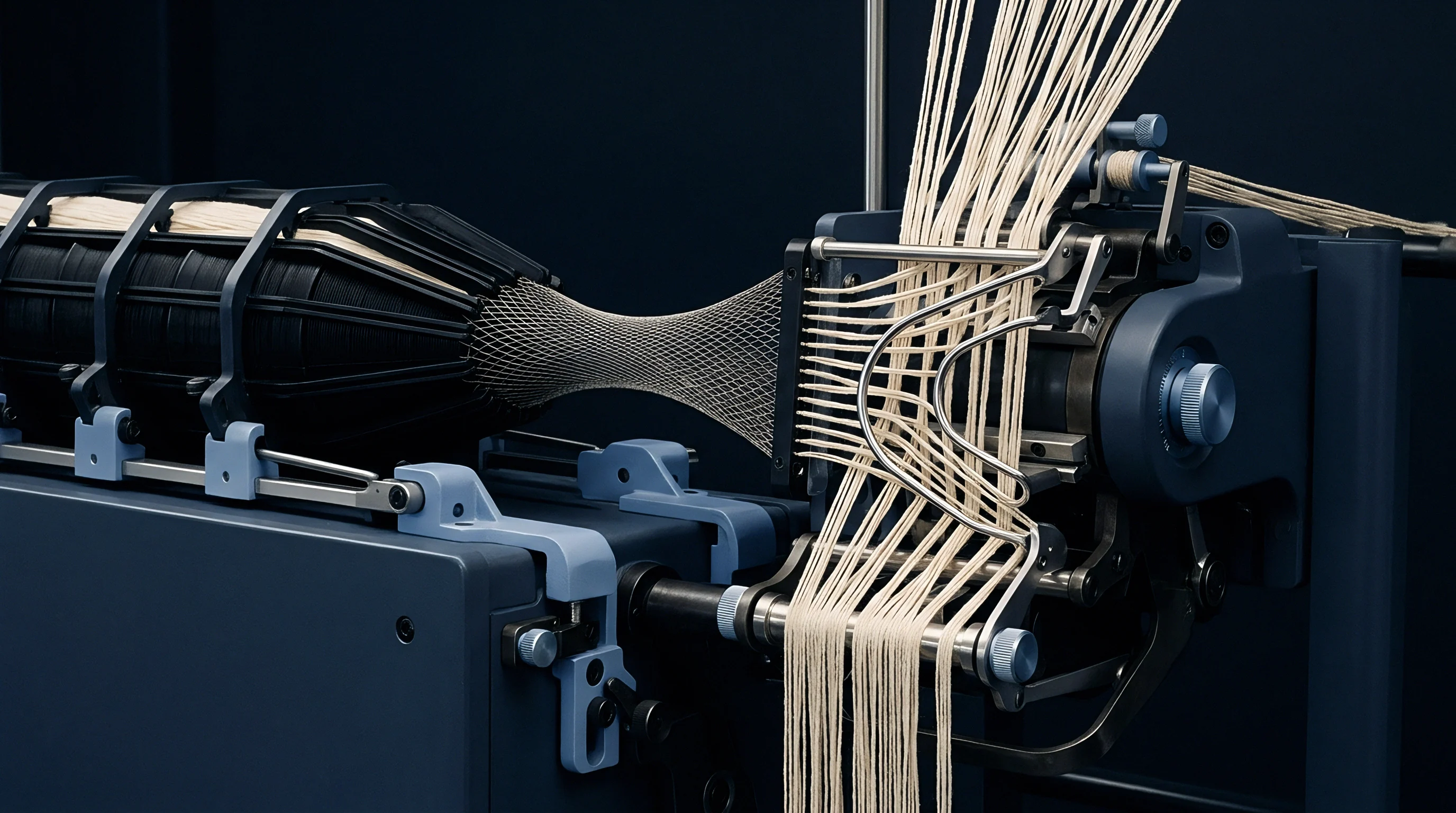
Accurate measurement of extended static creep under chemical softening requires standardized testing apparatus that isolate physical tension from ambient atmospheric fluctuations. Conventional tensile testing machines measure dynamic pull-to-break or short-term cyclic recovery, failing to capture long-term static creep decay under chemical influence. A dedicated creep testing rig applies continuous static hanging weights or controlled mechanical screw tension to isolated yarn strands or narrow fabric strips immersed in specified chemical baths.
The testing framework holds samples at fixed elongation levels while recording force decay through digital load cells or measuring elongation under constant mass through optical encoders. The testing chamber maintains environmental isolation, controlling relative humidity within two percent and temperature within half a degree Celsius. Sample mounting clamps require pneumatically actuated smooth jaws coated with synthetic rubber to prevent jaw-breaks or sample slippage, which skew creep measurements.
| Specification Parameter | Iso 20932 Modified Static | Astm D3107 Extended Modification | Desk Benchmark Standard |
|---|---|---|---|
| Applied Static Load | 1.5 N per tex core | 3.0 kg flat mass | 2.0 N per tex core |
| Test Duration | 24 hours | 8 hours | 72 hours continuous |
| Chemical Immersion Method | Pre-dip padding 80% wet pickup | Direct bath spray inside chamber | Controlled padding with 100% liquor retention |
| Temperature Control | 20 plus minus 2 deg C | 21 plus minus 1 deg C | 23 plus minus 0.5 deg C |
| Acceptable Set Threshold | Less than 8.0% after 1 hour rest | Less than 10.0% after 2 hours rest | Less than 4.5% after 4 hours rest |
Step-by-Step Test Execution Protocol
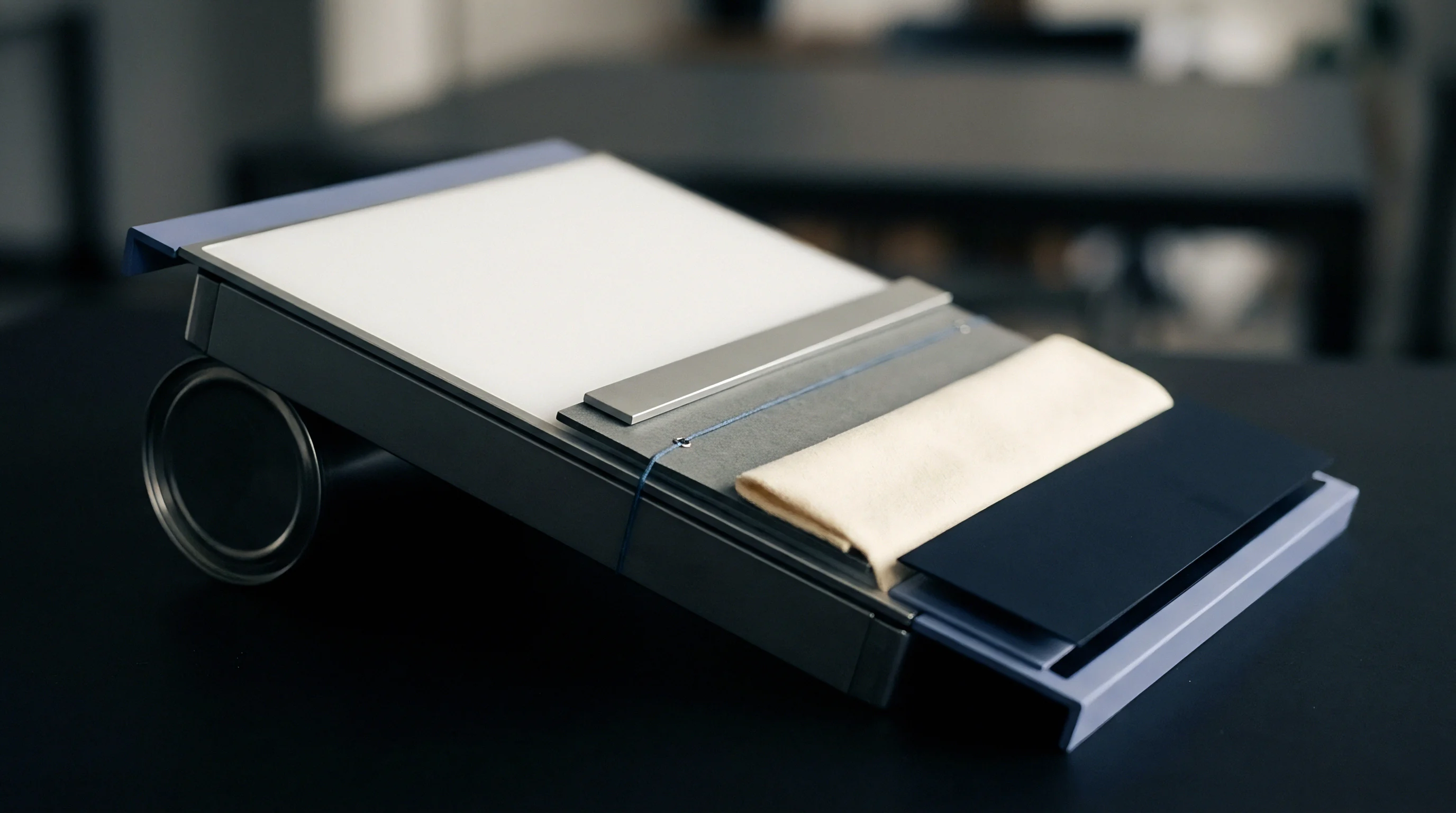
- Condition elastomeric core yarn samples for twenty-four hours at twenty-three degrees Celsius and sixty-five percent relative humidity in standard atmospheric chambers.
- Mount yarn strands into pneumatic capstan grips, maintaining a gauge length of two hundred fifty millimetres between clamp contact points without pre-tension stretching.
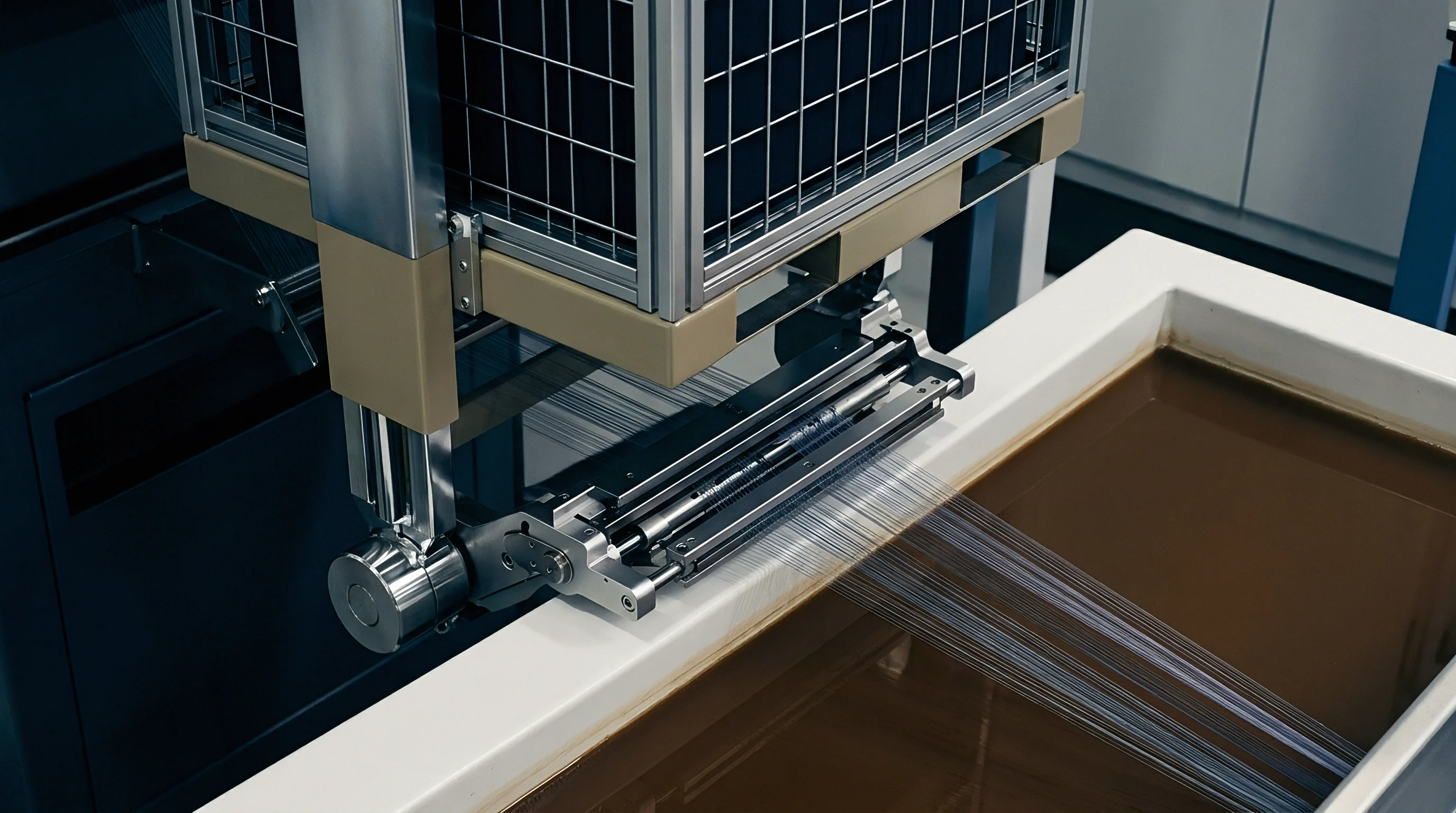
- Apply specified chemical softener emulsion via high-precision liquid dosing pumps to achieve uniform eighty percent wet pickup across the yarn sample length.
- Lower the static mass load equivalent to two Newtons per tex onto the bottom grip platform within five seconds without impact shock.
- Engage laser displacement sensors to measure gauge length expansion continuously at intervals of one second for seventy-two hours.
- Release the static load after seventy-two hours and record immediate recovery length within thirty seconds of load removal.
- Allow samples to rest unconstrained on flat teflon surfaces for four hours before measuring final permanent set length.
Clamping pressure must balance sample security against mechanical damage, as excessive clamp force crushes softened elastomeric cores and initiates premature shear failure at the grip line.
Boundary
Establishing Critical Strain Retained Limits
Defining creep thresholds requires setting strict upper limits for permanent deformation and lower limits for retained elastic force. Standardizing these boundaries protects downstream converting operations from fabric dimensional instability, garment distortion, and stretch recovery degradation. Creep boundaries divide into two measurable criteria: maximum allowable tension set percentage after extended load release, and minimum allowable elastic modulus retention after chemical exposure.
When an elastomeric core undergoes static tension equivalent to fifty percent elongation for seventy-two hours under chemical softening, permanent tension set must remain below five percent of original gauge length. Retained elastic force at one hundred percent elongation must remain above eighty percent of the unsoftened baseline value. Cores exceeding five percent tension set experience structural relaxation, causing fabric bagging at high-stress garment zones like knees and elbows.
Uncontrolled static creep during stenter drying or roll storage leads to permanent fabric width loss, high garment assembly reject rates, and total loss of recovery power in finished goods.
Creep Compliance Sensitivity across Elastomeric Formulations
Synthetic elastomeric cores exhibit varying chemical resistance based on their crosslinking chemistry and polymer backbone composition. Polyether-based segmented polyurethanes offer superior hydrolytic stability, yet demonstrate vulnerability to swelling when exposed to siloxane-based softeners. Polyester-based polyurethanes provide resistance to solvent swelling, but degrade when exposed to acidic cationic softener baths.
Crosslinked polyolefin elastomers lack polar functional groups, resisting chemical solvation and maintaining low creep compliance figures across fatty acid and silicone finish applications.
Comparative evaluations under standard test conditions illustrate these chemical differences. In a trial of three forty-denier core yarns ~ a polyether polyurethane, a polyester polyurethane, and a crosslinked polyolefin elastomer, each wrapped with textured filament nylon ~ all samples were treated with a twenty percent concentration of macro-emulsion silicone softener at eighty percent wet pickup, followed by seventy-two hours of static loading at two Newtons per tex.
The polyether polyurethane exhibits a final static creep extension of twelve point four percent and a four-hour permanent set of six point two percent. The polyester polyurethane shows a creep extension of nine point eight percent and a permanent set of four point eight percent. The crosslinked polyolefin elastomer maintains a creep extension of three point six percent and a permanent set of one point eight percent.
The polyolefin core preserves its structural matrix due to its non-polar aliphatic hydrocarbon structure, which limits silicone solvent insertion.
Under ISO 20932 modified test conditions, a permanent tension set exceeding five percent after four hours of unconstrained recovery marks a lot rejection threshold for high-performance stretch applications.

Finishing Bath Parameter Controls
Controlling chemical softening parameters requires managing bath concentration, drying temperature, and dwell time. Finishing plants often increase softener dosage to compensate for harsh greige fabric hand resulting from aggressive scouring or dyeing processes. Excess softener concentration drives core plasticization beyond critical boundaries.
| Finishing Parameter | Minimum Safe Boundary | Maximum Upper Boundary | Critical Failure Consequence |
|---|---|---|---|
| Softener Bath Concentration | 5 g/L active content | 15 g/L active content | Core plasticization and rapid static creep expansion |
| Stenter Chamber Temperature | 110 deg C | 140 deg C | Thermal crosslink breakdown and accelerated matrix swelling |
| Fabric Dwell Time in Stenter | 30 seconds | 60 seconds | Excessive solvent penetration into core interior |
| Batch Roll Winding Tension | 0.8 N/cm width | 1.5 N/cm width | Extended static load storage deformation on the A-frame |
Finishing mills operating outside these process windows incur permanent elastomeric damage, forcing buyers to reject full production lots due to inconsistent fabric width and poor recovery power.
Verification

Dyehouse Audit and Laboratory Testing Integration
Verifying static creep compliance requires establishing a chain of custody for elastomeric performance from raw yarn receipt through finished fabric rolling. Mills perform incoming quality control on raw elastomeric packages before weaving or knitting, but this testing reflects only unsoftened yarn baseline values. The critical audit point occurs after wet finishing, where chemical softeners and thermal exposure have exerted their combined effect on the embedded core.
Dyehouse verification audits inspect bath chemical logs, stenter temperature charts, and winding tension settings. Inspectors collect fabric samples immediately upon exit from the stenter frame, allowing them to cool and condition in sealed vapor-barrier bags to prevent moisture loss prior to laboratory evaluation. Laboratory testing measures fabric static recovery alongside isolated core creep performance extracted from finished goods.
- Four-Point Inspection with Creep Sampling requires cutting full-width bench samples every five hundred metres of production to run rapid twenty-minute static strain screening tests.
- Solvents Extraction Analysis utilizes gravimetric solvent extraction to quantify total silicone and fatty acid softener deposition on the core yarn versus sheath fibers.
- Thermal History Verification uses differential scanning calorimetry on extracted cores to confirm that stenter temperatures did not exceed the polymer melting peak of urethane hard segments.
- Differential Shade and Stretch Audit checks batch-to-batch consistency in fabric width, stretch percentage, and recovery force across light box illuminants D65, TL84, and CWF.
Contractual specifications must incorporate mandatory creep performance clauses: Fabric lots exhibiting extended static creep greater than five percent or elastic modulus loss exceeding fifteen percent after standardized chemical bath immersion shall be deemed non-conforming, subject to immediate lot rejection at the supplier expense.

Contract
Commercial Specifications and Landed Cost Arithmetic
Standardizing extended static creep thresholds directly impacts commercial fabric contracts, price negotiations, and risk distribution between buyers, converters, and mills. Elastomeric cores engineered for high chemical resistance carry higher raw material costs. A crosslinked polyolefin elastomeric core commands a premium of twenty-five to thirty-five percent over standard polyether polyurethane yarns.
Synthetic core selection influences total landed cost per finished metre, balancing yarn costs against potential claim liabilities from garment distortion.
A buyer contracting for fifty thousand metres of high-stretch woven fabric with a seventy denier elastomeric core faces a base fabric cost of four dollars and twenty cents per metre. Selecting a standard polyether polyurethane core with an aggressive macro-emulsion silicone finish yields a finished fabric cost of four dollars and sixty-five cents per metre, including wet finishing fees. Selecting a premium crosslinked polyolefin core with an optimized micro-emulsion silicone finish increases finished fabric cost to four dollars and eighty-eight cents per metre.
If the standard core fabric undergoes static creep during storage on batch rolls under high winding tension, twenty percent of the lot exhibits width narrowing beyond specification tolerances. The buyer rejects ten thousand metres, resulting in a primary financial loss of forty-six thousand five hundred dollars in fabric, plus air freight delays and factory seam-rejection penalties totaling twenty-two thousand dollars. The unit cost savings of twenty-three cents per metre achieved by selecting the cheaper core configuration creates a net liability exposure of sixty-eight thousand five hundred dollars on a fifty thousand metre order.
Contractual agreements incorporate tiered tolerance bands that link physical performance thresholds directly to invoice settlement terms. Fabric lots demonstrating static creep within target limits receive full invoice clearance. Lots landing in marginal creep categories trigger automatic mill rebates to cover cutting table adjustments, while lots exceeding upper boundary thresholds trigger complete contract cancellation and scrap return rights.
Specifying precise testing standards, wet pickup limits, and creep recovery thresholds within purchase orders converts invisible wet processing risks into enforceable commercial terms.