Resolving Interlaboratory Mass Discrepancies in Thermally Sensitive Regenerated Cellulose Regain Testing
Resolve interlaboratory regenerated cellulose regain disputes by substituting standard convective heating with 60°C vacuum drying or Karl Fischer titration.
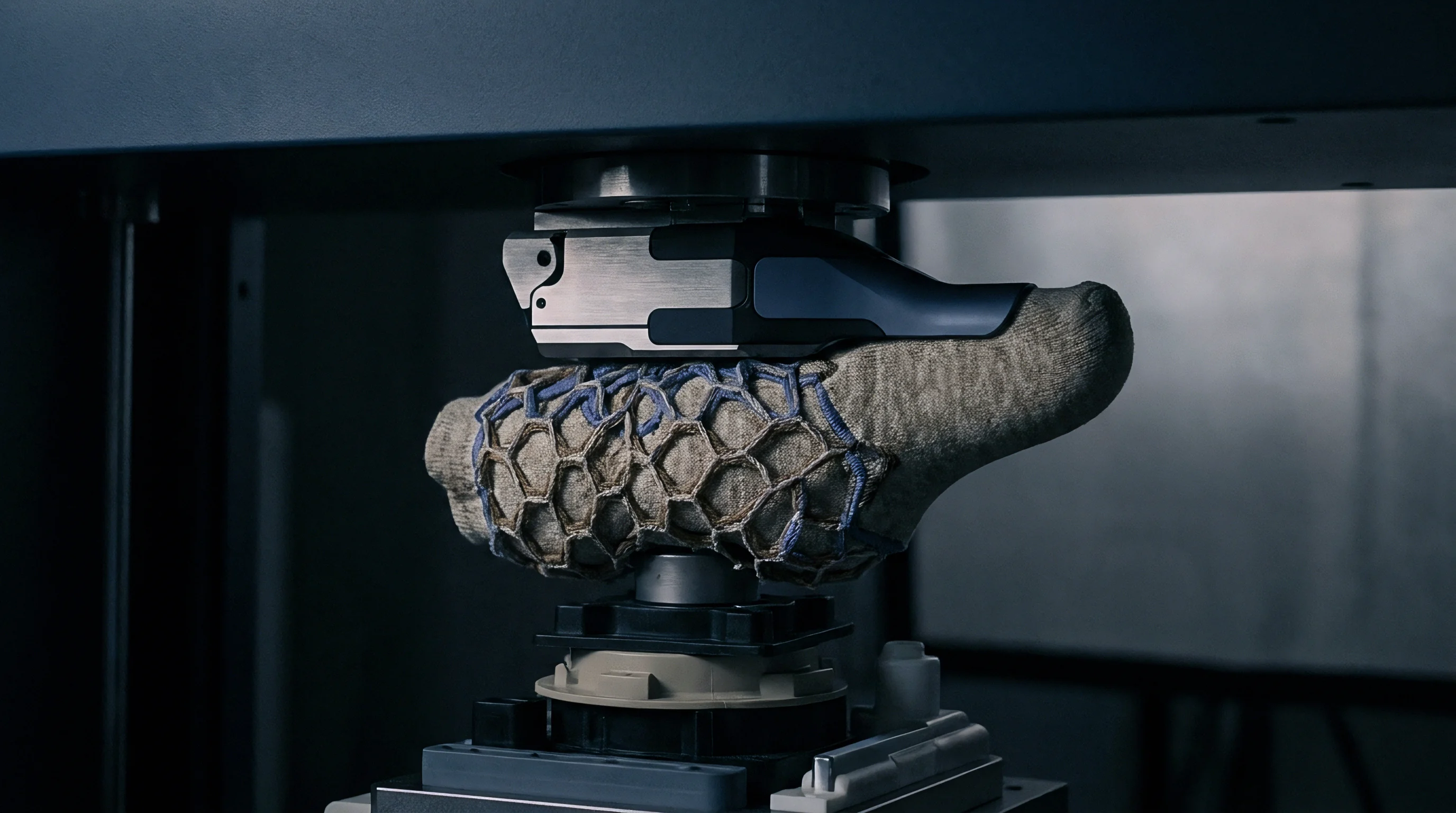
Drift
Commercial invoices for regenerated cellulosic filaments and staple yarn settle on dry weight multiplied by an agreed commercial moisture regain allowance. When testing facilities disagree on that baseline dry mass by even zero point six percent, a forty-tonne consignment of modal or lyocell yarn produces thousands of dollars in disputed billing. Testing personnel frequently attribute these discrepancies to atmospheric humidity during transit or bale conditioning errors.
The primary point of divergence originates inside the drying oven itself, where standard convective procedures driven by uncalibrated heating cycles alter polymer mass through thermal degradation.
Regenerated cellulosics, manufactured through the viscose xanthate, cuprammonium, or N-methylmorpholine N-oxide direct dissolution routes, exhibit lower degrees of polymerisation than virgin cotton. Viscose typically displays a degree of polymerisation between two hundred fifty and three hundred, whereas modal ranges from three hundred to four hundred, and solvent-spun lyocell reaches five hundred to six hundred. These shortened glucan chains terminate in abundant reducing end-groups.
When exposed to conventional forced-air drying chambers operating at one hundred and five degrees Celsius, these chemical end-groups undergo oxidation, dehydration, and early-stage chain cleavage long before natural cotton shows structural mass loss.
Regenerated lyocell heated past one hundred and five degrees Celsius loses approximately zero point four percent non-water mass through primary decomposition within four hours.
Standard testing schedules drawn from international norms specify drying at one hundred and five to one hundred and ten degrees Celsius until successive weighings separated by fifteen minutes differ by less than zero point zero five percent. Because regenerated fibres display pronounced hygroscopicity, conditioning them to true bone-dry mass demands extended oven dwell times. During these lengthy exposure windows, thermal cleavage strips volatile decomposition products from the yarn alongside desorbing water molecules.
The testing laboratory records this chemical loss as evaporated moisture, reporting an artificially elevated regain value that inflates the invoiced commercial mass.
Centrifugal extraction oils, antistatic surfactants, and cohesive spinning finishes compound this gravimetric error. Regenerated fibres carry between zero point three and one point two percent by weight of synthetic finish formulations. Many polysiloxane, ethoxylated alcohol, and fatty acid ester lubricants volatilize steadily between ninety and one hundred and ten degrees Celsius.
If one laboratory tests raw unwashed yarn in a high-velocity forced-convection oven while a reference facility scours the sample according to solvent extraction standards prior to drying, their final dry mass figures diverge systematically. The buyer pays for evaporated process chemicals under the guise of clean fibre mass, distorting landed costing across every subsequent manufacturing phase.


Heat
Cellulose degradation kinetics accelerate when atmospheric oxygen circulates across high-surface-area filament structures inside heated test chambers. In standard viscose, the amorphous fraction reaches sixty to sixty-five percent of the total volume, contrasted with approximately thirty percent in upland raw cotton. This extensive accessible amorphous volume permits ambient air to penetrate the entire microfibrillar network.
Weak hydrogen-bonded hydration shells decouple rapidly, followed immediately by oxidative attack on accessible carbon-six primary alcohol groups and beta-one-four glucosidic linkages.

Where Thermal Cleavage Outpaces Desorption?
Desorption curves plotted across isothermal holds demonstrate that water release from regenerated cellulose follows a two-stage thermodynamic decay. Surface water and capillary moisture vacate the fibre during the opening twenty minutes at ninety degrees Celsius. Bound water held by secondary hydroxyl groups on carbon-two and carbon-three requires substantially higher activation energy, releasing gradually as temperatures climb toward one hundred and five degrees.
In this identical thermal threshold, the oxidative peeling reaction initiates, liberating carbon dioxide, formic acid, and trace aldehydes.
Oven gravimetric procedures cannot differentiate between the mass lost as evaporated moisture and the mass lost through chemical peeling. The testing technician observes continuous mass reduction on the balance and assumes the sample remains incompletely dry. Prolonging the heating cycle to drive off the final tenth of a percent of bound water merely burns away pyranose monomers.
The mass loss curve never reaches a genuine horizontal plateau; it shifts from a steep desorption gradient into a steady linear degradation slope. Laboratories that terminate the test at ninety minutes record a higher dry mass than facilities that insist on drying for four hours.
- Spin finish volatilization discharges low-boiling lubricants before moisture clears the cell wall.
- Hemicellulose chain scission releases non-aqueous condensables at elevated temperatures, distorting dry mass readouts across prolonged heating intervals.
- Surface hornification traps residual hydrate clusters inside collapse-prone microfibrils, suppressing measured release.
Vacuum drying technology circumvents this degradation trap by lowering the boiling point of bound water without exposing sensitive polymer chains to thermal stress. Operating at sixty degrees Celsius under a residual pressure of ten millibars pulls moisture from the deep amorphous pockets of modal and lyocell within sixty minutes. Atmospheric oxygen remains absent from the vessel, suppressing oxidation and preventing end-group peeling.
Alternatively, Karl Fischer titration eliminates thermal gravimetry altogether by extracting cell-wall moisture with anhydrous methanol and measuring absolute water content through stoichiometric iodine consumption. Industrial laboratories continue using convective drying ovens primarily because standard commercial rules were drafted around mechanical apparatus designed half a century ago.
| Fibre Type | Degree of Polymerisation | Standard Commercial Regain (%) | Decomposition Onset (Air, °C) | Volatile Finish Loss at 105°C (%) |
|---|---|---|---|---|
| Viscose Staple | 250 ~ 320 | 13.0 | 102 ~ 106 | 0.35 ~ 0.60 |
| Modal Staple | 340 ~ 420 | 11.5 | 108 ~ 112 | 0.25 ~ 0.45 |
| Lyocell Filament | 520 ~ 620 | 11.0 | 115 ~ 120 | 0.15 ~ 0.30 |
| Cupro Filament | 380 ~ 460 | 12.5 | 104 ~ 108 | 0.20 ~ 0.40 |
| Scoured Cotton | 1800 ~ 2400 | 8.5 | 135 ~ 142 | 0.05 ~ 0.12 |
Thermal stability variations between different production batches of the same generic fibre category further complicate laboratory alignment. Viscose produced from dissolving wood pulp containing four percent residual hemicellulose exhibits earlier mass loss than dissolving pulp derived from cotton linter sources. Hemicellulose fractions such as xylan and glucomannan possess lower activation energies for thermal decomposition, shedding mass at temperatures as low as ninety-five degrees Celsius.
A spinning mill importing viscose from two distinct pulp suppliers experiences diverging dry-weight outcomes under identical oven schedules.
The exact thermodynamic tipping point where chemical decomposition surpasses remaining water desorption remains undefined across commercially variable spinning finishes and pulp chemistries.

Vial
Specimen transfer protocols between heating chambers and measurement apparatus generate substantial interlaboratory divergence. Oven-dry regenerated cellulose acts as a voracious desiccant. A ten-gram specimen of bone-dry viscose exposed to a standard room atmosphere of twenty degrees Celsius and sixty-five percent relative humidity absorbs over zero point one percent moisture within forty-five seconds.
Technicians who open oven chambers, extract samples with tongs, and transfer them into open weighing pans invalidate their measurements before the balance settles.
- Pre-drying weighing containers eliminates baseline condensation before raw specimen insertion. Failure to desiccate the receptacle generates phantom mass increments.
- Hermetic ground-glass sealing prevents ambient vapour ingress during the transport transfer across open laboratory bays.
- Equilibrated cooling intervals stabilize internal chamber air pressure prior to balance actuation, avoiding convection buoyancy uplift on the knife-edge pan.
- Rapid mechanical taring isolates actual fibre weight within twenty seconds of desiccator removal.
Cooling procedures within glass desiccators introduce secondary physical measurement artifacts. When a sealed weighing bottle containing hot fibre enters a desiccator, the enclosed air expands and forces its way past the ground-glass stopper. As the container cools to ambient temperature, an internal partial vacuum develops.
Placing this depressurized bottle onto an analytical balance produces an erroneous downward weight indication. Releasing the stopper to equalize air pressure introduces moist room air into the vessel, instantly raising specimen mass. Proper execution mandates using ground-glass vessels equipped with capillary pressure-equalizing stopcocks and active synthetic zeolites rather than spent silica gel.
Hot weighing bottles generate convective updrafts that lift balance pans and register false deficits.
Air currents inside balance draft shields represent another persistent source of measurement noise. A specimen container transferred directly from an oven or insufficiently cooled in a desiccator warms the air directly surrounding the weighing pan. The rising convective current exerts an upward buoyant force against the bottom of the container, while the reduction in local air density alters balance calibration.
A vessel weighed ten degrees above ambient air registers lower mass than its true physical value. In regenerated cellulosics, where specimen mass must be known within one milligram to satisfy international precision bands, convective lift easily corrupts the third decimal place.
Warm vessels always read lighter on the pan than cold ones.
Variance
International standard methods establish explicit numerical limits for acceptable testing variation. ISO 6741 prescribes commercial mass determination for textile fibres, while ASTM D2654 and ISO 1833 outline procedures for moisture conditioning and quantitative chemical separation. Despite these codified instructions, round-robin trials across certified commercial laboratories frequently reveal moisture regain spreads exceeding one point two percentage points on identical packages of regenerated modal and viscose.
These differences emerge directly from operational divergences in airflow velocity, temperature gradient uniformity across the oven cavity, and finish extraction protocols.
Whose Balance Dictates Commercial Weight?
Determining the legally recognized commercial mass of a shipment requires converting measured laboratory dry weight into invoiced weight through international trade coefficients. Commercial regain allowances are contractual legal fictions, set at eleven percent for lyocell, eleven point five percent for modal, and thirteen percent for conventional viscose under international cotton and man-made fibre rules. If testing house Alpha records a dry mass of eight thousand seven hundred kilograms on a ten-tonne sample lot by drying at ninety-five degrees under vacuum, it calculates invoiced viscose weight at nine thousand eight hundred and thirty-one kilograms.
If laboratory Beta aggressively bakes the same lot at one hundred and ten degrees in convective air, burning away polymer end-groups to yield a dry mass of eight thousand six hundred and twenty kilograms, the calculated invoice mass drops to nine thousand seven hundred and forty kilograms. Ninety-one kilograms of paid material disappears entirely through testing methodology.
Finer filaments shed moisture faster and decompose earlier than coarse staple fibres in convection chambers.
Drying oven internal aerodynamics dictate local thermal exposure. In large commercial ovens processing twenty baskets simultaneously, filament packages situated adjacent to electric heating coils experience temperatures up to seven degrees higher than packages resting in the exhaust airstream. Regenerated fibres resting in hot zones undergo accelerated degradation, while samples in dead zones retain residual bound moisture.
Laboratories lacking multipoint thermocouple certification generate internal variances that exceed international interlaboratory reproducibility boundaries.
- Direct temperature sensor log validates whether the heating chamber operated within two degrees of the specified setpoint throughout the cycle.
- Moisture-free weighing bottle tare confirmation confirms empty vessel dry weights were logged immediately prior to specimen intake.
- Karl Fischer cross-validation record supplies solvent-extracted reagent titration figures to benchmark against convective gravimetric outcomes.
Spinning mills purchasing regenerated staple fibre must manage these discrepancies through tight procurement contracts. Technical managers frequently encounter commercial rejections based on external test reports from downstream knitting plants. An external laboratory will report that a shipment of modal yarn failed composition or regain standards, prompting financial debit notes against the yarn manufacturer.
In reality, the mill testing department employed rapid moisture balances utilizing infrared heaters, while the customer facility ran twelve-hour convection ovens that scorched the fibre.
| Test Parameter | Regime A: Vacuum Oven (60°C) | Regime B: Standard Oven (105°C, 2h) | Regime C: Aggressive Oven (110°C, 4h) |
|---|---|---|---|
| Measured Residual Dry Weight (%) | 88.60 | 88.15 | 87.40 |
| Effective Moisture Regain (%) | 12.87 | 13.44 | 14.42 |
| Contract Commercial Regain Applied (%) | 13.00 | 13.00 | 13.00 |
| Lot Commercial Invoice Weight (kg) | 40,047 | 39,843 | 39,504 |
| Financial Invoiced Delta at $2.40/kg | +$113 (Base) | -$376 | -$1,190 |
The vendor routinely claims the yarn leaves the spinning frame at exact legal moisture content and that any deficit represents testing degradation in the customer laboratory.

Audit
Commercial contracts and purchase specifications for regenerated cellulosic yarns must establish strict arbitration mechanisms to manage laboratory divergence before production lots leave the spinning mill. Relying on generic references to international testing standards invites financial dispute. Standard test methods permit operational latitudes, such as alternative drying temperatures or optional finish extractions, that directly shift final gravimetric figures.
Sourcing agreements must explicitly name the primary laboratory, specify the precise drying apparatus, define the pre-drying extraction steps, and state the exact temperature tolerances permitted during testing.
Cross-border customs classifications heighten the financial stakes of moisture regain accuracy. Under international trade tariffs, Chapter 54 and Chapter 55 distinguish pure regenerated cellulosic yarns from multi-fibre blends containing small percentages of synthetic polymer. Quantitative chemical dissolution testing under ISO 1833 isolates synthetic components by dissolving the cellulosic fraction in cold sixty-seven percent sulphuric acid or zinc chloride solutions.
If thermal degradation during the preliminary oven-drying phase distorts the initial dry mass of the regenerated cellulose, the calculated percentage of the insoluble synthetic component shifts artificially. A yarn engineered to contain precisely ninety-five percent modal and five percent elastane can record five point eight percent elastane if the cellulosic matrix sustains thermal mass loss during testing. Crossing the five percent threshold can alter preferential origin status, reclassify the material under alternate duty codes, and trigger border penalties.
Landed cost calculations must incorporate the moisture-testing tolerance band into the initial price per finished metre. If an enterprise purchases high-tenacity lyocell filament at four dollars and twenty cents per kilogram, a zero point eight percent interlaboratory moisture dispute translates to a direct cost variance of three point four cents per kilogram. Across a monthly weaving consumption of two hundred tonnes, that discrepancy represents an unhedged operational exposure of over eight thousand dollars per month.
Technical buyers who leave testing methodology undefined transfer direct margin to yarn suppliers whose testing houses systematically report lower dry masses.
Invocation of ISO 6741 commercial allowance terms overrides local gravimetric oven findings when laboratory temperatures exceed contract specifications.
Arbitration protocols must mandate Karl Fischer titration or sixty-degree vacuum oven drying as the sole legal settlement method in disputed transactions. Convection drying at one hundred and five degrees Celsius must be explicitly restricted to non-binding internal process control. When a buyer drafts a commercial contract incorporating the standard arbitration clause of the International Bureau for the Standardisation of Man-Made Fibres, the agreement binds both trading parties to settle invoices based on neutral testing houses operating within these verified low-temperature thermal boundaries.