Managing Non Equilibrium Solvent Extraction Transients in Coated Fabric Certification
Non-equilibrium solvent extraction transients skew coated fabric testing; controlling dwell kinetics and edge boundary transport secures reliable eco-certification.


Matrix
Synthetic polyurethane and polyvinyl chloride coatings on woven carrier fabrics form dense organic barriers that dictate how chemical solvents are absorbed. Verifying compliance requires extracting target analytes from these layered structures by submerging cut swatches in organic solvents to pull out restricted processing aids, plasticizers, and residual monomers. As solvent molecules penetrate synthetic elastomeric topcoats, the liquid swells the polymer network and alters the free volume available for mass transport.
This process differs from simple liquid dissolution, as crosslinked polymers resist penetrating fluid molecules structurally.

Polymer Dissolution and Solvent Mass Diffusion
Submerging coated swatches in organic liquid baths during compliance testing causes chemical compounds to migrate out of the solid film along concentration gradients. Methanol, dichloromethane, and tetrahydrofuran swell flexible synthetic coatings rapidly. As solvent molecules enter the coating, local polymer concentration falls and free volume expands, allowing residual solvents locked inside the matrix—such as N-methyl-2-pyrrolidone, N,N-dimethylformamide, and N,N-dimethylacetamide—to move toward the surface.
Swelling kinetics directly alter these mass transfer rates.
Initial mass diffusion rates depend largely on whether the elastomeric film stays in a glassy state or transforms into a solvated gel network. Glassy polymers have low diffusion coefficients, locking residual solvents within dense molecular chains. Heating extraction baths above ambient temperature shifts the coating into a rubbery state, accelerating solvent ingress and analyte release through dense polymeric skins that otherwise absorb solvent slowly.

Boundary Swelling and Phase Boundary Migration
Substrate characteristics and topcoat thickness govern how quickly liquid penetrants reach deeper layers during sample preparation. Coated technical fabrics contain distinct phase boundaries: an outer skin coat, a porous foam layer, an adhesive tie coat, and a textile core woven from filament yarns. Each layer has its own solvent sorption profile and swelling coefficient, causing extraction fronts to move sequentially through the cross section and create non-uniform concentration profiles.
Thicker polymeric topcoats double the required solvent dwell time before analytical extraction reaches equilibrium saturation.
The boundary layer between the surface coating and the liquid bath creates external mass transfer resistance. High agitation rates thin this boundary layer, encouraging rapid transport of released analytes into the solvent. Low agitation allows stagnant fluid layers to settle around the swatch, slowing compound release and creating artificial extraction plateaus.
Testing before the elastomeric topcoat reaches full solvent saturation yields volatile results that understate total chemical concentration.
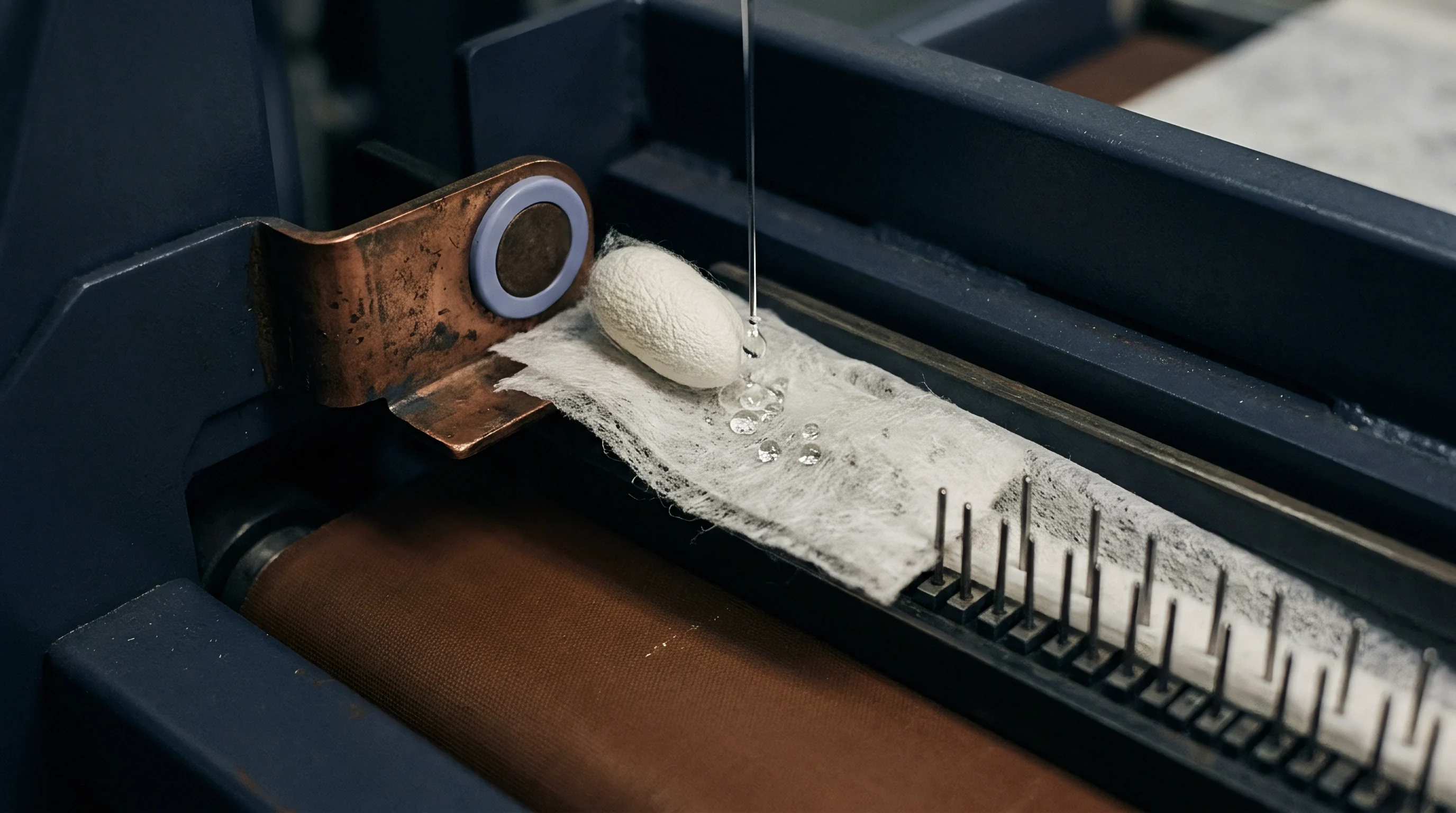

Transient
Extraction durations in standard eco-certification protocols frequently end while chemical mass transport is still in flux. Standard methods like EN 17137 and DIN 54231 set fixed extraction times of thirty to sixty minutes. For thick polyurethane coatings or heavily plasticized polyvinyl chloride films, sixty minutes is insufficient to reach thermodynamic equilibrium.
Analytes measured at these early points reflect transient extraction states rather than the total residual solvent payload in the fabric lot.

Mass Transport Kinetics during Ultrasonic Dwell
Standard analytical procedures using thirty-minute liquid bath agitation capture inconsistent analyte fractions depending on specimen dimensions and fluid temperature. Ultrasonic agitation applies acoustic energy that disrupts boundary layers and drives liquid into microscopic voids in the coating. While ultrasound accelerates initial mass transfer, it does not alter total thermodynamic solubility limits.
During the first fifteen minutes of exposure, target analyte release spikes sharply as surface-bound residues dissolve into the bath.
Abbreviated agitation times often produce false compliance results.
- Incomplete Solvation Truncation stopping extraction before the elastomeric film swells completely leaves up to forty percent of target residual solvents locked inside the inner coat layer.
- Transient Concentration Spikes rapid localized breakdown of plastisol stabilizers during heated bath cycles causes temporary analyte surges that skew gas chromatography baselines.
- Substrate Preferred Wicking unsealed sample edges let fluid infiltrate internal core yarns directly, bypassing topcoat diffusion resistance and inflating short-term recovery figures.
- Solvent Evaporative Concentration Shifts prolonged thermal exposure in open extraction vessels alters solvent volume ratios, introducing systematic errors during target ion quantification.

Temperature Curves and Partition Coefficients
Applying thermal energy during extraction lowers fluid viscosity and expands free volume within synthetic coatings. Raising the bath temperature from thirty degrees Celsius to sixty degrees Celsius increases target compound diffusion coefficients by an order of magnitude. The partition coefficient—the concentration ratio of target analyte in the polymer phase versus the solvent phase—shifts continuously as temperature rises and the solvent swells the matrix.
| Coated Fabric Type | Target Solvent Analyte | Bath Temp (°C) | Dwell Time (min) | Extraction Yield (%) | Equilibrium State |
|---|---|---|---|---|---|
| Polyurethane Coated Polyester | N-Methyl-2-pyrrolidone | 30 | 30 | 42.5 | Non-Equilibrium |
| Polyurethane Coated Polyester | N-Methyl-2-pyrrolidone | 60 | 30 | 78.1 | Non-Equilibrium |
| Polyurethane Coated Polyester | N-Methyl-2-pyrrolidone | 60 | 120 | 99.4 | Equilibrium Saturation |
| Polyvinyl Chloride Plastisol | N,N-Dimethylformamide | 40 | 30 | 51.0 | Non-Equilibrium |
| Polyvinyl Chloride Plastisol | N,N-Dimethylformamide | 60 | 90 | 98.7 | Equilibrium Saturation |
| Data measured across technical fabric lots using EN 17137 GC-MS method modifications; yields expressed relative to 180-minute total Soxhlet reference extraction baseline. | |||||
Under 60 degrees Celsius extraction in methanol for 60 minutes, dimethylformamide yields exceed 500 milligrams per kilogram.
Temperature changes boundary layer solubility values, while controlled heat input accelerates mass transport toward true saturation equilibrium. Similar kinetics govern active constituent release in pharmaceutical transdermal patches, where controlled polymer swelling regulates drug diffusion across synthetic membranes. Dynamic extraction yield variance is sensitive to coat thickness: on a 1.2 millimeter polyurethane topcoat measured across five mill production lots, a ten percent variance in coating thickness alters thirty-minute extraction recovery by plus or minus fourteen percent.
Relying on non-equilibrium extraction yields during brand compliance audits produces misleading certificates, leaving importers vulnerable to product recalls when market surveillance authorities perform extended equilibrium extractions.


Clamp
Containing specimen boundaries during laboratory preparation isolates topcoat mass diffusion from capillary suction along raw edges. Standard punch dies expose bare filament edges around cut perimeters. When submerged, extraction solvents migrate rapidly through exposed core yarns via capillary action, bypassing the high-resistance topcoat entirely.
This edge short-circuiting creates artificial extraction rate spikes during short test cycles.

Edge Sealing and Specimen Preparation Controls
Standard die punching creates fresh cut perimeters where open texturized yarns absorb extraction liquids without passing through the protective synthetic film. Sealing specimen edges ensures topcoat surface diffusion remains the sole mass transport mechanism. Technicians apply inert glass edge clamps or fluoropolymer sealants over cut perimeters before placing swatches into extraction flasks, preventing exposed interior yarns from contacting the solvent directly.
- Cut rectangular swatches measuring exactly fifty millimeters by one hundred millimeters using a calibrated stainless steel die punch.
- Apply a thin line of inert polytetrafluoroethylene edge sealant along all four freshly exposed sample perimeters.
- Secure specimen perimeters using specialized glass edge retainers before inserting swatches into extraction flasks.
- Add fifty milliliters of analytical grade methanol to the flask and initiate temperature-controlled agitation.
- Extract samples at sixty degrees Celsius for ninety minutes to achieve near-equilibrium mass transfer across the surface coating.

Why Do Extraction Times Shift Residual Polyurethane Limits?
Extended fluid exposure allows solvent molecules to penetrate crosslinked elastomer networks that remain untouched during brief screening runs. Polyurethane coatings contain hard and soft segments arranged in complex micro-phase domains. Short extraction cycles harvest residual solvents bound in soft segments while leaving compounds trapped inside crystalline hard domains unmeasured.
Over longer dwell times, solvent molecules disrupt hard-domain hydrogen bonding, releasing latent N-methyl-2-pyrrolidone or N,N-dimethylacetamide into the liquid phase and pushing measured concentrations above regulatory limits.
Substrate absorption mechanics alter target compound release rates during dynamic solvent agitation.
Glass clamps isolate edge mass transfer. Mechanical edge containment stabilizes non-equilibrium extraction kinetics, yielding reproducible analytical data across testing runs. Residual solvent detected after long extraction cycles can stem from laboratory matrix degradation under extended testing rather than unevaporated processing chemicals remaining in the coating.


Verification
Regulatory compliance audit programs evaluate coated fabrics against chemical threshold limits using standardized laboratory testing protocols. Verification relies on matching certified batch records against actual chemical content in imported containers. When certification schemes accept test reports generated under truncated, non-equilibrium extraction protocols, border authorities operating under full equilibrium test conditions detect non-compliant solvent residues.

Analytical Standard Methods and Regulatory Thresholds
OEKO-TEX Standard 100 Annex 6 and REACH Regulation EC 1907/2006 Annex XVII Entry 72 impose mandatory limits on polar organic solvents in coated textiles. REACH Annex XVII Entry 72 restricts N-methyl-2-pyrrolidone, N,N-dimethylformamide, and N,N-dimethylacetamide to an individual maximum of 300 milligrams per kilogram in clothing and technical apparel. OEKO-TEX Standard 100 Class I imposes a 500 milligram per kilogram total polar solvent limit for infant articles.
REACH Annex XVII Entry 72 restricts N-methyl-2-pyrrolidone content in clothing textiles to 300 milligrams per kilogram, triggering immediate border detention upon audit failure.
| Regulation / Standard | Target Solvent | Limit Value (mg/kg) | Reference Test Method | Specified Extraction Dwell |
|---|---|---|---|---|
| REACH Annex XVII Entry 72 | N-Methyl-2-pyrrolidone | 300 | EN 17137 | 60 min at 60°C |
| REACH Annex XVII Entry 72 | N,N-Dimethylformamide | 300 | EN 17137 | 60 min at 60°C |
| OEKO-TEX Standard 100 Class I | Total Polar Solvents | 500 | OEKO-TEX Method | 60 min at 60°C |
| OEKO-TEX Standard 100 Class IV | N,N-Dimethylacetamide | 1000 | OEKO-TEX Method | 60 min at 60°C |
| California Proposition 65 | N-Methyl-2-pyrrolidone | Safe Harbor Limits | EN 17137 Variant | 120 min Soxhlet Ref |

Quantification Mechanics and Retest Variance Limits
Gas chromatography combined with mass spectrometry measures extracted target ions against calibrated reference curves. Consider a 40-tonne lot of polyurethane-coated polyester fabric submitted for OEKO-TEX Standard 100 Class I certification carrying a 500 milligram per kilogram N,N-dimethylformamide threshold, screened using a truncated 30-minute ultrasonic extraction at 40 degrees Celsius instead of the reference 60-minute extraction at 60 degrees Celsius.
Under non-equilibrium conditions at 40 degrees Celsius for 30 minutes, kinetic extraction yield reaches only 58 percent of total extractable solvent, producing a gas chromatography measurement of 320 milligrams per kilogram. Because 320 milligrams per kilogram falls below the 500 milligram threshold, the laboratory issues a pass certificate. When a market surveillance authority retests the fabric using a full 60-minute extraction at 60 degrees Celsius, extraction yield reaches 96 percent.
The resulting measurement yields a calculated value of 529.6 milligrams per kilogram, exceeding legal allowances and triggering shipment detention.
Regulatory authorities retest retained lots using standard equilibrium methods.
Laboratory swell tests show up to an eighteen percent variance in non-equilibrium extraction yields across testing facilities due to differences in ultrasonic bath power output. Given this uncertainty, buyers typically require full 120-minute equilibrium extraction reports whenever an initial batch test falls within twenty percent of regulatory thresholds.
- Method Duration Verification confirm that testing laboratory reports document explicit sixty-minute extraction dwell times at sixty degrees Celsius rather than abbreviated screening runs.
- Matrix Swelling Calibration require laboratory documentation of calibration curves generated using polymer-matched reference swatches to account for extraction yield kinetics.
- Boundary Leakage Audit inspect retention sample swatches to ensure edge clamping protocols prevented core yarn liquid bypassing during extraction agitation.
- Gas Chromatography Mass Recovery Check review deuterated internal standard recoveries to verify that matrix co-extractives did not suppress target ion signal response during mass spectrometry quantification.
Incorporating OEKO-TEX Standard 100 Annex 6 Clause 4 into mill purchase agreements shifts compliance verification from raw initial test scores to full equilibrium extraction validation records.


Ledger
Commercial purchase orders for coated technical textiles assign financial liability for non-compliant chemical residues detected during customs clearance. Testing protocols that rely on non-equilibrium extraction windows hide residual solvent risks until containers reach destination ports, where importers of record hold legal accountability for product safety.

Commercial Exposure and Border Detention Mechanics
Customs authorities in importing territories conduct random sampling under national product safety frameworks. Under EU Market Surveillance Regulation 2019/1020, enforcement officers pull sample swatches directly from landed containers. Surveillance laboratories use exhaustive extraction parameters to ensure complete analyte recovery.
When testing reveals residual N-methyl-2-pyrrolidone or N,N-dimethylformamide levels above legal limits due to non-equilibrium discrepancies in the mill certificate, authorities issue import rejections and order shipment destruction.
Port seizures eliminate the commercial margin of a shipment immediately.

Contractual Allocation of Chemical Retest Costs
Sourcing practices mitigate border hold risks by establishing clear purchase order terms that cover laboratory methodology and retest cost allocation. Purchase contracts should explicitly specify extraction parameters, fluid temperatures, and minimum agitation durations for all chemical compliance verifications. When mill-supplied certificates rely on truncated extraction cycles, buyers face substantial commercial risk unless custom compliance clauses allocate testing liability and retention samples are held to resolve mill disputes.
Whether standardized certification schemes will adopt dynamic solvent extraction correction factors to account for polymer topcoat thickness variations remains an open question for international compliance bodies.