Shed Layout
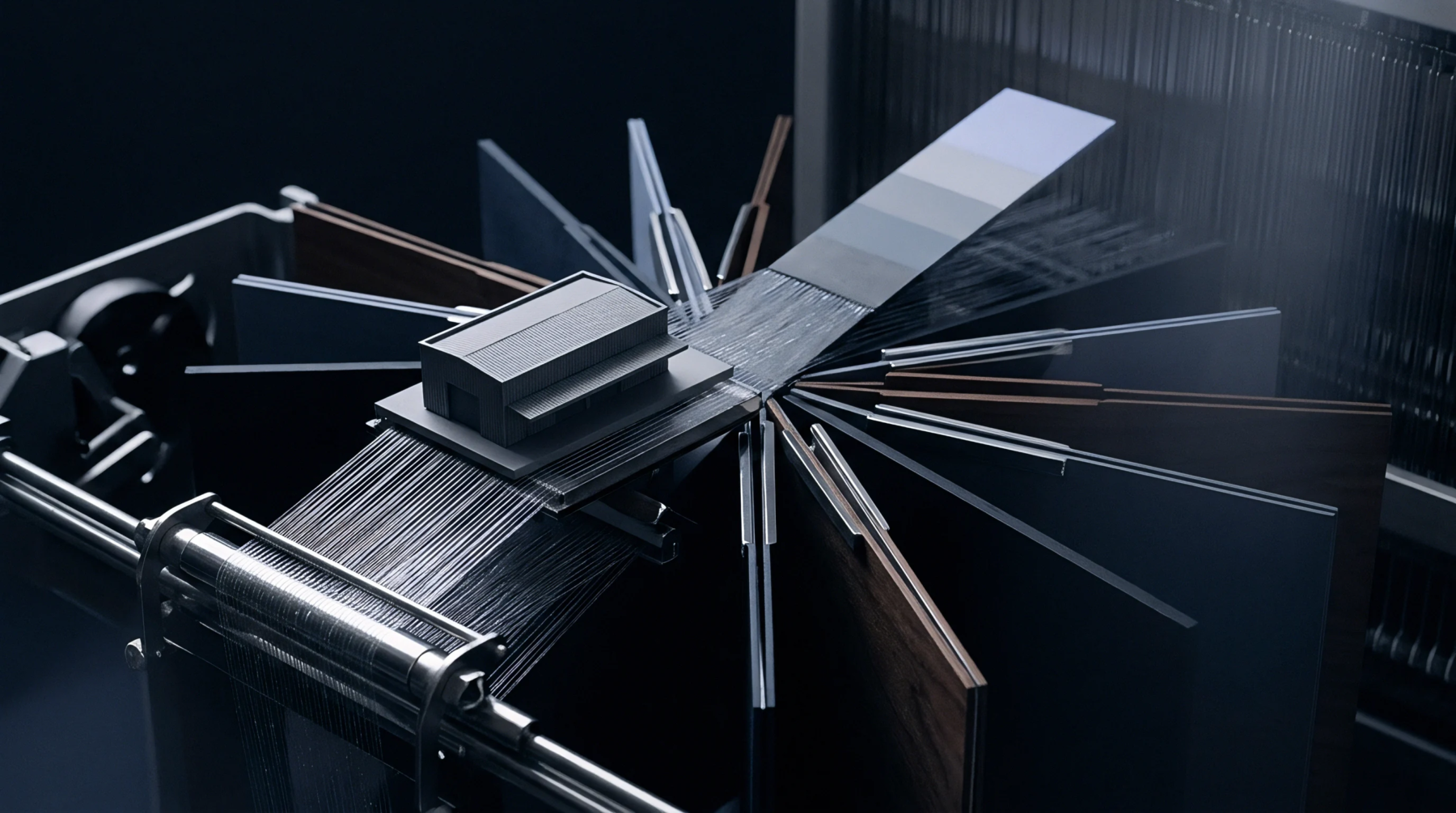
Loom shed formation establishes unequal geometry between the upper and lower warp lines during shed opening. Setting asymmetric shed geometry shifts the backrest roll position above or below the neutral warp line to create different path lengths for top and bottom threads. This structural difference imposes higher tension on the lower warp sheet when the shed opens fully.
The configuration applies to high-density filament and spun weaving processes on air-jet, rapier, or projectile looms. It stops applying when neutral shed symmetry is restored or when jacquard harness ties require uniform tension across all sheds.
Tension Differential
Divergent path lengths force the tightened warp line to bear heavy beat-up stress while the slackened line allows adjacent ends to yield. In asymmetric shed geometry, slack top ends move laterally during reed impact, which spreads individual yarns across the reed gap. This lateral shifting fills spaces between warp threads to eliminate reed marks in dense fabric constructions.
High warp tension on the lower line prevents shed sagging, maintaining clean passage for insertion elements.
Warp Deflection
Vertical movement of the whip roll alters the mechanical advantage of the warp tensioning system. Mechanical adjustments raise or lower the backrest relative to the heald eye center, shifting the vertex of the open shed. Lowering the backrest slackens the bottom sheet, whereas raising the backrest tightens it during shed formation.
These physical movements alter peak yarn tension during shedding, modifying the mechanical stress profile experienced by individual ends.
Fabric Cover
Fabric surface uniformity increases when loose warp ends align across previous pick intersections. Applying asymmetric shed geometry produces smoother face appearance in high-count poplin and twill weaves. Unequal tension prevents yarn grouping, producing flat weave structures during continuous production runs.