Dyeing Defect
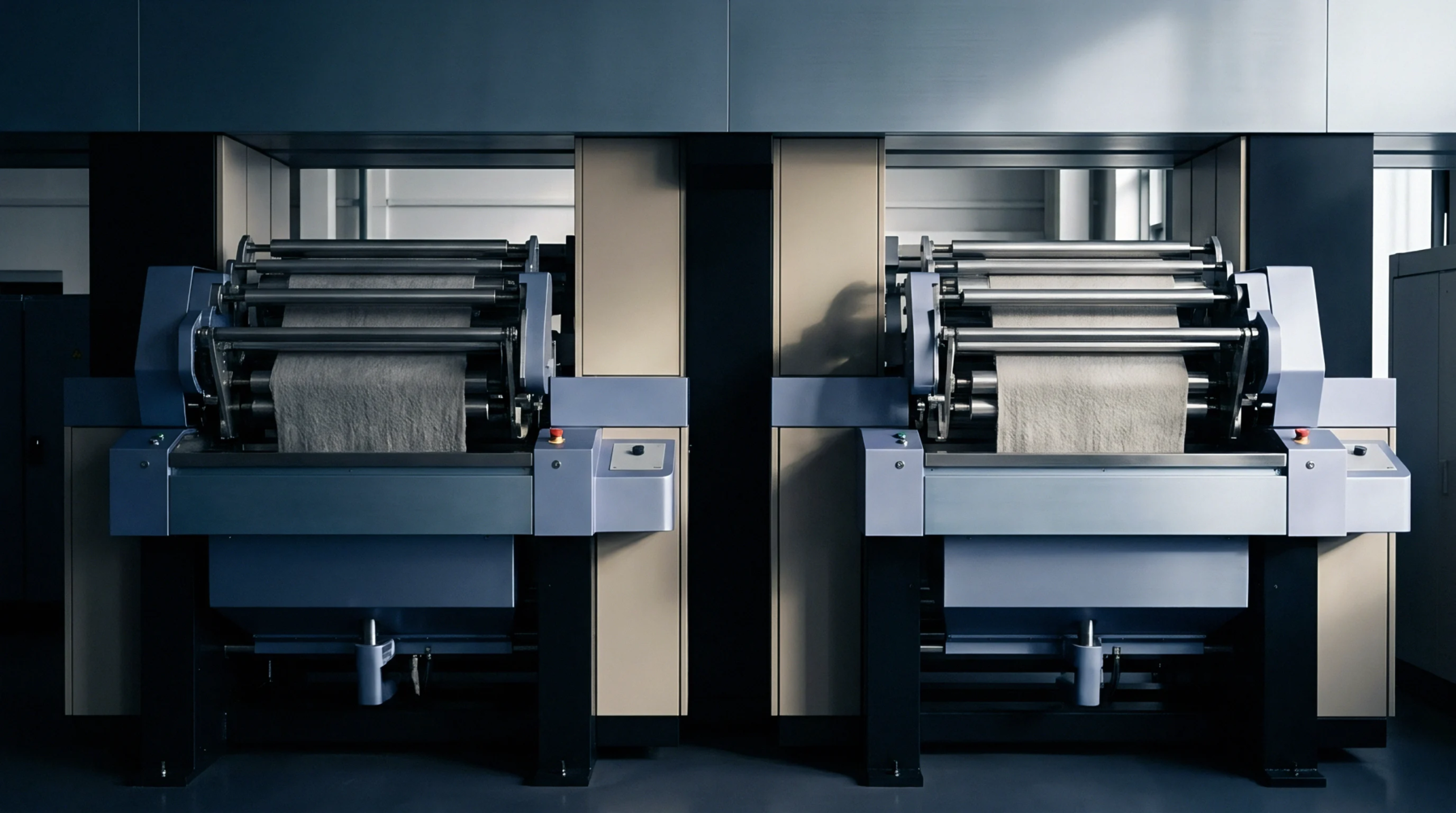
Colorimetric variance across the width of a continuously dyed fabric represents a major challenge in industrial continuous dye ranges. Such variation, known as center to selvage shade tailing, appears as a gradual shift in depth or hue from the middle of the fabric roll toward the outer edges. This defect occurs during wet processing and is usually confined to padders or continuous migration during drying.
Mechanical Action
Pressure imbalances across the face of the dye padder squeeze rolls force more dye liquor into some areas of the web than others. When the roll ends experience higher pressure than the center, a greater volume of dye accumulates in the middle of the fabric. This creates a visible shade difference that runs the entire length of the production batch.
Process Consequence
Improper migration control during infrared pre-drying accelerates this uneven distribution as moisture evaporates. Severe tailing causes the rejection of finished fabric rolls because the panels cannot be matched during garment assembly.
Dye Range Control
Routine measurement of liquor pick-up across the fabric width using high-speed moisture sensors prevents the development of these defects. Operatives adjust roll pressure manually to maintain a uniform moisture profile before the fabric enters the drying oven.