Drying Phase
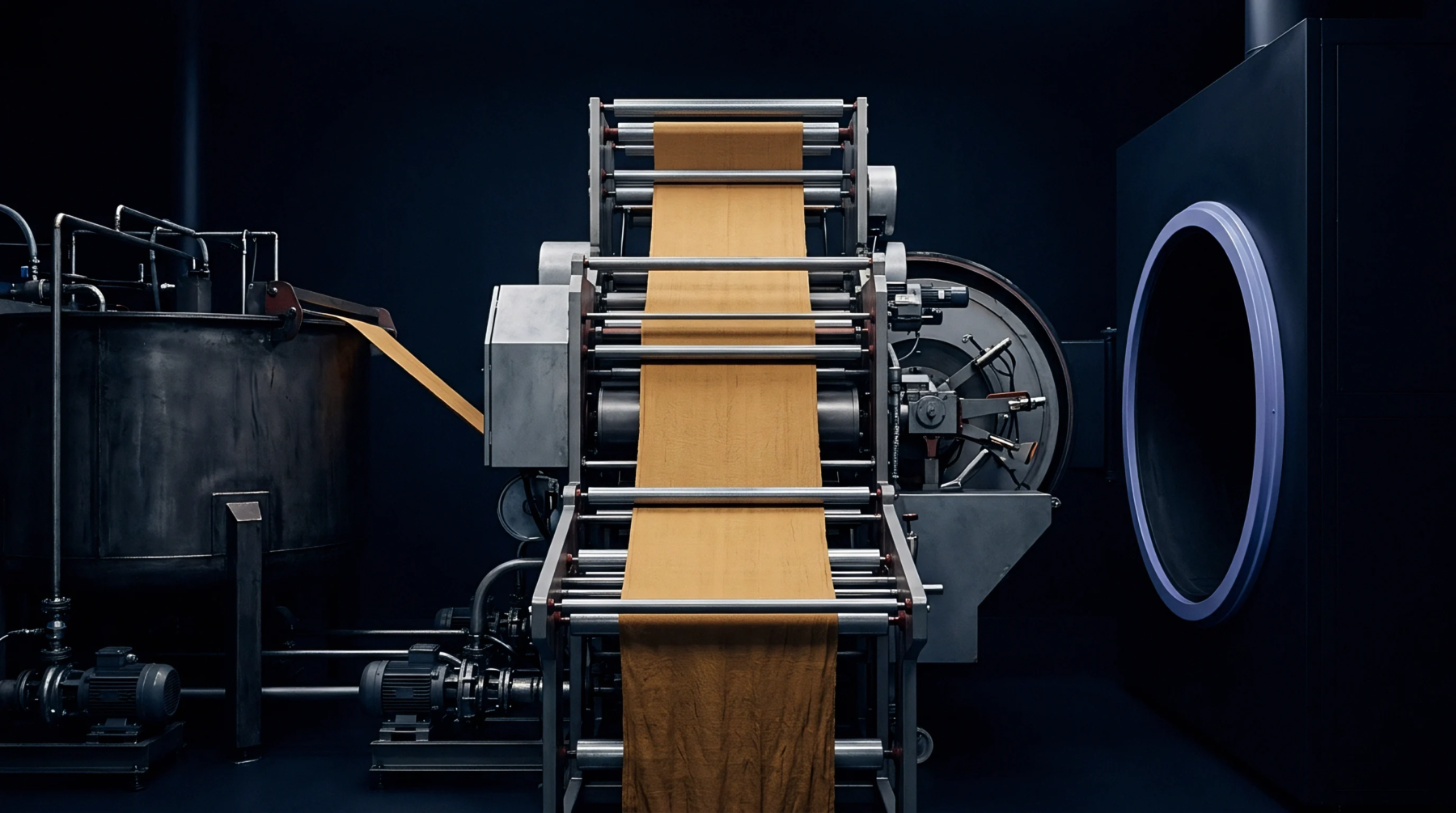
Moisture evaporation slows down because the liquid on the textile surface is depleted and the remaining water must travel from the fiber core. This specific phase of moisture removal is called falling rate drying, and it dominates the final stage of garment finishing. The energy consumption during this period is higher than during the initial drying phase.
Internal Mechanism
Liquid transport depends on diffusion through the solid polymer rather than simple surface wicking. Heat from the dry air must penetrate deep into the fibers to release trapped water molecules. This slows the drying rate because the dry polymer layer acts as a barrier to heat transfer.
Process Transition
The critical transition point between the constant and declining moisture loss periods occurs when the fabric surface loses its saturated liquid film. Once this boundary is crossed, the falling rate drying phase begins and the temperature of the fabric starts to rise toward the temperature of the dry air. Process control systems monitor this shift to avoid overheating.
Production Consequence
Overheating dry fabrics leads to fiber degradation or discoloration of the batch. Precise control of the line speed prevents the fabric from staying in the dryer too long during this slow phase.