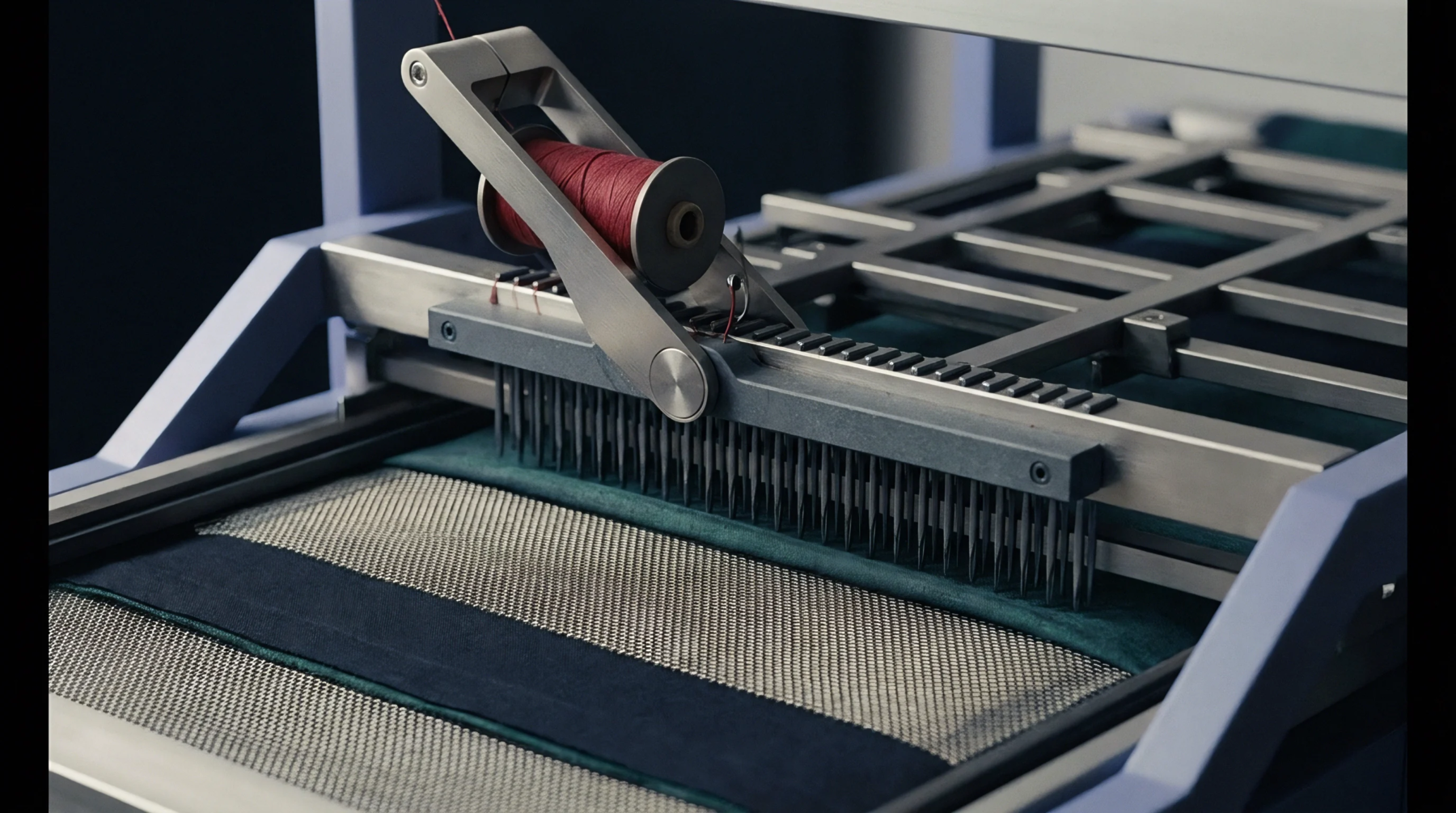
Greige Thread Density Influence on Wet Fabric Relaxation
Greige thread density limits wet fabric relaxation by establishing inter-yarn friction boundaries that block yarn swelling and crimp interchange during finishing.
The measurement of warp ends per cm represents the frequency of individual longitudinal yarns placed within a defined width of a loom setup before a shuttle or rapier introduces filling yarns. This density standard fixes the physical composition of a woven fabric by quantifying the specific count of lengthwise yarns occupying a space of ten millimeters. Production facilities rely on this count to calculate total yarn requirements for a production run.
Deviations from the specified count produce unintended shifts in the finished goods weight and hand feel. Proper calibration requires an automated counting glass or a manual needle pick on a flat surface to confirm the alignment of yarns against a calibrated ruler. Accuracy depends on the tension applied during the measurement process because loose yarns tend to shift and create errors in the result.
Fabric construction specifications rely on warp ends per cm to ensure consistency across batches. A mill manager evaluates the loom state to verify that the reed density aligns with the intended fabric width. Machines require this specific setting to maintain the structural integrity of the final goods.
High counts increase the opacity of a textile while low counts allow more air permeability. Engineers adjust the harness movement to accommodate these variations in yarn placement during the setup stage. Bulk production verification occurs at the inspection table where graders count the yarns under high magnification.
Any variance from the initial setup triggers a recalibration of the reed or the tension beams. These controls prevent the output of sub-standard material that fails to meet the technical sheet.
Yarn distribution across the width of the fabric determines the mechanical limits of a garment or interior textile. This spatial arrangement governs how a fabric performs during sewing operations and long-term use. Increased counts restrict the movement of individual yarns within the structure and improve the dimensional stability of the item.
Fabric stability is a direct outcome of this density because tight groupings reduce the gaps where yarns shift out of position. Manufacturers choose the count based on the load requirements of the final product application. Low counts promote flexibility but risk yarn slippage at the seam lines.
High counts provide abrasion resistance but demand precise needle selection to avoid damage during assembly.
Compliance with the target warp ends per cm acts as a baseline for all downstream finishing processes. Chemical treatments or heat setting steps alter the final width of the product and modify the density established at the loom. Finishing agents react differently depending on the volume of fiber available per surface unit area.
Standard testing procedures at a laboratory quantify the finished state to determine if the processing caused excessive shrinkage or distortion of the structure. Producers accept a narrow tolerance range to account for natural fiber movement. Precise control of this metric prevents the total failure of the physical properties in the finished product.
Greige thread density limits wet fabric relaxation by establishing inter-yarn friction boundaries that block yarn swelling and crimp interchange during finishing.
Expertise is a utility, not a secret. sentiention™ publishes its working knowledge as open reference: intelligence layer covering the materials it sources, the markets it enters, and the reference that serves both.