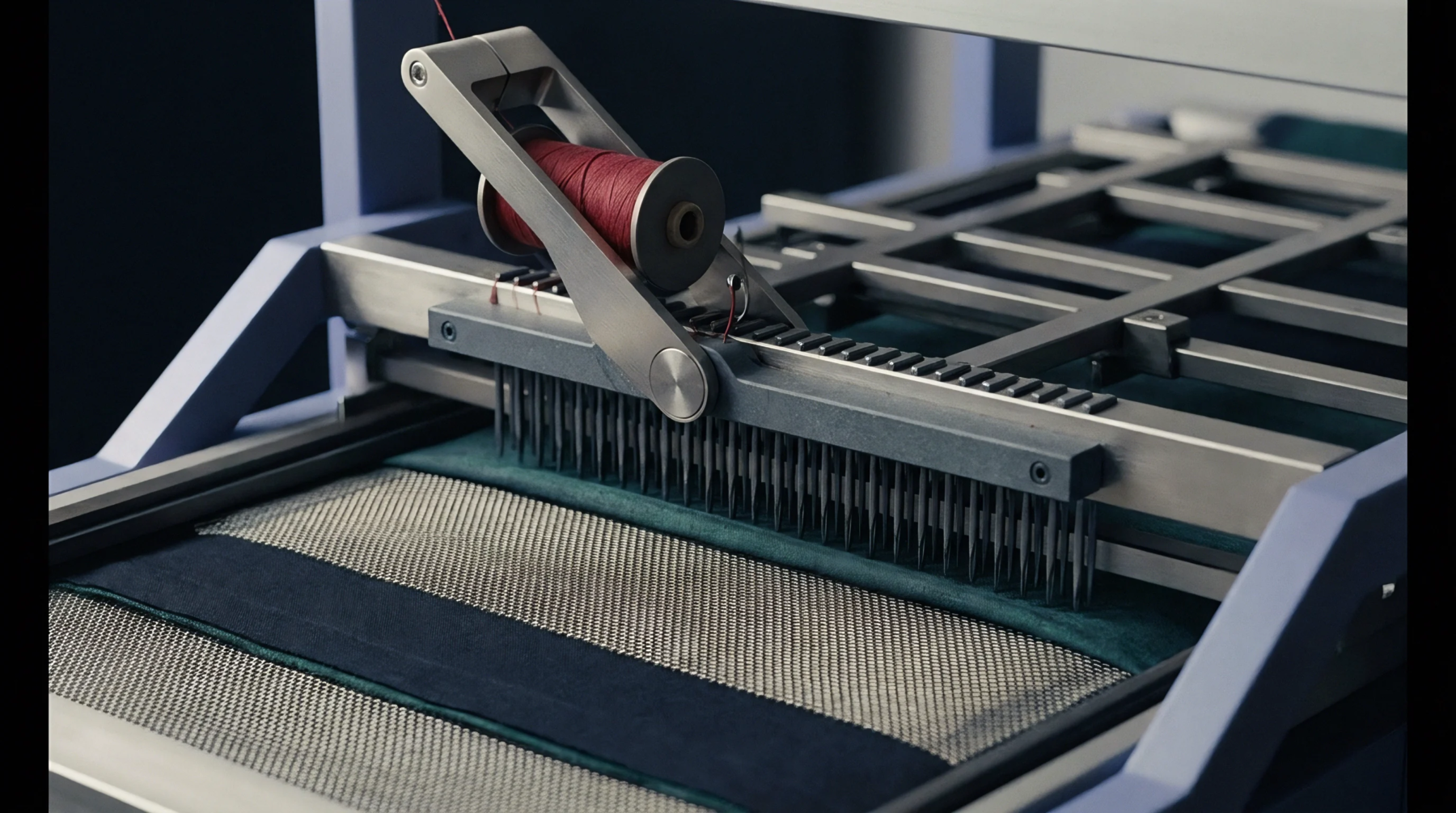
Greige Thread Density Influence on Wet Fabric Relaxation
Greige thread density limits wet fabric relaxation by establishing inter-yarn friction boundaries that block yarn swelling and crimp interchange during finishing.
Fibre equilibrium denotes the physical state where internal stresses accumulated during yarn spinning or fabric weaving dissipate under total immersion in aqueous environments. Wet fabric relaxation identifies this state as the objective metric for predicting latent shrinkage before garment assembly. Manufacturers monitor this value to prevent size deviation after consumer laundering cycles.
Water molecules penetrate polymer chains, reducing intermolecular forces that lock deformed fibres into temporary arrangements. Mechanical tension applied during finishing processes holds these yarns in a distorted, non-equilibrium position until immersion allows the structure to recover its natural geometry.
Factories utilize controlled submersion procedures to quantify the contraction potential inherent in raw greige goods before final heat setting. Analysts calculate the area change observed after drying to determine if mechanical stretch exceeds the tolerance of the finished garment dimensions. Standardized testing protocols prescribe exact temperatures and cycle durations to ensure results remain consistent across different batches.
High precision scales measure specimen mass before and after drying to account for moisture regain influences on the final weight reading. Variations in yarn twist density change how quickly moisture penetrates the fibre core. Dense twill weaves resist quick wetting compared to open jersey constructions, requiring extended soak times to ensure the textile reaches its true state of rest.
Commercial mills report significant discrepancies between lab results and bulk production due to differences in machine tension settings during final pass finishing. Tension monitors on tenter frames exert constant pull on the fabric edge to maintain width, yet this pull hides latent shrinkage potential inside the warp yarns. Inspectors correlate the laboratory results with observed edge curling in the cutting room.
A fabric piece exhibiting stability in a static vat often displays different behaviour when processed through continuous steamers. Water temperature variations also shift the total shrinkage observed, as higher heat levels soften synthetic polymers more effectively than cold water.
Quality control departments accept or reject incoming shipments based on the maximum allowed shrinkage percentage defined in the technical specification. Buyers verify that the fabric construction matches the intended end use by checking these relaxation values against historical data logs. If the measured contraction exceeds the specified tolerance, workers adjust the heat setting dwell time to lock the fibres in their final dimension.
Proper preparation ensures that the garment stays true to size throughout the garment life cycle. Measurements obtained through this method provide the primary evidence for assessing the performance of treated fibres under standard cleaning conditions. Accurate testing allows designers to draft patterns with the correct allowance for inevitable movement.
Constant surveillance of these metrics limits the financial loss associated with returns caused by excessive post-production size distortion.
Greige thread density limits wet fabric relaxation by establishing inter-yarn friction boundaries that block yarn swelling and crimp interchange during finishing.
Expertise is a utility, not a secret. sentiention™ publishes its working knowledge as open reference: intelligence layer covering the materials it sources, the markets it enters, and the reference that serves both.