Caustic Mercerization Effects on Cotton Microfibrillar Swelling Behavior
Caustic mercerization at 28-30° Bé converts Cellulose I to Cellulose II, rounding microfibrils to boost dye uptake by 30% and warp strength by 15%.
Lye
Alkali Penetration Kinetics within Native Cellulosic Chains
Dyehouse hydrometer checks on caustic baths frequently register 28 to 30 degrees Baumé, corresponding to sodium hydroxide concentrations between 270 and 300 grams per litre. At this density, the aqueous liquor alters the molecular geometry of raw cotton fibers. Native cotton microfibrils consist of highly ordered crystalline domains interrupted by amorphous regions, bound tightly by intra- and intermolecular hydrogen bonds between adjacent glucan chains.
Penetration of sodium ions into these dense microfibrillar aggregates requires a specific ionic hydration radius that only forms within narrow concentration and temperature thresholds. When caustic concentration drops below 20 degrees Baumé (approximately 170 grams per litre), the sodium ions remain encased in large hydration shells, limiting their physical access to amorphous fiber spaces and preventing lattice entry.
Raising the concentration into the optimal window strips a portion of the hydration envelope from the sodium cations. The reduced ionic diameter permits these unhindered cations to force their way into the crystalline core of the microfibril. As sodium ions invade the inter-chain voids, they disrupt the hydroxyl-to-hydroxyl hydrogen bonding network holding the Cellulose I lattice together.
The microfibrils swell laterally, increasing their diameter while contracting longitudinally along the fiber axis.
ISO 1159 test protocols demonstrate that un-tensioned caustic immersion reduces total fiber length by 12 to 15 percent while doubling cross-sectional swelling area.
Temperature controls the speed and uniformity of this penetration sequence. Caustic bath temperatures held between 15 and 20 degrees Celsius promote maximum lattice expansion by stabilizing the sodium-cellulose complex. Higher temperatures, exceeding 35 degrees Celsius, increase kinetic motion and disrupt the structural coordination required for deep microfibrillar entry, leading to ring mercerization where only the outer microfibrillar sheath undergoes transformation.
Hydration Shell Dynamics and Hydroxyl Disruption
Caustic liquor interaction converts the compact hydroxyl matrix into reactive alcoholate groups. Microfibrillar bundles consist of parallel glucan chains packed in the Cellulose I structural arrangement. Sodium ions form complex coordination spheres with the hydroxyl groups at the C-2, C-3, and C-6 positions of the anhydroglucose ring.
This complexation forces the parallel microfibrillar sheets apart, relieving the natural structural twist of the cotton ribbon.
Process control relies on maintaining structural uniformity across every incoming greige lot. Variations in greige wax content, pectin residual levels, or fabric moisture content alter the diffusion rate of sodium hydroxide into the microfibrillar interior. Non-uniform wetting causes localized swelling differentials, generating structural streaks that become visible only after piece dyeing.
- Caustic concentration threshold requires strict maintenance at 28 to 30 degrees Baumé to guarantee complete swelling across the microfibrillar core.
- Bath temperature stabilization between 15 and 18 degrees Celsius prevents kinetic degradation of the sodium-cellulose complex during continuous immersion.
- Wetting agent formulation must remain stable in high-alkali liquor to strip natural waxes and promote instantaneous microfibrillar liquor ingress.
- Impregnation dwell time demands a minimum of 30 seconds of active contact to allow complete chemical diffusion through high-twist yarn centers.
When dyehouse managers complain about uneven color depth across wide woven goods, chemical suppliers frequently argue that greige yarn count variations caused the differential absorbency rather than poor caustic concentration management on the pad frame.
Lattice

Crystallographic Reorientation and Monomer Alignment
X-ray diffraction analysis records a permanent crystalline transition when wet processing applies concentrated caustic soda to native cellulosic fibers. Cotton microfibrils in their natural state exhibit the Cellulose I crystal structure, characterized by parallel polymer chain orientation. Sodium hydroxide impregnation converts this structure into intermediate Na-Cellulose I complexes.
Subsequent aqueous washing and neutralization steps collapse these complexes into the thermodynamically stable Cellulose II lattice, where adjacent polymer chains adopt an antiparallel orientation.
This conversion alters the structural packing of the microfibrils. Amorphous regions expand at the expense of the rigid crystalline domains, reducing the overall crystallinity index from approximately 70 percent down to 50 to 55 percent. The increase in amorphous volume multiplies the number of accessible hydroxyl groups available for chemical bonding and water vapor sorption.
Microfibrils uncoil their helical pitch, driving the fiber from a kidney-bean cross-section toward a uniform cylindrical form.
| NaOH Concentration (°Bé) | Temperature Range (°C) | Microfibrillar Swelling State | Predominant Crystal Lattice | Crystallinity Index (%) |
|---|---|---|---|---|
| 12 ~ 16 | 20 ~ 25 | Surface Inter-fibrillar Swelling | Cellulose I (Unconverted) | 68 ~ 72 |
| 20 ~ 24 | 20 ~ 25 | Partial Intra-crystalline Swelling | Cellulose I + Na-Cellulose I | 60 ~ 64 |
| 28 ~ 30 | 15 ~ 20 | Full Intra-crystalline Swelling | Cellulose II (Post-Wash) | 50 ~ 55 |
| 28 ~ 30 | 45 ~ 50 | Heterogeneous Sheath Swelling | Mixed Cellulose I & II | 58 ~ 62 |
Morphological Evolution of Microfibrillar Core
Microscopic examination of treated cotton cross-sections confirms the complete elimination of the central lumen. As the microfibrils swell inward and outward simultaneously, internal pressure forces the lumen walls together, sealing the hollow central cavity. Fiber surface smooths out, removing the surface striations typical of raw cotton ribbons.
Untwisting microfibrils remove mechanical light scattering points along the fiber wall, increasing specular reflection across the fabric face.
The structural rounding of the microfibrillar bundle directly alters the physical flexural rigidity of the yarn. Chains arranged in the antiparallel Cellulose II configuration exhibit higher lateral flexibility. This structural rearrangement reduces internal fiber friction, enhancing the soft hand and drape of high-density woven constructions.
Does the microfibrillar shift from Cellulose I to Cellulose II fully revert if fabric undergoes high-temperature acidic post-finishing steps?
Tension
Axial Restraint and Microfibrillar Realignment
Applying mechanical force along the warp axis during caustic impregnation controls the final orientation of the swollen microfibrils. Unrestrained immersion lets microfibrils contract lengthwise while expanding laterally, yielding high elongation but minimal luster gains. High-tension processing pulls the plasticized, swollen microfibrils into tight parallel alignment along the fiber axis before the caustic liquor is washed out.
Mechanical tension prevents the random buckling of glucan chains during the lattice transition. As microfibrils align parallel to the longitudinal axis, their internal structural symmetry increases. High axial tension forces the microfibrils closer together, forming new inter-chain hydrogen bonds in the stretched position when the alkali is removed by warm water sprays.
Calculations for tensioned mercerization balance warp draft force against fabric width control on stenter clip frames. Excess tension stretches the microfibrils beyond their elastic limit, inducing micro-tears along the primary cell wall. Insufficient tension permits crimp exchange between warp and weft yarns, causing unstable fabric dimensions and irregular light reflectivity.
Does Chainless Mercerization Eliminate Edge Strain Variations?
Chainless roller frames rely on a series of expanding curved rollers to maintain fabric width during caustic contact. While chainless systems handle high throughput without clip damage, edge-to-center tension profiles remain uneven. Edge zones experience less lateral restraint than the fabric center, causing a microfibrillar orientation gradient across the roll width.
- Impregnate greige cloth in a 29-degree Baumé bath at 18 degrees Celsius under minimum tension to allow complete microfibrillar swelling.
- Pass fabric through high-pressure squeegee nips to achieve an 80 percent wet pick-up rate, forcing alkali deep into yarn interspaces.
- Enter the stenter clip zone to pull fabric out to grey width, aligning plasticized microfibrils along both warp and weft directions.
- Cascade hot water wash boxes over the fabric while maintaining maximum lateral and longitudinal draft force to lock the Cellulose II lattice.
- Neutralize residual alkali in a weak acetic acid bath before entering the drying cylinder stack.
Over-stretching swollen fabric during the wash-out stage breaks microfibrillar bridges and permanently degrades tear strength.

Uptake
Accessibility of Amorphous Hydroxyl Sites
Color yield improvements in processed cotton stem from the physical restructuring of the microfibrillar matrix. Natural cotton presents limited accessibility to dye molecules because dense crystalline domains exclude large dye structures. Transforming the polymer matrix into a lower-crystallinity Cellulose II structure exposes thousands of previously buried hydroxyl groups, creating direct binding sites for reactive and direct dyestuffs.
Dye adsorption kinetics accelerate sharply on swelling-modified cotton. The enlarged inter-fibrillar pore volumes allow rapid diffusion of large dye aggregates into the core of the fiber. Color strength values (K/S) evaluated via spectrophotometry show increases between 25 and 40 percent compared to un-mercerized control fabrics dyed under identical liquor ratios and salt concentrations.
| Processing Route | Barium Activity Number | K/S Value (Reactive Black 5) | Warp Tensile Gain (%) | Weft Tear Loss (%) |
|---|---|---|---|---|
| Un-mercerized Control | 100 | 11.2 | 0.0 | 0.0 |
| Slack Mercerized | 125 ~ 130 | 13.8 | -5.0 | +12.0 |
| Tension Mercerized (Chain) | 138 ~ 145 | 15.6 | +18.5 | -8.0 |
| Chainless Mercerized | 132 ~ 138 | 14.9 | +12.0 | -4.0 |
| Liquid Ammonia Treated | 150 ~ 160 | 14.2 | +8.0 | +5.0 |

Shade Depth Equalization and Immature Fiber Coverage
Immature cotton fibers lack a fully developed secondary cell wall, consisting mostly of a thin primary wall that collapses into thin flat ribbons. These immature fibers fail to absorb standard dye quantities, showing up as un-dyed white specks on finished fabric surfaces. Caustic treatment forces the thin walls of immature microfibrils to swell outward, generating a cylindrical form that absorbs dye at rates comparable to mature fibers.
Spectrophotometer readings confirm a 35 percent reduction in Delta E shade variation across batch lots when caustic processing precedes reactive dyeing.
Level dyeing depends on complete chemical neutralization prior to dye bath entry. Residual alkali trapped within swollen microfibrillar cores raises local pH during dyeing, causing premature fixation of reactive dyes at the fiber surface. Surface fixation blocks dye penetration into the inner microfibrillar layers, yielding poor rub fastness and ring-dyed yarns that reveal white cores upon abrasion.
Standard master purchase agreements specify that delivered shade depth matching must stay within a Delta E of 0.8 under D65 illumination, with a minimum Barium Activity Number of 135 to guarantee uniform dye site accessibility across the bulk shipment.

Assay
Quantifying Swelling Efficiency via Barium Number
Quality control relies on standardized laboratory testing to verify microfibrillar conversion levels. The Barium Activity Number test, governed by AATCC Method 89, measures the relative iodine absorption capacity of treated cotton compared to an un-treated control. Un-treated cotton yields a baseline value of 100.
Fully mercerized goods achieving complete Cellulose II transformation deliver values between 135 and 150. Values below 120 indicate incomplete liquor penetration, cold-bath depletion, or insufficient dwell times.
Cross-sectional circularity measurements under optical or scanning electron microscopy validate the physical rounding of microfibrillar bundles. The circularity factor compares the cross-sectional area of the fiber against a perfect circle of equal perimeter. Natural cotton yields a circularity factor near 0.65, whereas properly tensioned, caustic-swollen fibers reach values between 0.85 and 0.92.
- AATCC Method 89 test execution requires thorough solvent extraction of softeners and waxes before running barium hydroxide absorption cycles.
- X-ray diffraction analysis monitors the shift in lattice diffraction peaks at 2-theta angles to calculate exact Cellulose II conversion ratios.
- ISO 13934 tensile testing verifies strength gains along warp direction while flagging degradation caused by over-stretching on stenter chains.
- ISO 5077 dimensional stability runs measure residual shrinkage after five domestic wash cycles to prove microfibrillar relaxation.

Failure Diagnostics in Over-Processed Goods
Excessive caustic exposure combined with high mechanical strain degrades the primary cell wall. When microfibrils are over-extended under high alkali concentration, inter-fibrillar cleavage occurs, causing severe loss in tearing strength despite high tensile strength figures. Diagnostic testing must pair tensile strength data with ISO 13937 tear strength tests to detect embrittled microfibrillar structures.
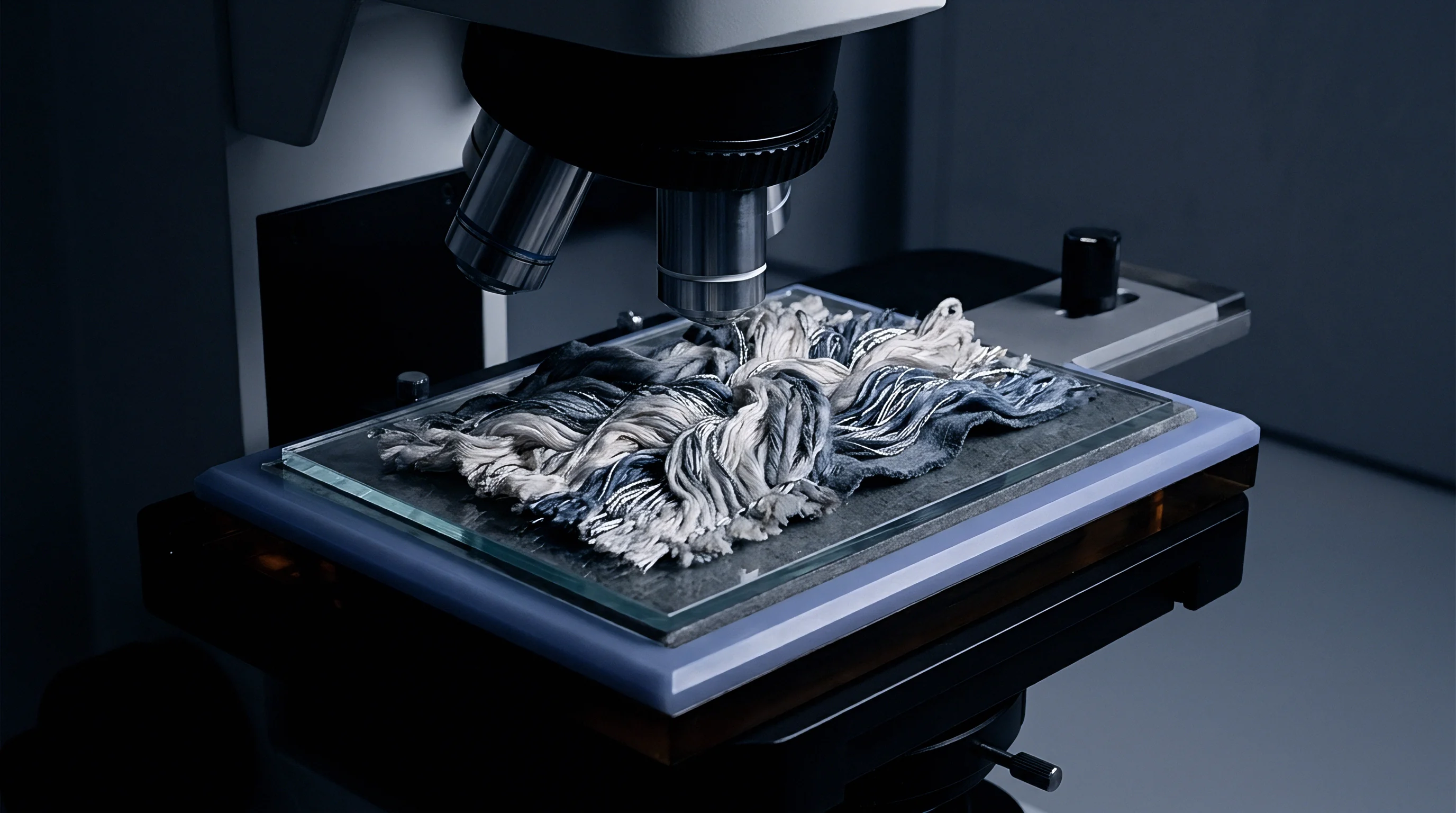
Microscopic inspection of damaged cloth shows microfibrillar fibrillation, where individual sub-fibrils detach from the fiber main body. This structural disintegration generates surface fuzzing, rapid pilling during Martindale testing, and accelerated color loss along wear folds.
Properly adjusted stenter chains deliver a balanced 15 percent tensile strength increase while restricting tear strength losses to less than 8 percent.
Delivering fabric with a Barium Activity Number below the specified contract limit triggers automatic shade-lot rejections, leaving the converter liable for landed fabric costs and mill re-dyeing charges.
Margin
Production Economics and Machinery Selection
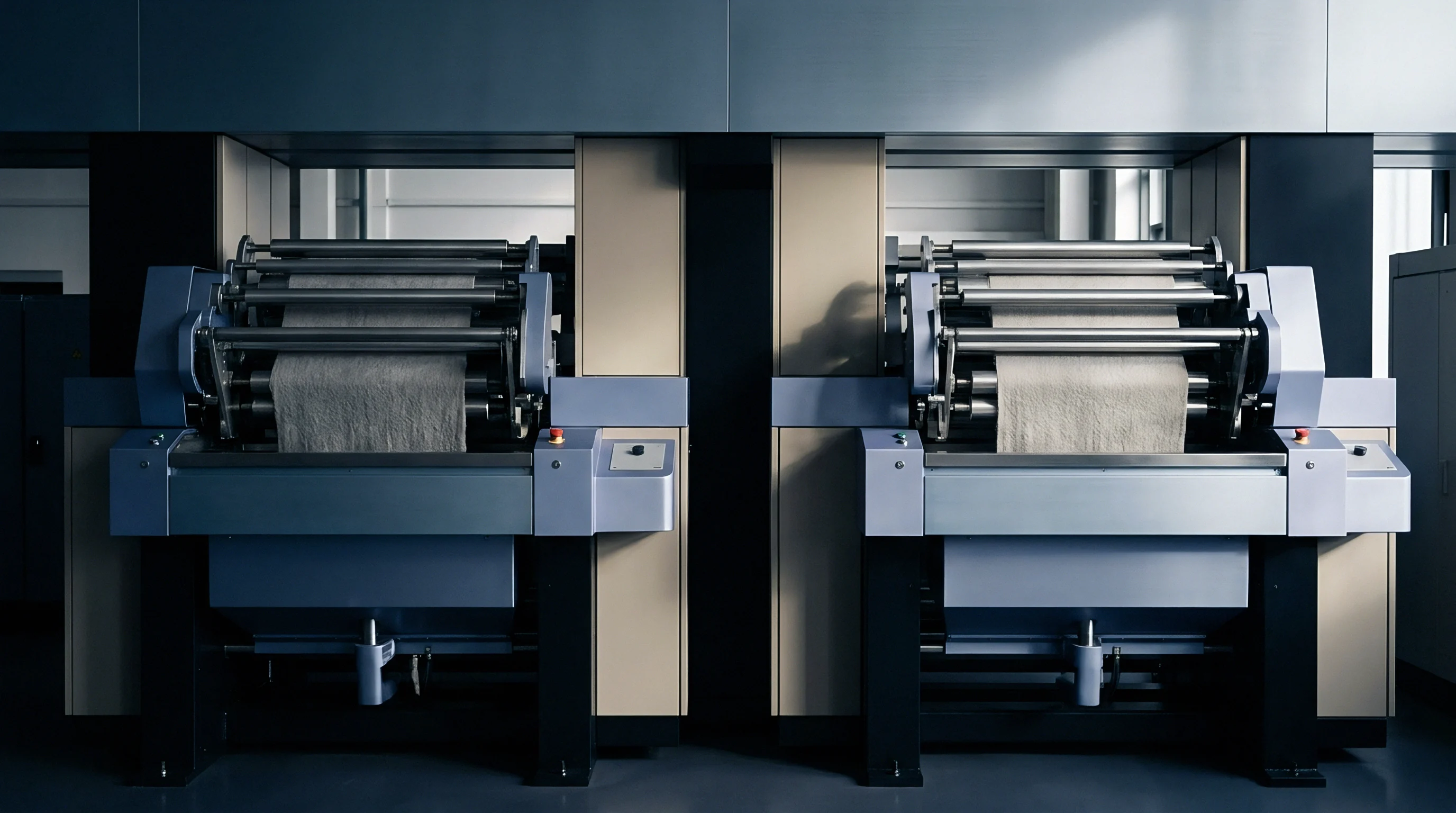
Capital investment and operational costs dictate machinery selection for microfibrillar modification lines. Chain-type mercerizers require high footprint area, heavy mechanical drives, and continuous clip maintenance, driving up fixed operating costs. These systems deliver precise width control and maximum microfibrillar orientation, making them mandatory for high-end shirting fabrics where dimensional stability and luster command price premiums.
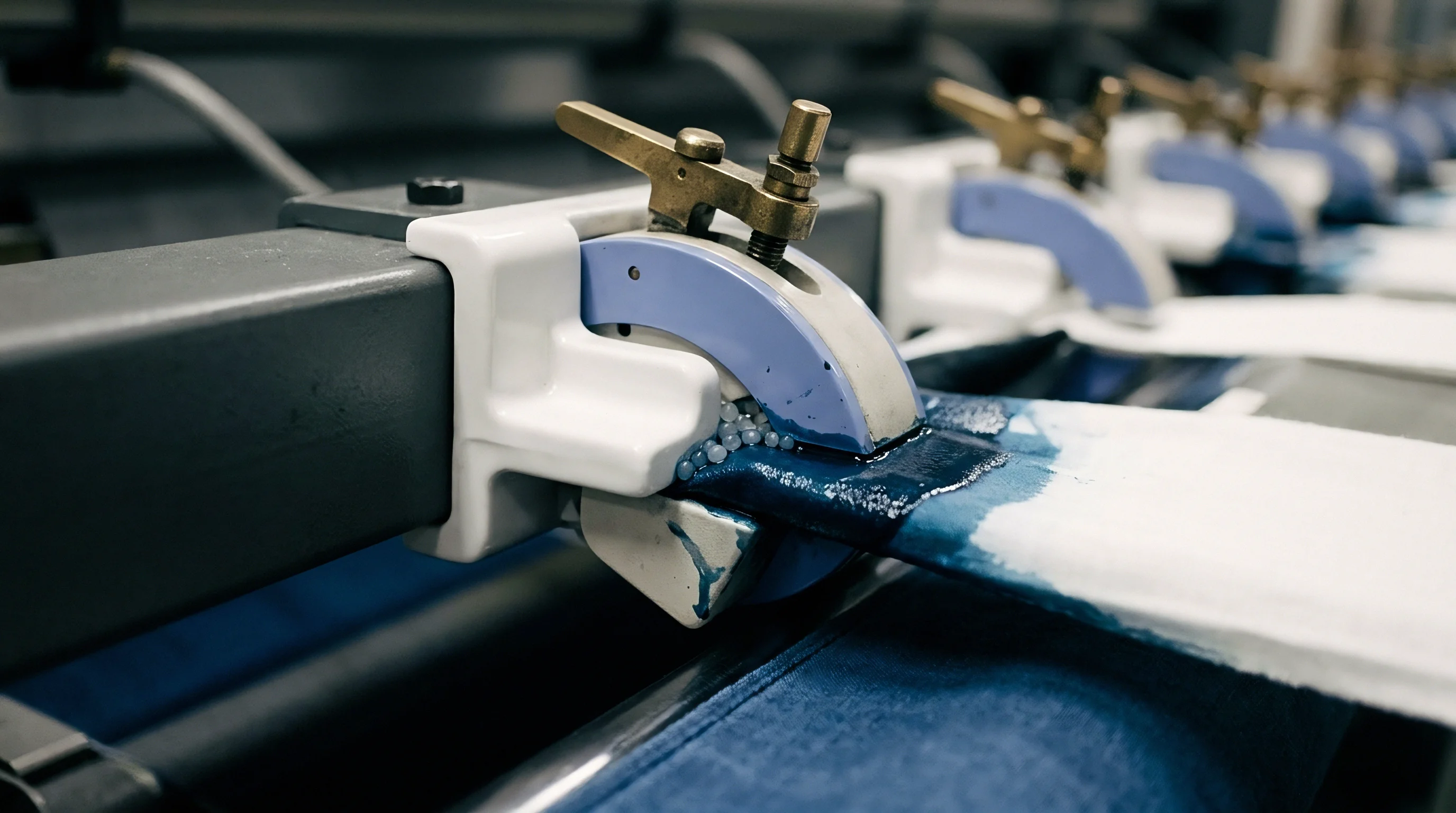
Chainless roller mercerizers feature lower capital costs and higher running speeds, lowering processing expense per linear meter. The lack of lateral clip restraint results in lower luster and lower Barium Activity Numbers. Sourcing practices must weigh the savings of chainless processing against the risk of elevated garment shrinkage during home laundering.
| Machine Configuration | Processing Cost ($/m) | Warp Shrinkage (%) | Weft Shrinkage (%) | Luster Rating (Gloss Units) |
|---|---|---|---|---|
| Chain Mercerizer (High Restraint) | 0.38 ~ 0.45 | 1.5 ~ 2.0 | 1.0 ~ 1.5 | 78 ~ 85 |
| Chainless Roller Frame | 0.22 ~ 0.28 | 3.5 ~ 4.5 | 2.5 ~ 3.5 | 62 ~ 68 |
| Combination Chain-Chainless | 0.32 ~ 0.36 | 2.0 ~ 2.5 | 1.5 ~ 2.0 | 70 ~ 75 |
Chemical Recovery and Net Processing Charges
Caustic recovery plants dictate the economic viability of high-volume mercerizing operations. The wash water exiting the stenter frame contains dilute sodium hydroxide at concentrations between 3 and 6 degrees Baumé. Running this weak liquor through multi-effect evaporators concentrates the solution back to 28 degrees Baumé for re-use on the primary pad frame.
Efficient recovery plants capture 95 to 98 percent of total caustic chemical volume, reducing raw chemical purchase costs by up to 0.12 US dollars per finished meter.
Unrecovered caustic enters effluent treatment facilities, where neutralizing high-alkali water requires massive acid dosing. Mills operating without caustic evaporators face heavy environmental surcharges, which are passed directly to fabric buyers through elevated finishing surcharges. Procuring mills must be audited for closed-loop caustic recovery systems to protect supply chains against sudden regulatory shutdowns.
Calculating the true cost of mercerized goods requires adding fabric weight loss from wax removal and length loss from yarn crimp changes to the base finishing charge. High-tension processing recovers up to 4 percent of length loss through warp draft, lowering the effective fabric weight per square meter while raising finished length yield. A mill balancing its caustic recovery plant operations maintains consistent finishing prices even during global chemical supply disruptions.