Continuous Dye Liquors Viscosity Modulation under Ambient Relative Humidity Shift
Relative humidity shifts alter water evaporation rates in continuous dye troughs, shifting liquor viscosity, pick-up levels, and shade consistency across runs.
Hydration
Uncontrolled evaporation between dyehouse air and open pad troughs shifts water content faster than automated dosing pumps replace consumed dye solutions. Continuous dyeing ranges running woven cotton or polyester-cotton blends need a stable wet pick-up percentage to maintain target shade depth from the first metre to the last. When plant hall air fluctuates between dry winter conditions of 35 percent relative humidity and humid summer atmospheres reaching 85 percent relative humidity, water exchange across the open surface alters the solid-to-liquid ratio of the dye bath.
Evaporative Water Loss Mechanics
Continuous dye ranges operating without enclosed bath housing expose up to two square metres of standing liquor surface directly to hall ambient conditions. Low ambient relative humidity drives rapid evaporation from the trough, concentrating dissolved reactive, disperse, or vat dyes along with auxiliary salts and wetting agents. This loss of liquid volume elevates bath viscosity, changing how liquid penetrates yarn bundles during the fraction of a second fabric spends submerged in the dip pan.
Liquor loss through evaporation at 35 percent relative humidity increases reactive dye solids concentration by 6.8 percent over a four-hour continuous run without water compensation.
Atmospheric dry-bulb temperature and ambient relative humidity govern the vapor pressure gradient above the dye trough. When ambient air holds little moisture, water vaporizes continuously from the bath interface. The resulting drop in free solvent volume restricts the mobility of dissolved dye molecules, raising bath viscosity and pulling the pad squeeze pick-up percentage down.
- Concentration Drift increases active dye concentration per unit volume, creating dark heads on bulk rolls and shade drift across continuous yardage.
- Viscosity Creep alters fluid resistance within yarn interstices, reducing core penetration while depositing excess dye solids on the fabric surface.
- Substrate Desiccation causes dry greige cloth entering the trough to strip moisture rapidly from the liquor, accelerating local viscosity spikes near the entry roll.
- Boundary Layer Cooling lowers liquid temperature at the bath surface through latent heat loss, further increasing localized fluid viscosity.
Failing to control atmospheric exposure in the padding zone causes irreversible shade tailing across the batch, leaving hundreds of metres of fabric outside agreed color tolerances and forcing full dyehouse re-runs at the mill’s expense.
Polymer
Rheological modifiers added to continuous dye baths establish pseudoplastic flow curves that resist migration during intermediate drying. The choice of thickener dictates how liquor responds to atmospheric moisture loss. Natural polymers like sodium alginate behave differently under relative humidity shifts compared to synthetic polyacrylates or modified carboxymethyl cellulose formulations.
Polymer Chain Structure under Atmospheric Stress
Water activity within the liquid dye phase governs the hydrodynamic volume of dissolved thickeners. In high relative humidity environments, ambient water vapor slows evaporation, keeping polymer chains fully hydrated and extended. This maintains predictable pseudoplastic flow where viscosity drops sharply under the high shear of the pad nip and recovers predictably in the trough.
When ambient relative humidity drops, rapid surface evaporation removes free water, forcing thickener polymer chains into closer proximity. Inter-chain entanglements build up quickly, turning a low-viscosity continuous bath into a structured fluid with elevated yield stress that prevents liquor from leveling uniformly across the fabric face before entering the intermediate infrared dryer.
Polymer chains that fully hydrate in high humidity environments reduce migration velocity but increase pad roll slip when shear rates exceed five thousand reciprocal seconds.
| Thickener Chemistry | Concentration (g/L) | Viscosity at 40% RH (mPa·s) | Viscosity at 85% RH (mPa·s) | Pick-up Delta (%) |
|---|---|---|---|---|
| Sodium Alginate (Low Viscosity) | 15.0 | 145 | 112 | -4.2 |
| Carboxymethyl Cellulose (CMC) | 8.0 | 210 | 165 | -5.8 |
| Synthetic Polyacrylate | 3.5 | 320 | 295 | -1.5 |
| Guar Gum Ether | 10.0 | 180 | 130 | -6.1 |
Synthetic polyacrylate thickeners offer superior viscosity stability under ambient moisture fluctuations due to their hydrophobic backbone structure. Sodium alginate displays severe viscosity reductions when ambient relative humidity rises, as atmospheric water absorption dilutes the bath boundary layer. Dyehouses balancing color yield against migration control must specify thickener chemistry based on plant floor environmental controls.
Unexpected viscosity spikes on continuous dyeing ranges often reflect water loss from an unconditioned plant atmosphere rather than raw material batch variation.
Padder
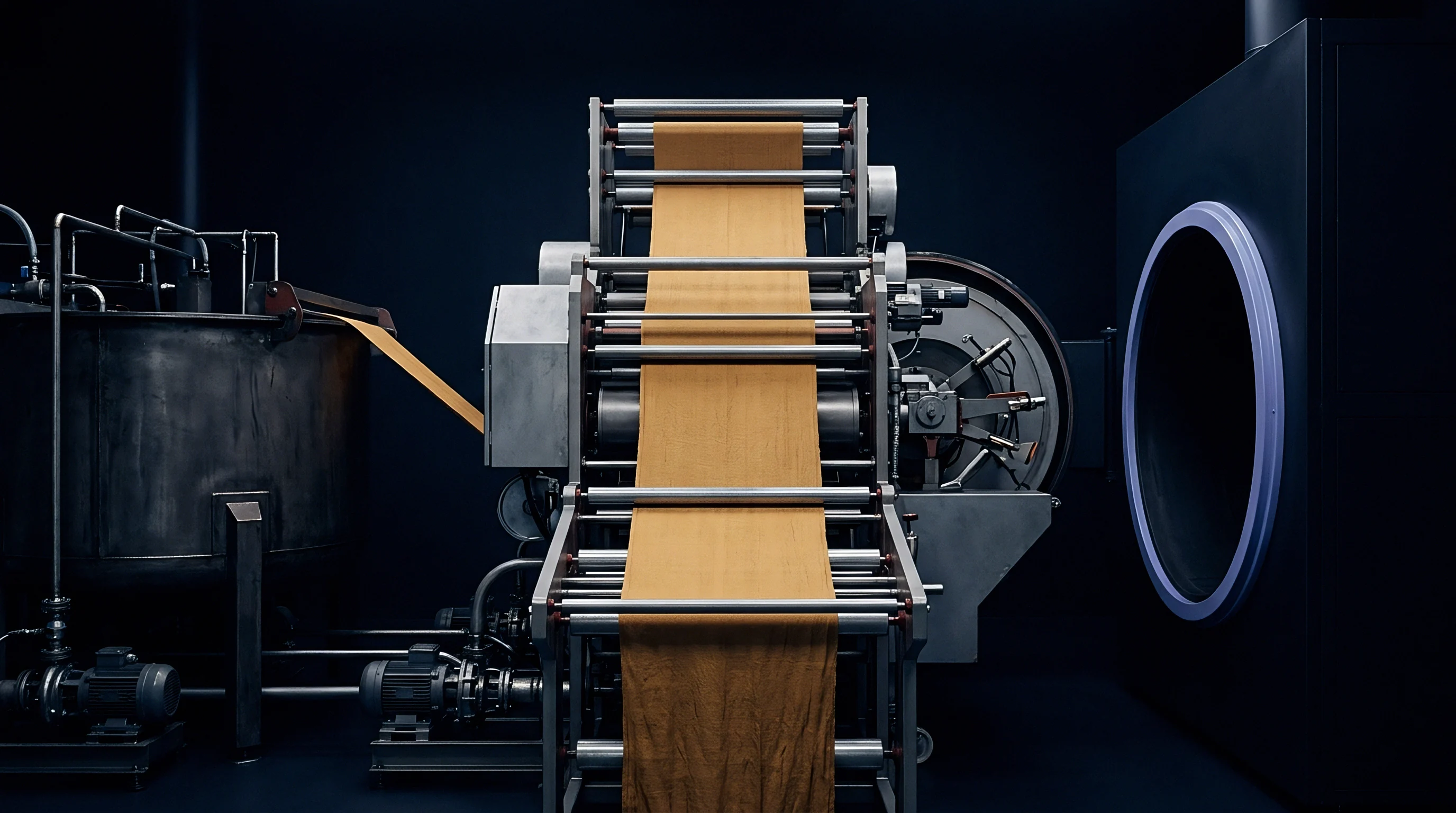
Liquid transfer at the mechanical nip depends on dynamic fluid film thickness, roll hardness, and fabric velocity. The padder serves as the primary metering device in continuous wet processing. When liquor viscosity shifts with ambient relative humidity, hydrodynamics inside the pad roll nip alter the physical mass of liquor left on the substrate.

Fluid Film Dynamics in High Shear Nips
Rotational nip velocities exceeding sixty metres per minute generate shear rates inside the liquid wedge that cross ten thousand reciprocal seconds. Under these conditions, the effective viscosity of a pseudoplastic dye liquor drops to a fraction of its standing value. Shifts in relative humidity that alter standing liquor viscosity change the liquid film split ratio as fabric emerges from the nip center.
Dry ambient conditions increase standing bath viscosity, creating a thicker hydrodynamic wedge at the nip entry. Squeeze rolls cannot fully expel this thicker fluid film, causing an unintended rise in wet pick-up. Conversely, high ambient relative humidity slows evaporation, keeping fluid viscosity low and allowing pad squeeze rolls to expel more liquid, dropping wet pick-up below target specification.
Tailing and Cross Web Liquor Distribution
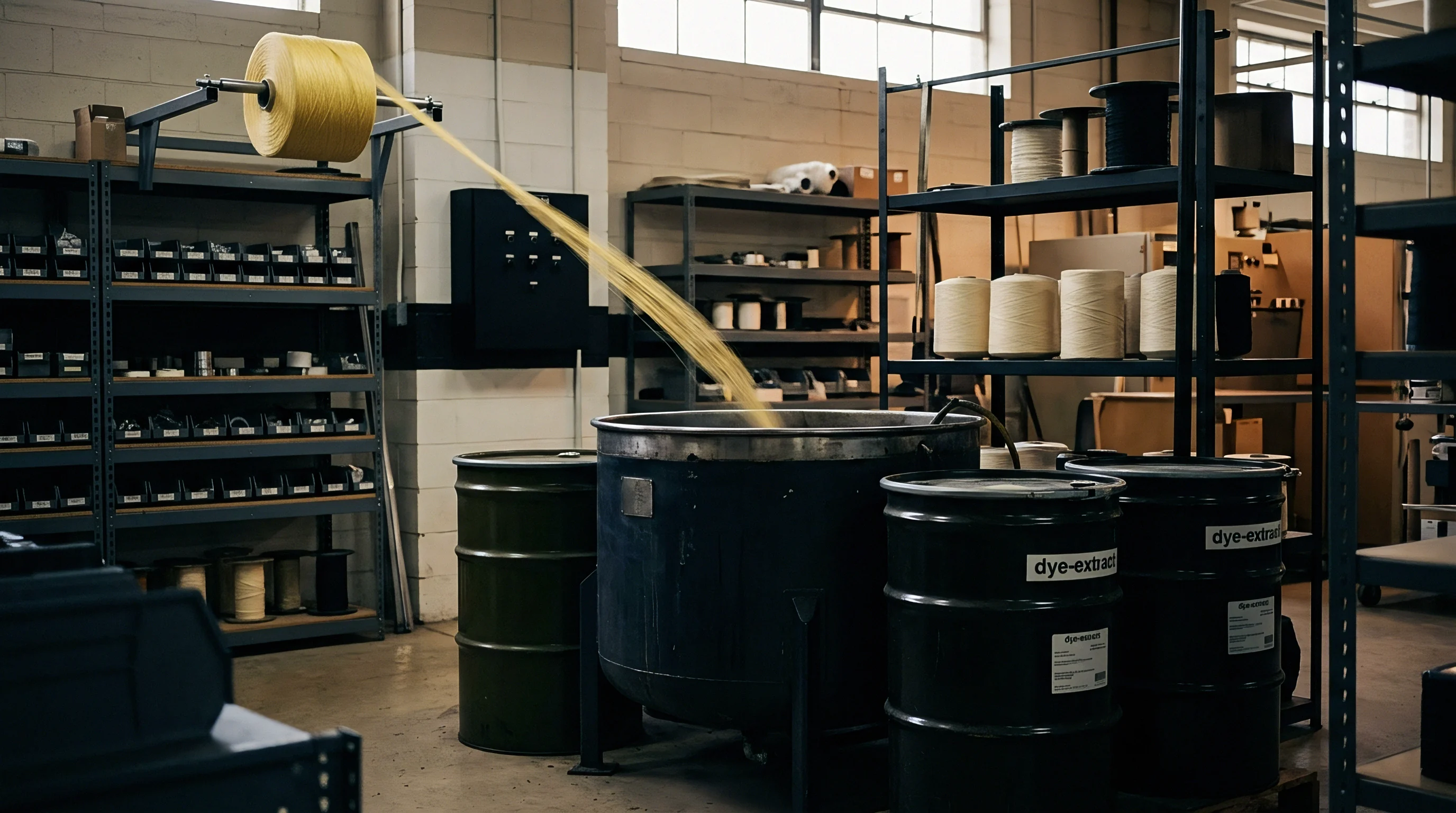
Continuous runs extending past three thousand linear metres experience progressive shade variation along the warp direction as active bath solids rise. Evaporation from the exposed edges of open pad troughs creates viscosity gradients across the width of the roll. Edge liquor becomes thicker and more concentrated than center liquor, producing severe side-to-center shade variation, known in the trade as listing.
Under standard mill purchase conditions, shade variation across a single dye lot exceeding a Delta E of 0.8 under D65 illumination grants the buyer full rejection rights for the finished yardage.
- Ambient air current across the pad trough accelerates water loss at the drive side.
- Local liquor viscosity increases by fifteen percent near the trough walls.
- Thicker fluid resists nip displacement, increasing local wet pick-up along fabric selvages.
- Edge-to-center pick-up imbalance causes listing defects visible across finished rolls.
- Corrective water addition without active agitation creates transient light streaks in the warp direction.
Maintaining steady nip velocity and constant bath temperature minimizes liquor pickup drift far more effectively than adjusting roll squeeze pressure mid-run.

Calibration
Benchtop viscosity readings measured at twenty degrees Celsius fail to mirror floor behavior when ambient hall conditions drift by fifteen percent relative humidity. Laboratory testing carried out under standard climate conditions of twenty degrees Celsius and sixty-five percent relative humidity generates baseline flow curves that misrepresent what happens inside a hot, unconditioned dyehouse plant.
Does Relative Humidity Drift Alter Liquor Pickup across High Speed Runs?
Fabric moving through an open bath absorbs liquid proportional to its instantaneous moisture content and the bath’s active dynamic viscosity. Relative humidity shifts alter both parameters simultaneously. Lower ambient humidity dries incoming greige fabric, increasing its capillary suction rate, while evaporating bath solvent and raising fluid shear resistance.
High-speed continuous lines operating above eighty metres per minute experience rapid shade darkening within thirty minutes of an uncompensated atmospheric shift.
Standard Measurement Conditions versus Plant Realities
Viscometric verification requires standardized shear rate definitions and tight temperature controls. Rotational viscometers operating under ISO 2555 standard conditions measure bulk fluid resistance at low shear rates, typically between ten and one hundred reciprocal seconds. These measurements fail to capture high-shear viscosity behavior at the padder nip, where shear rates exceed ten thousand reciprocal seconds.
- Temperature Compensation requires real-time thermal probes paired with viscometers to separate thermal viscosity shifts from evaporation-driven concentration shifts.
- Shear Rate Matching obligates technicians to test dye liquors at multiple rotational speeds using coaxial cylinder geometries conforming to DIN 53019.
- Substrate Conditioning mandates measuring the incoming moisture regain of greige cloth using high-frequency microwave sensors prior to bath entry.
- Atmospheric Tracking forces the continuous recording of wet-bulb and dry-bulb temperatures directly above the open liquor pan.
Incorporating ISO 105-J03 color measurement thresholds directly into the wet-processing contract forces the mill to install ambient humidity monitoring at the padder, transferring financial risk of evaporative shade variance back to the dyehouse.
Dosing
Automated water injection loops connected to inline viscometers stabilize bath solids within tight operational bands. Manual additions of raw water by operators routinely introduce pale spots and fail to match continuous atmospheric evaporation. Modern continuous dyeing ranges utilize closed-loop feedback systems that combine micro-motion mass flow meters with acoustic or rotational inline viscometers to preserve exact liquor formulation balance.

Closed Loop Density and Flow Compensation
Integrating continuous online viscometry with differential pressure cells allows continuous dye ranges to inject tempered water based on active viscosity targets. When ambient relative humidity drops and drives water loss, inline sensors detect the corresponding density rise within milliseconds. Automated micro-dosing valves open, feeding demineralized water into the circulation loop at the precise volume needed to offset atmospheric evaporation without diluting active dye solids below specification.
Consider a continuous dyeing line running a 220 g/m² 65/35 polyester-cotton twill at 60 metres per minute with a target wet pick-up of 65 percent. The system processes 792 kilograms of dry fabric per hour, consuming 514.8 litres of dye liquor per hour under equilibrium conditions. If ambient relative humidity drops from 65 percent to 35 percent, open trough evaporation removes 18.5 litres of water per hour directly from the 40-litre standing bath.
Without automated compensation, this water loss increases total bath concentration by 3.6 percent every hour. Over a six-hour production shift, active dye concentration creeps upward by over 20 percent, shifting color yield well beyond acceptable commercial limits. Installing an automated dosing loop calibrated to maintain target fluid density preserves color consistency across fifty thousand metres of continuous production.
A continuous dyeing line running without relative humidity compensation consumes excess dye concentrate to cover up evaporative water loss.
| Operational Parameter | Uncontrolled RH (35% Ambient) | Automated Dosing Loop | Enclosed Trough + Controlled RH | |
|---|---|---|---|---|
| Viscosity Drift over 8 Hours | +28.5% | +1.2% | +0.4% | |
| Mean Color Variance (Delta E2000) | 1.45 | 0.38 | 0.22 | |
| Off-Quality Yardage (Rejections) | 4,200 m | 120 m | 0 m | |
| Excess Dye Chemical Cost ($) | $1,840 | $110 | $15 | |
| Landed Rejection Cost Penalty ($) | $14,700 | $420 | $0 | |
| Calculated for 100% reactive dyed cotton woven fabric at $3.50/m base cost under D65 standard illuminant. | ||||
Precision water dosing systems equipped with Coriolis flowmeters maintain target liquor density within 0.1 percent, eliminating atmospheric humidity as a source of color variation on continuous dye ranges.