Controlling Dye Migration in Continuous Fabric Pad Drying
Controlling dye migration in continuous pad drying demands precise wet pick-up control, intermediate infrared pre-drying, and thermosensitive anti-migrants.
Flow
Water movement through wet woven structures during continuous drying follows capillary pressure gradients. High thermal energy applied to wet cloth triggers rapid liquid transport toward the outer boundaries. Surface evaporation drives liquid pull.
Dissolved dyes and dispersed color pigments move with the evaporating water stream, concentrating at the outer boundaries where evaporation rates peak. Liquid movement continues as long as continuous liquid channels bridge the yarn interior and the textile surface.
Capillary Evaporation Kinetics in Wet Pick Up
Dye liquor distribution immediately after padding depends on the mechanical pressure applied by the mangle nips. Excess liquor resides in the inter-yarn voids, forming a continuous liquid film across the web. Capillary radii govern transport speed.
As heat hits the running web inside the drying equipment, evaporation begins at the surface fiber interfaces. Water molecules escape into the air stream, drawing fresh liquor up through the yarn capillaries to maintain equilibrium. Pigment disperse dyes and soluble reactive dyes lack chemical affinity for the fiber during this un-fixed wet phase.
They travel passively along the convective flow lines, accumulating at the sites of highest evaporation.
Liquids carry dissolved salts and dye particulate aggregates along paths of least resistance. Coarse yarns with wide internal capillary diameters transport liquid rapidly toward external heat sources. Tight yarn twists compress internal void volume, generating higher capillary pressure that pulls liquor from loose inter-yarn gaps into dense yarn cores.
As surface water evaporates, solute concentration increases at the outer face, setting up concentration gradients that work against capillary flow. Capillary forces dominate over diffusion during high-speed drying, forcing color migration toward the drying boundary.
Critical Water Content Boundaries
Dye migration halts when liquid bridges between adjacent yarns sever. Water flows toward high heat. This transition occurs at the Critical Water Content threshold, where liquid water converts from a continuous phase to isolated droplets within individual fiber pores.
Above this moisture level, water moves freely through liquid capillaries, carrying dye particles along with the bulk solvent stream. Below this threshold, liquid continuity breaks down, and further water removal occurs exclusively through vapor diffusion, locking dye particles in their spatial coordinates.
Equal evaporation rates on opposing web surfaces prevent directional color movement.
Every fiber blend and weave construction exhibits a characteristic Critical Water Content. Synthetic fibers like polyester hold minimal internal moisture, yielding low critical thresholds where migration stops rapidly during drying. Cellulosic fibers absorb water into their amorphous cell walls, retaining continuous liquid capillary pathways across a broader moisture range.
Determining the precise moisture percentage where liquid transport terminates enables precise calculation of intermediate drying parameters.
| Substrate Blend | Initial Wet Pick Up (%) | Critical Water Content (%) | Migration Window Time (s) | Primary Migration Risk |
|---|---|---|---|---|
| 100% Ring-Spun Cotton Poplin | 75 | 32 | 6.2 | Face-to-back shade differential |
| 65/35 Polyester/Cotton Twill | 65 | 24 | 4.1 | Side-center-side color listing |
| 100% Filament Polyester Fine Canvas | 45 | 12 | 1.8 | Surface dye specking and ring-dyeing |
| 50/50 Viscose/Polyester Plain Weave | 80 | 38 | 7.5 | Two-sided blotchiness and streakiness |
| 98/2 Cotton/Elastane Stretch Denim | 70 | 30 | 5.5 | Selvedge-to-selvedge shade shading |
Uncontrolled capillary flow during the drying phase yields face-to-back shade variations that render bulk rolls uncuttable for structured apparel.
Thickener
Auxiliary chemicals added to the padding bath modify fluid dynamics during evaporation. Chemical anti-migration agents raise liquor viscosity under thermal stress or cause controlled aggregation of dye particles. Liquid movement slows dramatically as viscosity climbs, preventing color migration before the web reaches the critical moisture boundary.
Rheological Immobilization Mechanics
Auxiliary chemical additives increase solution viscosity under heat to halt liquid transport. Viscosity drops as heat rises. Polymeric chains bind wet dye.
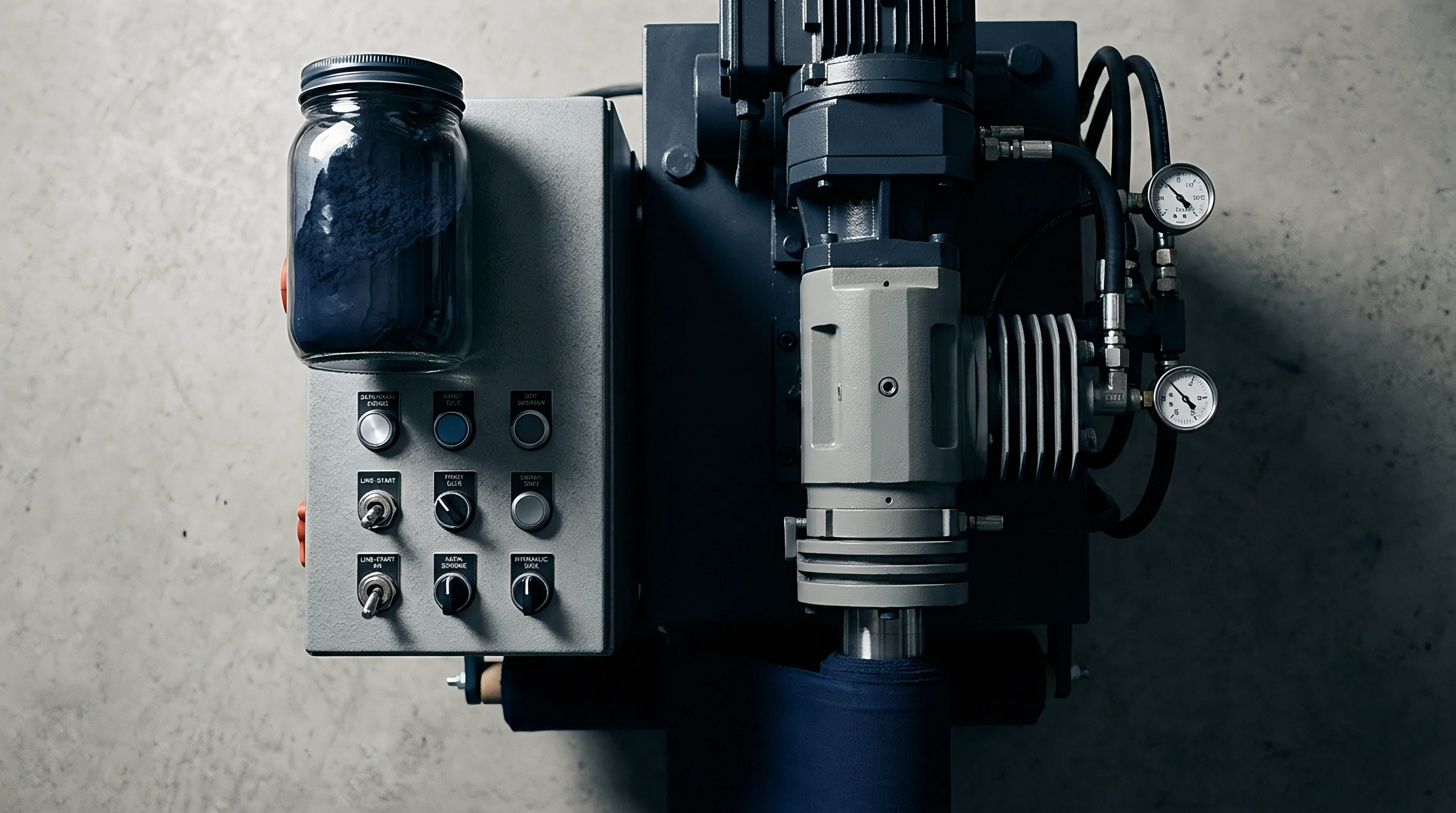
Standard thickening agents used in print pastes rely on high room-temperature viscosity, but padding applications require low initial viscosity to permit rapid yarn penetration at the mangle nip. Anti-migration additives designed for continuous padding exhibit pseudoplastic or thermosensitive behavior, maintaining low viscosity inside the pad trough under high shear forces while thickening rapidly inside the drying zone as temperature climbs past 50 degrees Celsius.
Thermosensitive polymers phase-separating at elevated temperatures create an instantaneous three-dimensional gel network within the wet web. This thermal gelation traps dye particles inside local capillary structures before bulk evaporation begins. As water evaporates from the outer surfaces, the gel structure blocks liquid migration toward the web edges, forcing water molecules to convert to vapor and diffuse out without displacing color pigments.

Polyelectrolyte and Nonionic Polymers
Anionic polyelectrolytes like purified sodium alginate and sodium polyacrylates increase ionic repulsion between dispersed dye particles. Charged polymer chains extend in aqueous solution, entangling adjacent dye molecules and restricting their linear velocity through capillary channels. Nonionic polymers, including modified polyacrylamides and ethoxylated fatty alcohols, rely on steric stabilization and hydration sphere modification to immobilize dyes without interfering with bath electrolyte stability.
- Viscosity collapse under high shear occurs when pump agitation degrades polyacrylamide chains, allowing unhindered capillary migration during initial drying stages.
- Baking in of residue happens if excessive polymer concentration coats fibers, stiffening hand feel and blocking subsequent finishing chemistries.
- Differential shade pickup manifests when high anti-migrant loading lowers pad bath stability, producing shade drift across a 2000 metre dye lot.
- Solubility shock in hard water arises when calcium ions interact with alginate chains, creating insoluble flocs that spot the running web.
Adding 10 grams per litre of polyacrylate anti-migrant to a 65/35 polyester cotton pad bath reduces face-to-back shade variance to within 0.4 Delta E CMC units under D65 illumination.
Chemical vendors frequently attribute edge-to-center listing to uneven air nozzle distance rather than instability in their polymer formulation.
Ray
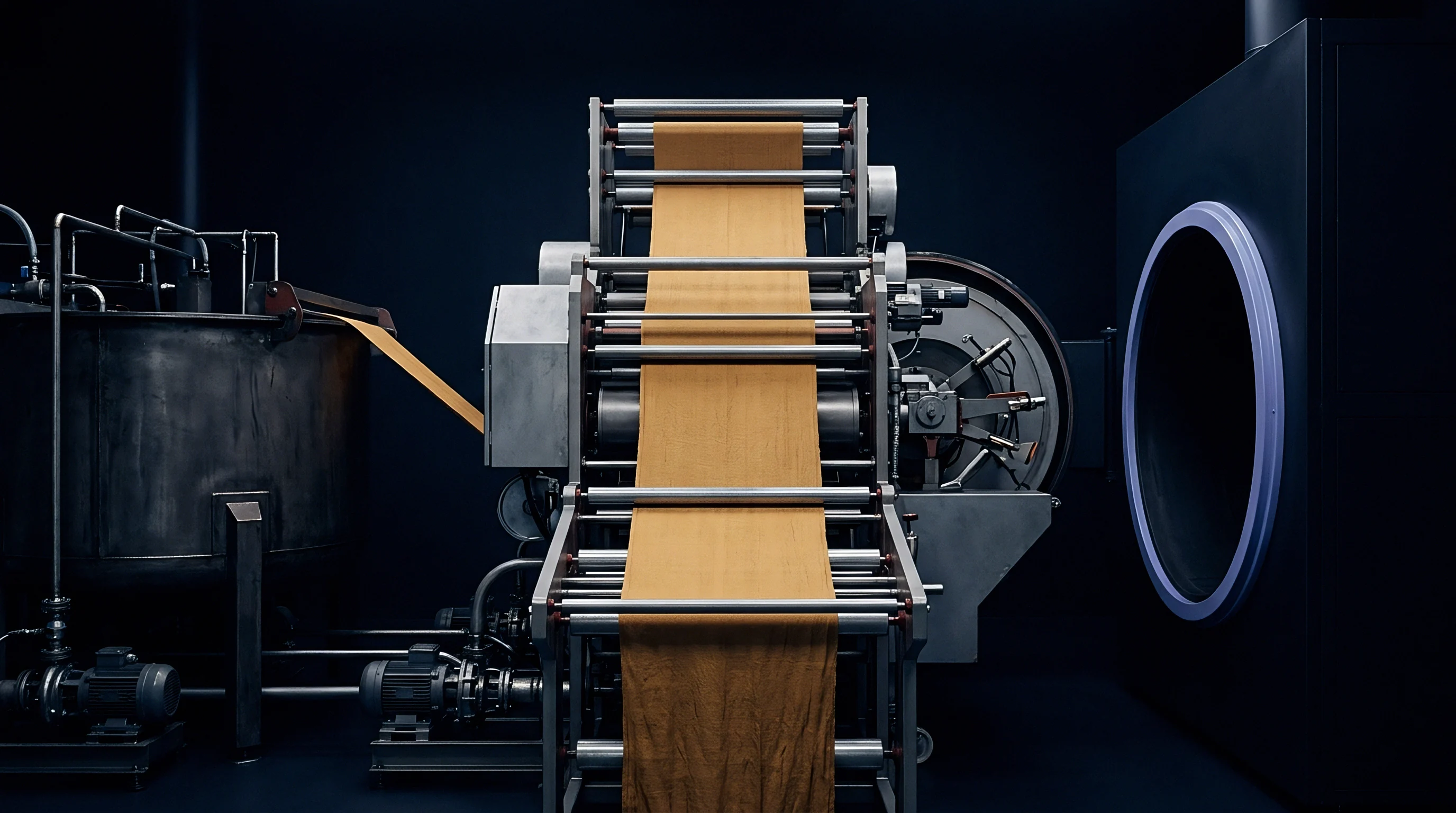
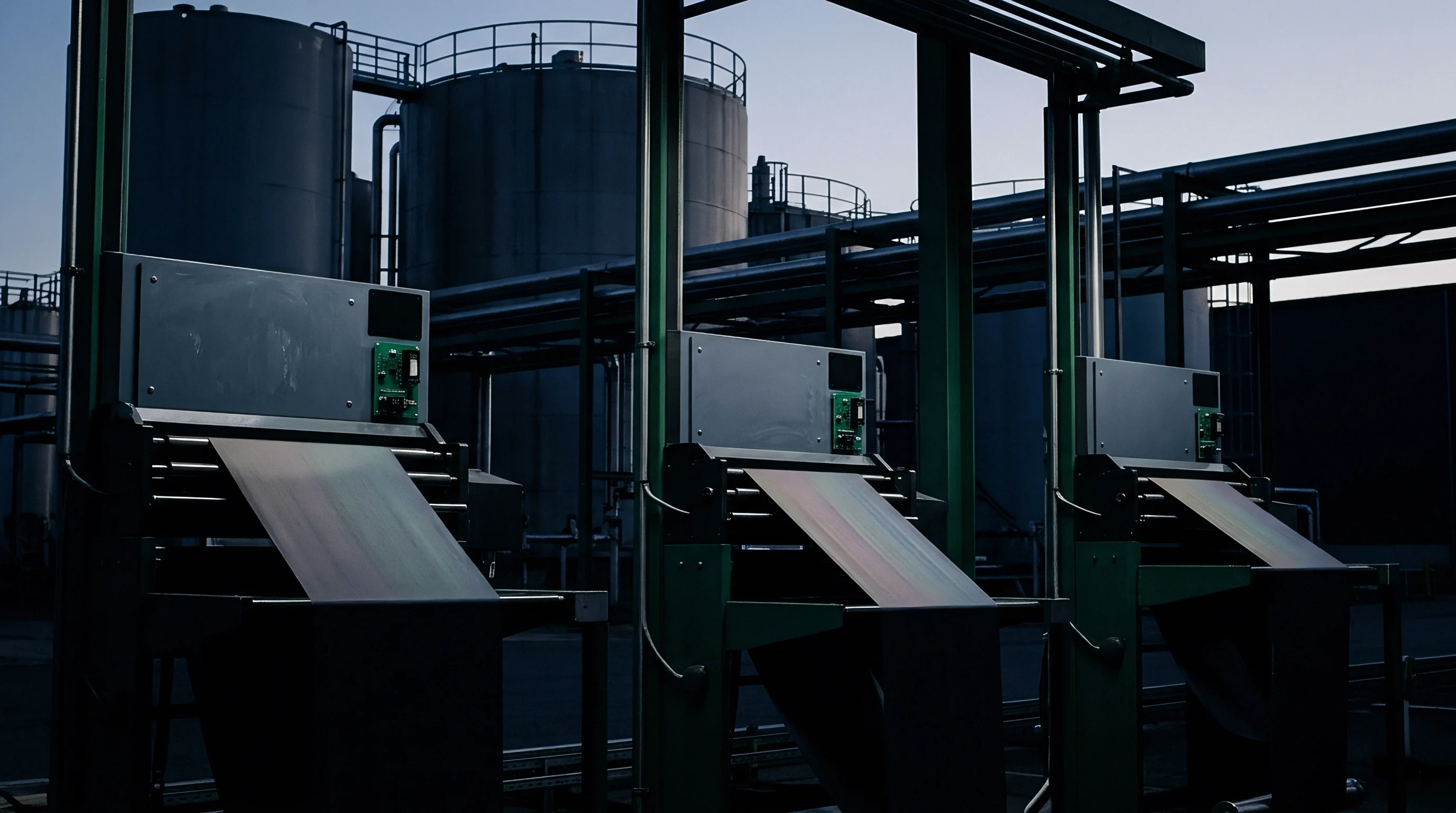
Electromagnetic heat application removes water from wet textiles without direct mechanical contact or aggressive air movement. Intermediate infrared pre-dryers positioned between the pad mangle and the hot flue dryer rapidly lower moisture levels below the critical point. Non-contact radiant heating fixes dye positions before turbulent air currents can distort the wet dye bath profile.

Infrared Intermediate Pre-Drying Geometry
Positioned immediately after the pad mangle, contactless heating units drop wet pick-up below the critical threshold. Infrared radiation penetrates outer yarns. Medium-wave gas ceramic emitters operating between 2.0 and 3.5 microns align directly with the primary infrared absorption peak of liquid water at 2.97 microns.
Water molecules absorb radiant energy directly, heating the internal liquor volume uniformly without relying solely on surface thermal conduction.
Short-wave quartz lamps emit peak energy between 1.0 and 1.4 microns, penetrating deeper into heavy woven structures before converting energy to heat. Combining short-wave and medium-wave emitters inside an intermediate tunnel ensures balanced water evaporation from both the outer yarn sheath and the inner core. Equal energy delivery to both faces of the web eliminates thermal imbalances that pull liquor preferentially to one side of the material.
Air Speed Control in Hot Flue Zones
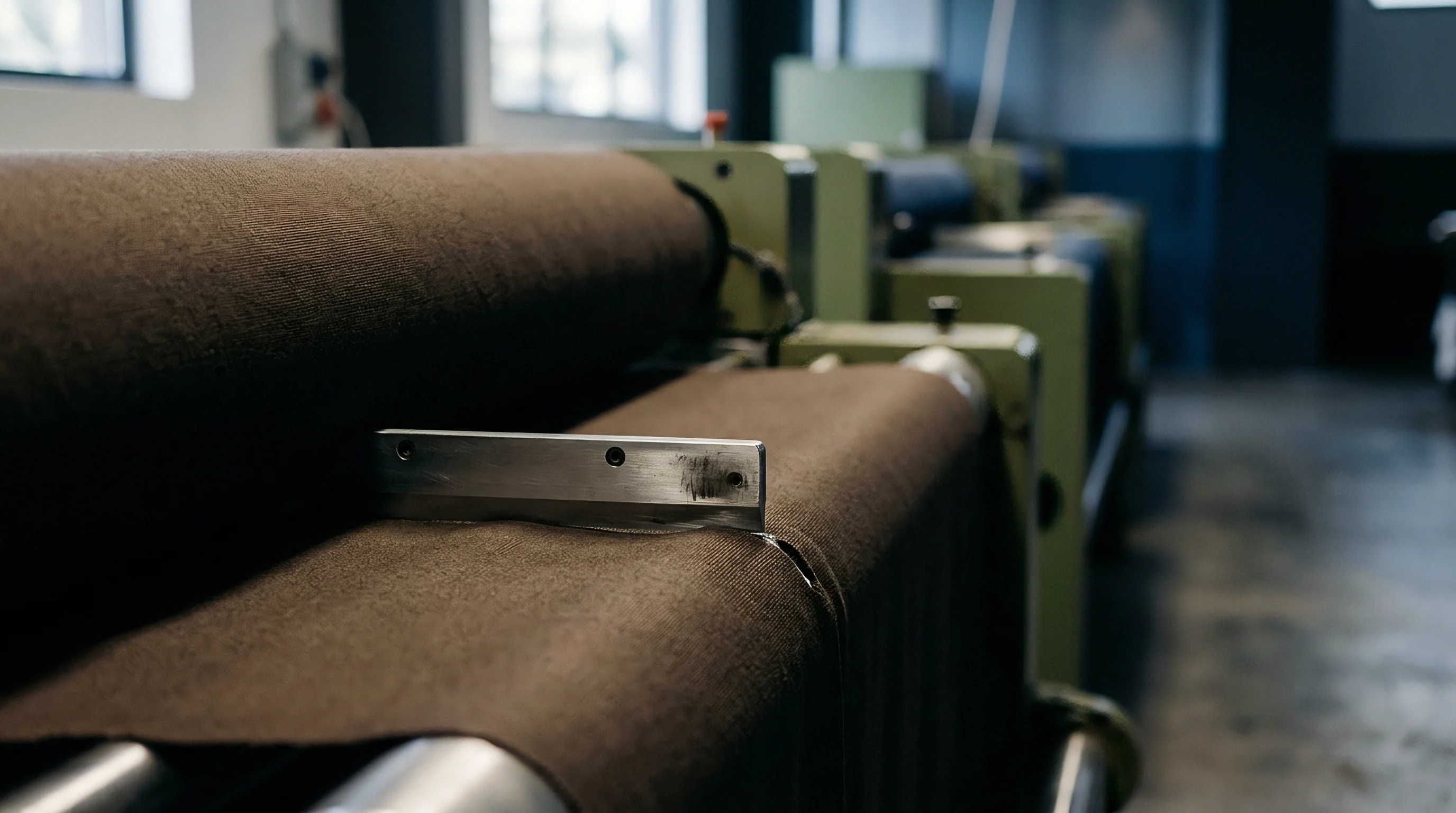
Convective drying chambers following the non-contact zone demand balanced velocity profiles to prevent surface boundary disruption. Air movement disturbs wet liquor. High-velocity air nozzles impinging directly onto wet cloth disrupt the liquid surface film, blowing un-fixed dye along the web plane.
Hot flue dryers utilize low-velocity, symmetrical air circulation to maintain uniform drying across full web widths.
| Emitter Type | Wavelength Peak (µm) | Target WPU Reduction (%) | Air Velocity Limit (m/s) | Thermal Efficiency (%) |
|---|---|---|---|---|
| Gas-Fired Porous Ceramic Panel | 3.0 to 3.5 | 70 to 35 | 1.5 | 52 |
| Electric Tungsten Quartz Tube | 1.2 to 1.6 | 65 to 40 | 1.0 | 78 |
| Metal Sheath Resistance Element | 4.0 to 6.0 | 70 to 50 | 2.0 | 41 |
| Catalytic Natural Gas Radiator | 4.5 to 5.5 | 65 to 30 | 1.2 | 64 |
Failure to achieve a minimum 30 percent reduction in moisture content across the infrared pre-dryer voids the shade levelness guarantee specified under ISO 105-J03 color assessment guidelines.
Whether gas-fired ceramic panels achieve lower operational cost than high-efficiency electric quartz tubes when processing lightweight cotton poplins remains dependent on localized energy grid tariffs.

Sett
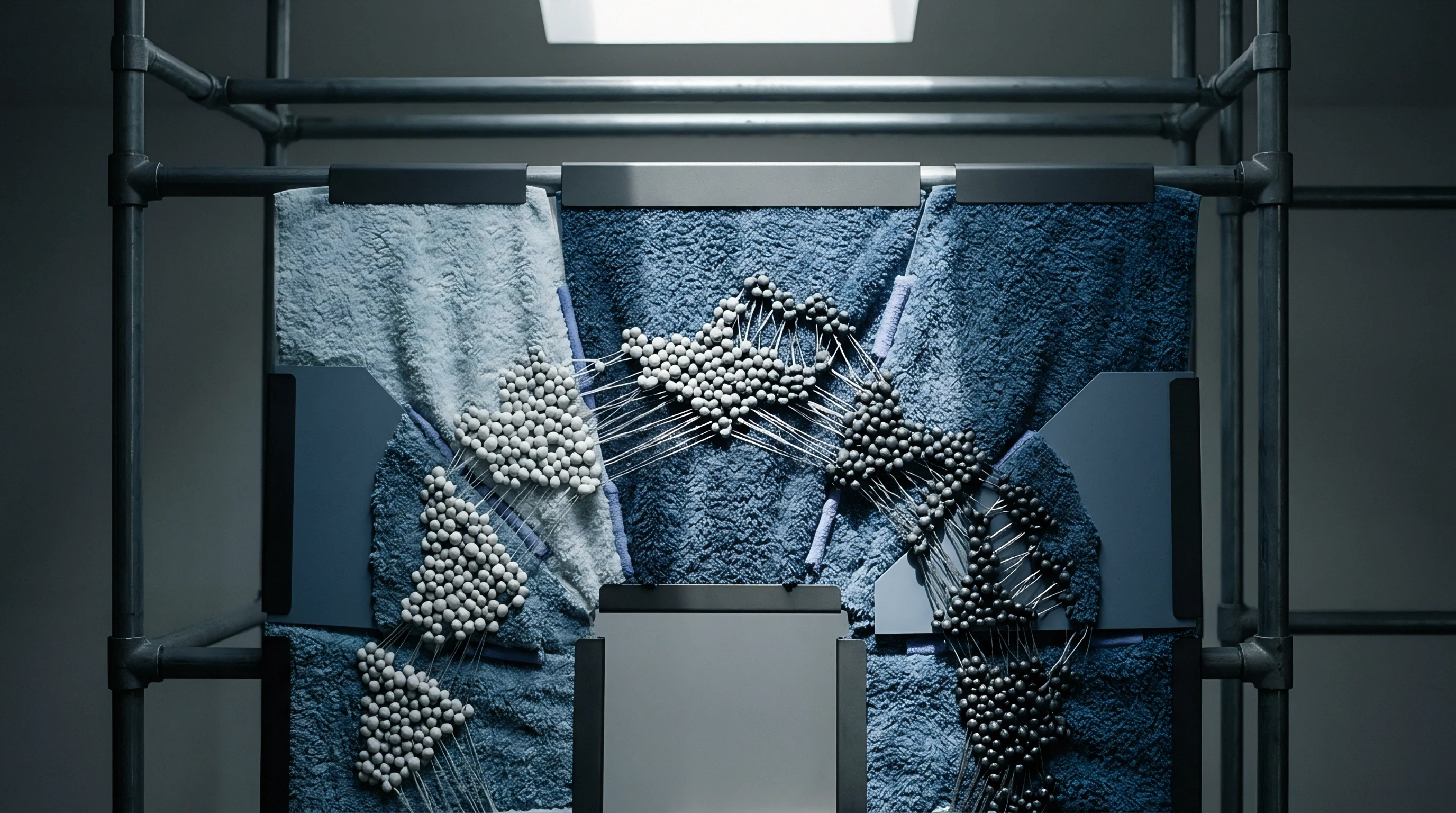
Yarn density, weave geometry, and filament structural arrangement govern the internal capillary network within a woven web. Thread count per inch, yarn twist levels, and crimp distribution determine pore dimensions and water holding capacity. Dense weaves with tight inter-yarn spacing generate strong capillary suction forces that alter liquid migration kinetics.
How Does Yarn Skew Accelerate Migration across Thermal Zones?
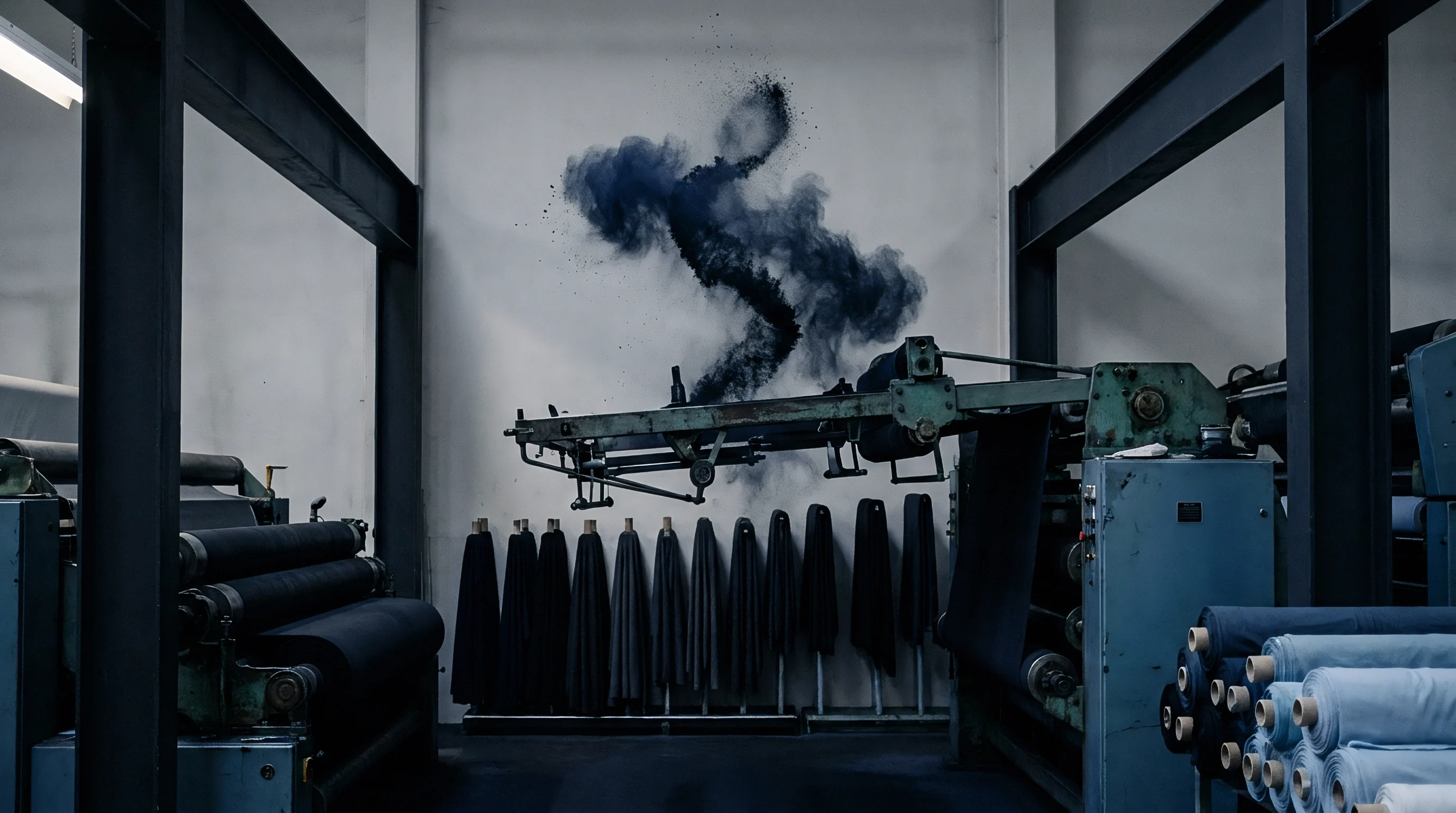
Asymmetrical yarn alignment alters the angle of capillary channels relative to thermal heating elements. Density alters pore size distribution. When warp and weft yarns do not intersect at precise ninety-degree angles, internal liquid channels twist diagonally across the web thickness.
Radiant heat applied to skew-distorted cloth heats the raised yarn surfaces unevenly, creating localized evaporation hotspots. Liquid liquor migrates laterally along slanted fill yarns toward high-temperature regions, producing diagonal color streaks across the finished roll.
Woven Density and Capillary Radius
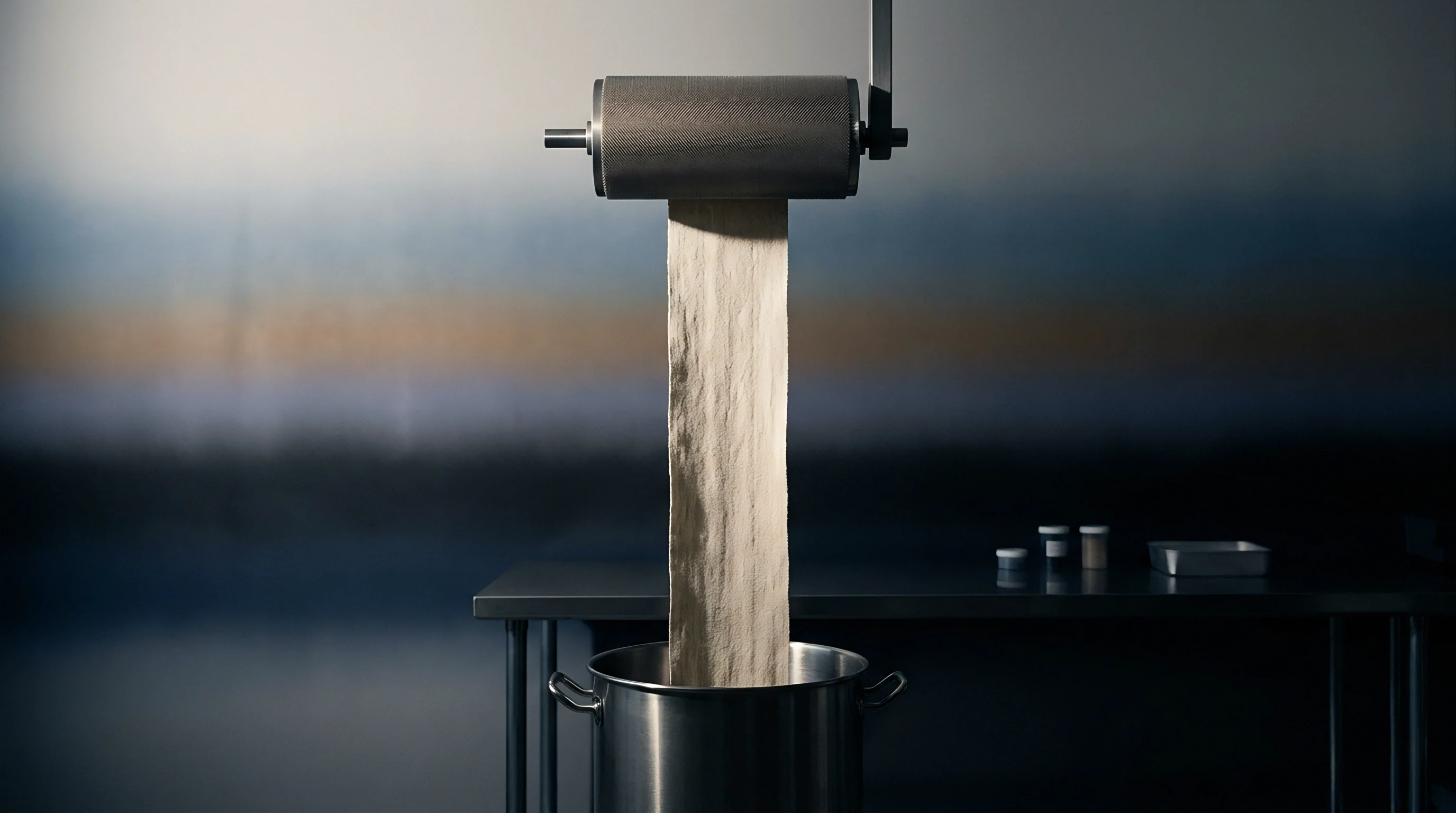
Tightly packed warp yarns create fine capillary radii that draw liquor rapidly from coarse weft interstices. Dye molecules follow water pathways. Heavy twill and satin constructions feature unequal distribution of warp and weft floats on their front and back faces.
A 3/1 warp-face twill exposes long warp floats on the technical face, while the reverse side presents a open weft-dominant grid. The fine capillaries of the warp-dense face pull liquid away from the back side during drying, causing severe face-to-back shade listing unless drying rates are strictly balanced.
- Lowering initial pad mangle nip pressure establishes a controlled wet pick-up target of 55 percent to limit excess mobile liquor volume.
- Engaging dual-sided infrared pre-dryers brings surface temperature to 80 degrees Celsius within three seconds of trough exit.
- Graduating hot flue zone temperatures starting at 105 degrees Celsius prevents premature boiling of water inside dense warp structures.
- Maintaining balanced nozzle blower frequency prevents air impinging on the face side from driving liquor to the back side.
Tighter weave constructions demand lower wet pick-up targets to offset the aggressive capillary action of fine internal pores.
Fastness
Instrumental evaluation of color levelness across the web confirms the structural uniformity achieved during drying. Spectrophotometric measurements capture color variations across web width and depth, providing objective quantification of dye distribution. ISO 105 fastness standards provide the testing framework to verify that unlevel drying has not compromised commercial quality.

Quantifying Face to Back Color Differences
Spectrophotometric measurements taken along the face and reverse sides of finished cloth isolate migration severity. Spectrophotometers read surface color drift. The Face-to-Back Migration Index calculates color variance by comparing spectral reflectance data across multiple wavelength bands.
High migration values point to inadequate intermediate drying or improper anti-migrant chemical dosing.
To evaluate migration severity numerically, calculate color difference values using the CIEDE2000 or CMC (2:1) formula under D65, A, and F11 light sources. Take reflectance readings at ten points along a single cross-section of the web to assess edge-to-center-to-edge listing. Consistent shade values indicate that moisture evaporation proceeded uniformly without localized dye accumulation.

Instrumental Tolerances across Industrial Widths
Reading shade parameters at five points across a 180 centimetre web identifies side-center-side color listing. Take a 300 GSM cotton 3/1 twill dyed with Reactive Blue 21 at 2.5 percent shade intensity. Initial wet pick-up reaches 70 percent off the pad mangle, with a target wet pick-up of 55 percent entering the hot flue.
If air nozzle velocity on the left side of the drying chamber exceeds the right side by 0.6 metres per second, localized evaporation rates split unevenly.
Moisture flux calculations demonstrate that a 15 percent increase in localized evaporation on the left web margin increases dye concentration on that edge by 12 percent over the center line. Spectrophotometric analysis yields a Delta E CMC (2:1) difference of 1.65 units between the left selvedge and center web. This variation exceeds standard commercial tolerance of 0.8 units, causing batch rejection.
- Cut test specimens measuring 10 by 40 centimetres along the warp direction from left, center, and right web locations.
- Pad the specimens through a 30 grams per litre reactive dye solution at 60 percent wet pick-up using a laboratory pad mangle.
- Pin specimens vertically inside a forced-air convection laboratory oven set at 120 degrees Celsius without intermediate infrared exposure.
- Measure color values on front and back surfaces using a spectrophotometer under D65 and F02 illuminants to calculate the face-to-back ratio.
Continuous shade monitoring across full production runs reveals that face-to-back listing becomes visible to the human eye at Delta E values exceeding 0.8 units.
Incorporating a maximum face-to-back color differential clause of 0.6 Delta E CMC under ISO 105-J03 into the purchase specification forces mills to maintain calibrated infrared pre-drying zones.
Margin
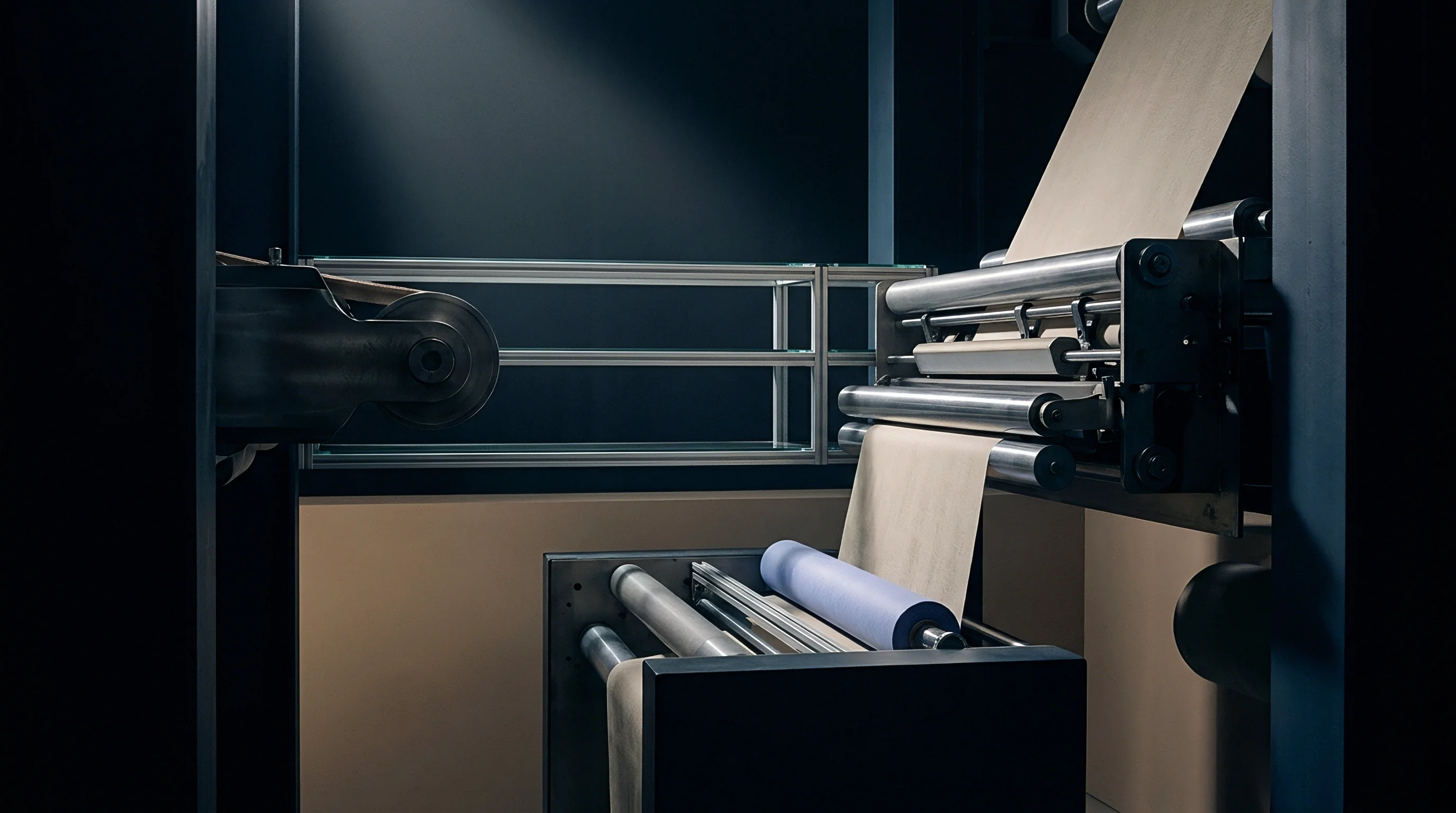
Commercial profitability on high-volume continuous dye runs hinges on minimizing scrap rates and thermal energy consumption. Running continuous drying equipment demands precise calibration between chemical additives, electrical pre-heating inputs, and line mechanical speed. Balance failure directly inflates landed fabric costs through rejected meterage and re-dyeing overhead.
Line Speed Tradeoffs and Thermal Energy Expenditures
Running continuous pad-dry lines at maximum mechanical capacity accelerates surface drying rates, increasing migration risk. Energy expenditures change line speed. Re-dyeing fabric destroys mill margins.
Rapid heating locks dye early. Pushing line speed from 40 to 60 metres per minute reduces dwell time inside the infrared pre-dryer, leaving moisture levels above the critical threshold as the web enters the turbulent hot flue section. Color migration increases exponentially, requiring higher anti-migrant polymer dosing to stabilize the pad bath.
Operating gas-fired infrared pre-dryers adds direct energy costs per meter of dyed output. However, skipping infrared intermediate drying forces mills to lower line speeds by up to 40 percent to prevent migration inside convective drying zones, destroying plant throughput economics.
Landed Cost Penalty of Unlevel Fabric Lots
Rejecting 5,000 metres of unlevel dyed cloth adds substantial re-processing costs or scrap loss to the converter ledger. Stripping and re-dyeing off-shade continuous runs damages tensile strength, increases energy consumption, and extends delivery schedules by weeks. Implementing robust anti-migration controls protects initial margin targets on long production runs.
| Parameter | Hot Flue Dryer Only | IR Pre-Dryer Added | Low-Pickup Vacuum Pad | Optimized Anti-Migrant Dosing |
|---|---|---|---|---|
| Line Speed Capacity (m/min) | 35 | 58 | 65 | 50 |
| Thermal Energy Cost ($/1000m) | 42.50 | 58.00 | 31.20 | 45.00 |
| Auxiliary Chemical Cost ($/1000m) | 12.00 | 14.50 | 10.50 | 28.00 |
| Average First-Pass Yield (%) | 91.5 | 98.8 | 97.2 | 96.5 |
Calculating total landed cost across a 50,000-metre continuous run demands balancing anti-migrant chemical dosing against infrared pre-dryer electrical loads. Optimizing the wet pick-up percentage at the pad nip delivers direct savings in thermal energy while maintaining shade uniformity across the entire order volume.