Electrolyte Dosing Regimes for Greige Cotton Duck Dyeing
Controlled progressive salt dosing prevents outer-fiber strike in heavy cotton duck, delivering level shade penetration and high crock fastness.

Weave

Yarn Density and Structural Jamming
Heavyweight canvas constructions present severe physical barriers to wet processing. Heavy canvas fabrics like Number 4 duck at 610 grams per square metre or Number 10 duck at 490 grams per square metre employ plied ring-spun yarns in high sett density. A typical Number 10 duck uses two-ply 12s English Cotton Count yarns in both warp and weft, packed at 44 ends per inch and 36 picks per inch.
Plied ring-spun structure creates tight intercellular void spaces inside the yarn core. Hydrophobic cotton waxes, residual seed coat fragments, and natural pectins remain trapped within these tight yarn bundles when greige duck enters wet processing without preliminary desizing. Wetting agents cannot instantly penetrate plied yarn bundles under rapid liquor movement.
Liquor ratio drives strike rate. Dense plied yarns retard fluid displacement inside the loom state matrix. When dye liquor passes through the fabric roll on a jig or jet dyeing vessel, fluid flows around the outer surface of the plied yarn bundle rather than through the interior core.
Hydrophobic natural impurities create localized surface tension variations across the fabric surface. The cover factor of duck fabric frequently exceeds 95 percent, leaving minimal interstitial spacing for bulk bath transport. Dye molecules must rely almost entirely on molecular diffusion rather than convective flow to reach inner fiber walls.
Cotton holds hydrophobic wax. The native wax content on greige cotton fiber ranges between 0.4 percent and 1.2 percent by dry weight. Raw pectin compounds form a insoluble calcium salt shell around primary cell walls, preventing aqueous swelling.
Without complete fiber swelling, the internal lumen remains collapsed, restricting internal pore channels to diameters under two nanometers. High yarn twist multiplies this resistance by compressing individual cotton fibers together under mechanical torsion.
Slower electrolyte addition rates compensate for tight structural packing in plied cotton yarns.

Failure Modes in Greige Canvas Processing
Dyeing un-pretreated or partially pretreated duck fabric through aggressive bath profiles causes permanent shade defects. Structural jamming combines with non-uniform absorbency to generate distinct failure modes across bulk runs.
- Skittery Appearance occurs when dye molecules exhaust onto outer fiber surfaces before migrating into the plied yarn core, creating a speckled shade effect.
- Center-to-Selvedge Tailing develops during jig dyeing as tension variations alter fabric thickness, causing uneven electrolyte accumulation across the roll width.
- Channeling Streaks form in jet vessels when high fabric density prevents uniform liquor penetration, forcing chemical bath flow into path-of-least-resistance channels.
- Resist Spotting stems from unremoved hydrophobic pectin patches that prevent electrolyte-driven dye adsorption, leaving un-dyed white spots under light inspection.
Density retards diffusion. When dyehouse operations skip comprehensive preparation to save water and energy, the raw fabric construction forces the dye bath to operate against extreme physical resistance. Electrolyte concentration profile becomes the only variable capable of controlling exhaustion speed across these structural boundaries.
Imbalanced salt addition over jammed greige canvas converts minor yarn variations into severe visual streaks that force the rejection of entire dye lots at final inspection.

Pretreatment
Desizing and Saponification Kinetics
Removal of starch sizes and natural oils forms the prerequisite step for level shade development. Raw duck incoming from the loom shed carries 3 percent to 8 percent starch or polyvinyl alcohol size applied during warp preparation. Enzymatic desizing requires alpha-amylase enzymes operating at pH 6.5 to 7.5 and temperatures between 70 and 95 degrees Celsius to break long-chain starch polymers into water-soluble dextrins.
Omitting full desizing leaves an insoluble film over warp yarns, blocking reactive dye diffusion during subsequent electrolyte additions.
Thick yarn resists flow. Alkaline scouring uses sodium hydroxide at concentrations between 30 and 50 grams per liter to saponify natural fats into soluble soaps. Emulsified waxes float off the fiber surface, raising fabric absorbency to acceptable wet processing levels.
Absorbency evaluation under AATCC Test Method 79 requires a water drop to sink completely into the conditioned fabric within three seconds. Raw greige duck exhibits water drop absorption times exceeding 300 seconds, confirming complete hydrophobic rejection of aqueous bath chemistries.
Alkali fixes reactive dyes. Chemical preparation alters the baseline zeta potential of raw cotton fibers. Unbleached cotton immersed in water carries a negative electrostatic charge of negative 25 to negative 35 millivolts due to carboxylic acid groups in pectin impurities and hydroxyl ions absorbed from water.
Effective alkaline scouring cleans carboxylic impurities, raising the surface negative charge to a predictable baseline level of negative 15 to negative 20 millivolts. Uniform electrostatic surface potential across every square meter of canvas prevents uneven ion repulsion when dissolved salt enters the vessel.
Degree of Whiteness and Pectin Residuals
Continuous pad-steam scouring lines achieve faster processing speeds than batch vessels but demand precise concentration checks. Sodium persulfate addition at 2 to 5 grams per liter during steam scouring assists in breaking down size residues, though excessive oxidation degrades cellulose polymer chains. Degree of polymerization for high-strength duck must remain above 2000 to maintain required ISO 13934-1 strip tensile strength standards above 1800 Newtons in the warp direction.
Purity dictates salt volume. Residual pectin content measured by gravimetric extraction must drop below 0.15 percent of total dry fiber mass before dyeing. Higher residual pectin leaves variable binding sites for inorganic cations, causing localized electrolyte concentration drops near dense yarn cores during high-temperature dye baths.
Dyehouse suppliers frequently claim that modern high-affinity levelling surfactants eliminate the need for complete desizing on heavy duck. Bulk production records show that surface-active levelling agents merely mask low absorbency temporarily, leading to poor rub fastness and shade bronzing during fixation.

Kinetics
Thermodynamic Drive of Neutral Salts
Dissolved electrolytes overcome the electrostatic repulsion existing between negatively charged cellulosate ions and anionic reactive dye molecules. Dissociated sodium ions from sodium sulfate or sodium chloride accumulate near the cellulosic fiber wall, forming a condensed electrical double layer. Screening this negative zeta potential reduces the electrical potential barrier from 30 millivolts down to near zero.
Dye molecules approach within short-range Van der Waals attractive distances of 0.3 to 0.5 nanometers, enabling adsorption onto fiber binding sites.
Salt lowers surface charge. Sodium sulfate provides higher ionic strength per mole than sodium chloride due to the divalent sulfate anion. One mole of sodium sulfate yields three moles of active ions, creating a higher ionic strength bath at equivalent molar concentrations.
Dosing 60 grams per liter of anhydrous sodium sulfate creates an ionic strength of approximately 1.26 moles per liter, whereas 60 grams per liter of sodium chloride yields an ionic strength of 1.03 moles per liter. Heavy canvas dyeing requires this elevated ionic strength to push large vinyl sulfone or bis-monochlorotriazine dye molecules deep into dense yarn structures.
Water temperature alters migration. Dye bath temperature controls kinetic energy and migration capability. At 40 degrees Celsius, reactive dyes display high substantivity but exceptionally low diffusion coefficients inside tight cotton fibers.
Raising the bath temperature to 60 or 80 degrees Celsius expands fiber pore dimensions and speeds molecular movement. High temperatures lower thermodynamic equilibrium adsorption values. Dyeing heavy duck demands a balanced temperature profile: salt addition at lower temperatures to maximize total exhaustion capacity, followed by precise heating ramps to promote dye migration throughout inner yarn layers before alkali fixation.
Electrolyte concentration of 80 grams per liter at a liquor ratio of 4:1 generates ionic strength sufficient to exhaust 92 percent of vinyl sulfone dye before alkali addition.
Comparative Dosing Regime Models
Selecting an appropriate electrolyte dosing schedule determines whether dye molecules exhaust uniformly or aggregate on outer yarn edges. Three main dosing schedules are deployed across industrial jig and jet systems processing heavy canvas duck.
| Dosing Regime | Electrolyte Type | Dosing Time (min) | Exhaustion Yield (%) | Cross-Sectional Levelness Index (K/S Ratio) |
|---|---|---|---|---|
| Single Bulk Dump | Sodium Chloride | 2 | 88.5 | 0.54 |
| Linear Stepwise (4 Splits) | Sodium Sulfate | 40 | 91.2 | 0.78 |
| Progressive Exponential Curve | Sodium Sulfate | 60 | 94.8 | 0.94 |
| Isothermal Constant Rate | Sodium Chloride | 45 | 89.1 | 0.71 |
Linear dosing profiles add fixed salt quantities at equal time intervals. A four-split linear schedule adds 10 percent of total salt weight at turn one, 20 percent at turn two, 30 percent at turn three, and 40 percent at turn four on a dye jig. Rapid initial salt concentration spikes cause early surface strike.
Secondary turns add electrolyte to a bath already depleted of free dye molecules, yielding poor cross-sectional migration.
Progressive exponential dosing starts with minimal salt delivery, gradually increasing addition rates as bath dye concentration drops. The mathematically defined exponential profile maintains a constant rate of dye exhaustion onto the fiber throughout the dosing phase. Bath exhaustion stays under 2 percent per minute, allowing dye molecules sufficient time to diffuse through dense 12/2 plied yarns before fixation.
This dynamic equilibrium prevents local concentration saturation, yielding uniform shade depth from selvedge to center across heavy fabric rolls.
What specific mathematical constant defines the optimal exponential dosing slope when liquor ratios drop below four to one in short-liquor jig processing?

Metering
How Does Dosing Curve Shape Prevent Core Strike?
Controlling the rate of electrolyte addition protects heavy canvas from strike marks caused by instantaneous dye aggregation. High local salt concentration precipitates direct and reactive dyes out of solution before internal fiber pores absorb them. Modern automated dye vessels utilize progressive metering pumps governed by programmable logic controllers to regulate chemical flow.
The dosing curve follows an exponential function described by equation rate parameters where initial flow rates remain below 0.5 liters per minute for a 1,000-liter bath volume.
Jig turns dictate dosing. In batch jig dyeing, fabric passes through a stationary liquor trough between two motorized rolls. A full roll passage of 1,000 meters of 500 grams per square meter duck takes approximately 15 to 20 minutes depending on mechanical speed settings.
Adding raw salt directly into the trough during a passage subjects the leading end of the fabric roll to high electrolyte concentrations while the trailing end receives diluted bath liquor. Automated dosing systems feed concentrated electrolyte stock solution through a distribution pipe running along the full width of the trough, synchronized to deliver precise volumetric increments per fabric pass.
Shear forces aggregate dye. Dosing execution on low-liquor jet machines demands high pump circulation speeds to achieve uniform contact. Heavy duck requires nozzle pressures around 1.5 to 2.2 bar to transport fabric without slippage.
Mechanical shear forces inside the jet nozzle accelerate dye aggregation if local salt concentration exceeds critical thresholds. Progressive dosing spreads total electrolyte delivery over 45 to 60 minutes, keeping free dye concentration in the liquid phase balanced with adsorbed dye on the solid fiber phase.
High liquor circulation speeds prevent thermal micro-gradients across heavy canvas rolls during salt dosing cycles.
Stepwise Dosing Execution Protocol
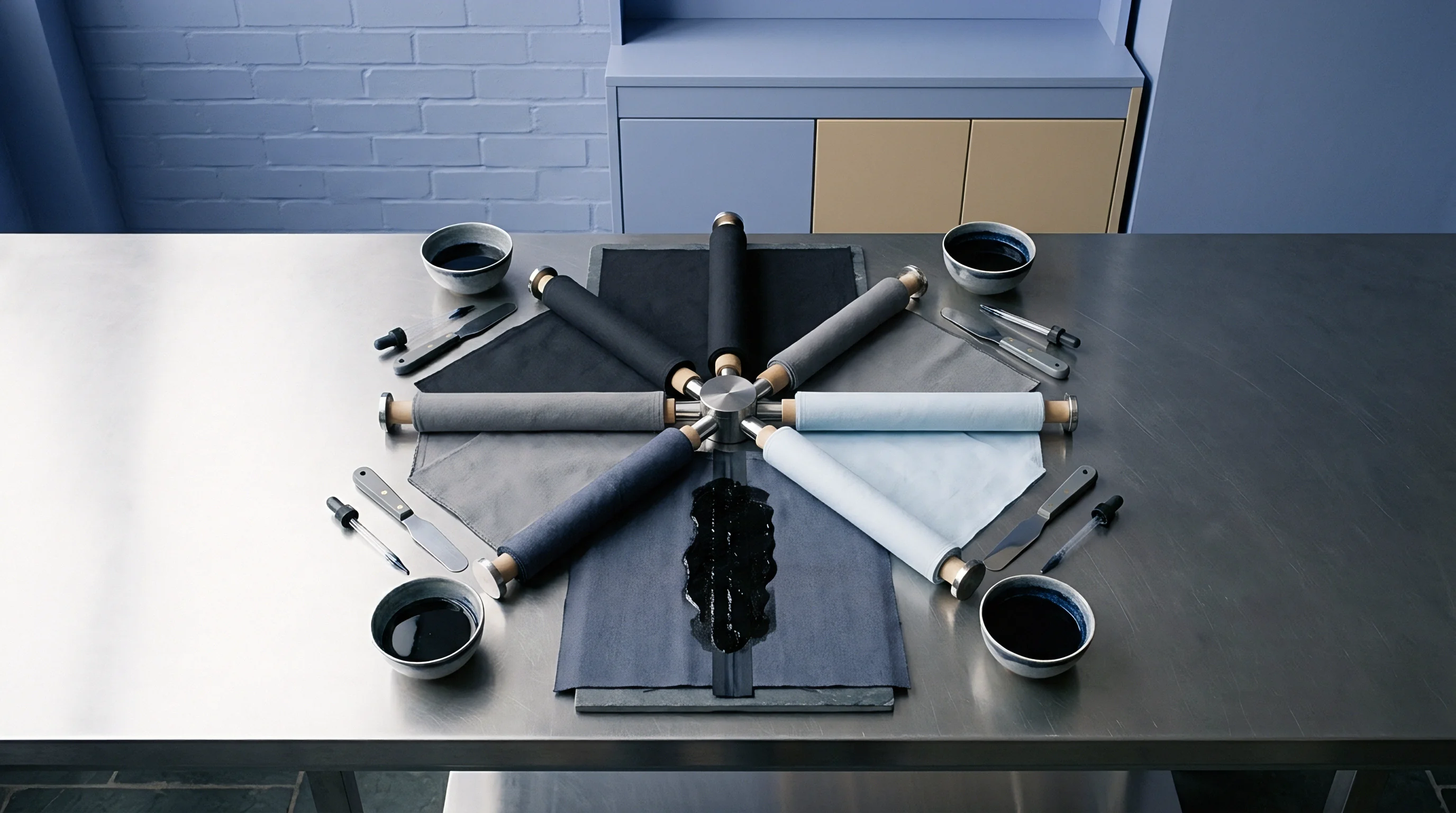
Mill technicians operating manual or semi-automated dyehouses must follow strict sequential steps to maintain shade levelness on heavy duck lots when automated dosing pumps are unavailable.
- Pre-dissolve technical grade anhydrous sodium sulfate in secondary chemical preparation tanks at 60 degrees Celsius using clean softened water.
- Measure baseline bath pH and adjust to 6.0 to 6.5 using acetic acid before introducing reactive dye solution.
- Add 5 percent of the prepared electrolyte stock solution over the first full fabric passage through the dye trough.
- Increase addition to 15 percent of total volume on the second passage, monitoring vessel temperature to maintain 50 degrees Celsius.
- Inject 30 percent of total volume on the third passage to maintain steady exhaustion kinetics across the inner yarn matrix.
- Deliver the final 50 percent of total electrolyte volume over the fourth passage while ramping temperature to final exhaustion setpoint.
- Run two complete fabric passages without chemical additions to allow intra-fiber migration before dosing alkali fixative.
Disregarding strict passage timing during manual dosing creates visible batch end-to-end shading. Commercial supply agreements specify that fabric lots displaying a color variation above Delta E 0.8 across roll ends fail acceptance criteria under ISO 105-J03 calculations, transferring all rework expenses to the dyeing facility.

Verification
Cross-Sectional Microtomy and Penetration Metrics
Assessing dye distribution inside heavy duck yarns requires microtome cross-sectional evaluation. Microtome slicing cuts thin fabric cross-sections down to 10 micrometers in thickness. Optical microscopy combined with digital image analysis measures light absorption profiles across individual plied yarn bundles.
Fully penetrated yarns display consistent K/S spectral absorption values from outer circumferential fibers to inner core fibers.
Yield drops under streakiness. Penetration ratio calculations divide inner core K/S intensity by outer ring K/S intensity. A penetration ratio of 1.0 indicates absolute shade uniformity across the yarn bundle.
Heavy canvas dyed under single bulk salt additions yields penetration ratios as low as 0.35, indicating heavily dyed surface fibers surrounding white yarn cores. Progressive electrolyte dosing regimes elevate cross-sectional penetration ratios above 0.88 on 600 grams per square meter numbered duck constructions.
Color fastness demands levelness. Inadequate core penetration causes fastness failures during garment wash cycles or field wear. Abrasive wear strips away outer dyed fibers, exposing un-dyed white core areas underneath.
This structural exposure manifests as artificial frosting or streakiness along seam lines after minimal domestic laundering cycles.
Standard ISO 105-C06 commercial laundering tests grade color loss on heavy duck below Grade 4 when salt distribution varies across the warp beam.
Fastness Testing Protocols and Shade Matching
Testing laboratories evaluate finished canvas duck against strict international standards before issuing commercial clearance certificates. Physical fastness requirements for heavy duck applications exceed baseline apparel standards due to demanding end-use environments.
- ISO 105-C06 Color Fastness to Washing evaluates shade change and staining across multi-fiber strip fabrics under accelerated laundering at 40 or 60 degrees Celsius.
- ISO 105-X12 Color Fastness to Rubbing measures dry and wet crocking transfer onto un-dyed cotton fabric using a standardized mechanical crockmeter finger.
- ISO 105-B02 Color Fastness to Artificial Light subjects dyed samples to xenon arc fading lamps until blue wool standard reference scales reach designated degradation thresholds.
- ISO 105-J03 Color Difference Evaluation calculates total Delta E values using spectrophotometric data captured under standard illuminants D65, TL84, and A.
Evaluating wet crock fastness on heavy canvas dyed with dark shades remains a persistent challenge for mill quality managers. Heavy duck dyed with improperly managed salt profiles frequently yields wet crocking scores below Grade 2 on the ISO grey scale. Un-migrated dye aggregates resting loosely on dense yarn outer surfaces detach easily under mechanical friction during crock testing.
Adequate levelling during electrolyte addition provides the primary defense against friction fastness failure.

Economics

Landed Chemical Costs and Salt Selection
Selecting electrolyte salt involves direct chemical cost trade-offs, purity calculations, and effluent compliance costs. Technical grade sodium chloride costs approximately 0.12 to 0.18 US dollars per kilogram, while vacuum-dried anhydrous sodium sulfate ranges from 0.25 to 0.38 US dollars per kilogram. Dyeing a 1,000-kilogram lot of heavy duck at a 5:1 liquor ratio requires 300 kilograms of salt at a standard concentration of 60 grams per liter.
Base chemical expenditure using sodium chloride totals 45 US dollars per lot compared to 90 US dollars per lot for sodium sulfate.
Sodium chloride contains trace metal impurities including calcium, magnesium, and iron ions. Calcium and magnesium ions react with sodium carbonate used during fixation, precipitating insoluble carbonates onto duck surfaces. Precipitated salts alter fabric hand feel and cause harsh needle wear during high-speed industrial sewing operations.
Anhydrous sodium sulfate exhibits higher chemical purity levels, eliminating needle cut risks on heavy canvas items like military tents and industrial conveyor belting.
Effluent processing costs alter the chemical selection calculus. Environmental regulations enforce strict limits on Total Dissolved Solids (TDS) and chloride ion discharge levels in textile wastewater. Reverse osmosis membrane treatment systems process sodium sulfate effluent more efficiently than sodium chloride effluent due to membrane scaling parameters.
Recovering salt from sulfate-rich dye bath wastewater cuts raw material procurement costs and reduces environmental compliance surcharges.
| Parameter | Sodium Chloride (NaCl) | Anhydrous Sodium Sulfate (Na2SO4) |
|---|---|---|
| Chemical Purity Level (%) | 98.2 | 99.7 |
| Raw Chemical Cost (USD/kg) | 0.15 | 0.30 |
| Required Quantity for 1,000 kg Lot (kg) | 300 | 300 |
| Precipitation Risk Index | High (Calcium/Magnesium) | Negligible |
| Wastewater TDS Load (mg/L) | 60,000 | 60,000 |
| Effluent RO Recovery Efficiency (%) | 65.0 | 82.0 |

Cycle Time Economics and Yield Optimization
Optimizing electrolyte dosing duration balances process control against machine hourly operating rates. Operating a heavy-duty industrial dye jig costs between 45 and 65 US dollars per machine hour in direct power, steam, labor, and overhead allocation. Extending a progressive dosing profile from 30 minutes to 60 minutes adds 0.5 machine hours per batch, raising conversion cost by approximately 27.50 US dollars per lot.
This cycle time expenditure protects against batch shading failures that require stripping and re-dyeing.
Stripping and re-dyeing off-shade heavy duck fabric consumes extensive chemical stripping agents like sodium hydrosulfite and caustic soda. Stripping degrades cotton fiber strength by 8 percent to 15 percent, reducing burst strength and tear resistance below commercial technical specifications. Re-dyeing doubles water consumption from 40 liters per kilogram of fabric to 80 liters per kilogram, eliminating operational profit margins on bulk orders.
Controlled progressive salt dosing minimizes lot rejections to below 1.5 percent of total dyehouse throughput. Dyehouse managers who enforce strict automated electrolyte dosing profiles achieve lower total landed cost per finished meter despite longer machine cycle times.