Finite Element Modeling of Thermal Yarn Strain in Wet Processing
Predicting wet yarn strain via finite element modeling requires coupled hybral viscoelastic parameters to eliminate post-processing fabric shrinkage.

Heat
Aqueous processing environments alter the amorphous polymer matrix long before mechanical tension stretches the structural weave. Synthetic and natural yarns undergo severe thermodynamic shifts when submerged in liquor baths or swept with saturated steam. Plasticization by liquid water weakens inter-chain hydrogen bonds, dropping the glass transition temperature of synthetic fibers significantly.
Polyethylene terephthalate filaments that remain rigid under dry conditions at seventy degrees Celsius become susceptible to permanent structural deformation once moisture penetrates the amorphous regions. Internal stresses accumulate rapidly.
Thermal agitation inside wet finishing machinery triggers entropic polymer chain recoil. Spun yarns and textured continuous filaments stored under strain on greige rolls attempt to return to their lowest energy conformational states. Unconstrained yarn contracts axially while expanding radially.
Within a tight fabric weave, surrounding warp and weft yarns restrict this radial expansion, shifting axial contraction forces directly into contact interfaces. Crimp geometry adjusts under these coupled thermal and hybral stress fields.

Hydrothermal Polymer Softening and Glass Transition
Water molecules penetrating synthetic filament bundles act as plasticizers, lowering intermolecular hydrogen bonding. Polyamide 6 and polyamide 6,6 exhibit wet glass transition temperatures below room temperature, accelerating stress relaxation under minimal external loads. Water breaks inter-chain bonds.
Polyethylene terephthalate maintains higher hydrothermal resistance, yet its glass transition drops from eighty degrees Celsius dry to sixty-two degrees Celsius in saturated steam. Process engineers who calibrate numerical models using dry thermal properties miscalculate yarn strain magnitude during dye liquor immersion.
Frictional heating and environmental temperature changes shift the elastic modulus of the yarn along non-linear curves. At temperatures exceeding the wet glass transition, the storage modulus declines by orders of magnitude while the loss modulus spikes. Mechanical loads applied during this transition period yield permanent plastic strain alongside viscoelastic deformation.
Modeling this behavior demands temperature-dependent and moisture-dependent constitutive relations operating concurrently in the finite element solver solver numerical domain.

Entropic Recoil and Crimp Interchange Kinetics
Tensile force applied along a wet yarn axis forces cross-over points to displace vertically across the weave plane. As longitudinal tension increases, warp yarns straighten, driving weft yarns into higher crimp amplitudes. High temperature accelerates this crimp interchange by lowering the bending rigidity of individual filaments.
Crimp undulation geometry determines the local distribution of longitudinal stretch versus transverse compression.
Polyethylene terephthalate submerged in liquid water experiences a glass transition temperature drop from seventy-eight degrees Celsius down to sixty-two degrees.
Thermal contraction forces generated within constrained yarn paths generate high contact pressures at weave crossover points. Friction balances longitudinal forces. If the applied tension along the machine direction exceeds the transverse restraining force, warp yarns slip across weft yarns, permanently altering thread counts per centimeter.
Numerical simulations must evaluate local contact shear stress against temperature-dependent inter-yarn friction coefficients to capture localized structural distortion.
- Warpway Tightness Bands Continuous residual tension during high-temperature dwell creates linear density variations across the fabric width.
- Spurious Skewing Unbalanced lateral stress fields in the stenter clip chain rotate picks away from ninety-degree alignment.
- Crimp Suppression Excessive longitudinal pinning force flattens yarn undulations, permanently altering fabric flexural rigidity.
- Thermal Streaking Localized temperature gradients across heating zones yield uneven dye uptake kinetics within synthetic filaments.
The dyehouse representative claimed that minor length variation across rolls stems entirely from raw yarn lot differences rather than uneven stenter chain pin drive speed.

Mesh
Spatial discretization choices define whether a numerical model captures individual filament sliding or simply averages stress across continuous volume. Modeling a woven or knitted yarn assembly at full production scale requires multi-level spatial representation. Full micro-scale models treat every constituent filament as an individual elastic continuum or beam element, capturing inter-filament friction and cross-sectional flattening.
Compute requirements restrict micro-scale domain sizes to a few cubic millimeters of cloth, making full-roll simulation impossible.
Meso-scale discretization models individual yarns as homogeneous solid continuum bodies or vector beam arrays mapped to a single weave unit cell. This representation captures yarn cross-sectional flattening, crimp interchange, and inter-yarn contact shear while maintaining solvable element counts. Macro-scale models simplify whole fabric sheets into orthotropic shell elements, embedding micro-structural mechanics into homogenised non-linear constitutive equations.
Bridging these scales requires precise boundary parameter mapping from unit-cell simulations into macro-scale shell integration points.

Multi-Filament Continuum versus Beam Discretization
Solid eight-node hexahedral elements resolve transverse cross-sectional distortion at yarn crossover intersections. Under wet pressing or high tension, circular yarn cross-sections flatten into elliptical geometry, altering contact area and internal strain distribution. Continuum elements track this transverse strain directly, though they introduce potential element locking under severe shear deformation.
Filament sliding determines hand.
Timoshenko beam elements model yarn bending and axial stretching with minimal computational overhead. Beam element formulations incorporate transverse shear deformation, rendering them effective for high-crimp yarn paths. Standard beam formulations neglect cross-sectional shape changes, underestimating contact area growth under compressive loads.
Hybrid discretization models apply solid elements within high-compression contact zones and transition to beam elements along free yarn spans.
Contact Mechanics and Inter-Yarn Friction Coefficients
Surface traction between intersecting yarn paths dictates how crimp transfers under external tension. Finite element penalty contact algorithms enforce non-penetration conditions between yarn boundaries, while Coulomb friction models govern tangential shear. In wet processing, the presence of water and chemical surfactants alters the friction coefficient dynamically, dropping dry coefficients of zero point three five down to hydrodynamic lubricant regimes below zero point15.
Reducing element size past the individual filament radius increases computation time without improving macro-scale shrinkage prediction accuracy.
Mesh density dictates cost. Mesh refinement along yarn contact regions must resolve high normal stress gradients without causing numerical chatter. Inadequate element density across yarn radii leads to artificial stress concentration spikes, miscalculating peak yarn strain during stenter stretching.
Explicit time integration schemes handle complex multi-body contact transitions effectively, provided artificial mass scaling does not introduce spurious inertial forces into slow thermal relaxation processes.
| Scope Level | Element Formulation | Computational Cost per Unit Cell | Transverse Strain Accuracy | Frictional Slip Resolution |
|---|---|---|---|---|
| Micro-Filament | 3D Solid C3D8R / Timoshenko Beam | Extremely High (100+ CPU hours) | Exact Filament Geometry | Resolves Inter-Filament Friction |
| Meso-Unit Cell (Solid) | Continuum Hexahedral C3D8R | Moderate (1 to 4 CPU hours) | High Yarn Cross-Section Flattening | Resolves Inter-Yarn Contact Area |
| Meso-Unit Cell (Hybrid) | Solid Core with Beam Spans | Low (0.2 to 0.5 CPU hours) | Moderate Contact Zone Strain | Approximates Yarn Slip Points |
| Macro-Continuum Shell | Orthotropic Shell S4R | Negligible (Seconds) | Homogenized Thickness Change | Non-Resolvable (Averaged Slip) |
Selecting solid continuum elements for unit-cell contact regions while routing far-field yarn paths through beam elements preserves convergence stability without sacrificing transverse strain accuracy.

Rheology
Constitutive equations governing wet textile structures must incorporate coupled mechanical, thermal, and moisture-dependent state variables. Polymer filaments exhibit pronounced time-dependent viscoelasticity, where stress decay occurs under constant hold strain and creep deformation accumulates under constant line tension. The total strain tensor breaks down into elastic, viscoelastic, thermal expansion, and hybral swelling components acting simultaneously during wet thermal finishing.
Time-temperature-moisture superposition principles extend standard viscoelastic formulations into hydrothermal domains. Increasing temperature or moisture content shifts the material relaxation spectrum toward shorter time scales, accelerating stress dissipation. Explicit mathematical shift functions translate environmental histories into reduced time parameters within the numerical integration scheme.
Polymer chains recoil quickly.

Viscoelasticity and Prony Series Calibration
Mathematical representations of stress relaxation rely on exponential series terms fitted to experimental load-decay curves. Multi-term Prony series capture relaxation responses across time scales ranging from split-second mechanical impacts in jet nozzles to multi-minute dwell periods inside stenter heat zones. Maxwell model elements arranged in parallel represent instantaneous elastic response alongside delayed viscous flow.
Viscoelastic decay takes time. Standard material parameters calibrated at dry room temperature fail completely when applied to hot water immersion. Laboratory testing must measure stress relaxation curves across a matrix of temperatures and moisture levels.
Fitting Prony parameters to these empirical matrices provides the solver with accurate shear and bulk relaxation moduli across varying processing states.

Non-Linear Hybral Expansion Formulations
Volumetric expansion induced by liquid absorption exhibits strong directionality based on internal polymer orientation. Synthetic filaments expand predominantly in the radial direction upon wetting, with minimal axial elongation. Natural cellulosic fibers experience significant transverse swelling, forcing woven yarn diameters to grow up to twenty percent while decreasing yarn length through geometric crimp intensification.
Testing yarn tensile relaxation under ISO 3341 without controlling ambient humidity introduces strain model variance exceeding twelve percent.
Hyperelastic constitutive models, such as Ogden or Mooney-Rivlin formulations, capture non-linear stress-strain behavior in highly plasticized wet states. Combining hyperelasticity with viscoelastic relaxation yields quasi-linear viscoelastic models suitable for finite element execution. These formulations track high-strain deformations occurring when wet fabric passes over aggressive tensioning rollers or expanding scroll bars.
Whether non-linear hyperelastic damage models can accurately predict permanent set caused by localized yarn over-stretching during sudden stenter speed alterations remains an active point of technical debate.


Exposure
Wet processing machinery subjects moving fabric webs to simultaneous thermal gradients and mechanical boundary constraints. Stenter frames, jet dyeing vessels, jig units, and continuous pad-steam ranges apply distinct load signatures to processing yarns. Steam accelerates structural relaxation.
Simulating these environments requires applying coupled thermal-fluid-mechanical boundary conditions to the finite element mesh.
Stenter processing drives moisture evaporation while maintaining fixed longitudinal and transverse dimensions via chain-mounted pins or clips. The web enters under overfeed conditions, providing excess length to accommodate thermal contraction. As water evaporates in heating zones, yarn temperature rises rapidly toward the air set point, triggering heat setting mechanisms.
Finite element models must update local moisture content and yarn temperature at each numerical time step to track stress evolution across the chamber length.

Stenter Overfeed Optimization and Pin Chain Strain
Differential speeds between feed rollers and pin chains dictate the longitudinal strain state during thermal setting. Positive overfeed feeds extra fabric length onto the pins, allowing yarns to relax and contract thermally without building high tension. Insufficient overfeed forces yarns to heat set under high longitudinal strain, leaving high residual stress in the finished cloth.
Tension spikes ruin yields. Edge pins enforce zero-transverse-displacement boundary conditions while the chain width expands to target dimensions. Finite element strain maps show high localized tension near selvedges, dissipating toward the fabric center.
Adjusting overfeed parameters based on model predictions prevents warpway yarn necking and ensures uniform square-meter weight distribution across the usable width.
Hydrodynamic Nozzle Forces in Jet Dyeing Machinery
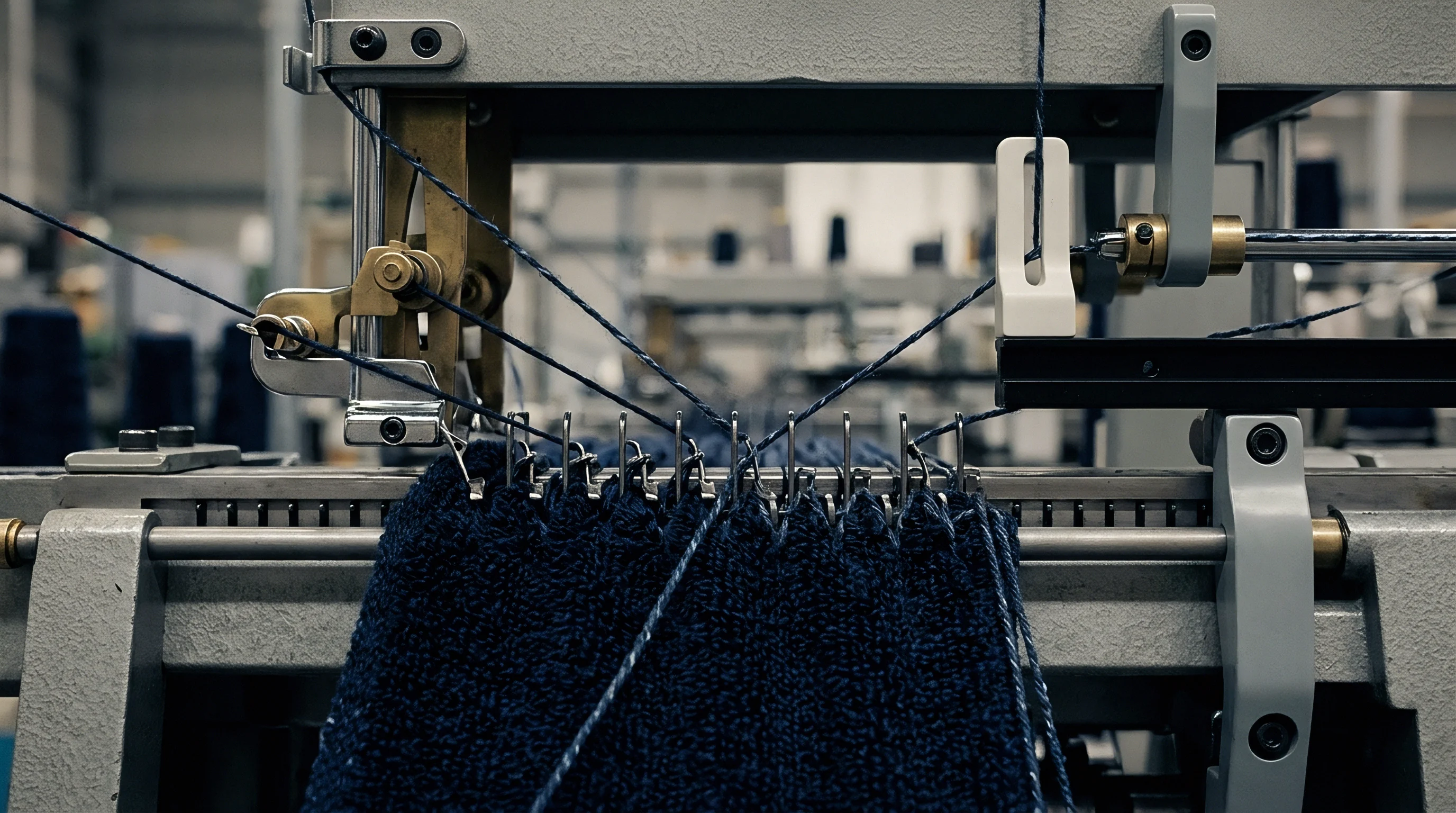
Fluid drag within venturi nozzles generates localized tension peaks that stretch hot, plasticized yarn bundles. High-velocity dye liquor propels the fabric rope through transport tubes, imposing cyclic flexural and tensile loads. Drag forces stretch wet yarns.
Yarns submerged in ninety-five degree Celsius dye liquor experience rapid mechanical extension followed by relaxation inside the storage bath basket.
- Measure raw yarn thermal contraction force using a dynamic mechanical analyzer at specified ramp rates.
- Calibrate inter-yarn wet friction coefficients across target processing temperatures using a specialized micro-tribometer.
- Solicit machine speed and temperature field boundary parameters from the specific dyehouse finishing line.
- Execute meso-scale FEA unit cell simulations to predict macro-scale fabric width change and residual strain fields.
- Adjust machine overfeed ratios prior to running bulk rolls to prevent warp tension spikes above target limits.
Simulating jet dyeing dynamics requires coupling computational fluid dynamics solvers with non-linear finite element structural solvers. Fluid pressure fields convert to boundary surface traction forces applied to the yarn rope model. Calculating cumulative plastic strain over multiple circulation passes identifies risk zones for rope mark formation and localized dimensional distortion.
| Processing Operation | Target Temperature Range | Moisture Content State | Applied Web Tension | Dominant Strain Mode |
|---|---|---|---|---|
| Stenter Heat-Setting | 170°C to 210°C | Drying to Bone-Dry | Low to Moderate (Overfeed Dependent) | Biaxial Thermal Recoil & Fixation |
| Jet Dyeing Nozzle Pass | 90°C to 130°C | Fully Submerged Liquid | High Local Hydrodynamic Drag Peaks | Cyclic Axial Tensile Shock |
| Pad-Steam Dwell | 100°C me Saturated Steam | 100% Saturated Vapor | Low Longitudinal Web Transport | Unconstrained Hybral Swelling |
| Jig Dyeing Batching | 80°C to 98°C | Fully Submerged Liquid | High Constant Winding Tension | Sustained Longitudinal Creep |
Polyamide 6,6 yarn subjected to ninety-five degrees Celsius at eighty percent relative humidity exhibits a sixty-five percent drop in yield stress compared to dry ambient conditions.
Failing to account for hydrodynamic drag peaks inside jet dyeing nozzles results in permanent fabric necking, forcing mills to scrap entire dye lots when finished widths fall below garment marker tolerances.

Optics
Experimental verification of simulated yarn strain fields relies on non-contact measurement tools capable of operating inside steam-filled test chambers. Standard mechanical extensometers contact the specimen physically, introducing local mass and temperature distribution distortions. Optical measurement systems track deformation non-destructively, mapping real-time displacement vectors across yarn surfaces during thermal cycles.
Digital Image Correlation tracks movement in high-contrast random surface patterns applied to the fabric or yarn assembly. High-speed digital cameras record image sequences through environmental chamber windows as temperature and moisture levels change. Software algorithms compare sub-facet image blocks between reference and deformed states, computing full-field strain tensors with high spatial resolution.

Environmental Digital Image Correlation Setups
High-resolution stereo camera pairs capture full-field surface deformation through anti-fog optical viewport windows. Environmental testing demands precise control over ambient illumination and optical path thermal gradients. Refractive index variations caused by hot air plumes or steam condensation skew displacement calculations if uncorrected.
Camera resolution sets accuracy. Speckle pattern application onto fine filament yarns requires micro-dispersion airbrushes or high-precision carbon deposition. Pattern scale must match optical magnification, ensuring individual correlation sub-facets contain unique intensity distributions without obscuring individual filament boundaries.
How Does Digital Image Correlation Measure Moist Strain?
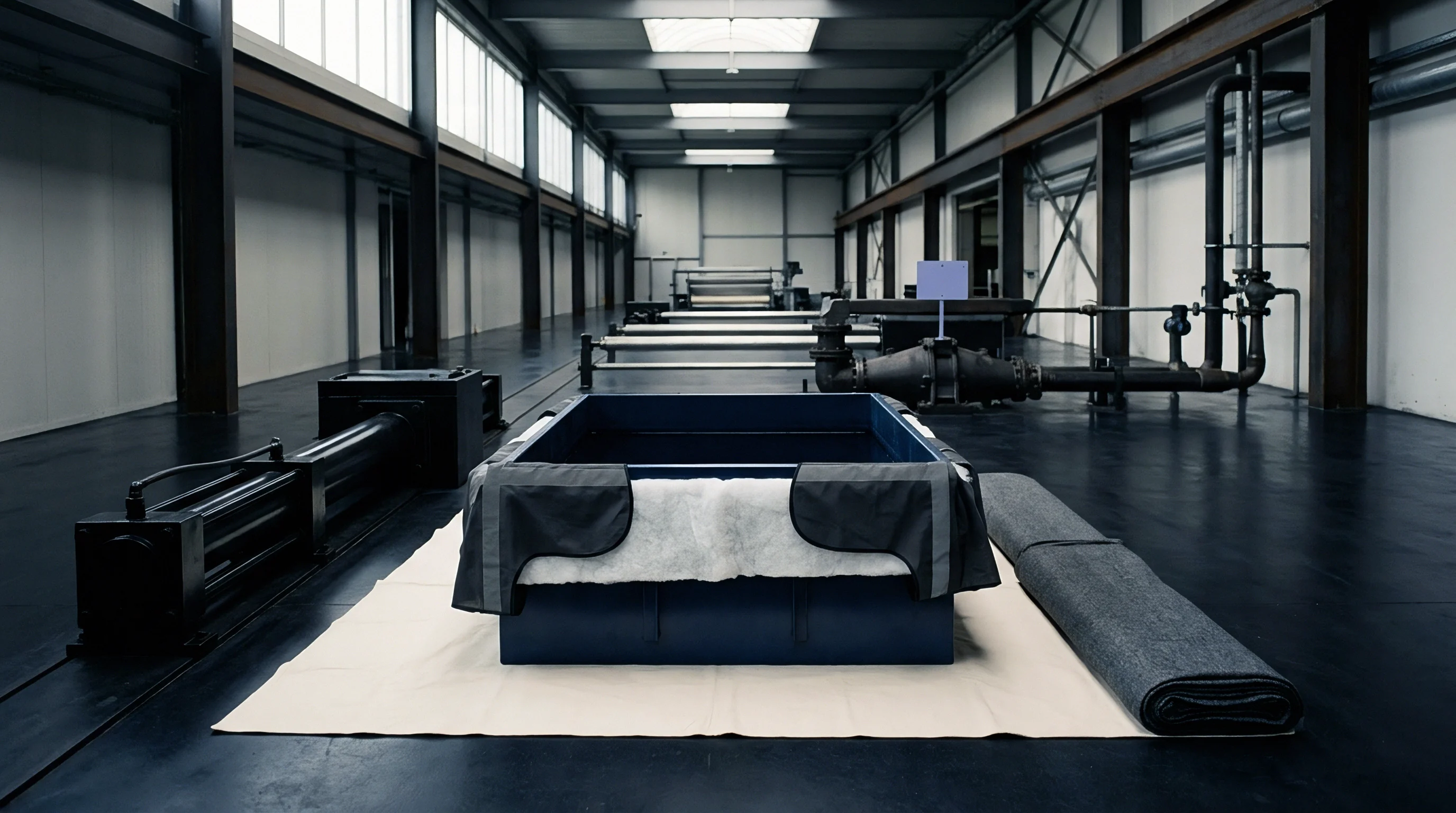
Speckle patterns applied to yarn surfaces track local displacement vectors as temperature and moisture levels rise. Computer algorithms compute green-lagrange strain tensors by differentiating displacement fields across the spatial grid. This non-contact approach isolates thermal expansion and hybral swelling strain components from machine-induced mechanical extension.
Calibrating finite element models against optical strain data involves comparing predicted unit cell deformation contours directly with measured full-field maps. Discrepancies between simulated and measured strain distribution highlight inaccurate material inputs, such as erroneous friction coefficients or simplified constitutive relaxation parameters.
- Speckle Pattern Fidelity High-contrast heat-resistant paint dots must adhere to wet filaments without altering local yarn stiffness.
- Stereo Calibration Rigidity Camera mounts must remain isolated from thermal expansion of the environmental chamber housing.
- Sub-Pixel Displacement Accuracy Image resolution must yield spatial precision finer than five micrometers per pixel grid unit.
- Refinement Window Selection Sub-facet sizes in the correlation algorithm must match local yarn weave repeat geometry.
Incorporating ISO 13934 tensile strain validation into technical delivery specifications forces suppliers to warrant physical dimensional stability within a plus or minus point five percent boundary under simulated thermal bath conditions.


Tolerance
Commercial fabric specifications translate complex finite element strain predictions into hard dimensional boundaries written into purchase orders. Predictive modeling reduces reliance on costly trial-and-error mill runs, identifying processing windows that keep residual post-wash shrinkage within contract limits. Connecting numerical strain fields to commercial risk parameters transforms theoretical engineering into actionable sourcing control.
Unrelaxed strain drives shrinkage. Residual strain locked into synthetic yarns during improper stenter processing releases during subsequent laundering, causing severe garment distortion. Finite element models calculate the residual elastic energy remaining in yarn structures post-finishing.
Converting this residual energy into expected dimensional change via ISO 5077 testing standards establishes a clear link between machine parameters and final product compliance.
Translating Residual Strain to Dimensional Stability
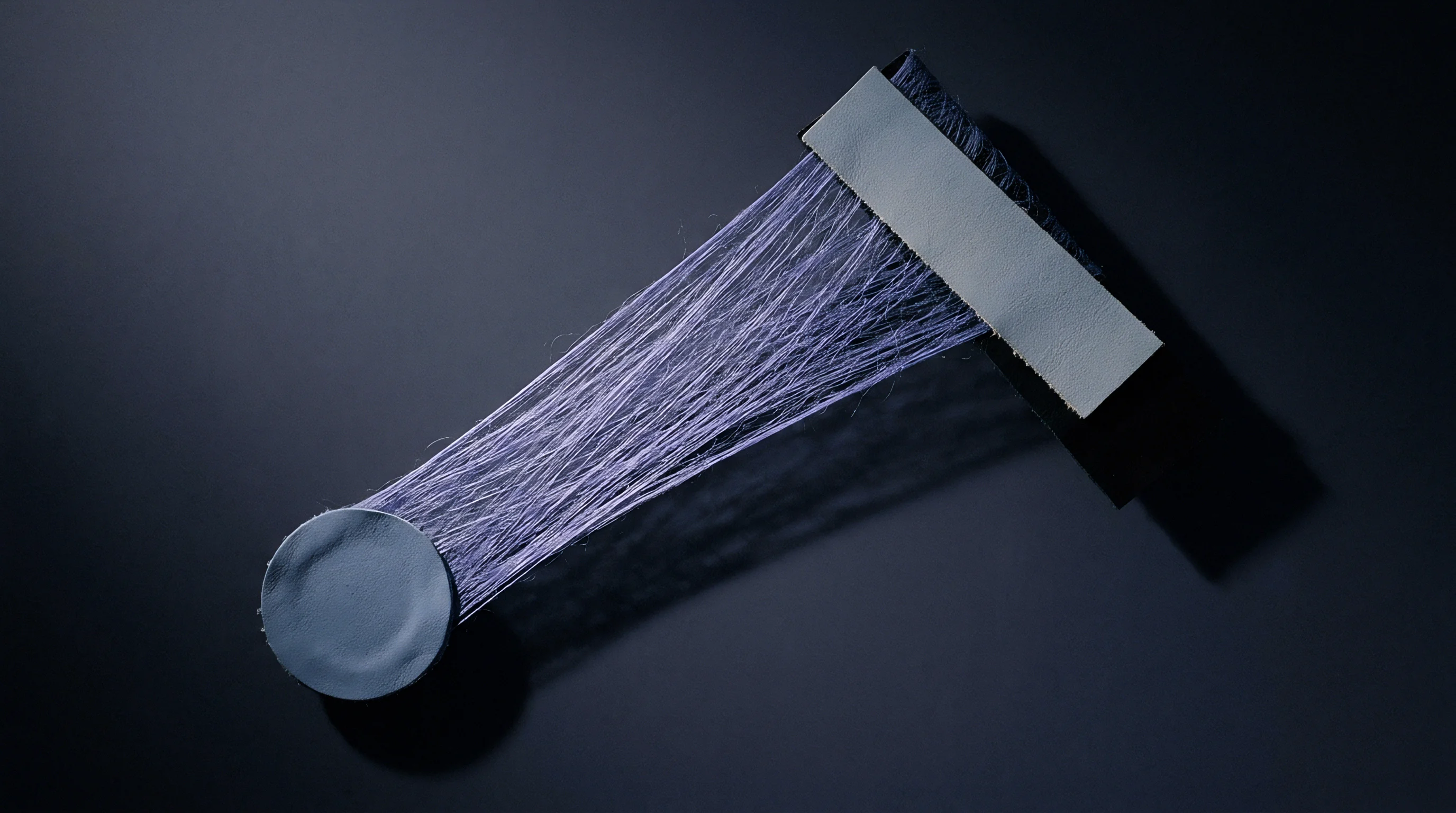
Unrelaxed elastic strain locked into yarn structures during finishing releases upon subsequent laundering cycles. When consumers wash finished garments, water and domestic drying temperatures lower the polymer glass transition once more, enabling locked-in strain to recover. Fabrics heat set under excessive machine tension shrink along the warp direction while expanding along the weft direction.
Setting maximum allowable internal yarn strain boundaries prevents field failures. Finite element simulations output residual strain maps across the weave repeat. Process engineers verify that peak residual strain remains below target thresholds, typically less than one point five percent for performance woven goods, guaranteeing post-laundering dimensional stability.

Cost Mechanics of Precision Strain Control
Tightening stenter overfeed parameters to reduce residual warp strain alters line speed and finished metre throughput. Running stenters at reduced speed to ensure complete thermal relaxation increases energy consumption per finished meter, altering landed manufacturing costs. Sourcing managers balance numerical strain predictions against production economics to establish viable processing windows.
Line speed governs dwell time. Precision modeling identifies the maximum allowable line speed that satisfies thermal relaxation criteria without creating scrap rolls. Minimizing scrap through predictive modeling directly protects mill profit margins and prevents costly delivery delays caused by rejected dye lots.
| Control Strategy | Capital / Software Investment | Stenter Throughput Impact | Bulk Scrap Rate Reduction | Landed Cost Change per Metre |
|---|---|---|---|---|
| Empirical Trial & Error | Zero Direct Investment | Standard Baseline | Baseline (3.5% Average Scrap) | Base Metre Cost |
| Standard Macro FEA Shell Modeling | Moderate Software Licensing | +5% Speed Optimization | 1.2% Scrap Reduction | -$0.04 per Metre |
| Multi-Scale Hybral FEA Modeling | High Modeling & Lab Fitting | +12% Optimized Line Speed | 2.8% Scrap Reduction | -$0.11 per Metre |
| Real-Time DIC Closed-Loop Control | Very High Hardware Installation | +8% Automated Adjustment | 3.1% Scrap Reduction | -$0.08 per Metre |
Aligning FEA predictions with physical stenter settings stabilizes finished web width across production runs, locking down shrinkage allowances before grey cloth enters the dyehouse.