Predictive Ionic Modeling across Dense Cellulosic Substrates under Extreme Liquor Ratio Constraints
Predictive ionic models resolve short-liquor cellulosic dyeing defects by coupling dynamic Donnan equilibria with substrate water retention and salt activity surges.
Bath
Mechanical Volume Constraints
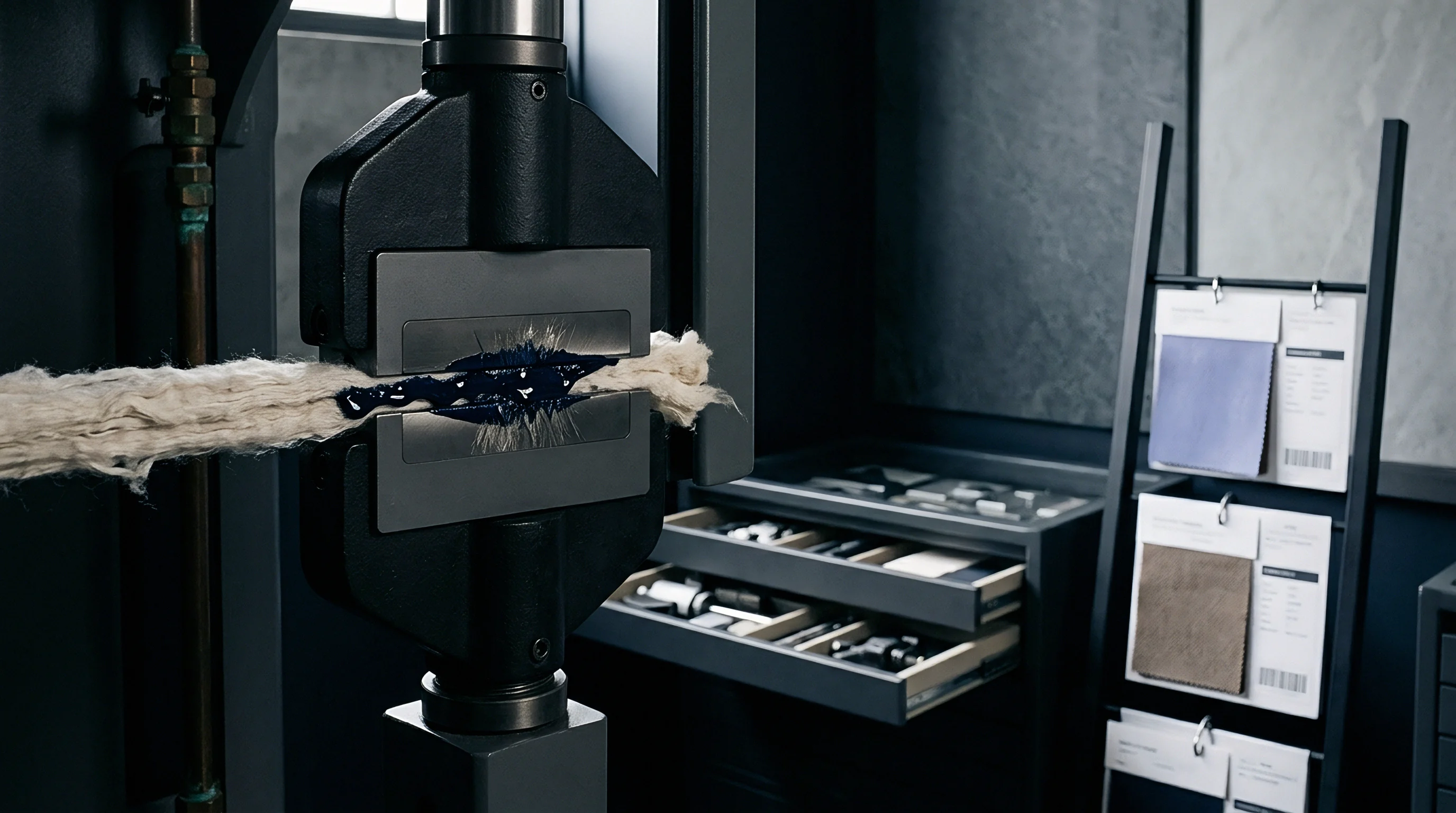
Water retention values of mercerized combed cotton exceed forty-five percent by dry weight under ambient conditions, locking substantial fluid volume directly inside the secondary cell wall. In ultra-low liquor processing running at a three-to-one or four-to-one ratio, the volume of external circulating liquid drops below the threshold required to submerge the moving rope or yarn package completely. Free liquor diminishes to less than one-third of total bath volume.
Fiber swelling restricts inter-yarn clearance. Fluid transport through the compressed interstitial gaps of a high-sett construction depends on forced hydrostatic pressure differentials rather than passive convective distribution. When yarn bundles pack tightly into dense weaves, internal voids resist liquor penetration.
Liquor circulation stalls.
Under a three-to-one liquor ratio on five-hundred-gram mercerized poplin, free bath volume outside the cellulose wall measures less than 1.15 liters per kilogram of dry substrate.
Calculations of bath exhaustion in short-liquor machinery frequently fail because formulations assume the dissolved electrolyte and dyestuff remain evenly distributed throughout the entirety of the water. Swollen cellulose excludes large ionic solutes from its crystalline microfibrils while selectively concentrating water within smaller structural micropores. This phenomenon reduces the effective solvent volume available to dissolve inorganic salts.
High electrolyte concentrations surge. Sodium sulfate concentrations reach eighty to one hundred grams per liter in the external phase, creating steep local concentration boundaries. The true ionic strength of the bulk liquor outside the cellulose matrix ends up twelve to eighteen percent higher than nominal recipe calculations predict.
| Substrate Construction | Areal Weight (g/m²) | Water Retention (cm³/g) | Bound Liquid Fraction (%) | Free Bath Volume (L/kg) | Effective Salt Surge (%) |
|---|---|---|---|---|---|
| Mercerized Poplin 60s/1 | 118 | 0.52 | 52.0 | 1.92 | +14.2 |
| Combed Twill 3/1 40s/2 | 245 | 0.46 | 46.0 | 2.16 | +11.8 |
| Heavy Drill 16s/1 × 12s/1 | 380 | 0.41 | 41.0 | 2.36 | +9.5 |
| High-Wet-Modulus Modal Plain | 145 | 0.68 | 68.0 | 1.28 | +22.4 |
Liquor depletion distorts mechanical contact during the wetting cycle. In conventional dyeing at ten-to-one liquor ratios, the moving cloth remains fully suspended in an aqueous cushion, dissipating frictional drag between yarn interfaces. At extreme liquor boundaries, mechanical squeeze rollers and venturi jets exert direct compressive shear on partially lubricated cellulose bundles.
The lack of free liquid generates non-uniform contact zones where chemical adsorption outpaces physical dispersion. Local concentration spikes establish unlevel initial strikes that cannot migrate during later holds. Mills that operate below four-to-one ratios without correcting for internal water retention generate unlevel strike patterns across entire bulk lots, resulting in off-shade rejections that destroy lot profitability.

Boundary

Electrical Double Layer Compression
High electrolyte concentrations exceeding sixty grams per liter suppress zeta potentials at the cellulosic wall. In unbuffered aqueous baths, cellulose carries a negative surface charge through the dissociation of carboxyl and hydroxyl groups, yielding a resting zeta potential near minus twenty-four millivolts under neutral conditions. This value rests on Helmholtz-Smoluchowski streaming potential measurements using an eight-gram pad at twenty-five degrees Celsius, shifting toward minus four millivolts if ionic strength reaches 0.15 molar sodium sulfate.
Fixed negative ions attract counter-ions. The resulting electrical double layer contracts in thickness from ten nanometers down to less than one nanometer. Surface charges repel anionic chromophores.
Compressing the electrical double layer reduces the electrostatic barrier, accelerating dye adsorption to rates that challenge mechanical liquor circulation limits.
Electrical double layers collapse below one nanometer thickness when bath electrolyte concentrations exceed 0.5 molar monovalent salt.
Predictive ionic models capture this transition by solving the Poisson-Boltzmann equation alongside dynamic boundary parameters. In dense yarns, overlapping electrical double layers within adjacent micro-voids generate electrostatic exclusion zones that repel multi-sulfonated reactive dyes. Donnan potentials develop across the macro-pore interface, creating a disparity between the external salt concentration and the internal ionic activity inside the secondary cell wall.
The internal phase maintains a higher counter-ion concentration and a lower co-ion concentration relative to the external solution. Substrate density magnifies this disparity. The ratio between internal and external dye concentration depends directly on the structural volume accessible to individual ionic species.

Where Does Donnan Equilibrium Collapse?
Internal pore volumes restrict free solvent motion when yarns sit under mechanical tension. Under twenty to thirty percent warp yarn packing fractions in dense twills, interstitial spaces close down to dimensions comparable to the hydrodynamic radii of hydrated dye aggregates. Donnan equilibrium equations assume a distinct two-phase system separated by an idealized semi-permeable membrane.
Real cellulose bundles present a continuous gradient of pore geometries, ranging from five-nanometer micro-voids to five-hundred-nanometer inter-fiber capillaries. When external liquor ratios fall below four-to-one, local ionic depletion occurs faster than convective replenishment can supply fresh counter-ions.
- Inter-fiber capillary starvation prevents uniform transport of dissolved alkali into yarn cores, producing ring-dyeing profiles where outer fibers over-fix while inner fibers remain undyed.
- Premature dyestuff dimerization accelerates in high-salt low-volume boundaries, forming high-molecular-weight aggregates that cannot enter five-nanometer cell wall pores.
- Localized zeta potential inversion arises in the presence of trace polyvalent cations, shifting local surface potentials positive and provoking immediate spotty dye strike.
- Salt crystallization crusts deposit on exterior yarn surfaces during rapid liquor exchange cycles whenever local solubility limits are exceeded.
Modeling these phenomena requires continuous real-time tracking of electrolyte flux. Traditional steady-state Donnan models assume infinite reservoir conditions where external concentrations remain constant throughout the fixation sequence. In closed short-liquor equipment, the rapid consumption of salt and water changes boundary equilibrium values every minute.
The true state of the ionic boundary layer under extreme volume constraints remains impossible to measure directly without perturbing the fragile hydration balance of the swollen fiber matrix.

Affinity

Dye Strike and Sorption Energetics
Triazine and vinyl sulfone chromophores encounter steep chemical potential gradients in concentrated liquors. The thermodynamic affinity of a reactive dye for cellulose reflects the standard chemical potential difference between the dye molecule in aqueous solution and inside the fiber phase. As liquor ratios decline from ten-to-one down to three-to-one, the activity coefficient of the dye in the bath increases substantially.
Dye strike happens rapidly. Elevated chemical activity drives the adsorption equilibrium toward the fiber, raising initial strike values from forty percent to over seventy percent before the addition of fixing alkali. Desorption rates plummet.
A thirty percent increase in initial dye strike occurs when the bath ratio drops from eight-to-one to three-to-one under identical salt concentrations.
Calculations of dye exhaustion kinetics must incorporate internal tortuosity factors. Secondary cell walls under short-liquor conditions present an effective internal tortuosity factor commonly modeled around 2.8, though this specific figure cannot be experimentally isolated from swelling pressure. Buyers handle this uncertainty by enforcing a mandatory plus-or-minus three percent liquor circulation rate buffer on automated dosing pumps.
Consider a worked example tracking dye distribution across a dense plain weave poplin run at a four-to-one liquor ratio:
Take a 500-kilogram lot of combed cotton plain weave (120 g/m², yarn count 50s/1 in warp and weft, sett 136 ends by 72 picks per inch). The machine holds exactly 2,000 liters of total water. The dry cellulose absorbs 0.50 liters of water per kilogram into its cell walls, sequestering 250 liters as bound non-circulating solvent.
The effective external circulating bath consists of 1,750 liters. A recipe prescribing eighty grams per liter of anhydrous sodium sulfate requires 160 kilograms of salt. Dissolving this salt into the active volume yields an actual external concentration of 91.4 grams per liter.
This fourteen percent salt surge increases the dyestuff affinity constant by twenty-two percent at sixty degrees Celsius. Dyestuff strike climbs to seventy-six percent within eight minutes of introduction, far ahead of target strike intervals.
Selection of chemical auxiliaries and process controls determines whether bulk runs achieve acceptable appearance. Production teams utilize specific criteria before loading dense cellulosic goods into ultra-low liquor machinery:
- Substrate water retention certification identifies precise moisture sequestration values across each greige yarn lot using standardized centrifuge extraction.
- Electrolyte dosing curves enforce linear or progressive dosing across forty minutes to prevent sudden surges in chemical potential.
- Alkali ramp scheduling delays soda ash dosing until exhaustion reaches eighty-five percent equilibrium to separate adsorption from covalent fixation.
- Circulation turn rate verification checks that the machine pump completes at least two full liquor turnovers per minute per rope.
Alkali dosing controls fixation. Adding sodium carbonate or sodium hydroxide converts cellulose hydroxyl groups into nucleophilic cellulosate anions, initiating nucleophilic substitution or addition reactions with the reactive dye. Under restricted liquor conditions, local pH shifts occur violently upon alkali entry.
Reactive dyes hydrolyze quickly. Uncontrolled strike rates lead to surface fixation that resists subsequent wash-off routines. Dyehouse technical directors routinely justify batch unlevelness by asserting that extreme liquor reduction creates physical boundary limits that no machine controller can overcome.


Drift
Mass Transport and Convective Flow
Pumping pressure drops across tightly packed yarn packages generate spatial variations in chemical activity. Inside dense cross-wound bobbins or compacted rope packages, the permeability of the cellulosic substrate governs liquor velocity. High-density twill weaves and tightly spun combed yarns resist fluid shear.
As the concentrated dye bath traverses the substrate layer, the leading edges of the yarn bundles strip dyestuff from solution, creating an exhaustion gradient along the flow path. Fiber cores stay pale. Mass transfer models predict this drift by coupling the Navier-Stokes equations for porous media with one-dimensional advection-diffusion formulations.
Diffusion inside the water-swollen fiber matrix controls the ultimate leveling rate. The apparent diffusion coefficient for C.I. Reactive Blue 19 at eighty degrees Celsius measures 1.4 times ten to the minus twelve square meters per second, derived from finite-bath exhaustion kinetics across twenty-meter rolls. This value shifts downward by forty percent if yarn twist multipliers increase beyond 4.2.
In low-ratio processing, the concentration boundary layer at the fiber surface narrows, steepening the external concentration gradient. Boundary layer gradients steepen. Convective mass transport outside the fiber cannot compensate for slow intra-fiber diffusion if liquor flow rates fall below twenty liters per kilogram per minute.
Industrial desalination plants operating high-pressure reverse osmosis membranes face identical boundary-layer concentration polarization when tortuous pores reject counter-ions under low flux ratios. Both systems encounter an operational ceiling where mechanical pumping pressure cannot overcome localized osmotic resistance. Membrane engineers manage this through precise cross-flow velocity profiles, a principle that translates directly to textile dyeing machinery.
Liquid velocities through the substrate must remain above threshold shear rates to scour away stagnant boundary layers.

Do Boundary Potentials Shift near Hydration Limits?
Water molecules freeze into structured hydration shells surrounding cellulose hydroxyl groups below critical moisture thresholds. When the bath reaches extreme concentration limits, competitive hydration occurs between inorganic salt ions and the cellulose substrate. Sodium cations strip water molecules from the cellulose matrix, altering the swelling behavior of the amorphous domains.
Calcium ions displace sodium. Divalent impurities present in industrial water supplies cause disproportionate disruptions, bridging adjacent carboxyl groups and forming crosslinked structures that reduce fiber pore volume.
- The automated dosing unit injects concentrated sodium sulfate solution through a calibrated bypass manifold over twenty-five minutes.
- Spectrophotometric sensors monitor bath exhaustion at sixty-second intervals to calculate instantaneous dyestuff consumption.
- Circulation pumps adjust differential pressure across the kier to maintain a constant fluid velocity of twelve centimeters per second through the woven substrate.
- Alkali dosing initiates through a progressive metering pump, raising the bath pH from 6.2 to 10.8 along an exponential curve over thirty minutes.
- Cooling heat exchangers lower the bath temperature to forty degrees Celsius before rinse cycles discharge the spent liquor.
Tighter process control minimizes chemical variance across production lots. Migration cannot correct strike. Machine operators who calibrate salt dosing curves against instantaneous substrate exhaustion curves eliminate shade banding between package interiors and exteriors.
Successful short-liquor processing requires balancing chemical strike rates directly against the physical circulation limits of the mechanical system.
| Dosing Profile Strategy | Predicted Exhaustion (%) | Measured Exhaustion (%) | Color Difference (ΔE CMC 2:1) | Internal Ring Dyeing Index |
|---|---|---|---|---|
| Single-Step Salt Dosing | 92.4 | 78.1 | 1.84 | 0.42 |
| Linear 20-Minute Ramp | 89.6 | 84.2 | 1.12 | 0.68 |
| Exponential 35-Minute Ramp | 88.1 | 87.4 | 0.38 | 0.89 |
| Bivariate Conductivity Control | 86.5 | 86.1 | 0.22 | 0.94 |
| Exhaustion measured spectrophotometrically at 600 nm. Ring dyeing index quantified by cross-sectional microscopic image analysis where 1.0 represents perfect radial penetration. | ||||
Predictive ionic calculations establish reliable operational envelopes across dense substrates. When the chemical potential gradient exceeds the convective transport capacity of the jet or beam machine, unlevel shades emerge along yarn interlacing junctions. Increasing circulation velocity smooths out localized disparities before fixation locks dye molecules into place.
Settlement
Commercial Rejection Thresholds
Spectrophotometric tolerances across bulk continuous lots govern commercial disputes over unlevel dyeing. Sourcing contracts typically reference standard tolerances under illuminants D65, TL84, and A, enforcing color differences below a Delta E CMC (2:1) limit of 0.8 against approved lab standards. In dense woven poplins and twills dyed under four-to-one liquor ratios, side-to-center and tail-to-head shade drifts frequently exceed 1.2 Delta E units when mills run uncorrected recipes.
Unlevel shades fail inspection. The financial liability for rejected bulk falls heavily on the converter or dyehouse, who must absorb greige cloth costs, lost production time, and customer delivery penalties.
A contract clause rejecting lots exceeding 0.75 Delta E CMC under secondary illuminants forces mills to absorb the total replacement cost of off-shade bulk runs.
Laboratory dip protocols must accurately replicate bulk liquor ratio mechanics. Standard laboratory dipping machines operate between eight-to-one and twelve-to-one ratios, using glass tubes with oscillatory agitation that bears no physical resemblance to the pressurized venturi action of an industrial jet. Lab formulations developed at ten-to-one ratios fail when scaled down to three-to-one production equipment because the electrolyte activity coefficients and bath exhaustion curves diverge sharply.
Technical managers must mandate that lab dipping for dense cellulosic substrates occurs on specialized low-liquor sample equipment operating at the exact four-to-one ratio target.
Route costs escalate when lots require chemical stripping and re-dyeing. Stripping hydrolyzed reactive dyes from dense cotton cloth requires harsh oxidative treatments with sodium hypochlorite or reductive digestion with sodium dithionite under strongly alkaline conditions. This process degrades the cellulose chains, lowering warp tensile strength by fifteen to twenty-five percent under ISO 13934-1 testing and reducing tear resistance below buyer baseline specifications.
Stripped goods exhibit modified pore structures and altered zeta potentials, making level redyeing difficult to achieve. The resulting second-grade goods sell at thirty to fifty percent below target market prices, turning projected operating margins into severe financial losses.
Purchase orders must define precise chemical and physical testing protocols. Incorporating specific clauses regarding shade tolerances under multiple illuminants and minimum tensile retention values protects buyers from compromised goods. Commercial agreements that specify standard testing methods like ISO 105-J03 for color measurement and ISO 13934-1 for mechanical integrity ensure that delivery acceptance rests on verifiable, objective data rather than subjective mill claims.