Resolving Disputed High-Sett Filament Thread Counts through Automated Image Processing and Chemical Dissection
Disputed thread counts in high-sett fabrics resolve by pairing spatial Fourier transform optical analysis with chemical solvent dissolution of finishing matrixes.

Discrepancy
High-density woven fabrics constructed from micro-denier synthetic yarns frequently fail incoming receiving audits because manual counting tools reach their physical resolution limits. A standard 20-denier polyester down-proof taffeta specified at 420 warp ends per inch and 380 weft picks per inch presents a thread density where yarn diameters measure less than 45 micrometres. Under standard optical counting frames, individual filament crowns merge into continuous visual bands.
Pick glass counting operators relying on ISO 7211-2 Method A routinely report pick deficits of 5% to 8% on perfectly compliant greige goods. Optical distortion obscures yarn crowns.
The core mechanism behind this optical counting failure rests on the cover factor saturation of high-sett constructions. When fractional fabric cover factor exceeds 0.92, the physical clearance between adjacent parallel yarns drops below 5 micrometres. Thermal calendering at pressures exceeding 80 bar and temperatures above 170°C further compounds this optical interference.
Calendering flattens circular filament bundles into elliptical cross-sections, forcing edge filaments from adjacent yarns into shared inter-yarn channels. Thermal calendering flattens synthetic filaments.
Structural Limits of Optical Pick Glass Inspection
Standard magnification tools function predictably on low-sett spun yarns below two hundred threads per inch. As thread density increases, hand-held pick glasses carrying 10x magnification generate severe spherical aberration at the lens perimeter. The human eye struggles to maintain focal plane alignment across a 10-millimetre inspection field when counting 15-denier multifilaments containing 24 individual micro-filaments per strand.
Edge contrast drops below readable thresholds.
Finishing calenders flatten round synthetic filaments into ribbons, blinding optical pick glasses at density limits.
Laboratory testing conducted under ASTM D3775 highlights severe operator variance when examining calendered high-density fabrics. Count differences between qualified technicians on the same fabric roll frequently reach 18 picks per inch. This variance exceeds the standard 2% commercial tolerance threshold, launching costly commercial disputes between converters and garment factories.
- Optical Overlap Failure occurs when flattened microfilaments migrate across adjacent yarn valleys, obscuring structural inter-pick boundaries under ambient white lighting.
- Glaze Reflection Artifacts stem from intense specular reflection generated by calendered synthetic surfaces, which blinds the technician under direct focal illumination.
- Yarn Compaction Distortion arises in ultra-dense weaves where pick packing forces alternate weft threads into secondary height planes, hiding underlying yarns from top-down optical inspection.
- Operator Fatigue Shift reflects the progressive decline in human visual acuity after counting high-sett microfilament goods for more than fifteen consecutive minutes.
Filament Migration and Cover Factor Saturation
When total fabric cover factor approaches theoretical unity, yarn spacing drops below the diameter of individual filaments. In high-sett parachute nylons and surgical barrier fabrics, warp ends press tightly against weft channels, creating continuous polymer barriers. Thread counts performed manually under these conditions require destructive physical yarn pulling under ISO 7211-2 Method C. Method C unravels a 50-millimetre fabric strip using dissection needles under a stereomicroscope.
Manual pick counting fails at density limits.
Unraveling high-sett filament yarns presents significant technical friction. Sizing resins, elastomeric coatings, and calendering fusion cause adjacent filaments to cling together during mechanical pulling. Dissection operators frequently snap fine 10-denier filaments during tensioning, resulting in uncounted fragments or erroneous double counts.
A non-destructive, objective verification framework remains an absolute operational requirement for cross-border fabric trade.
Mills frequently claim that thermal calendering permanently fuses adjacent yarn crowns, rendering physical thread separation an illegal alteration of the delivered specification.

Algorithm
Computer vision systems eliminate human operator fatigue by converting fabric surface topographies into numerical spatial frequency arrays. High-resolution digital imaging systems capture surface reflection patterns under controlled illumination geometries. Automated image processing replaces subjective visual estimation with mathematical spatial peak detection, extracting exact warp and weft periodicities directly from high-density fabric samples.
Spatial frequency transformation relies on the two-dimensional discrete Fast Fourier Transform. The image processing engine treats the digital sample image as a two-dimensional grid of light intensity values. Periodic structural elements, such as parallel warp ends and weft picks, generate prominent spectral energy spikes in the frequency domain.
Spatial frequency analysis eliminates operator bias.

How Does Spatial Frequency Analysis Expose Flattened Picks?
Two-dimensional discrete Fourier transforms convert spatial image intensity variations into periodic spectral peaks representing yarn pitch. In a typical 450-end-per-inch microfilament fabric, warp yarn spacing recurs every 56.4 micrometres. The Fast Fourier Transform translates this spatial periodicity into a high-amplitude peak in the frequency spectrum at a radial distance proportional to the fundamental yarn frequency.
Two-dimensional transforms resolve overlapping pitch.
Algorithmic peak detection filters out high-frequency noise generated by individual filament slubs and surface dust particles. Polarized lighting isolates surface topography. By calculating the distance from the spectral origin to the dominant frequency peak, the image processing software determines average thread density across the full field of view.
The system calculates thread count over a 50-millimetre optical sampling area in under 200 milliseconds with zero operator bias.
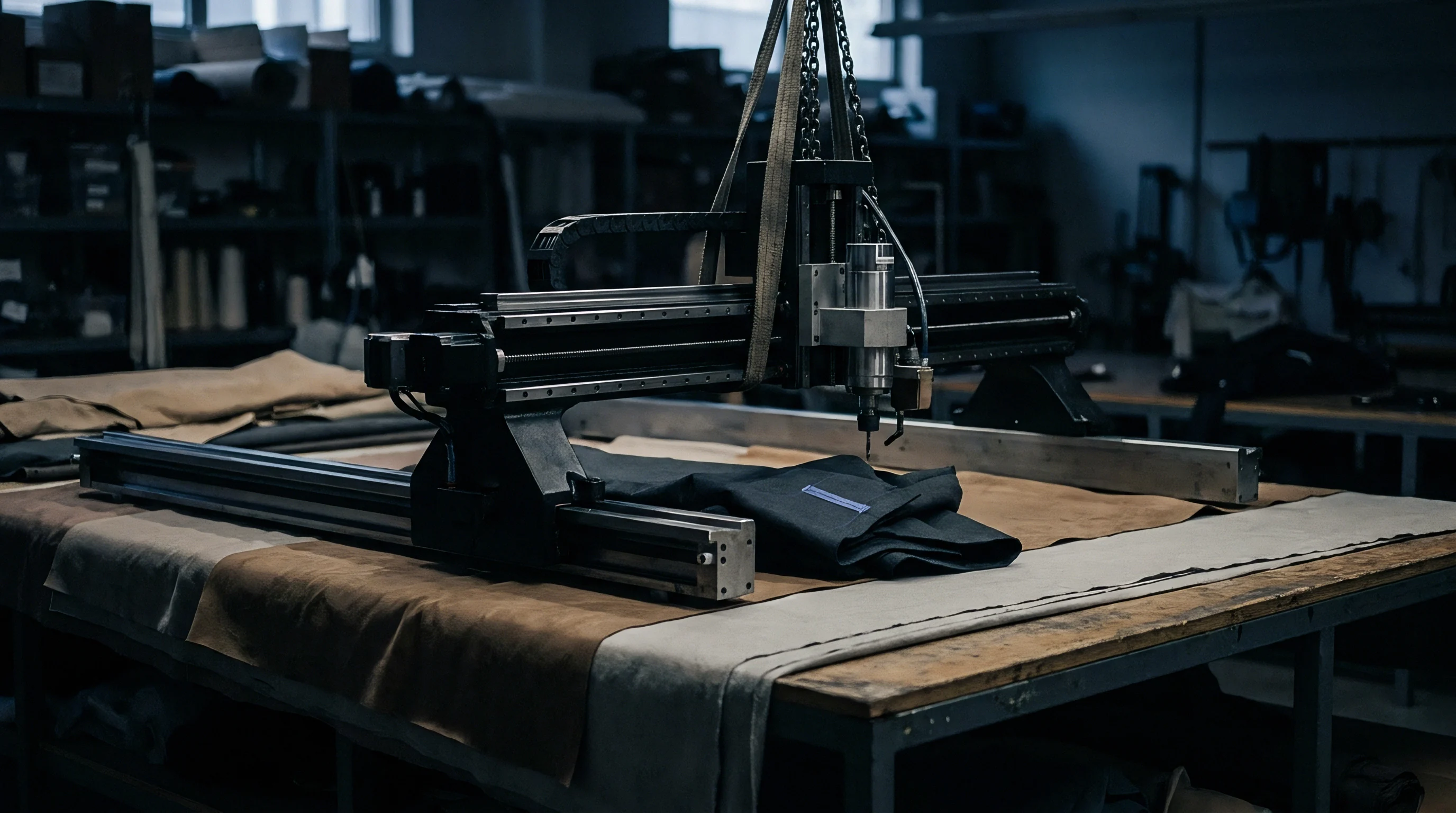
Image Acquisition and Calibration Parameters
Digital capture frames demand minimum spatial sampling rates of eight pixels per individual yarn diameter to prevent aliasing. For a 15-denier filament yarn measuring 40 micrometres in width, the optical imaging hardware utilizes a high-resolution charge-coupled device sensor paired with telecentric lens optics. Telecentric lenses eliminate perspective distortion across the entire field of view, maintaining constant magnification regardless of fabric surface height variations.
| Processing Stage | Target Feature | Algorithm / Method | Resolution Threshold | Measurement Uncertainty |
|---|---|---|---|---|
| Image Acquisition | Surface Topography | Telecentric Optical Capture | 2.5 micrometres / pixel | ± 0.1% Field Calibration |
| Preprocessing | Noise Removal | Gaussian Bandpass Filter | 5 x 5 Kernel Matrix | ± 0.05 Gray Scale Value |
| Spectral Analysis | Fundamental Yarn Pitch | 2D Fast Fourier Transform | 512 x 512 Spectral Grid | ± 0.3 Picks / Inch |
| Edge Extraction | Yarn Boundary Definition | Sobel Gradient Matrix | 8-bit Intensity Threshold | ± 0.5 Pixels Spatial Shift |
| Count Verification | Total Thread Density | Peak Distance Integration | Full 50 mm Scanning Field | ± 0.5 Threads / Inch |
Illumination geometry controls the signal-to-noise ratio of the captured image matrix. Grazing-incidence LED line lights positioned at an angle of 15 degrees relative to the fabric surface cast distinct directional shadows in the inter-yarn valleys. Directional shadowing amplifies physical surface relief, allowing edge detection algorithms to isolate yarn crowns on calendered down-proof goods.
Dual-axis orthogonal lighting captures warp and weft profiles simultaneously, preventing missing pick counts in tight plain weaves.
Reflected lighting isolates yarn surface topography, while transmitted lighting identifies inter-yarn voids in dense constructions.

Dissolve
Chemical matrix stripping clears surface polyurethane and silicone backings that hide structural yarn boundaries from optical sensors. Heavily finished or coated microfilament fabrics resist non-destructive optical pick counting because film-forming polymers fill the inter-yarn voids. Chemical dissection isolates structural filaments by selectively dissolving binder resins, water-repellent finishes, and elastomeric coatings without damaging underlying synthetic yarns.
Gravimetric solvent extraction protocol requires precise temperature and time controls adapted from modified ISO 1833 standards. Removing acrylic coating layers from high-density polyester taffeta demands immersion in technical-grade dimethylformamide at 60°C for 30 minutes. Complete resin stripping restores optical contrast across yarn channels, enabling accurate computer vision analysis or tension-controlled physical dissection.

Finish Matrix Extraction and Resin Stripping
Solvent immersion baths break chemical cross-links in hydrophobic surface treatments prior to mechanical dissection. Fluorocarbon durable water repellent coatings strip cleanly in boiling bath treatments of perchloroethylene or specialized hydrocarbon solvents. Removing silicone elastomer finishes requires cold treatment with concentrated aliphatic amine blends for 45 minutes, followed by a neutralized warm water rinse cycle.
Solvent baths extract acrylic matrix resins.
Formic acid treatment at eighty-five percent concentration extracts polyamide binder resins within twenty minutes without altering adjacent polyester filament tensile profiles.
Extracting matrix materials demands strict mass monitoring to confirm complete resin removal. Testing technicians weigh conditioned fabric specimens before and after chemical extraction using an analytical balance accurate to 0.1 milligrams under ISO 139 standard atmospheric conditions. Mass loss curves establish the exact resin add-on percentage, providing critical evidence during financial settlement negotiations.
- Immerse a pre-weighed 100 mm x 100 mm fabric specimen in a reflux condenser beaker containing 150 millilitres of target extraction solvent.
- Maintain the bath at specified reaction temperature for 30 minutes under continuous mechanical agitation to dissolve surface resins completely.
- Rinse the extracted fabric sample three times in fresh deionized water at 40°C to clear residual solvent and dissolved chemical matrix.
- Dry the stripped specimen in a forced-air oven at 105°C for two hours, then condition at 20°C and 65% relative humidity prior to final weighing and yarn counting.

Selective Solvent Systems for Hybrid Filament Blends
Differential chemical reagents target specific polymer classes within bicomponent filament bundles without degrading adjacent structural yarns. Complex technical wovens constructed from Polyamide 6,6 warp ends and Polyethylene Terephthalate weft picks require selective chemical isolation when yarn fusion prevents physical separation. Formic acid separates polyamide from polyester.
| Fibre Blend | Matrix / Finish | Solvent System | Temperature and Time | Filament Mass Retention Tolerance |
|---|---|---|---|---|
| PET / Polyamide 6,6 | Polyurethane Coating | Dimethylformamide (DMF) | 60°C for 30 Minutes | 99.5% Minimum Core Mass |
| PET / Cotton Blend | Fluorocarbon DWR | 75% Sulfuric Acid | 20°C for 15 Minutes | 99.8% PET Mass Retention |
| Polyamide 6 / PE | Acrylic Binder Resin | 85% Formic Acid | 20°C for 20 Minutes | 99.2% PE Mass Retention |
| UHMWPE / PET | Silicone Elastomer | Toluene / Amine Blend | 50°C for 45 Minutes | 99.9% UHMWPE Retention |
| Test methods adapted from modified ISO 1833 chemical analysis procedures. Specimens conditioned at 20°C and 65% relative humidity for 24 hours prior to gravimetric analysis. | ||||
Selective polymer dissolution demands precise timing control. Immersing a polyester-nylon blend fabric in 85% formic acid for exactly 20 minutes dissolves the polyamide components entirely while leaving polyester microfilaments chemically intact. Chemical dissection yields indisputable thread counts.
Standard laboratory testing specifications dictate that chemical thread counts supersede optical measurements whenever resin coatings exceed three percent of dry fabric mass.


Audit
Commercial disputes over delivered thread counts immediately threaten landed margins and garment production schedules. Consider a purchase order comprising 50,000 metres of 20-denier nylon 6,6 down-proof taffeta specified at 400 warp ends per inch and 350 weft picks per inch. The agreed landed purchase contract price stands at $3.45 per finished metre.
Disputed shipments stall garment production lines.
Upon receiving the freight at the garment manufacturing plant, receiving audits using standard manual pick glasses report an average thread density of 384 warp ends and 330 weft picks per inch. This represents a 5.3% deficit against the contracted construction specification. Thread count deficits reduce fabric weight.
Commercial Financial Impact of Sett Discrepancies
Contractual fabric specifications establish a direct link between total thread density and finished yardage pricing. In high-density functional textiles, a 5.3% thread count deficit reduces greige yarn consumption, saving the weaving mill significant material costs while degrading the functional performance of the finished fabric. Down-proof performance depends directly on tight thread packing.
Under ISO 9237 air permeability testing, the target 750 total sett specification delivers an air permeability rating of 2.8 cubic centimetres per square centimetre per second at 100 Pascals pressure. The delivered fabric testing at 714 total sett yields an air permeability rating of 7.2 cubic centimetres per square centimetre per second. Air permeability failures trigger garment rejections.
Contract clauses specifying ISO 7211-2 Method A without designating an optical verification path expose buyers to unrecoverable garment rejection costs.
Down feathers migrate rapidly through fabric exhibiting air permeability above 4.0 cubic centimetres per square centimetre per second. Accepting the non-compliant lot risks total field failure of finished outerwear garments, creating potential retail returns and warranty claims exceeding $850,000. Resolving the thread count discrepancy through accredited third-party arbitration becomes a financial imperative.
| Measurement Method | Sett Accuracy Range | Testing Time per Sample | Laboratory Cost per Roll | Adjudication Reliability |
|---|---|---|---|---|
| ISO 7211-2 Method A (Pick Glass) | ± 5.0% to 8.0% | 15 Minutes | $12.00 | Low (Operator Subjective) |
| ISO 7211-2 Method C (Unraveling) | ± 2.0% to 3.5% | 45 Minutes | $45.00 | Moderate (Filament Breakage) |
| 2D Fast Fourier Transform Optical | ± 0.3% to 0.5% | 2 Minutes | $25.00 | High (Fully Objective) |
| Chemical Extraction + 2D-FFT | ± 0.1% to 0.2% | 60 Minutes | $110.00 | Absolute (Definitive Standard) |

Arbitration Protocol and Dossier Validation
Independent laboratory adjudication requires a unified dossier containing raw optical spectra, chemical mass balance sheets, and verified thread counts. Combining non-destructive 2D Fast Fourier Transform optical scanning with solvent extraction creates an unassailable evidentiary record. Automated spatial frequency analysis proves the physical thread density, while chemical dissection proves that finishing resins did not distort optical edge readings.
- Raw Fourier Transform Spectra displaying fundamental radial energy peaks that prove absolute thread pitch across multiple sample areas.
- Chemical Mass Balance Logs documenting resin removal percentages and verifying core filament structural integrity post-extraction.
- High-Resolution Optical Micrographs capturing micro-scale surface views under polarized cross-lighting with spatial millimeter scale bars.
- Calibrated Tensile and Air Permeability Reports linking measured thread count deficits directly to functional performance failures.
Reconciliation under standard arbitration protocols resolves the commercial dispute cleanly. Demonstrating an actual thread deficit of 5.3% using validated automated methods forces the weaving mill to accept full lot return or pay liquidated damages covering re-weaving lead time. Receiving protocols demand clear precision limits.
Fabric accepted on unverified manual thread counts risks complete down-proof failure, leading to total garment line recalls and unrecoverable cutter floor losses.


Grid
Structuring clear technical agreements prevents costly commercial friction between weaving mills and garment conversion facilities. Standardizing thread count measurement methods inside the master fabric sales contract eliminates ambiguity before bulk production commences. Procurement teams trading in ultra-high-density synthetic fabrics must incorporate automated computer vision and chemical validation protocols into their standard purchase order terms.
Clear tolerance boundaries protect both buyer and seller. Standard commercial specifications allowing a ± 3.0% variance on broadcloth construction fail when applied to technical microfilament wovens. High-density down-proof and barrier fabrics require tighter tolerance bands of ± 1.5% on total thread density to guarantee functional performance consistency.
Standardizing Sett Tolerances for Microfilament Procurement
Commercial contracts define thread count tolerances based on microfilament cross-sectional geometry rather than legacy broadcloth benchmarks. Specifications for fabrics utilizing yarns finer than 30 denier should explicitly replace manual pick glass counting with automated spatial frequency analysis under ISO 7211-2 standards. Contracts specifying 2D Fast Fourier Transform analysis as the primary binding referee method prevent subjective optical disputes.
Non-destructive spatial Fourier transforms provide rapid receiving screening while chemical dissection supplies the definitive forensic proof for commercial arbitration.
Arbitration clauses must define the exact chemical extraction procedures used when testing coated or calendered fabrics. Specifying solvent systems, immersion temperatures, and mass retention limits inside the technical dossier ensures that independent laboratory testing yields reproducible results. Contractual clarity transforms technical testing into an enforceable commercial safeguard.
Verification Sequence for Incoming Freight Roll Audits
Receiving departments implement a two-stage testing workflow to balance laboratory throughput speed against forensic measurement accuracy. Stage one applies rapid, non-destructive 2D Fast Fourier Transform optical scanning to 100% of incoming rolls during standard warehouse receiving. Automated optical scanning identifies outlier rolls exhibiting thread density deviations greater than 1.5% within seconds per roll.
Stage two routes disputed outlier rolls directly to chemical dissection and solvent extraction analysis. Stripping finishing matrix resins clears visual obstructions, allowing final verification of true thread density under stereomicroscopic inspection. This dual-stage structure minimizes testing costs while providing absolute legal protection against non-compliant fabric deliveries.
Modern ultra-fine filament spinning continues to drive thread densities beyond five hundred ends per inch, raising the question of whether optical diffraction boundaries will soon force chemical dissection to become the primary receiving test for all technical wovens.