Stenter Heat Setting Parameters Governing Stress Relaxation in Stretch Wovens
Stenter heat setting at precise glass transition temperatures eliminates residual elastic stress while locking dimensional stability and fabric weight.
Chamber
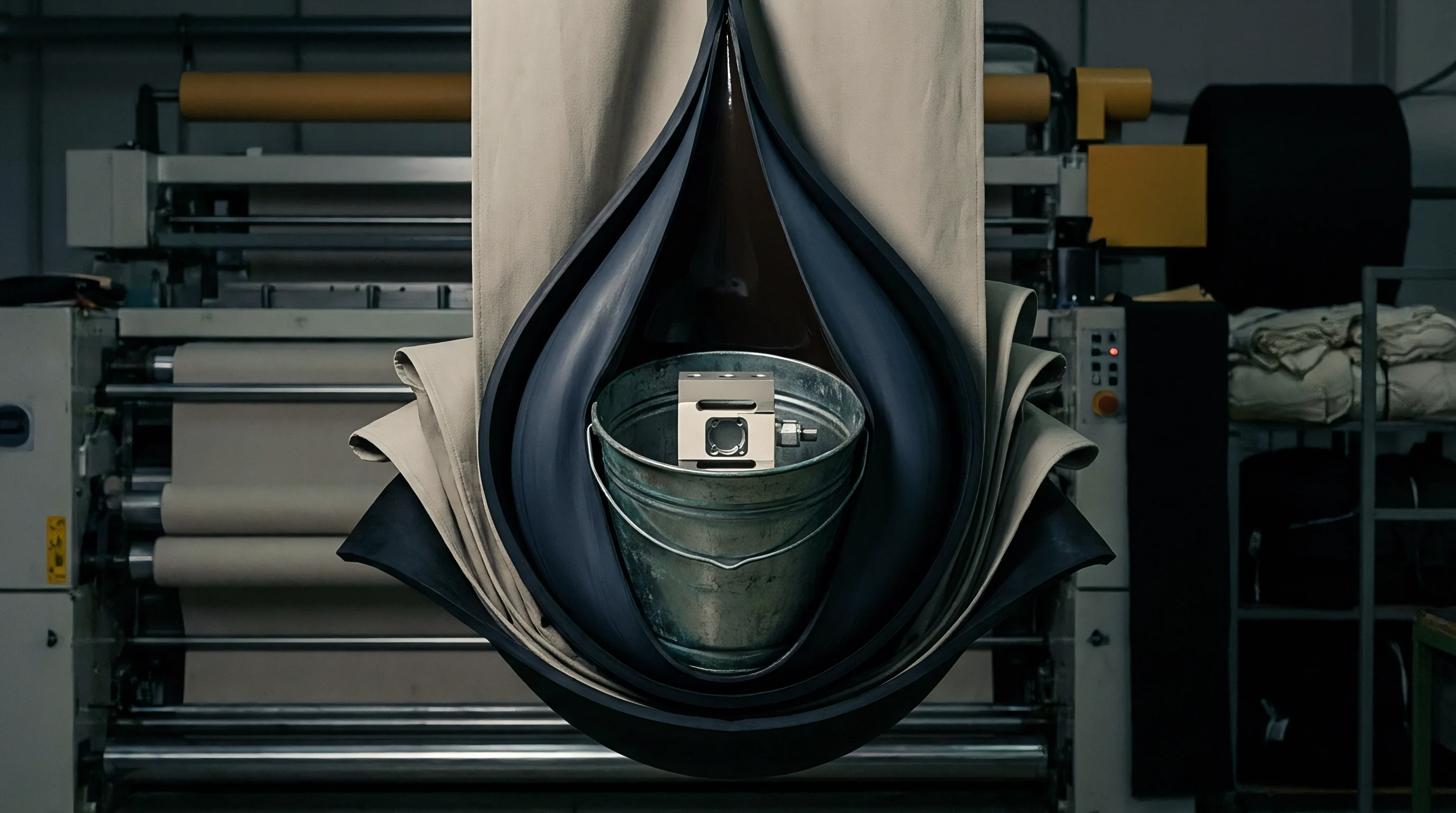
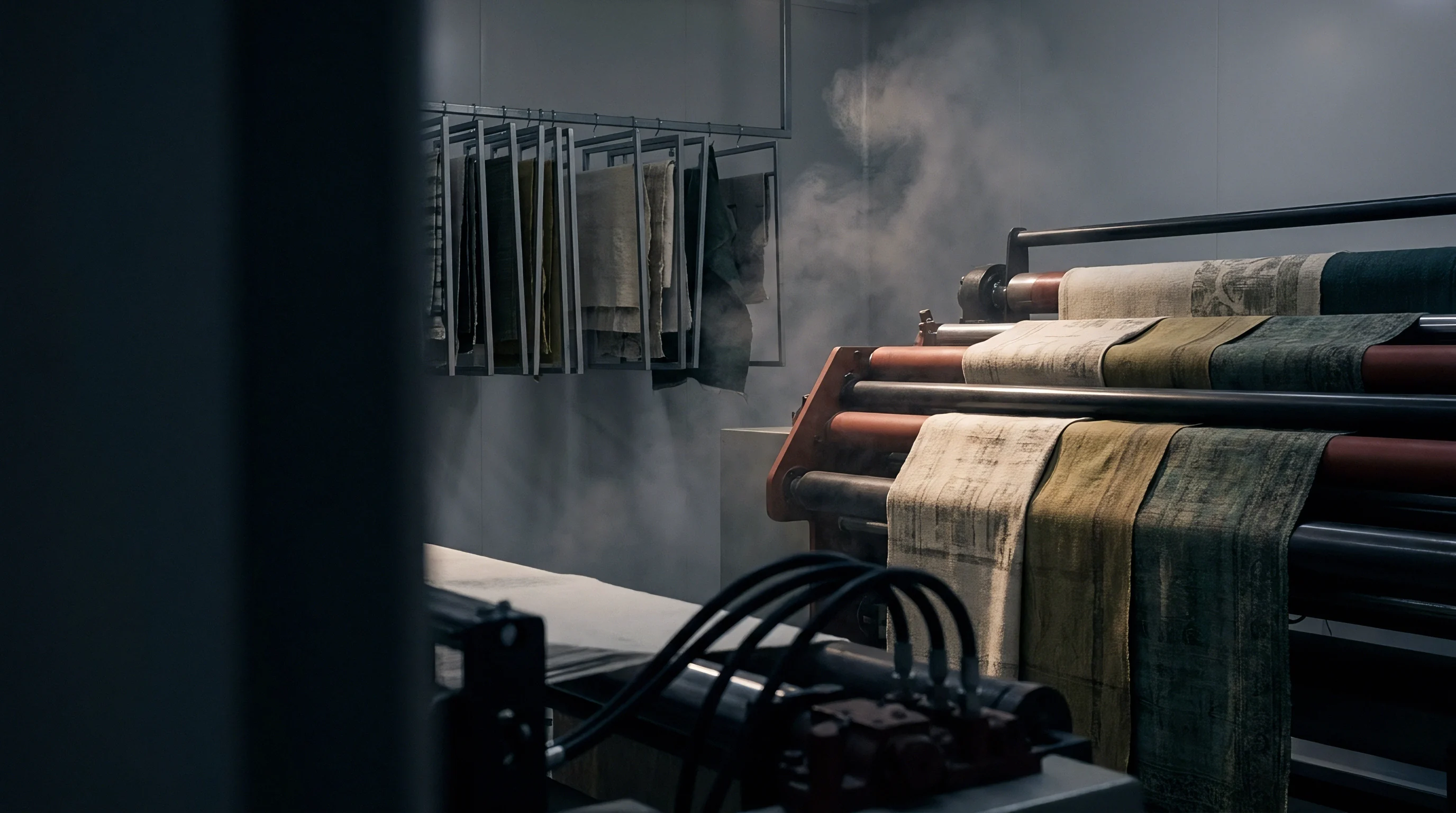
Greige stretch woven cloth enters the stenter entry zone carrying uneven internal stresses from warping, sizing, and weaving tension. Within the continuous filament matrix, elastomeric yarn cores maintain a state of unrelaxed draft, held under mechanical constraint by the surrounding rigid warp and weft spun yarns. Thermal fixation inside the initial heating zones initiates polymer chain mobility, allowing the stretched molecular segments to re-orient into low-energy thermodynamic states.
Without controlled thermal intervention, the elastomeric core retains high elastic energy, leading to uncontrolled width contraction, excessive garment shrinkage, and severe fabric distortion during downstream wet processing.
Polymer Glass Transition and Thermal Memory
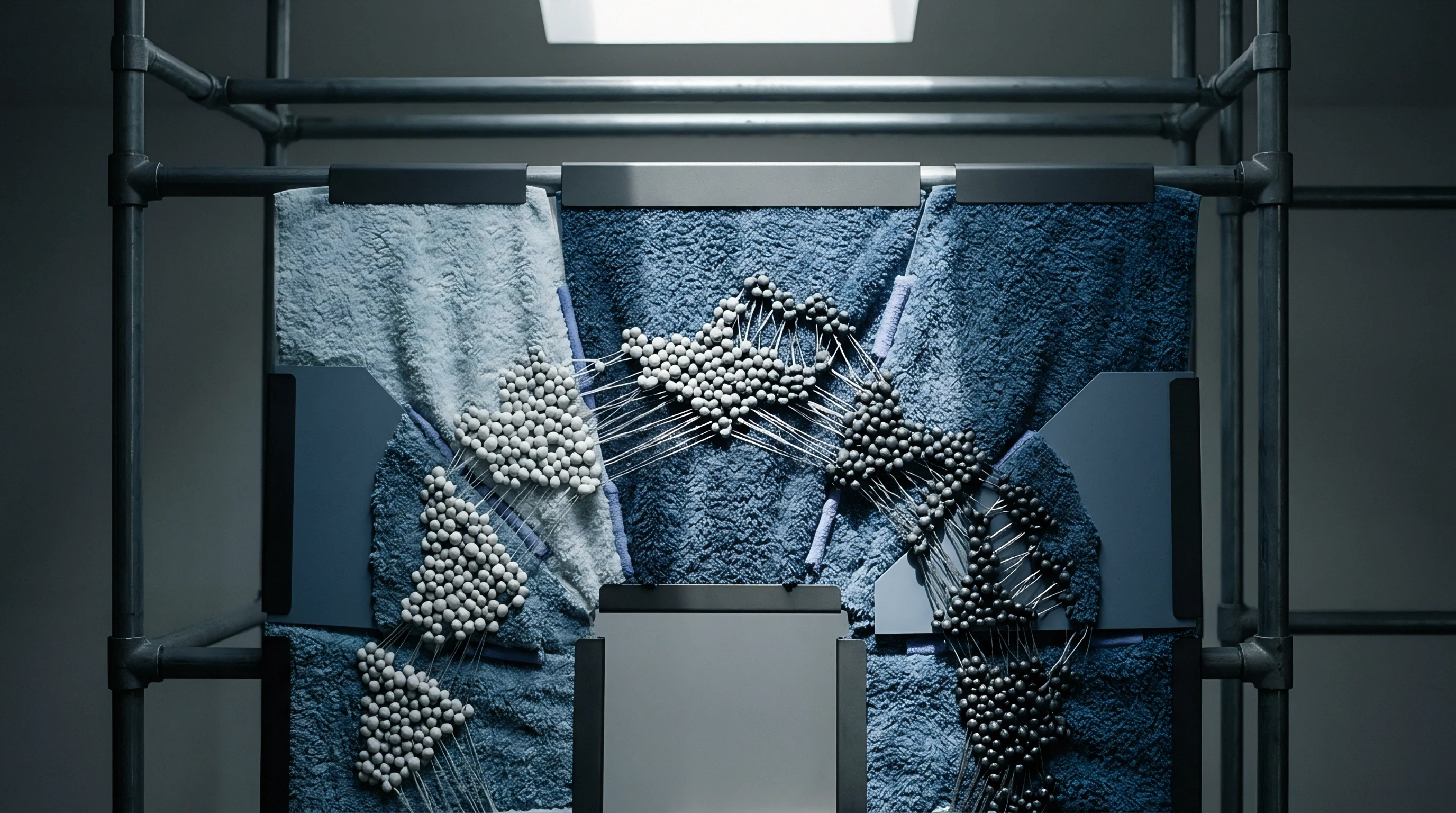
Thermal energy inside the heating enclosure breaks weak intermolecular secondary bonds within the amorphous regions of both the synthetic hard fiber and the elastomeric core. Polyethylene terephthalate yarns reach initial chain mobility around 75°C to 80°C, whereas polyurethane elastane cores require temperatures above their specific soft-segment glass transition point to unlock internal strain. The primary objective of early thermal exposure remains the equalization of tension vectors introduced during high-speed air-jet or rapier weaving.
Yarns under tension store mechanical potential energy inside distorted bond angles along the polymer backbone. As heat transfers into the moving web through forced convection, the kinetic energy of the polymer chains increases, allowing high-energy stress states to dissipate within seconds. When processing polyester and elastane blends, the applied temperature must clear the thermal memory of preceding mechanical processes without exceeding the melting threshold of the polyurethane hard segments.
Convective heat transfer inside multi-zone stenter chambers drives rapid thermal equilibrium across the fabric cross section.
Segmental Relaxation in Synthetic Elastomers
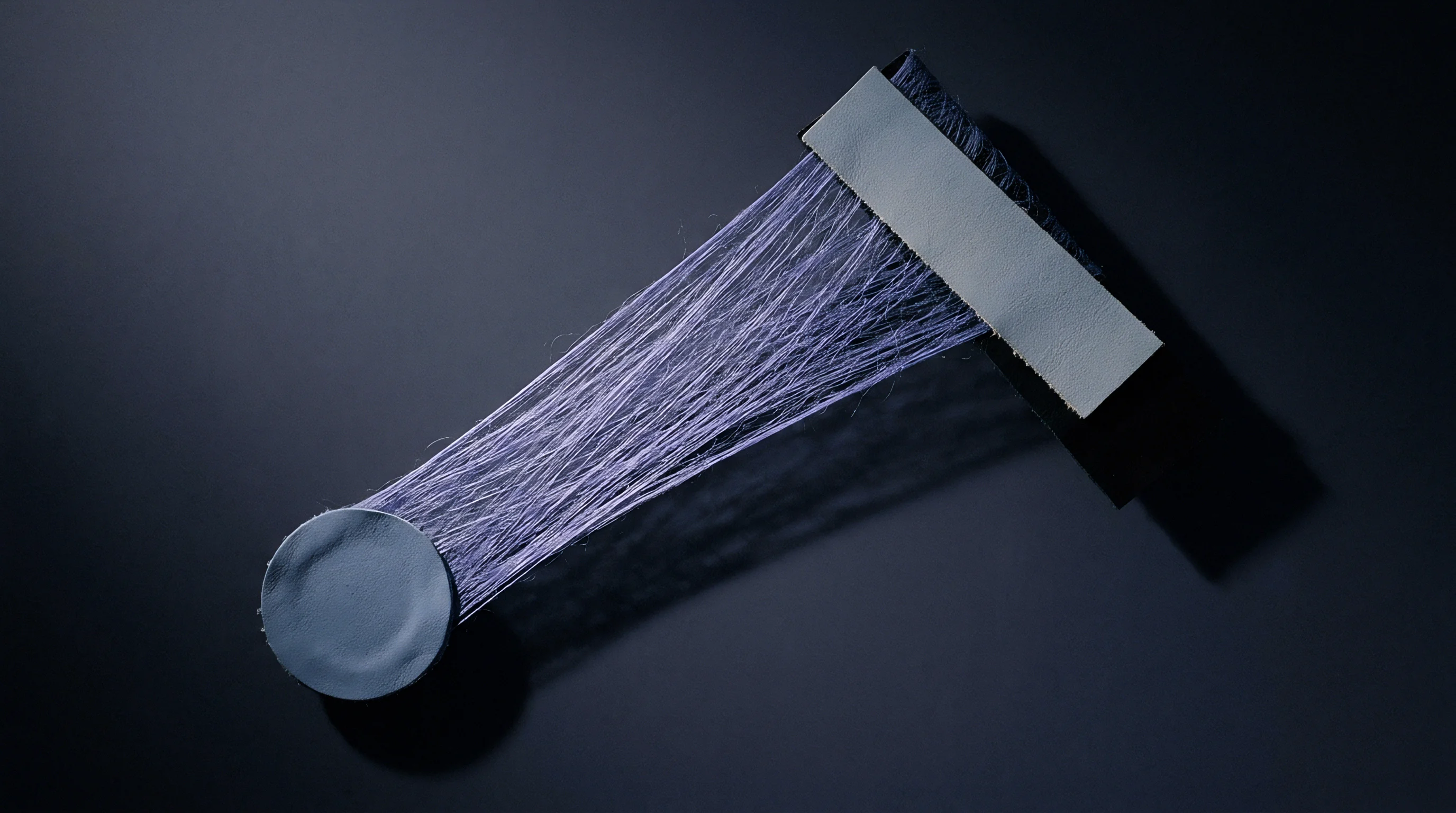
Elastomeric cores rely on alternating hard and soft blocks within the polyurethane polymer architecture to deliver elastic extension and recovery. Hard segments provide physical cross-links that anchor the structure, while soft segments uncoil under tension to provide stretch. Heat setting re-aligns these hard segments into new physical locations corresponding to the dimensions maintained by the stenter pin chain.
Excessive thermal exposure causes permanent scission of the hard segment cross-links, rendering the core incapable of generating full elastic retractive force. Deficient thermal exposure leaves the original crystalline domains intact, causing the fabric to contract uncontrollably once mechanical tension releases at the delivery end. The exact temperature window for balance depends on the linear density of the elastane yarn, the drafting ratio applied during core spinning, and the density of the protective hard-fiber sheath.
PBT yarns exhibit higher tolerance.
The exact rate at which internal chain entanglements re-establish physical equilibrium under dynamic convective airflow remains an ongoing research boundary in continuous wet finishing lines.


Dwell
Temperature accuracy across all heating compartments dictates the degree of stress relaxation achieved in elastomeric stretch fabrics. Processing line speed directly determines the dwell time, which represents the total seconds the fabric web remains exposed to peak thermal energy inside the active enclosure. Standard production setups utilize five to eight heating zones, where temperatures increment progressively to prevent thermal shock and minimize surface color migration.

Temperature Calibration across Fiber Classes
Different fiber compositions demand specific thermal regimes to clear stress without destroying core elasticity. Nylon 6,6 stretch wovens require heat setting between 180°C and 190°C, whereas polyester stretch wovens demand 190°C to 200°C to achieve dimensional equilibrium. Operating below these target ranges leaves residual elasticity active, causing high wash shrinkage in accordance with ISO 5077 testing.
Air velocity delivered through upper and lower air nozzles directly influences thermal penetration depth. Nozzle air speeds between 20 meters per second and 30 meters per second collapse the boundary air layer on the fabric surface, accelerating heat transfer into the core yarn. Inadequate air pressure results in uneven heating between the face and back of the cloth, creating shade differences and localized dimensional instability across the batch.
| Fiber Composition | Target Temperature Range (°C) | Dwell Time (Seconds) | Nozzle Air Speed (m/s) | Target Residual Shrinkage (%) |
|---|---|---|---|---|
| Cotton / Spandex (95/5) | 185 – 192 | 30 – 45 | 22 – 25 | < 3.0 |
| Nylon 6,6 / Spandex (88/12) | 180 – 188 | 25 – 35 | 24 – 28 | < 2.5 |
| Polyester / Spandex (92/8) | 190 – 198 | 30 – 40 | 25 – 30 | < 2.0 |
| Polyester / PBT Co-ester (85/15) | 175 – 185 | 20 – 30 | 20 – 25 | < 1.5 |
How Does Excessive Chamber Dwell Time Degrade Core Elastane?
Operating a stenter at low line speeds extends fabric residency inside high-temperature zones beyond the necessary relaxation threshold. Prolonged thermal exposure induces oxidative degradation within the polyether or polyester soft segments of the elastane core. This thermal damage manifests as yellowing, loss of tensile strength, and a sharp reduction in elastic recovery power.
When evaluating thermal processing profiles, dyehouse managers review several operational factors before setting production line speeds:
- Thermal Mass of the Web ~ Heavyweight stretch wovens above 300 grams per square meter require reduced line speeds to ensure full temperature penetration into dense yarn intersections.
- Moisture Content at Entry ~ Damp fabrics entering the heating zones delay temperature rise until applied heat fully evaporates residual water.
- Elastane Linear Density ~ Fine decitex core yarns lose elastic recovery power faster under elevated temperatures than heavy decitex cores.
- Dye Class Sensitivity ~ Disperse dyed synthetic blends experience thermal migration of dye molecules to the fiber surface when dwell times exceed optimum windows.
Speed governs thermal soak.
Processing cotton elastane blends at 195°C for 45 seconds reduces retained elasticity by up to 18 percent compared to a 30-second thermal exposure profile.
Higher thermal energy reduces the exposure time required to set synthetic fiber structures.
Feed
Overfeed mechanisms regulate the longitudinal slack introduced into the fabric web prior to pinning along the stenter transport chains. By overfeeding fabric onto the pin chains at speeds higher than the main chain velocity, wet processors allow the warp yarns to relax longitudinally during heating. Controlled overfeed directly controls finished fabric weight, pick density, and warp-way dimensional stability during laundering.
Overfeed Ratios and Weft Density Control
Warp stretch fabrics contract significantly in the longitudinal direction during tensionless thermal exposure. Applying positive overfeed between +10 percent and +35 percent counteracts the mechanical extension imposed during weaving and preparation. The exact overfeed percentage must match the natural relaxation shrinkage of the specific weave architecture.
If overfeed is set lower than the potential warp relaxation, the fabric remains under tension inside the chamber. This residual mechanical stress becomes frozen into the polymer structure upon cooling, resulting in high warp shrinkage when the garment is subsequently washed. Correct overfeed alignment ensures the target thread count per centimeter is achieved across the entire bulk run.
| Applied Overfeed (%) | Finished GSM (g/m²) | Picks per Centimeter | Warp Wash Shrinkage ISO 6330 (%) | Weft Wash Shrinkage ISO 6330 (%) |
|---|---|---|---|---|
| + 5 | 165 | 24.0 | – 6.5 | – 1.2 |
| + 15 | 178 | 26.5 | – 3.8 | – 1.5 |
| + 25 | 192 | 28.5 | – 1.8 | – 1.8 |
| + 35 | 208 | 31.0 | + 0.5 | – 2.2 |
Managing Chain Extension and Edge Trimming
Stenter chain rail width configuration establishes the transverse tension applied to the fabric web. Broadening the rail width beyond the gray woven width forces the weft elastomeric yarns into high extension, lowering the finished fabric weight while increasing weft stretch percentage. Over-stretching the web along the transverse axis introduces high stress concentration along the selvages, risking pin tears and edge curling.
Improper matching of overfeed and rail width creates recurring physical defects during bulk finishing operations:
- Edge Scalloping ~ Excessive transverse tension combined with low overfeed tears the cloth off the pin chain, creating wavy, damaged selvages.
- Center to Edge Weight Variance ~ Non-uniform air velocity distribution across the chain width causes differential shrinkage, resulting in a heavier weight along the fabric center.
- Bowing and Skewing ~ Uneven drive speeds between the left and right pin chains distort the weft alignment, introducing angle diagonal errors exceeding allowable tolerances.
- Curling and Width Snap-Back ~ Inadequate dwell time at maximum rail extension causes immediate fabric width collapse upon release from the delivery end pins.
Target densities demand tight windows.
Overfeeding fabric without matching convective heat transfer causes unpinned web sagging and severe temperature gradients across the length of the roll.
Failure to balance longitudinal overfeed with transverse rail expansion causes severe bowing defects that permanently ruin the cutting layout efficiency for apparel manufacturers.

Hysteresis
Stress relaxation kinetics measure the rate at which force decays inside a stretched elastomeric yarn held at constant extension. In woven stretch fabrics, elastic hysteresis represents the energy lost during cyclic extension and recovery movements. Heat setting parameters directly alter the shape of the hysteresis curve, dictating both the initial pull force required to stretch the fabric and the residual deformation remaining after repeated flexing.

Cyclic Loading Parameters under ISO 20932
Evaluation of fabric elastic behavior follows standardized cyclic loading protocols using constant rate of extension tensile testing machines. Testing under BS EN ISO 20932-1 involves stretching fabric strips to a fixed elongation, holding the load for a specified time, and recording force decay before returning to zero extension. Heat set quality determines the gap between the loading curve and the unloading curve.
Optimally set stretch wovens exhibit low decay rates, retaining structural holding power over long wear cycles. Under-set fabrics show steep force relaxation within the first minute of extension, followed by permanent unrecovered deformation. Over-set fabrics demonstrate diminished elasticity across all cycles due to heat-induced polymer degradation.
| Thermofixation Temperature (°C) | Holding Time at 30% Extension (s) | Force at Max Extension (N) | Stress Decay after 1 Minute (%) | Unrecovered Deformation after 30 Minutes (%) |
|---|---|---|---|---|
| 175 (Under-set) | 60 | 18.5 | 32.0 | 8.5 |
| 185 (Optimal) | 60 | 14.2 | 18.5 | 3.2 |
| 195 (Optimal High) | 60 | 12.8 | 16.0 | 2.8 |
| 205 (Over-set) | 60 | 8.1 | 28.5 | 7.2 |

Residual Strain and Unrecovered Draft
Unrecovered draft occurs when internal polymer chains slip past one another without returning to their original spatial configuration. Thermal processing locks the network structure, establishing a permanent baseline against which extension is measured.
Verification of residual stress decay relies on precise laboratory execution sequence:
- Cut fabric specimens measuring 50 mm by 250 mm along both warp and weft directions, conditioning them for 24 hours at 20°C and 65 percent relative humidity.
- Mount the specimen into the pneumatic grips of a universal tensile tester with a gauge length set precisely to 100 mm.
- Extend the specimen at a constant rate of 500 mm per minute until reaching the specified extension limit of 30 percent.
- Hold the specimen at maximum extension for 60 seconds while logging continuous load cell values to calculate the percentage force decay.
- Return the crosshead to zero position at the same speed and record the length of the slack specimen after a 30-minute relaxation period to quantify residual strain.
Core degradation remains permanent.
Suppliers frequently defend high unrecovered deformation by claiming greige yarn lot variation rather than admitting improper stenter temperature calibration across the finishing line.
Wastage
Heat setting parameters govern fabric yield, directly impacting landed cost per linear meter. Incorrect temperature or speed settings generate financial loss through fabric width reduction, excess weight buildup, or high scrap rates caused by physical degradation. Mills that fail to control stress relaxation face continuous rejections from apparel buyers due to inconsistent garment sizing.
Thermal Degradation and Elastic Power Decay
Over-heating elastane to achieve rapid line speeds permanently alters the polymer structure, decreasing retractive force. While high production speeds lower direct finishing costs per meter, the resulting elastic power loss frequently leads to bulk lot rejections. A fabric designed to deliver 30 percent extension may drop to 15 percent extension if the core yarn experiences thermal breakdown.
To analyze the financial impact of parameter selection, consider a 50,000-meter production run of polyester elastane stretch woven fabric processed through an eight-zone stenter line. Assume target finished width is 148 centimeters at a nominal weight of 200 grams per square meter, with a greige cost of $2.20 per meter and a finishing charge of $0.45 per meter.
If the dyehouse runs the stenter rails at 142 centimeters width to compensate for low temperature setting, the resulting fabric contracts under tension, yielding an actual weight of 215 grams per square meter. The 7.5 percent weight increase demands additional raw fiber material per meter to hit length requirements, raising total greige yarn consumption. Furthermore, the 6-centimeter width deficit renders the roll unusable for standard garment marker layouts, forcing a price downgrade of $0.60 per meter across the entire bulk lot, generating a direct lot loss of $30,000.
Commercial contracts for stretch wovens standardly enforce a financial penalty clause of 1.5 percent lot value for every 10 grams per square meter variance above agreed specification weight.
Width Contraction and Yield Arithmetic
Warp and weft tension control during cooling dictates the final stable width off the machine. Fabric leaving the delivery end pins contracts rapidly as surface temperatures fall below the polymer glass transition point. Cooling zones equipped with cold water chasers or high-velocity ambient air blowers freeze the set dimensions before the cloth winds onto bulk A-frames.
Unset elastane yields high shrinkage.
If fabric winds onto A-frames while still hot, residual thermal energy allows continued stress relaxation inside the roll. This uncontrolled cooling leads to width variations from the outer layers to the inner core of the roll, yielding up to 4 percent width differential across a single package. The financial consequence falls on the garment factory, where variable cut panel dimensions lead to assembly line failures.
Non-compliance with specified dimensional stability tolerances under ISO 5077 entitles the buyer to reject the entire dye lot or claim full reimbursement for cutting room yield losses.
Passage
Establishing repeatable heat setting performance requires technical audit frameworks that track machine parameters alongside physical laboratory verification. Dyehouse audit protocols focus on verifying temperature uniformity across all stenter chambers, calibrating overfeed speed sensors, and validating convective heat delivery systems. Consistent verification ensures bulk production lots match approved development swatches within tight tolerances.
Mill Qualification Dossier Standards
Sourcing organizations qualify wet processing mills based on their ability to control stress relaxation variables across seasonal production runs. Mills must present continuous temperature logs generated by calibrated internal thermocouple systems. Visual inspection of chamber nozzle cleaniness and exhaust airflow balance forms a mandatory part of the operational audit schedule.
A complete technical qualification dossier for stretch woven finishing must contain specific mill process documentation:
- Chamber Temperature Profile Logs ~ Automated continuous sensor records showing individual heating zone temperatures for every production batch.
- Pin Chain Overfeed Calibration Records ~ Monthly mechanical calibration logs verifying actual fabric feed speed against digital control display values.
- Thermal History Analysis Reports ~ Laboratory differential scanning calorimetry test results verifying the heat setting status of synthetic fibers.
- Elastic Recovery Test Dossiers ~ ISO 20932 test results collected from head, middle, and tail samples of every dyed bulk roll.
- Differential Width Tracking Sheets ~ Recorded fabric width metrics taken at chamber exit, post-cooling, and after 24-hour room temperature conditioning.
Verification Protocols and Production Control
Quality management systems rely on statistical process control to spot parameter drift before fabric damage occurs. Real-time infrared pyrometers mounted inside the final heating zones continuously monitor actual fabric surface temperature, adjusting line speed automatically if web temperature falls below target thresholds. This automated feedback loop prevents under-setting during cold machine starts or speed transitions.
Conditioning test samples prior to physical measurement represents a critical step in compliance verification. Stretch wovens require a minimum of 24 hours relaxation on flat surfaces in standard atmospheric conditions to recover from mechanical winding tensions before density, weight, or elastic recovery testing occurs.
Tension drives width loss.
Technical managers verify process stability by comparing batch laboratory heat setting records against physical roll performance. Roll-to-roll consistency across large orders depends on maintaining identical thermal profiles across different finishing frames. When multi-frame processing becomes necessary to meet delivery schedules, cross-machine calibration ensures uniform stress relaxation across the entire shipment.