Cotton Bale Core Testing Protocols and Variance Analysis
Core testing cotton bales protects landed margins by adjusting invoice mass for regain and penalizing internal micronaire variance before spinning.
Tube
Core Probe Mechanical Extraction Dynamics
Universal density cotton bales exit hydraulic presses at volumetric densities ranging from 420 to 480 kilograms per cubic metre. Penetrating these dense packages requires mechanical core sampling devices fitted with stainless steel tubes. Standard core tubes feature inside diameters between 12.5 millimetres and 19 millimetres, terminated with circular, sharpened tungsten-carbide cutting edges.
The core tube enters the bale perpendicular to the direction of compression, traversing at least 80 percent of the total bale depth to capture material across internal density gradients.
Pneumatic core extraction systems drive the sampling tube into the bale at rotational speeds between 400 and 600 revolutions per minute while applying axial force. Frictional heat generated at the tube wall presents an immediate risk to sample integrity. Surface temperatures at the cutting edge frequently exceed 65 degrees Celsius during rapid penetration.
Excessive heat alters the surface moisture distribution of the cotton tufts trapped inside the tube before extraction completes.
Sharp cutting edges cut clean cylindrical plugs without dragging adjacent fibres. Dull blades compress the cotton column forward, shearing staple fibers and artificially increasing the measured short fibre content in subsequent instrument analysis. Inspectors inspect tube tips using optical magnifiers after every fifty extractions to detect micro-chipping along the bevel edge.
Damaged tips strip outer fibers from the core plug, biasing the specimen toward shorter fragments.

Spatial Sampling Gradients and Matrix Selection
Cotton quality varies significantly within individual bales due to ginning inconsistencies and module mixing. Core sampling protocols specify pattern geometries to capture intra-bale variance without compromising structural packaging integrity. Sampling probes enter through the sides of the bale bands rather than along the exposed outer faces where surface contamination and atmospheric exposure degrade fibre condition.
Commercial contracts dictate sampling density based on lot size and transaction risk. Full core testing requires dual extractions from opposite sides of every single bale in a shipment. Statistical sampling contracts specify a reduced matrix, extracting single cores from ten percent or twenty percent of the lot.
High-variability growths require higher sampling ratios to achieve statistically valid mean values.
| Standard Body | Core Diameter (mm) | Minimum Sampling Depth | Standard Sampling Density | Primary Failure Mode |
|---|---|---|---|---|
| USDA AMS | 19.0 | 80% Bale Width | 100% of Bales | Edge Shearing |
| ICA Rules | 12.5 to 15.0 | 75% Bale Width | 10% to 100% Lot Dependent | Frictional Drying |
| ISO 6741-1 | 15.0 | 85% Bale Width | Representative Root-N | Tube Compaction |
Extracted core plugs drop directly into sealed collector tubes. Exposure to ambient air during collection allows rapid exchange of atmospheric moisture. Technicians cap collector channels immediately after extraction to preserve the true moisture profile of the internal core.
The exact threshold of axial drive pressure where mechanical core tube friction permanently alters raw cotton cellulose crystalline structures without burning remains a subject of active study in mill engineering laboratories.
Hydration
Moisture Regain Equilibrium and Core Preservation
Raw cotton contains natural moisture bound within the secondary cell walls of the cellulose polymer structure. Commercial trade recognizes a standard moisture regain baseline of 8.5 percent by oven-dry weight. Core samples reflect the true interior moisture of the compressed bale, shielded from atmospheric fluctuations.
Extraction breaks this environmental seal, forcing immediate moisture exchange with ambient air.
Preserving core sample moisture demands strict chain-of-custody containment. Field technicians transfer extracted cores into high-density polyethylene bags with wall thicknesses of at least 100 micrometres. Bags undergo immediate vacuum sealing or tight mechanical twist-locking before insertion into insulated transport crates.
Simple zip-top bags permit vapor transmission, invalidating moisture determination within six hours of extraction under arid field conditions.
Laboratory atmosphere stabilization at 20 degrees Celsius and 65 percent relative humidity requires twenty-four hours of core sliver exposure before final mass determination under ASTM D1776.
Gravimetric oven-drying serves as the reference standard for moisture determination under ASTM D2495. Core specimens undergo weighing prior to drying at 105 degrees Celsius plus or minus 2 degrees until reaching constant mass. Electronic capacitance probes provide rapid field measurements but yield systematic errors when core density fluctuates or when residual ginning oils alter electrical conductivity.
Commercial Mass Calculation and Regain Variance
Invoice mass adjustments depend directly on core moisture measurements. Commercial weight equals the bone-dry mass of the cotton lot multiplied by one plus the agreed commercial regain percentage, typically set at 8.5 percent. Buying lots based on raw scale weight without moisture core testing exposes mills to paying fibre prices for trapped water weight.
Consider a 100-bale lot carrying a gross scale weight of 22,700 kilograms. Oven-dry core testing reveals an actual lot moisture content of 10.2 percent, corresponding to a moisture regain of 11.36 percent. The calculated bone-dry mass equals 20,384.3 kilograms.
Applying the standard commercial regain of 8.5 percent yields an invoice commercial weight of 22,117.0 kilograms. The buyer claims an adjustment on 583.0 kilograms of excess water weight, converting directly into landed cost savings.
Bales stored in humid port warehouses gain perimeter moisture while maintaining dry centers. Single surface probes register superficial wetness, leading to false lot rejection. Core probes reach internal zones, revealing true average hydration across the entire fibre volume.
Field probe calibrations drift rapidly when testing cotton containing elevated salt or agrochemical residues.
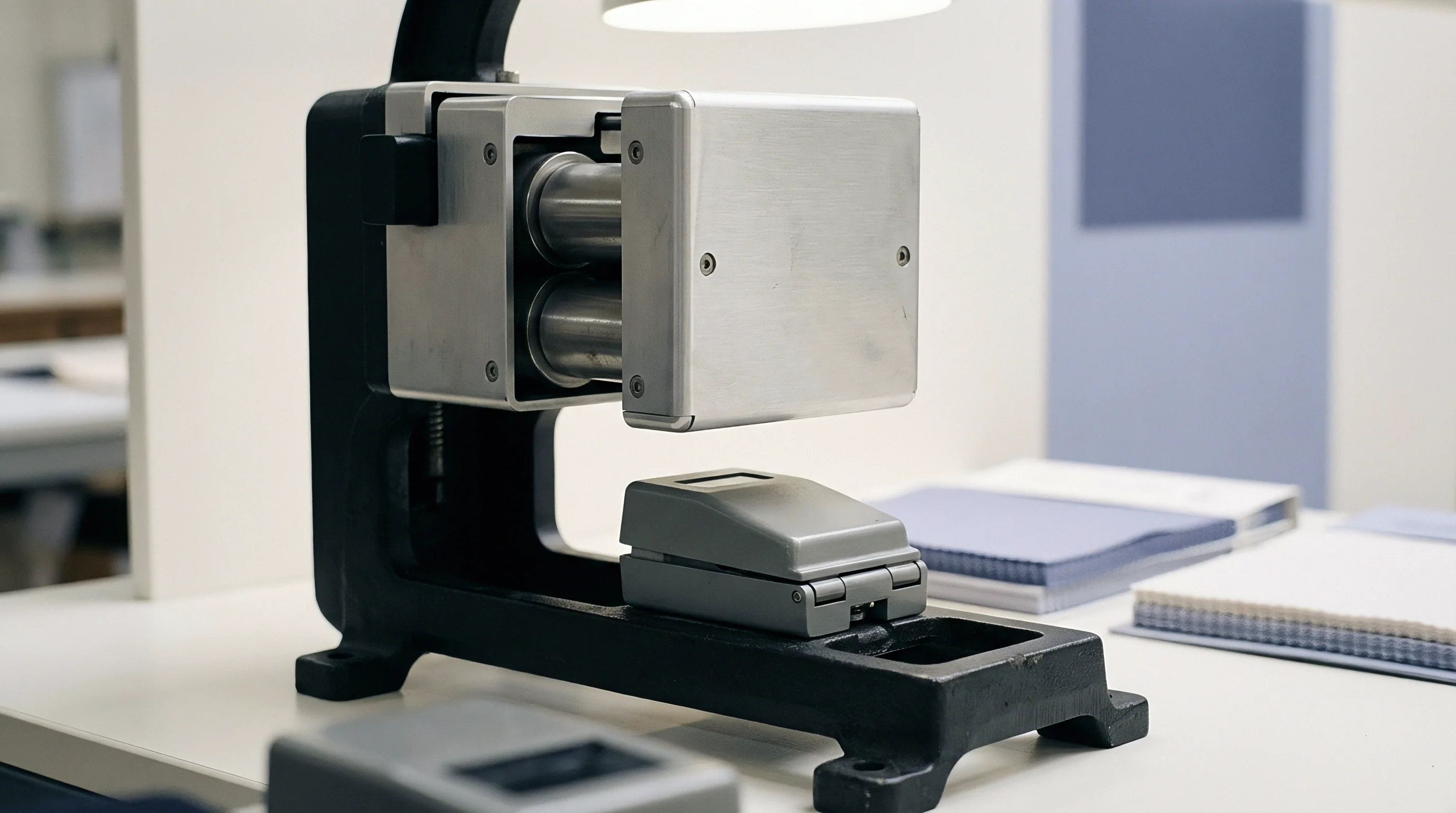
Instrument
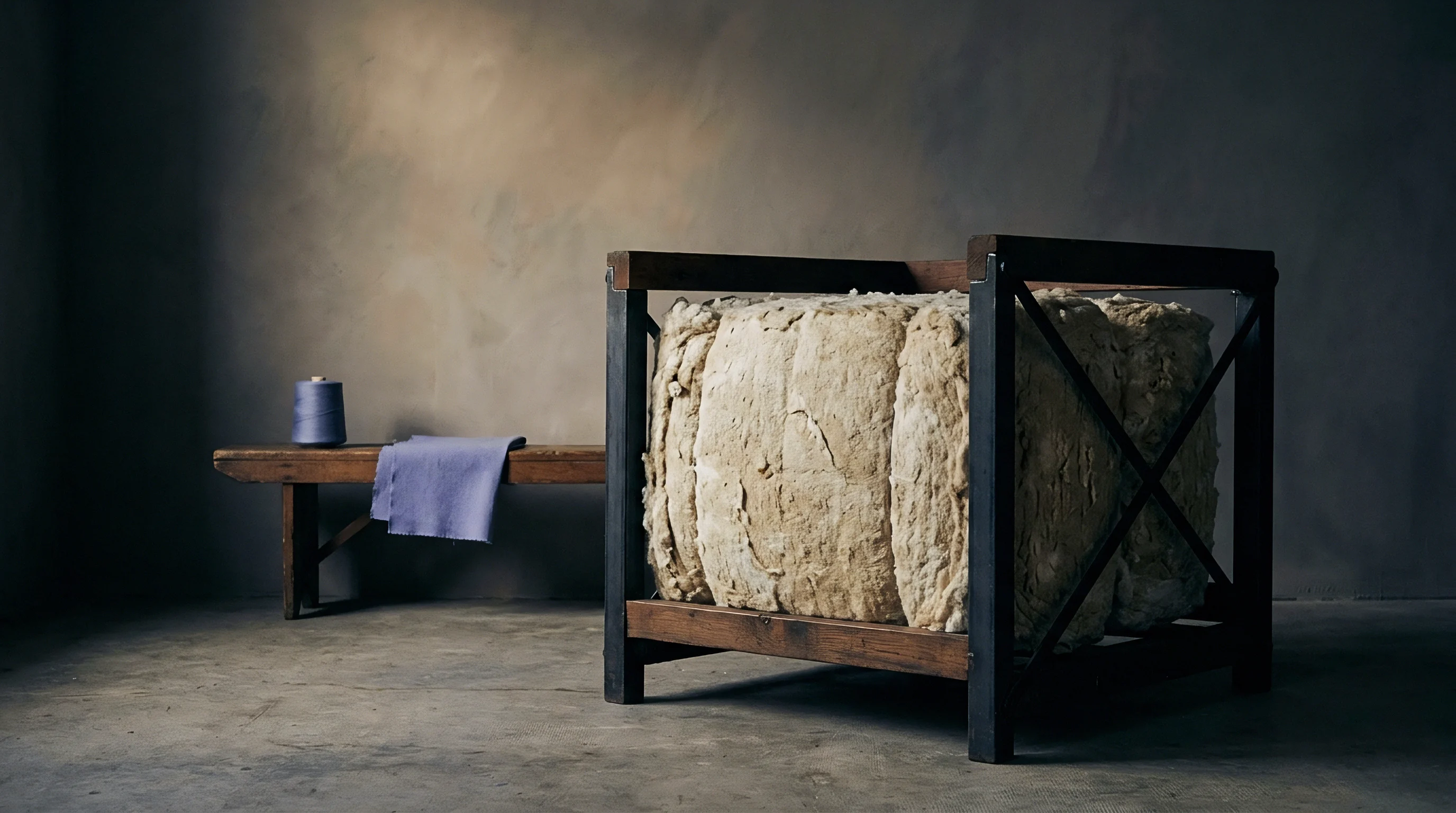
High Volume Instrument Protocol Calibration
High Volume Instrument (HVI) lines measure core samples to establish micronaire, upper half mean length, uniformity index, fiber strength, elongation, reflectance (Rd), and yellowness (+b). Core specimens require thorough mechanical opening prior to instrument testing. Unopened core plugs retain density variations from core tube compression, causing erroneous airflow measurements inside the micronaire chamber.
Micronaire determination relies on airflow resistance through a plug of core fibres weighing precisely 10.00 grams under ASTM D1448. Compressed core fibers present reduced surface area if not fluffed, yielding falsely elevated micronaire readings. Pneumatic mechanical openers card core plugs into uniform sliver matrices before specimen weighing occurs.
Contractual rejection limits trigger automatically when HVI core Micronaire testing returns lot mean values below 3.5 or above 4.9 under standard USDA classing rules.
Length and strength measurements utilize optical combs to draw fibre tufts across light-attenuation sensors and pneumatic break jaws. Core extraction shears a small percentage of fibers along the perimeter of the tube. HVI comb preparation algorithms account for core edge shearing by averaging multiple specimen draws from the interior bulk of the core sample.
| Quality Parameter | Standard Test Method | Repeatability Tolerance (Single Lab) | Reproducibility Tolerance (Multi Lab) |
|---|---|---|---|
| Micronaire | ASTM D1448 | ±0.10 units | ±0.15 units |
| Upper Half Mean Length | ASTM D1447 | ±0.38 mm (±0.015 in) | ±0.64 mm (±0.025 in) |
| Length Uniformity Index | ASTM D1447 | ±0.8% | ±1.2% |
| Tenacity (Fiber Strength) | ASTM D1445 / HVI | ±1.2 cN/tex | ±1.8 cN/tex |
| Reflectance (Rd) | ASTM D2253 | ±1.0 unit | ±1.5 units |
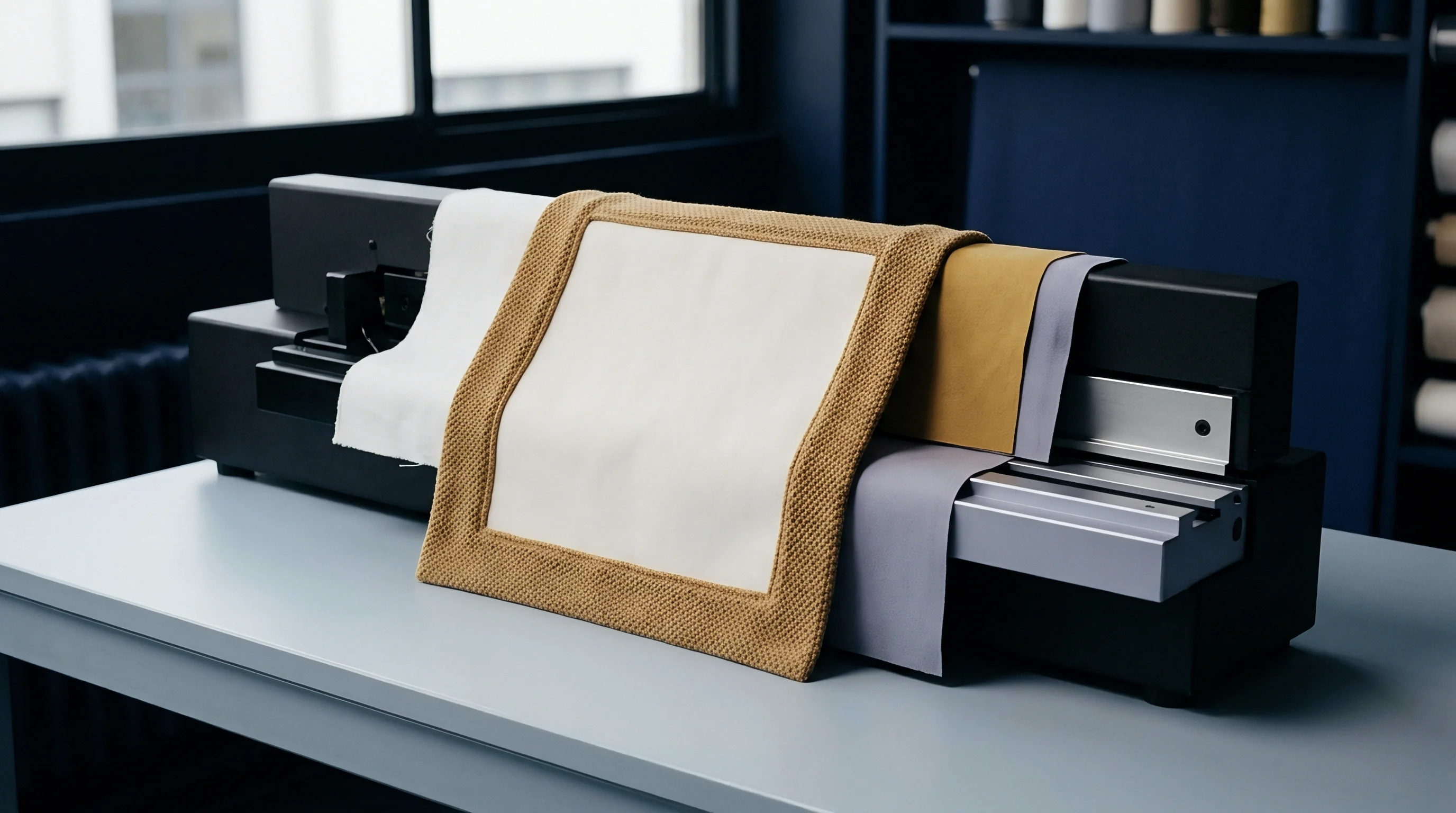
Advanced Fibre Information System Verification
Advanced Fibre Information System (AFIS) testing evaluates single-fiber distributions extracted from core slivers. AFIS measures nep counts per gram, seed coat fragment counts, and short fibre content by weight. Core sampling must avoid crushing fragile seed fragments, which inflates AFIS nep counts artificially.
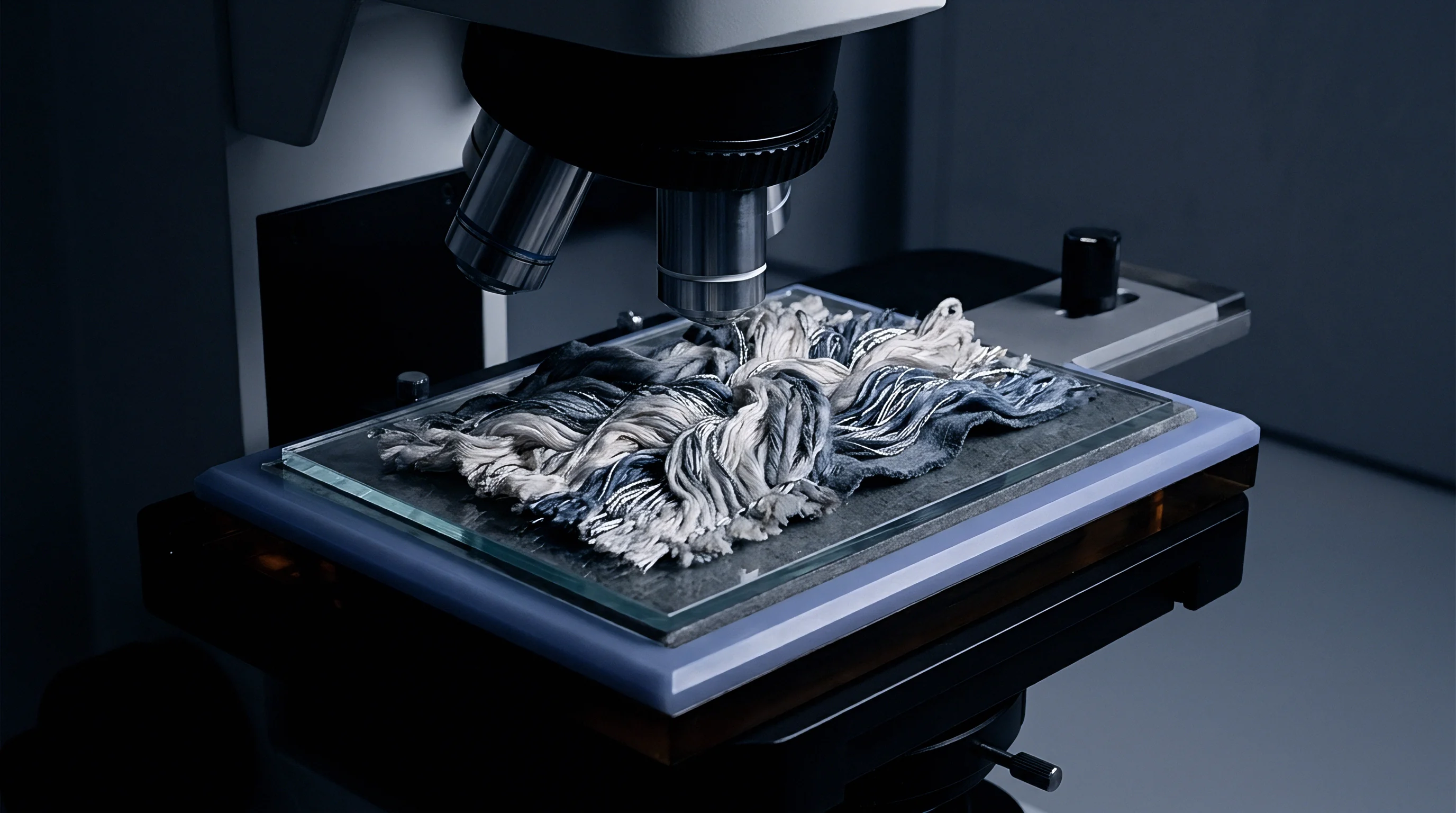
Can Automated Instruments Distinguish Core Edge Shear from Natural Short Fibres?
AFIS length distributions record individual fibre lengths as optical sensors monitor fibers passing through an air-stream separator. Periphery shearing from sharp core tube edges creates short fiber fragments that skew the length distribution curve toward higher SFC(w) values. Automated instruments cannot distinguish between a fibre cut by a sampling probe blade and a fibre broken during ginning.
Comparative testing of hand-drawn surface samples against machine cores establishes the sampling shear correction factor. If core samples show an SFC(w) elevation exceeding 1.2 percent over hand samples drawn from the same bale face, technicians inspect core tube bevel geometry for mechanical wear or dullness.
Ignoring calibration drifts during high-throughput HVI testing results in misclassifying staple lengths across entire warehouse lots, triggering unrecoverable commercial disputes at the spinning mill.


Variance

Intra-Bale and Inter-Bale Statistical Decomposition
Core test data exhibits two distinct variance components: within-bale variance arising from agricultural growth conditions and ginning changes, and between-bale variance across the lot. Calculating total variance requires nested analysis of variance (ANOVA) protocols across core replicate measurements. Statistical confidence improves with core count, but testing costs scale linearly.
The standard error of the lot mean decreases inversely with the square root of the number of tested bales. Testing ten percent of a 100-bale lot provides a confidence interval for micronaire of plus or minus 0.12 units at the 95 percent probability level. Increasing core coverage to 100 percent narrows the confidence interval to plus or minus 0.03 units, eliminating statistical ambiguity near penalty boundaries.
Core sampling protocols must balance statistical precision against physical testing costs to ensure commercial validity without eroding trading margins.
High intra-bale variance occurs when gins blend modules of differing staple lengths or moisture contents during press operations. Core sampling catches layered internal variation that dual surface hand-samples miss completely. A single bale may exhibit a surface micronaire of 4.2 while the core center registers 3.4 due to immature cotton feeding into the press box at the end of a ginning run.
| Fibre Parameter | Surface Hand Sample Std Dev | Core Probe Specimen Std Dev | Variance Reduction Ratio (%) | Commercial Risk Impact |
|---|---|---|---|---|
| Micronaire | 0.24 | 0.09 | 62.5% | Eliminates off-grade penalties |
| Staple Length (mm) | 0.81 | 0.35 | 56.8% | Prevents yarn tenacity claims |
| Trash Content (%) | 0.65 | 0.18 | 72.3% | Corrects blowroom yield loss |
| Moisture Content (%) | 1.12 | 0.22 | 80.4% | Protects against dry weight loss |

Core Density Variations and Artifact Control
Bale compression dynamics produce density gradients from core to perimeter. Universal density presses exert forces reaching several hundred tonnes, driving cotton into dense central cores. Core extraction tubes encounter higher mechanical resistance near the center, compacting fiber plugs unevenly along their length.
Compaction artifacts skew airflow tests unless samples undergo mechanical relaxation. Testing laboratories store core slivers in opening dishes inside environmental rooms for twelve hours prior to HVI processing. Accelerated relaxation using ultrasonic opening chambers reduces processing delays while maintaining measurement fidelity.
Suppliers frequently defend quality shortfalls by claiming core sample shearing artificially degraded the staple length distributions returned by independent test laboratories.

Deduction
Commercial Adjustments and Contractual Penalties
Trade contracts specify core quality parameters with clear penalty bands. International Cotton Association (ICA) rules dictate financial discounts when delivered lots breach contract specifications for micronaire, length, strength, or trash content. Core testing reports serve as legal evidence during arbitration proceedings.
Micronaire discounts operate on stepped penalty scales. Base contract ranges span from 3.5 to 4.9 micronaire units. Core test results returning values between 3.3 and 3.4 trigger a one percent deduction from total contract value.
Values dropping below 3.0 permit complete buyer rejection of the affected bales.
- Core Extraction Audit verifies physical probe depth and sample containment integrity within two hours of bale selection.
- Laboratory Conditioning holds specimens under standard atmospheric conditions until mass equilibrium establishes.
- Dual-Specimen Verification processes split core slivers on separate calibrated HVI lines to confirm result reproducibility.
- Variance Calculation computes the 95 percent confidence limits for lot mean quality parameters against contract specifications.
- Invoice Settlement applies published ICA discount tables to net bone-dry core weight determinations.
Worked Financial Claim Model
Consider a commercial shipment of 500 bales carrying a total gross weight of 113,500 kilograms. Core sample testing yields an average moisture content of 9.4 percent against a baseline allowance of 8.5 percent regain. Core HVI analysis shows 80 bales falling into the micronaire discount zone of 3.3 units, carrying a 1.5 percent contract price penalty.
The baseline contract price stands at 2.10 USD per kilogram.
Step one calculates corrected commercial mass. The measured moisture content of 9.4 percent corresponds to a moisture regain of 10.37 percent. The bone-dry mass equals 103,747.7 kilograms.
Applying standard 8.5 percent regain yields an adjusted invoice mass of 112,566.3 kilograms, reducing billable weight by 933.7 kilograms.
Step two computes quality penalties. The base value of the 80 off-spec bales equals 18,160 kilograms at 2.10 USD per kilogram, totaling 38,136.00 USD. Applying the 1.5 percent micronaire discount results in a direct deduction of 572.04 USD.
Combining weight adjustments and quality penalties yields a total financial deduction of 2,532.81 USD.
Commercial settlement schedules execute automatically when independent laboratory core test certificates show moisture or micronaire deviations exceeding contract thresholds under ICA Rule 234.
Customs authorities audit core test reports to verify tariff classifications under Harmonized System headings. Raw cotton containing elevated trash or seed coat content risks reclassification, moving duty liabilities upwards on landed cost ledgers.
Default clauses in international cotton purchase agreements assign total lab re-test and storage expenses to the seller whenever core verification proves delivered lot parameter averages breach declared baseline figures by more than two standard deviations.