Dynamic Core Sorption Equilibrium Modeling under Variable High Density Bale Transit Storage Enclosures
Dynamic core sorption modeling reconciles transit moisture shifts, preventing overpayment on raw fiber contracts through accurate core regain weight adjustments.
Hysteresis
Natural and regenerated cellulosic fibers adjust internal water mass through direct molecular attachment to free hydroxyl groups within amorphous regions. When relative humidity fluctuates inside a sealed transport environment, the path of moisture gain follows a lower equilibrium curve than the path of moisture loss. Thermodynamic binding sites remain occupied by trapped water molecules during desorption, creating a permanent divergence between absorption and desorption isotherms across equivalent ambient humidity levels.

Guggenheim Anderson De Boer Sorption Mechanics
Multilayer vapor adsorption within dense staple fiber assemblies follows non-linear equilibrium pathways governed by localized water activity. The Guggenheim-Anderson-de Boer formulation models this behavior across wide relative humidity bands by separating absorbed water into monolayer, multilayer, and bulk capillary fractions. Fiber morphology dictates the exact saturation limit of the primary monolayer site.
Hysteresis delays core equilibrium attainment.
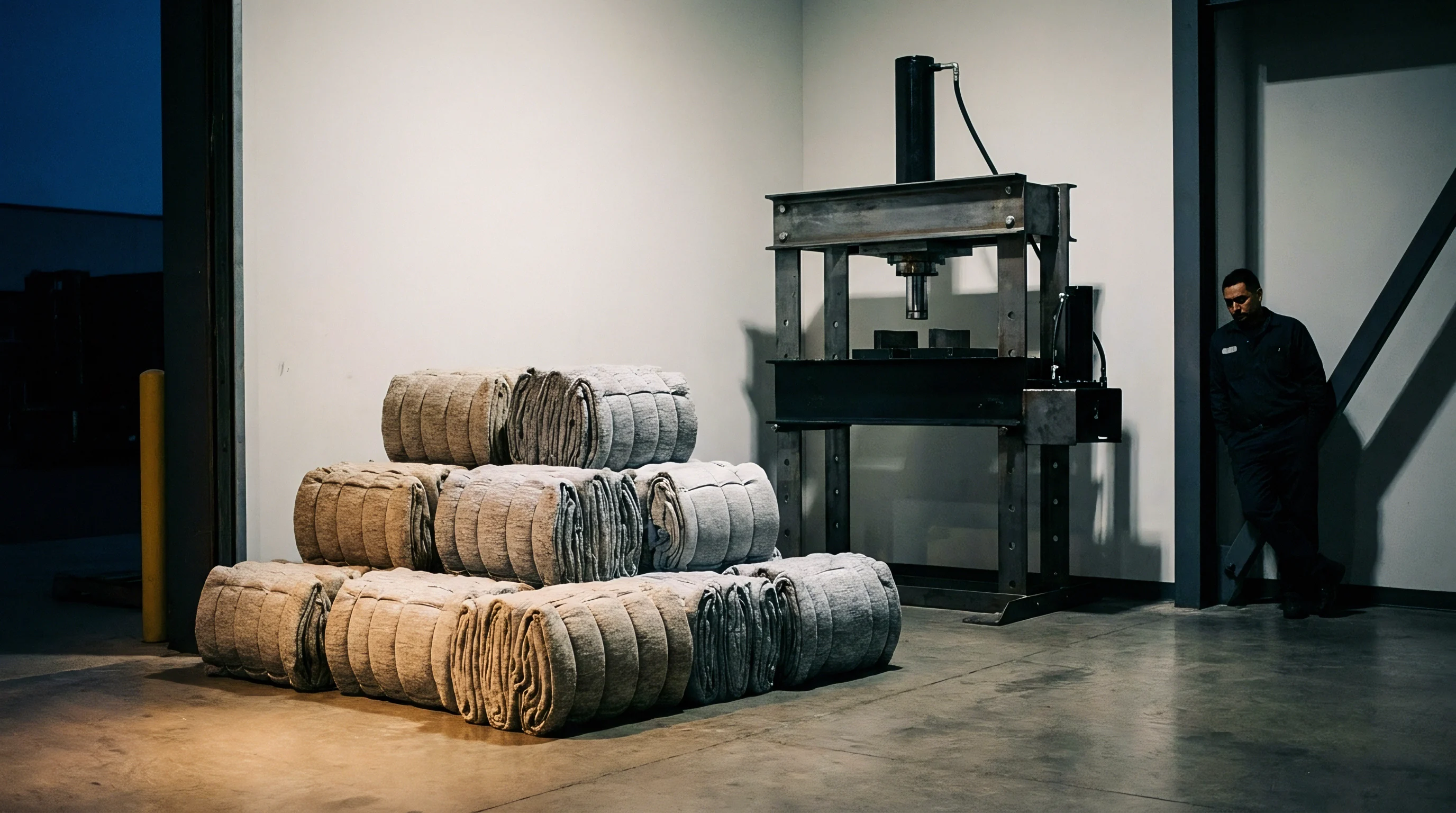
High-density packaging forces raw staple fiber into compressed geometries reaching densities between 380 and 460 kilograms per cubic meter. Compression reduces interstitial void volume, shifting the pore size distribution downward and increasing capillary condensation at relative humidity levels above 70 percent. Under these compressed conditions, internal vapor transport moves from free Knudsen diffusion to surface diffusion along tight fiber boundaries.
| Fiber Class | Monolayer Capacity Fraction | GAB Energy Parameter C | GAB Entropy Parameter K | Standard Regain Percentage |
|---|---|---|---|---|
| Upland Cotton (G. hirsutum) | 0.052 | 14.80 | 0.740 | 8.50 |
| Extra Long Staple Cotton | 0.056 | 16.20 | 0.745 | 8.75 |
| Scoured Fine Wool | 0.098 | 22.50 | 0.810 | 16.00 |
| Viscose Rayon Staple | 0.081 | 18.40 | 0.780 | 13.00 |
| Polyester Staple (1.4 dtex) | 0.004 | 2.10 | 0.620 | 0.40 |
Differential Heat of Wetting in Dense Fiber Matrices
Exothermic reaction heat generates local thermal gradients inside compressed fiber masses whenever moisture absorption occurs rapidly. As water vapor condenses onto binding sites, the released enthalpy of sorption raises core temperature, which temporarily suppresses further vapor absorption until thermal dissipation occurs through the outer pack boundary. Moisture transfer stops at thermal equilibrium.
The differential enthalpy of sorption for upland cotton equals 290 Joules per gram of bound water at zero moisture regain.
Thermal conductivity in dense bales ranges between 0.045 and 0.065 Watts per meter-Kelvin, creating severe thermal inertia. Heat generated within the bale interior takes weeks to dissipate through perimeter packaging during transit storage. Temperature swings force condensation inside wraps.
Buyers who calculate moisture migration without accounting for sorption enthalpy misjudge core regain development by up to 1.8 percentage points on 60-day transit routes, incurring unexpected tare weight adjustments and quality disputes upon destination mill intake.

Gradient
Mass transport through compressed textile packages depends on spatial positioning within the physical block geometry. Boundary layers exchange water vapor rapidly with ambient air, while interior regions experience delayed moisture migration governed by tortuous internal paths. A physical separation forms between the exterior envelope and the protected interior center.
Fickian Anisotropy in High Mass Compression
Vapor diffusion rates inside compressed staple fiber masses exhibit strong directional dependence based on fiber orientation patterns created during press stroke consolidation. Axial diffusion along primary fiber alignment channels proceeds faster than radial diffusion across tightly compacted fiber cross-sections. Core density blocks rapid vapor flow.
Effective moisture diffusion coefficients drop significantly as packing density increases from 250 to 450 kilograms per cubic meter. Dense packing forces water vapor through narrow interstitial pores where surface interactions slow net flux. Fiber swelling narrows internal pore channels.
The transient moisture diffusion equation requires directional permeability tensor adjustments to resolve interior regain profiles accurately over transit periods exceeding 30 days.
| Transit Days | Density 350 kg/m3 Shell Regain | Density 350 kg/m3 Core Regain | Density 450 kg/m3 Shell Regain | Density 450 kg/m3 Core Regain |
|---|---|---|---|---|
| 0 | 6.50% | 6.50% | 6.50% | 6.50% |
| 15 | 8.80% | 6.65% | 8.60% | 6.55% |
| 30 | 10.40% | 7.10% | 10.10% | 6.80% |
| 60 | 11.20% | 8.30% | 10.90% | 7.60% |
| 90 | 11.50% | 9.80% | 11.10% | 8.70% |
Core Shell Differential over Extended Storage Durations
Intermittent environmental conditioning creates severe moisture gradients between outer bale layers and inner core zones. While the outer 50 millimeters of fiber respond within hours to external relative humidity shifts, the internal core zone beyond 250 millimeters depth remains insulated from atmospheric fluctuations for several weeks. Surface probes miss core regain shifts.
ISO 6741-1 specifies commercial mass determination using oven drying at 105 degrees Celsius until mass constancy within 0.05 percent occurs.
Ginners and origin shippers often defend surface moisture probe discrepancies by asserting that outer layer regain representative values apply across the entire bale lot volume. Field sampling shows this defense ignores the multi-week lag required for core vapor diffusion. Surface measurements systematically overestimate lot weight during high-humidity loading and underestimate weight following dry storage periods.
Skin
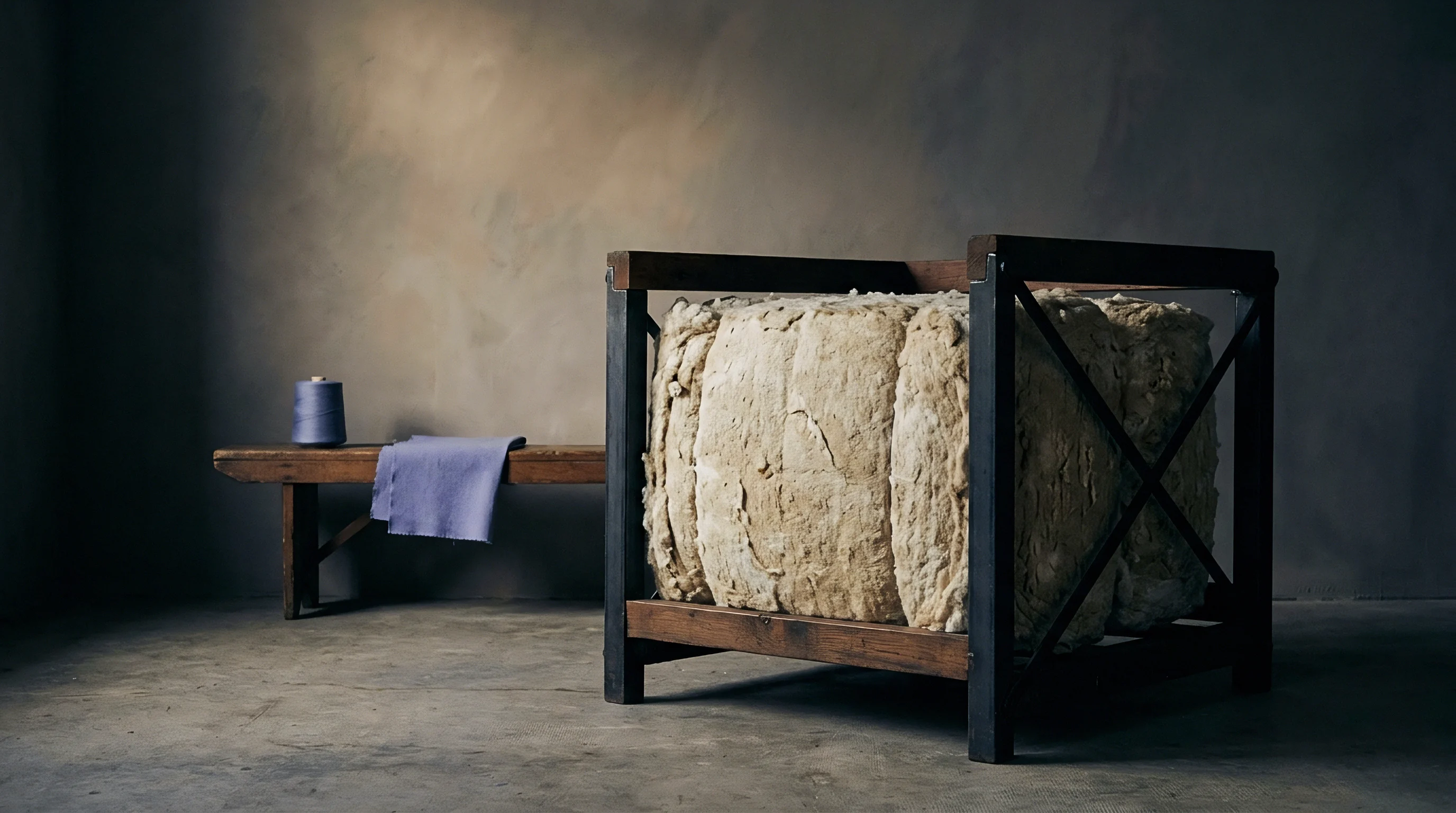
Polymeric wraps, woven polyolefin sleeves, and steel or plastic strapping assemble into a composite barrier system surrounding compressed staple fiber lots. Water vapor transmission rates through outer wrapping films govern total moisture mass ingress during ocean container transport. Physical integrity of the outer film determines overall barrier effectiveness.
Polyethylene Permeability and Water Vapor Transmission Rates
Low-density polyethylene film provides primary water vapor protection for export bale packaging, exhibiting nominal vapor transmission rates between 3.5 and 6.0 grams per square meter per 24 hours under standard test conditions of 38 degrees Celsius and 90 percent relative humidity. Polyethylene films limit vapor flow. Film thickness variations directly alter total vapor flux into the compressed fiber core.
Mechanical stress during high-density hydraulic compression stretches perimeter film wrap, reducing nominal thickness from 100 micrometers down to 60 micrometers at bale corners and band contact points. Localized thinning elevates vapor permeability by up to 80 percent at stress concentration points. Water activity governs surface regain.
- Corner Pinholing punctures film barrier integrity, letting ambient moisture enter directly along localized high-pressure contact edges.
- Band Abrasion strips protective film coatings during transit handling, exposing inner fiber layers to container atmosphere shifts.
- Seam Separation exposes internal fiber matrices along heat-seal joint failures caused by internal bale expansion forces.
- Condensation Trapping collects free water inside unvented film covers when rapid temperature drops cross the local dew point.

Perforation Metrics and Internal Vapor Trapping
Micro-perforations intentionally added to packaging film allow internal air evacuation during hydraulic pressing steps. Micro-perforations accelerate transit vapor intrusion. These air release vents create micro-scale pathways for water vapor exchange once the bale enters high-humidity storage enclosures.
Vapor diffusion through perforated packaging shifts from slow film permeation to rapid Knudsen micro-channel diffusion. Environmental moisture enters through perforations during warm transit cycles and becomes trapped behind the film when ambient temperatures drop, elevating perimeter fiber regain into mold growth risk zones above 12 percent moisture content.
Packaging integrity demands strict film specifications matching barrier performance to expected transit duration.


Psychrometrics
Atmospheric conditions inside closed steel shipping containers undergo severe cyclic variations driven by external solar heating and marine ambient temperatures. Moisture evaporates from cargo boundaries during warm daytime periods, accumulating within the container headroom air space. Retest windows expire within fourteen days.

Container Sweat Dynamics during Ocean Transit
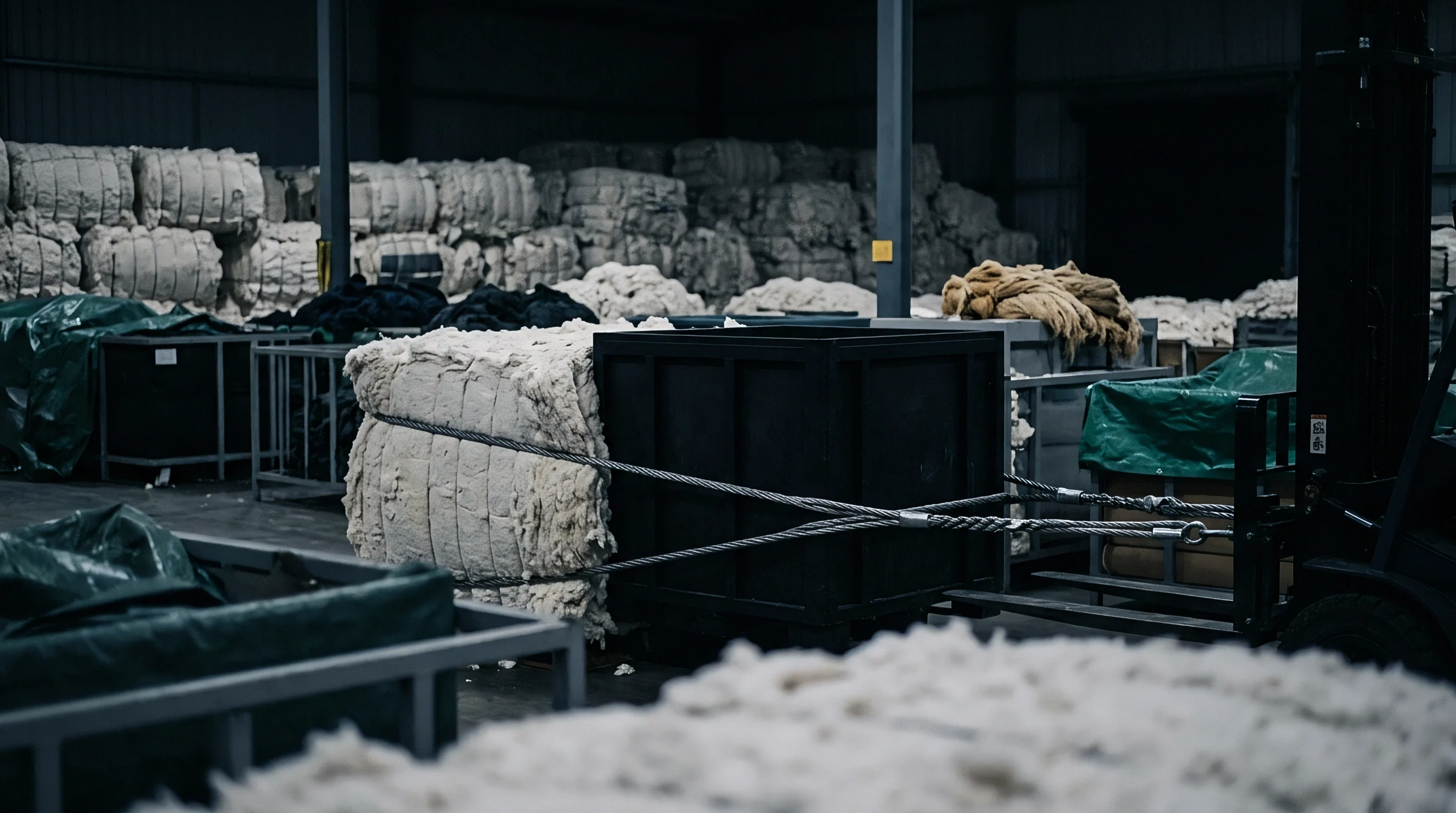
Solar radiation heats container roof plates to temperatures exceeding 65 degrees Celsius during equatorial marine transit. Rapid cooling at night drops roof plate temperatures below the dew point of high-humidity internal container air, causing liquid water condensation to form on internal steel surfaces. Condensation changes net landed weight.
Liquid water dripping from container ceilings saturates upper bale surfaces, overriding equilibrium vapor sorption dynamics. Direct water contact triggers rapid localized liquid absorption, elevating outer fiber regain past 15 percent and initiating microbiological decay before core vapor equilibrium can form.
Diurnal Vapor Pressure Swings in Sealed Marine Cargo
Consider a standard 40-foot ocean container carrying 88 high-density upland cotton bales with a net dry fiber weight of 19,800 kilograms. Initial fiber moisture content equals 7.0 percent, corresponding to 1,386 kilograms of bound water. During sea transit across tropical waters, internal air temperatures cycle daily between 22 degrees Celsius at night and 48 degrees Celsius during peak afternoon radiation.
At 48 degrees Celsius, air inside the sealed container holds a maximum saturated vapor concentration of 78.2 grams per cubic meter, compared to only 19.4 grams per cubic meter at 22 degrees Celsius.
During the heating phase, water vapor desorbs from the warm outer bale surfaces into the internal container air space, elevating relative humidity to 90 percent. As night temperatures drop to 22 degrees Celsius, the air capacity drops, forcing approximately 4.2 liters of free water vapor out of the air phase per diurnal cycle. This moisture re-condenses directly onto the cooler container walls and top bale wrapping.
Over a 30-day transit route, cumulative condensation cycles transfer 125 liters of water from core bale reserves to outer packaging surfaces, creating severe localized moisture spikes without altering total container mass.
Standard marine cargo clauses place condensation damage risk on the buyer unless packaging specifications mandate continuous vapor barrier sealing.
Shippers avoid financial loss from moisture degradation by incorporating vapor barriers with water vapor permeability below 1.0 gram per square meter per 24 hours under ISO 15106-2 test standards into standard container loading practices.

Audit
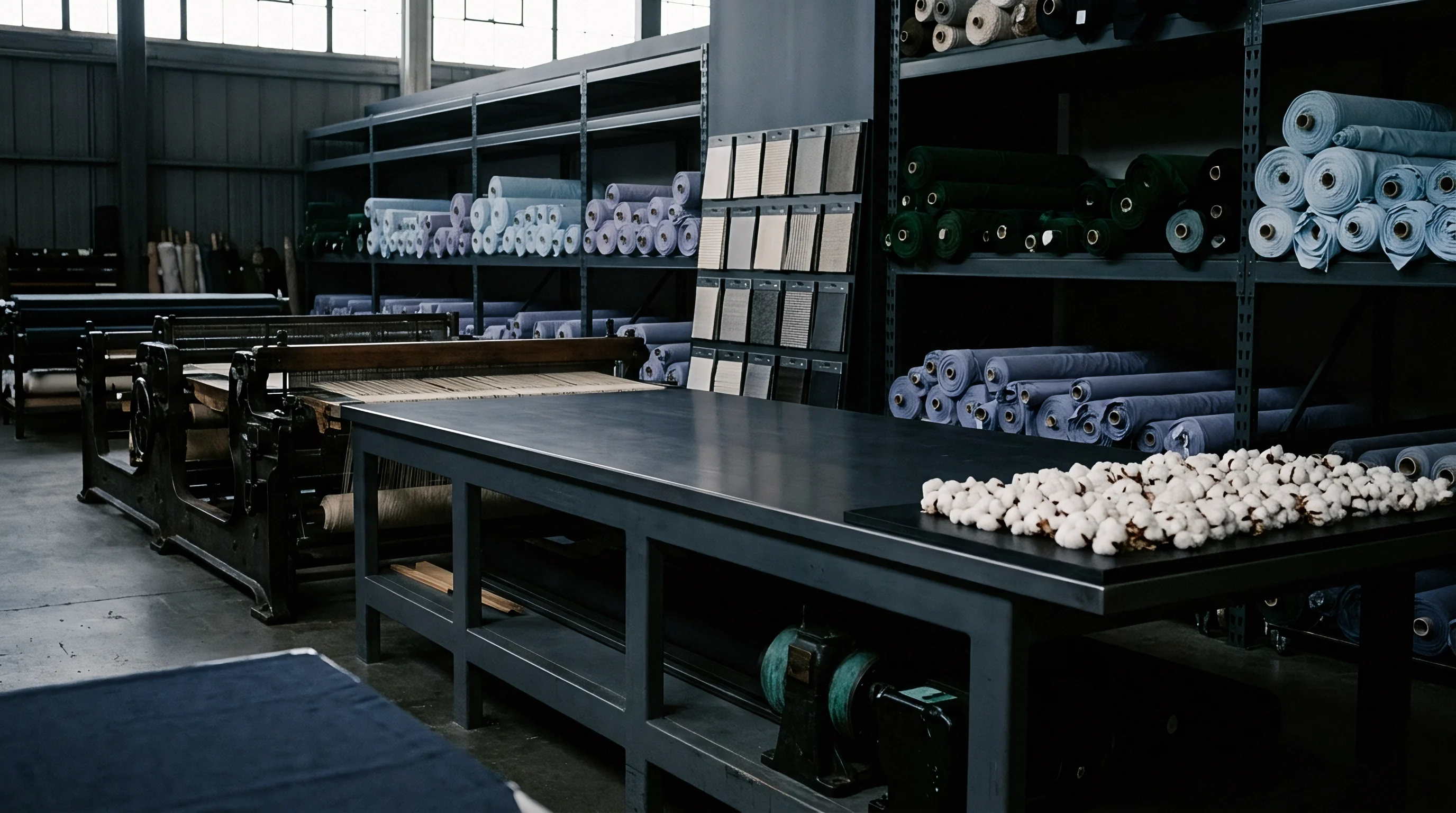
Verification of moisture content in incoming raw staple lots requires rigorous sampling methodologies to separate surface variations from actual core regain values. Laboratory test results match commercial reality only when extraction procedures capture spatial moisture distribution across the full bale volume.
Microwave Sensor Calibration against Oven Drying Verification
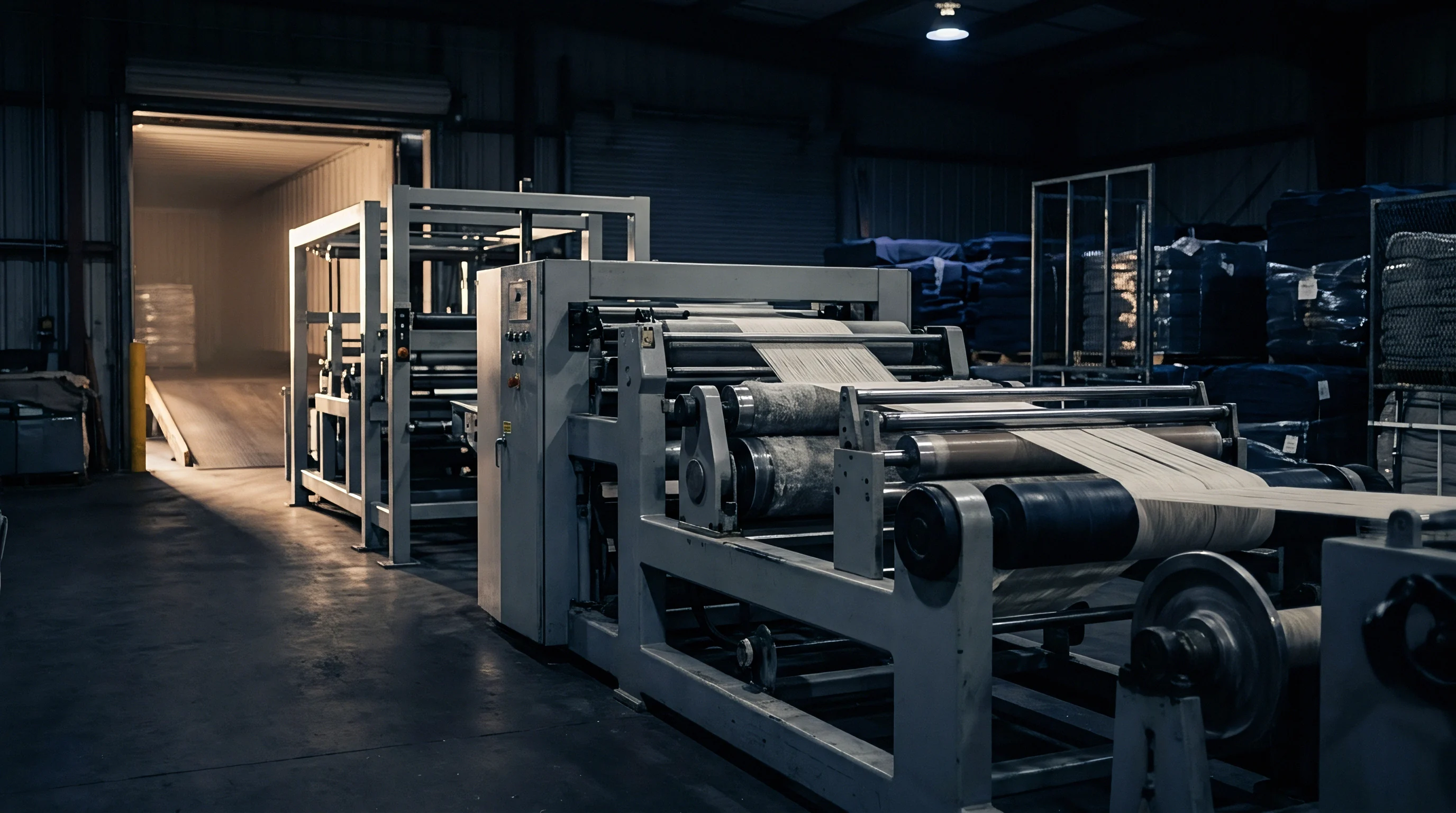
Dielectric microwave moisture probes offer rapid non-destructive testing of raw staple bales on mill intake platforms. Microwave sensors measure total attenuation and phase shift caused by free and bound water molecules within the high-frequency electromagnetic field. Density gradients skew microwave sensor readings.
Dielectric properties vary with bale packing density, fiber temperature, and mineral impurity content. Portable probe readings require continuous calibration against primary oven-drying reference methods under ISO 6741 or ASTM D2495. Uncalibrated surface probes exhibit measurement errors exceeding 1.5 percentage points on dense bales.
| Extraction Depth | Oven Drying (ISO 6741) Tolerance | Microwave Dielectric Probe Accuracy | Electrical Resistance Probe Accuracy |
|---|---|---|---|
| 0 to 50 mm (Surface) | +/- 0.15% | +/- 0.40% | +/- 0.60% |
| 50 to 200 mm (Intermediate) | +/- 0.15% | +/- 0.35% | +/- 0.85% |
| 200 to 450 mm (Core Center) | +/- 0.15% | +/- 0.30% | +/- 1.40% |

Standardized Core Extraction Methodologies
Accurate determination of lot regain requires physical core sample extraction using rotary coring tubes driven into the bale center parallel to the direction of hydraulic compression stroke. Penetration depth reaches the geometric core center to collect representative fiber samples.
- Tool Qualification selects a sharp stainless steel coring tube with an internal diameter of 18 to 25 millimeters and an integrated vacuum collection sleeve.
- Penetration Execution drives the tube into the bale center at controlled rotational speed to avoid frictional heating and localized moisture vaporization.
- Sample Sealing transfers extracted fiber cores immediately into airtight glass container vessels within five seconds of tool withdrawal.
- Mass Recording weighs sealed sample vessels on an analytical balance reading to 0.001 grams before entering thermal oven drying cycles.
How do dynamic moisture gradients inside stored high-density bales alter the statistical sampling frequency required to hold commercial invoice tolerances within zero point two percent?


Reconciliation
Financial accounting for raw staple fiber transactions converts gross delivered lot mass into standardized commercial mass based on official regain allowances. Discrepancies between origin invoice weight and destination arrival weight trace directly to dynamic moisture sorption during transit storage.

Commercial Mass Calculations from Core Regain Data
Commercial mass calculations adjust gross delivered weight by removing actual moisture content and adding back the official standard regain allowance defined for the specific fiber class under ISO 6741-1. Dry mass determines commercial invoice settlements. Fiber type dictates ultimate regain capacity.
Consider a delivered lot of 100 cotton bales with a gross scale weight of 22,500 kilograms upon destination arrival. Moisture audit by core oven drying yields an actual average moisture regain of 9.20 percent, compared to the official commercial regain allowance of 8.50 percent. The commercial mass calculation proceeds as follows:
Dry Fiber Mass = Gross Delivered Weight / (1 + Actual Regain / 100)
Dry Fiber Mass = 22,500 kg / (1 + 0.0920) = 20,604.40 kg
Commercial Mass = Dry Fiber Mass (1 + Standard Regain Allowance / 100)
Commercial Mass = 20,604.40 kg (1 + 0.0850) = 22,355.77 kg
The delivered lot contains 144.23 kilograms of excess water above the official commercial regain standard. At a market price of 2.10 USD per kilogram, the buyer deducts 302.88 USD from the final invoice settlement to offset excess water mass delivered in the shipment.
- Examine incoming shipping documents to establish contract regain standards.
- Extract core fiber samples within 48 hours of container unloading.
- Execute primary oven-drying mass determination under standard laboratory conditions.
- Calculate dry mass and apply commercial regain correction formulas.
- Issue financial credit adjustments against origin invoices within contractual claim windows.

Tariff Heading Classifications Based on Conditioned Weight
Customs duty assessments for cross-border textile fiber shipments rely on net net weight definitions, excluding tare packaging and excess moisture mass. Customs authorities verify declared fiber composition and weight against conditioned commercial mass standards under Harmonized System rules.
Mislabelling or failing to adjust gross landed weight for excess transit moisture absorption results in overpayment of import tariffs and potential customs penalty proceedings under misdeclaration statutes. Accurate core regain modeling establishes true tariff classification values prior to customs clearance filing.
Commercial contracts specify weight adjustment clauses based on destination core sampling data to protect buyers against water mass inflation. Standard purchase agreements incorporate ISO 6741 core sampling procedures, setting final payment terms on verified commercial mass rather than gross origin scale receipts. Sourcing managers write core regain audit requirements into raw lot purchasing specifications to secure financial protection across long marine transit routes.