InGaAs Sensor Pixel Pitch Optimization for High Speed Cotton Tuft Inspection
Selecting an InGaAs sensor pixel pitch balances spatial resolution against full well capacity to prevent motion blur and noise saturation in fast duct sorting.


Optics
Short-wave infrared radiation between 1000 nm and 1700 nm exposes subtle chemical differences between natural cellulosics and synthetic polymers, with bound moisture driving optical contrast. Natural cotton staple carries a standard moisture regain between 7.5 percent and 8.5 percent under standard laboratory conditions of 20 degrees Celsius and 65 percent relative humidity. This moisture produces deep optical absorption minima at 1450 nm due to standard O-H vibrational overtones.
Clear or white polypropylene packaging twine fragments, composed of saturated C-H hydrocarbon chains, show high optical reflectance at 1450 nm while absorbing light at 1195 nm and 1390 nm. High-speed inspection chutes illuminated by tuned SWIR light sources achieve contrast ratios exceeding 4:1 between clean cotton tufts and polypropylene contaminants.
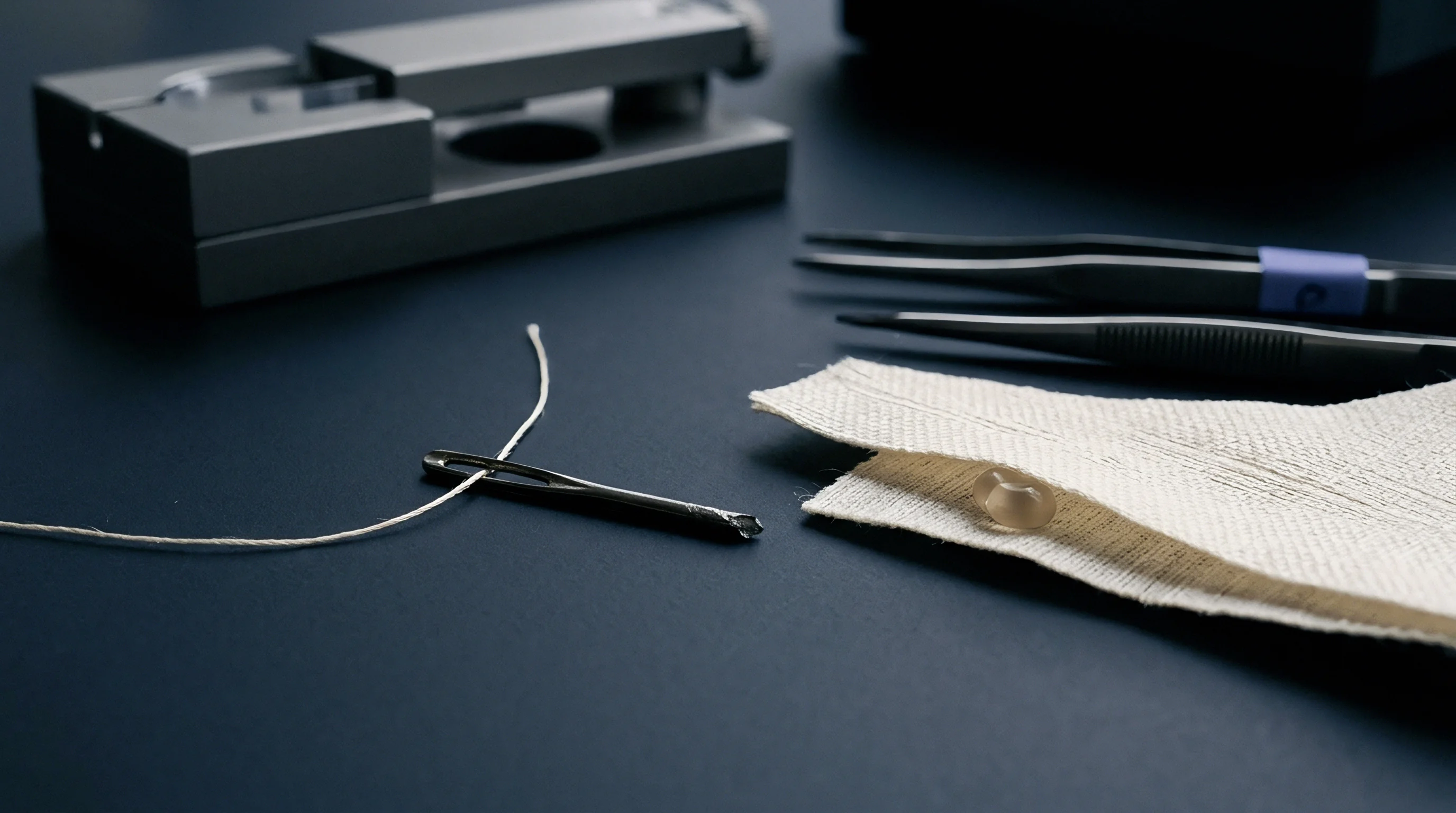
Spectral Footprints across Shortwave Infrared Bands
Differentiating organic trash from synthetic fragments requires matching illumination spectra directly to detector sensitivity. Raw cotton bales contain varied levels of botanical impurities, including leaf fragments, bark, stem, and seed coat remnants. Because organic trash components contain cellulose, lignin, and moisture, they track the optical absorption profile of cotton across much of the short-wave infrared spectrum.
Polypropylene, polyethylene, and polyester exhibit distinct spectral absorption signatures free from moisture-related spectral attenuation. Sensors configured with Indium Gallium Arsenide photodiodes capture these wavelength variations across line scan frequencies exceeding 50 kHz.

Spatial Resolution and Optical Magnification
Detecting fine synthetic filaments requires precise optical magnification across the transport duct to prevent field distortion from skewing spatial geometry. A typical polypropylene fragment shredded during bale opening measures 0.15 mm in diameter by 3.0 mm in length. To resolve this defect, the optical system projects the object plane onto the photodiode sensor array with a spatial sampling density of at least two pixels per minimum defect dimension.
Achieving a 0.075 mm spatial pixel footprint at the belt surface using a photodiode array with a 12.5 micrometre pixel pitch demands an optical magnification ratio of 0.167. Expanding the optical field of view across a 1200 mm duct without causing edge vignetting requires specialized low-distortion lenses designed for short-wave infrared transmission.
A spatial resolution of 0.25 mm per pixel at a line rate of 60 kHz maintains a 4:1 signal-to-contrast ratio for 0.15 mm polypropylene filaments under 1450 nm illumination.

Failure Modes of Infrared Contamination Inspection
Optical inspection systems operating in high-speed blowroom ducts face environmental and physical interference that degrades target contrast.
- Desiccation Blur ~ Low atmospheric humidity drops cotton moisture regain below 4 percent, diminishing the 1450 nm hydroxyl absorption peak and shrinking contrast against synthetic polymers.
- Depth Field Drift ~ Uneven pneumatic duct packing forces tufts outside the primary focal plane, reducing spatial modulation transfer function below acceptable detection thresholds.
- Illumination Saturation ~ Thermal drift in high-output LED arrays shifts narrow emission bands away from targeted hydrocarbon absorption wavelengths, introducing false positives across clean staple.
- Vignetting Degradation ~ Lens field curvature reduces photon irradiance at line scan edges, elevating background noise floors on wide conveyances.
Choosing an incompatible optical band or insufficient magnification lets synthetic filaments pass into the carding engine, where wire clothing shreds a single gram of twine into thousands of invisible defects.


Tuft
Pneumatic blowroom ducts transport loose opening-line fiber masses at velocities ranging from 12 m/s to 25 m/s, where target velocity directly determines line timing. Motion blur degrades spatial resolution when integration times exceed particle movement boundaries. Freezing the motion of a 0.2 mm contaminant traveling at 20 m/s without blurring across adjacent photodiode elements constrains exposure duration, as motion blur equals duct velocity multiplied by integration time.
At 20 m/s transport speed, a 5 microsecond integration time produces 0.1 mm of motion blur, consuming half of a 0.2 mm spatial pixel footprint.

Velocity Boundaries in Pneumatic Conveyance
Air velocity inside transport ducting fluctuates based on fan speed, duct cross-section, and fiber mass loading. High duct speeds expand opening-line throughput but reduce the number of optical line scans across each moving fiber mass. Increasing line scan frequency to 80 kHz provides a 12.5 microsecond line period, allowing short exposure bursts that limit integration time and freeze particle motion.
Short exposure windows reduce the total photon count landing on each photodiode element, demanding higher irradiance from line-illumination sources.
- Determine the maximum pneumatic transport velocity inside the inspection duct using pitot tube pressure measurements.
- Calculate the allowable motion blur limit based on the targeted minimum contaminant dimension of 0.15 mm.
- Set the sensor integration time below 8 microseconds to prevent motion-induced signal smear across adjacent photodiodes.
- Adjust line scan trigger frequency to achieve a 15 percent spatial overlap between consecutive line acquisitions.
- Calibrate light source drive currents to maintain adequate photon flux within the brief integration window.
Integration time stays shorter than the duration required for target material to cross half a spatial pixel width.
Pneumatic transport destabilizes depth field. As open cotton clusters tumble through the inspection zone, variations in clump thickness alter light scattering and shadows. Matching the optical line rate to physical duct velocity prevents spatial gaps where small synthetic fragments escape detection.
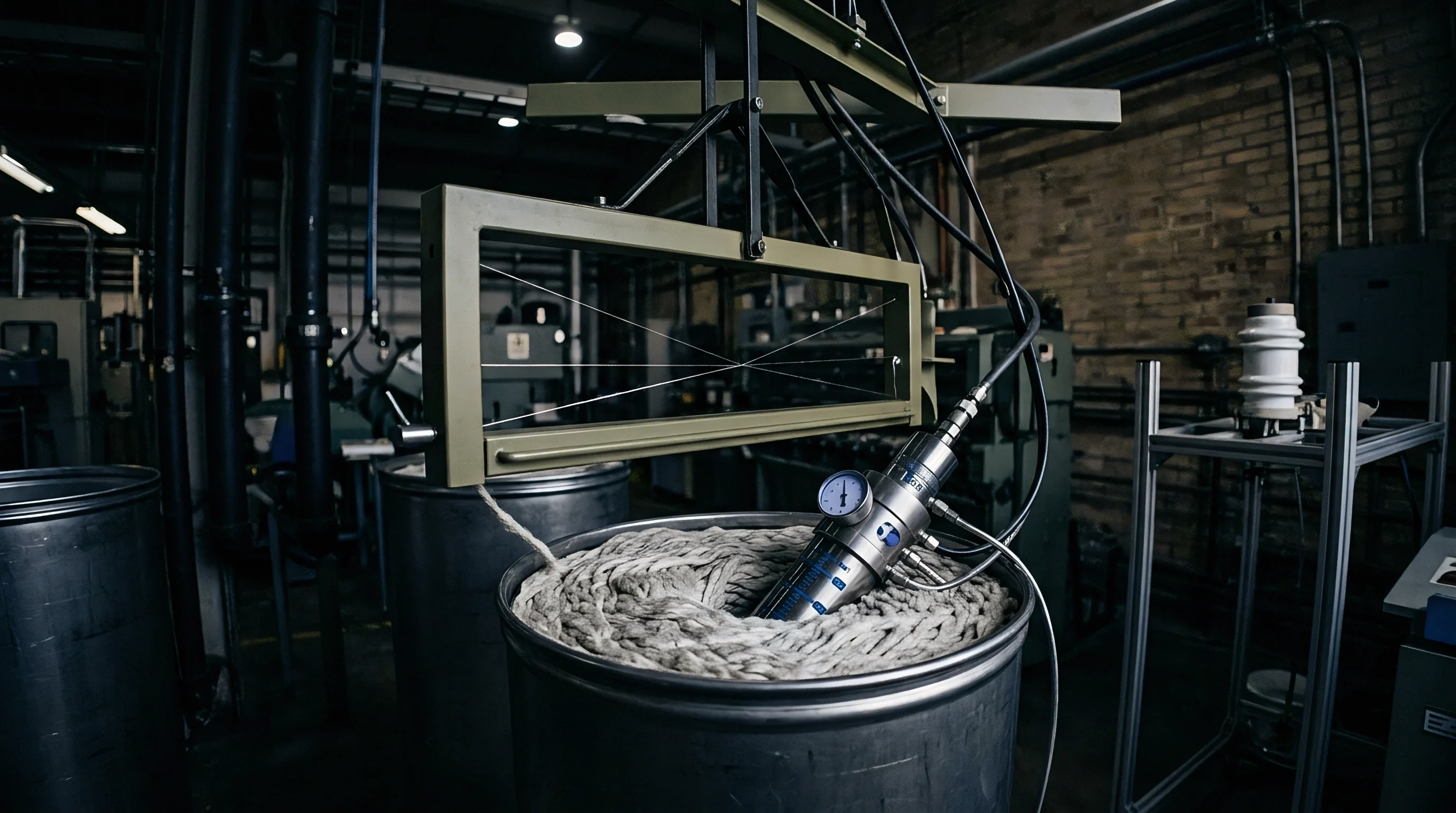

Array
InGaAs photodiode dimensions govern spatial sample density and photodetector electronic performance, as pixel size alters full well depth. Choosing between 10 micrometre, 12.5 micrometre, and 25 micrometre pixel pitch architectures involves trade-offs between physical array length, photodiode full well capacity, dynamic range, and system noise ceilings.

Can Smaller Pixel Pitch Compensate for Higher Speed?
Selecting a smaller pixel pitch allows sensor manufacturers to pack 4096 or 8192 photodiodes onto a single InGaAs chip, providing fine spatial sampling across wide inspection chutes. Smaller pixels present physical limitations in high-speed optical scanning. Photodiode full well capacity scales directly with active junction area.
A 25 micrometre pixel features an active area capable of holding approximately 1,500,000 electrons, whereas a 10 micrometre pixel holds roughly 120,000 electrons. Under brief exposure windows at 80 kHz line rates, smaller photodiodes hit full well saturation earlier under intense illumination, while collecting fewer photons under moderate lighting, causing shot noise to dominate the measurement signal.

Photodiode Capacity and Integration Limits
Fast scans are quickly dominated by photon noise. Dark current generation in InGaAs arrays increases exponentially with operating temperature, adding thermal noise to the read-out background. Peltier thermoelectric cooling (TEC) stabilizes sensor junction temperature at 233 Kelvin or 263 Kelvin, suppressing thermal noise and preserving baseline signals alongside dynamic range.
Consider a 1200 mm wide pneumatic inspection chute operating at a transport speed of 18 m/s. A line scan configuration utilizing a 4096-element InGaAs sensor with a 12.5 micrometre pixel pitch achieves an optical spatial resolution of 0.293 mm per pixel at a 1:1 optical magnification ratio. At an operating line rate of 64 kHz, the available exposure time per scan line equals 13.6 microseconds, after accounting for a 2.0 microsecond read-out dead time.
Assuming an active photodiode area of 156.25 square micrometers and a quantum efficiency of 75 percent at 1450 nm, an incident photon flux of 2.5 x 10^14 photons per square meter per second yields a signal charge of 195,000 electrons per integration period. This signal charge occupies 78 percent of the 250,000 electron full well capacity, maintaining a shot-noise-limited signal-to-noise ratio of 42.9 dB. Shrinking the pixel pitch to 10 micrometres under identical illumination reduces the active junction area to 100 square micrometers, dropping signal charge to 124,800 electrons against a 120,000 electron full well capacity, forcing photodiode saturation and requiring optical attenuation that degrades signal-to-noise ratio down to 35.2 dB.
| Pixel Pitch (µm) | Full Well Capacity (e-) | Dark Current at 293K (pA) | Shot Noise Floor (e-) | Max Line Rate (kHz) | Dynamic Range (dB) |
|---|---|---|---|---|---|
| 10.0 | 120,000 | 0.45 | 346 | 100 | 50.8 |
| 12.5 | 250,000 | 0.70 | 500 | 80 | 54.0 |
| 15.0 | 400,000 | 1.05 | 632 | 60 | 56.0 |
| 25.0 | 1,500,000 | 2.80 | 1224 | 35 | 61.8 |
Selecting array parameters demands matching electronic full well limits against available SWIR illumination power.

Decision Criteria for Sensor Selection
Evaluating sensor specs requires matching physical hardware attributes to conveyor speed and defect geometry.
- Spatial Pixel Footprint ~ Ensure the optical magnification projects a minimum of two pixels across the smallest target defect dimension.
- Full Well Charge Margin ~ Select photodiode capacities that operate between 60 percent and 80 percent of full well saturation under maximum illumination.
- Cooling Delta Capacity ~ Confirm Peltier cooling components maintain photodiode array temperatures at or below 253 Kelvin in high-ambient spinning environments.
- Line Scan Readout Architecture ~ Verify tap read-out architecture supports target line frequencies without introducing frame transfer dead time.
Contractual machine specifications referencing ISO 1833 compliance dictate a sensor dynamic range exceeding 58 dB to isolate synthetic polymers from natural fibers.
Software enhancement algorithms are frequently proposed to overcome photon starvation in tiny pixels, though shot noise limits remain an absolute physical constraint.


Benchmark
Evaluating target detection thresholds requires balancing line acquisition speed against background noise margins, as raw bale quality dictates baseline sorter thresholds. Cotton fiber lots exhibit varying baseline reflectance profiles driven by regional growing conditions, trash content, and moisture history. System sensitivity metrics demonstrate how pixel pitch selection alters detection reliability for different synthetic and organic foreign materials inside pneumatic sorting channels.

Detection Sensitivities and Noise Limits
Clear polypropylene film and fine transparent packaging twine represent the most difficult detection targets in raw cotton lines. Because transparent polypropylene reflects SWIR light while moisture-laden cotton absorbs it at 1450 nm, sensor dynamic range determines whether thin film edges trigger detection thresholds. Jute string and hemp fibers contain organic moisture and lignin, presenting spectral signatures closer to natural cotton staple.
Distinguishing jute from cotton requires multi-spectral line scanning combining 1450 nm moisture channels with 1200 nm hydrocarbon channels.
| Contaminant Material | Minimum Size (mm) | Optimal Pixel Pitch (µm) | Required Band (nm) | Max Duct Velocity (m/s) | False Positive Rate (%) |
|---|---|---|---|---|---|
| Polypropylene Twine | 0.15 | 12.5 | 1450 / 1200 | 22.0 | 0.12 |
| Polyethylene Film | 0.20 | 12.5 | 1450 | 20.0 | 0.08 |
| Jute / Hemp String | 0.50 | 25.0 | 1200 / 1390 | 15.0 | 0.35 |
| Organic Leaf / Bark | 0.30 | 15.0 | 1450 / 1550 | 18.0 | 0.22 |
Off-axis field distortion in short focal length lenses spreads light across adjacent photodiode columns, reducing spatial edge sharpness and mimicking false synthetic signatures through optical edge falloff. Modern inspection units specify macro-planar telecentric or high-resolution line-scan lenses rated for short-wave infrared transmission, preserving modulation transfer function across the entire conveyor width.
Incorporating ASTM D7349 inspection criteria into machine purchase contracts shifts liability to the equipment vendor when false-positive rejection rates exceed 0.5 percent of total processed fiber mass.


Loss
Undetected synthetic contamination inside raw cotton bales creates catastrophic financial exposure during fabric dyeing and finishing. Polypropylene packaging fibers pass through carding, drawing, and spinning processes without breaking down chemically. During ring spinning or open-end rotor spinning, these synthetic filaments twist directly into high-count yarns, triggering severe downstream financial claims when the fabric is dyed.

Downstream Financial Impact of Contamination Failure
Synthetic contaminants reveal their presence only after fabric piece-dyeing. Polypropylene possesses a non-polar hydrocarbon structure that resists standard cotton dye classes, including reactive, direct, and vat dyes. During industrial dyeing at elevated temperatures, cotton fibers absorb dye while polypropylene filaments remain completely colorless.
This differential dye uptake results in white streaks, specs, and structural fabric faults running across hundreds of meters of finished knit or woven cloth. A single 2-gram fragment of polypropylene twine shredded during opening can ruin up to 500 kilograms of finished cotton fabric, producing total batch rejections at the garment cutting house. Sourcing practices protect capital by integrating strict optical inspection standards directly into machinery procurement dossiers.

Document Contents for Equipment Sourcing Specifications
Procuring high-speed optical sorters requires clear technical boundaries written into equipment acquisition contracts.
- Sensor Integration Limits ~ Stated exposure window tolerances and line scan frequencies defined at peak line production speeds.
- Illumination Stability Guarantee ~ Thermal drift constraints and output spectrum guarantees across 10,000 continuous operating hours.
- False Positive Ceilings ~ Maximum allowable good-fiber rejection percentages linked to automated air-ejection valve timing.
- Thermal Management Specs ~ Thermoelectric cooling operating thresholds for ambient blowroom temperatures up to 45 degrees Celsius.
Undetected synthetic filaments in greige yarn create uncolorable defects that destroy finished fabric commercial value.
Calculations of total acquisition cost balance photodiode array manufacturing yields and Peltier cooling energy against the landed claims sheet generated by defective yarn shipments.