Raw Cashmere Grading and Coarse Hair Determination Standards
Raw cashmere quality depends on mean fibre diameter and residual coarse hair content, determined via ISO 17751 microscopy or optical image analysis.
Fleece
Raw cashmere entering the scour house carries a bimodal fibre distribution containing fine, non-medullated undercoat down and coarse, heavily medullated guard hair. Sourcing specifications defined under GB/T 18267 or IWTO standards separate raw lots into precise commercial tiers based on mean fibre diameter, coarse hair content by weight, vegetable matter, and scoured yield. The raw clip from Capra hircus goats harvested during the spring moult contains anywhere from thirty to seventy percent coarse hair by weight prior to mechanical processing.
Measuring the proportion of coarse fibres in the raw state establishes the net processing yield and predicts the mechanical stress needed during dehairing.
Physical Structure of Capra Hircus Down
Cashmere down consists of soft keratanized cortical cells wrapped in smooth, non-prominent cuticular scales. The scale frequency on fine down remains under six scales per hundred micrometres of length, creating a low surface friction coefficient that gives the fibre its distinct handfeel. Guard hair displays a continuous or interrupted central medulla filled with air pockets.
The outer diameter of guard hair ranges from thirty to over one hundred micrometres, with cuticular scales displaying dark, rough margins spaced closely together.
The boundary separating down from guard hair rests at thirty micrometres. Fibres registering under thirty micrometres lack continuous medullation and show the physical flexibility required for fine worsted or woolen spinning. Fibres exceeding thirty micrometres possess higher flexural rigidity, creating noticeable prickle in finished garments when present in concentrations above zero point two percent by weight.
Coarse hair content exceeding half a percent by weight causes immediate customer returns due to skin irritation on fine knitted garments.

Origin Grading and Regional Diameter Profiles
Geographic origin dictates the initial distribution of fibre thickness, length, and guard hair proportions. Inner Mongolian fleece sets the benchmark for fine luxury knitwear, maintaining a mean fibre diameter between fourteen point two and fifteen point five micrometres. Outer Mongolian raw wool presents slightly coarser down ranging from fifteen point eight to sixteen point eight micrometres, accompanied by higher grease content and heavier dirt burdens acquired during pasturage.
Iranian and Afghan raw fleece yields a broader coarse hair profile, with down diameters ranging between sixteen point five and nineteen micrometres. The coarse guard hair in Iranian clip often reaches extreme thicknesses, requiring distinct mechanical settings during carding and opening. Processing plants calibrate opening speed against these regional traits to avoid breaking the delicate down fibres while casting off guard hair.
| Geographic Origin | Mean Fibre Diameter (µm) | Average Down Length (mm) | Raw Coarse Hair Content (%) | Scoured Clean Yield (%) |
|---|---|---|---|---|
| Inner Mongolia (Alashan) | 14.2 – 15.2 | 38 – 45 | 40 – 55 | 48 – 58 |
| Outer Mongolia (Bayankhongor) | 15.8 – 16.5 | 36 – 42 | 45 – 60 | 42 – 52 |
| China (Qinghai) | 15.2 – 15.8 | 34 – 40 | 42 – 58 | 45 – 55 |
| Iranian Plateau | 16.8 – 18.5 | 30 – 38 | 50 – 70 | 38 – 48 |
Raw fleece grading relies on visual sorting and manual hand-classing before scouring. Classers isolate white fleece from light grey, grey, and brown clips. Pigmentation influences dyeing capacity, making raw white lots command higher market premiums per kilo.
Fleece containing mixed color tones drops straight into darker dye channels.
A simple rule of thumb holds that fine raw fleece feels cool and dense while raw fleece laden with guard hair feels stiff and springy.

Comb
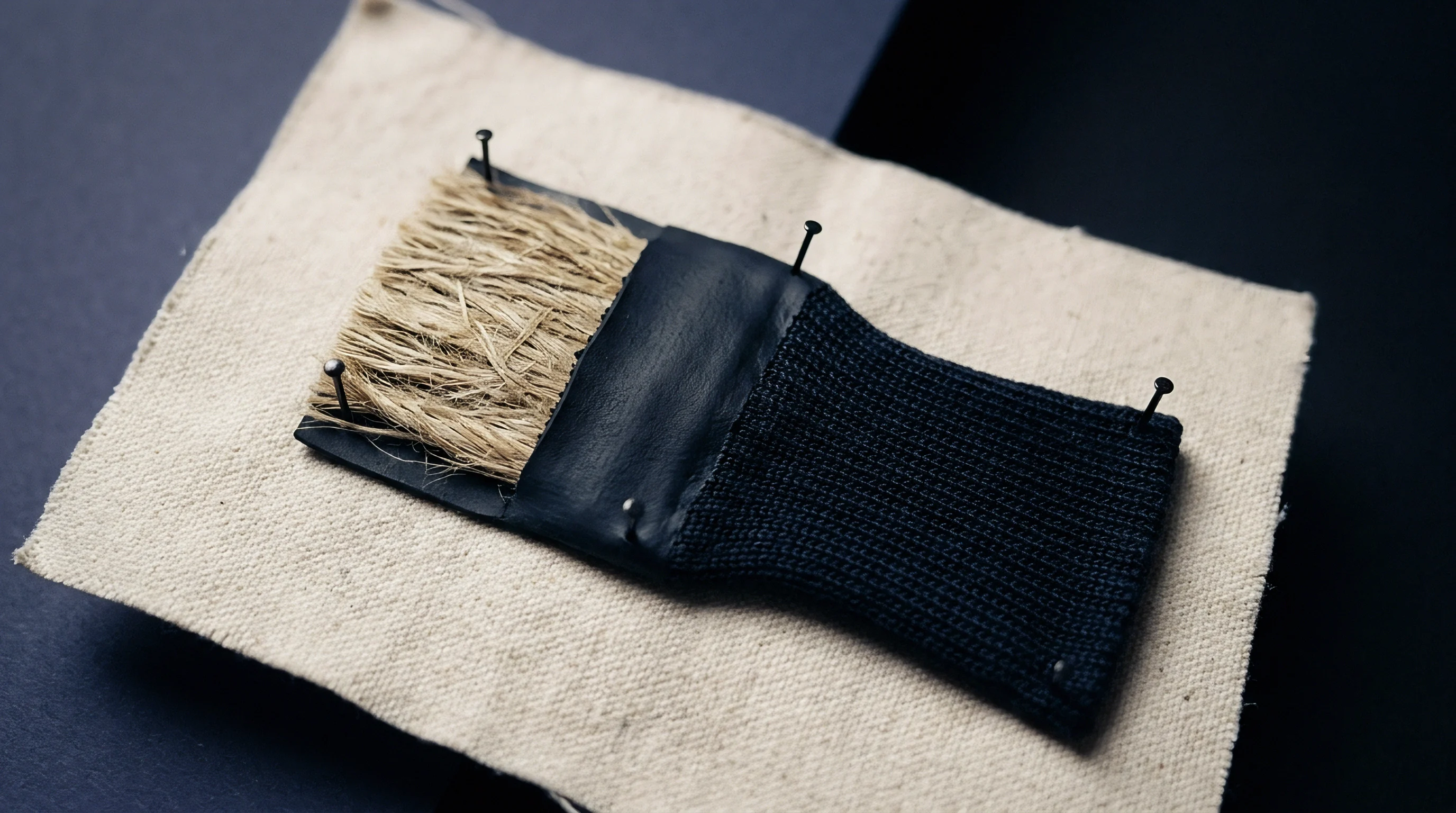
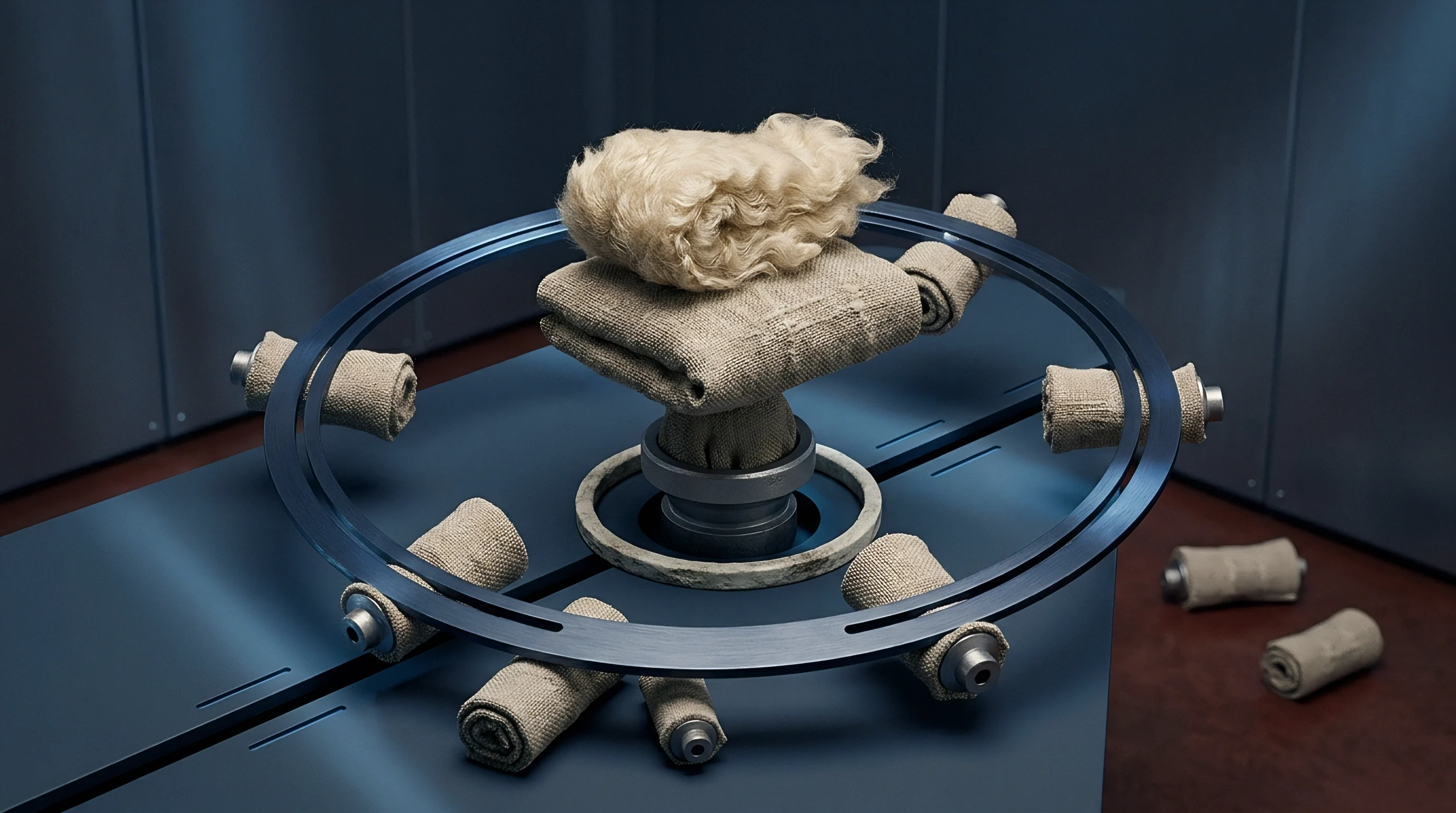
Separating fine down from stiff guard hair relies on multi-stage mechanical dehairing machines. High-speed carding cylinders, worker rollers, and stripping knives open the raw scoured locks, exploiting the differential mass and aerodynamic drag of fine down against coarse hair. Coarse guard hair carries higher momentum due to its larger cross-sectional area, flinging outward from high-speed cylinders into collection hoppers while the light down clings to the card wire clothing.
Mechanical Dehairing and Density Separation
The dehairing process subjects raw fleece to repeated opening and beating passes. Initial feed hoppers disperse scoured locks into preliminary opening cylinders equipped with metallic wire. Coarse sand, dirt particles, and thick guard hair fall through grid bars positioned beneath the main cylinder.
The partially opened fibre web moves across successive dehairing heads, each set to progressively tighter tolerances between the main cylinder and the worker rolls.
Card wire points catch the fine down, carrying it past air-stripping knives. The stiffer guard hair resists bending around small-radius wire teeth, projecting outward where high-velocity air streams or mechanical beaters knock it away. Eight to sixteen sequential dehairing passes yield a clean down web containing under zero point two percent residual coarse hair by weight.

Feed Rates and Yield Calculations
Dehairing operations face an absolute trade-off between throughput speed, down fibre breakage, and residual coarse hair removal. High cylinder surface speeds increase separation efficiency but break delicate down, reducing mean staple length by two to six millimetres per pass. Overly aggressive wire settings create short fibre content under fifteen millimetres, deteriorating yarn tenacity during worsted spinning.
- Raw Scouring removes suint, dirt, and vegetable contaminants to establish scoured clean yield.
- Preliminary Opening breaks scoured lock structures using wide-gauge pinned rollers to release coarse grit.
- Coarse Separation ejects heavy medullated guard hair over grid bars using centrifugal force.
- Fine Dehairing isolates clean down web across tight card clothing wires operating at differential speeds.
- Final Lapper Dusting eliminates residual fine dust and residual short guard hair fragments.
Yield calculations track total fine down output against scoured raw wool weight. A raw lot yielding fifty percent scoured clean wool generates roughly thirty-five to forty percent finished dehaired down after accounting for guard hair waste, dust, and short fibre dropouts. Processing records show that attempting to clear every trace of guard hair past zero point zero five percent results in ruinous down fibre loss inside the waste bins.
A supplier off-loading rejected stock claimed the machinery ran too fast for the wet northern wool.

Optics
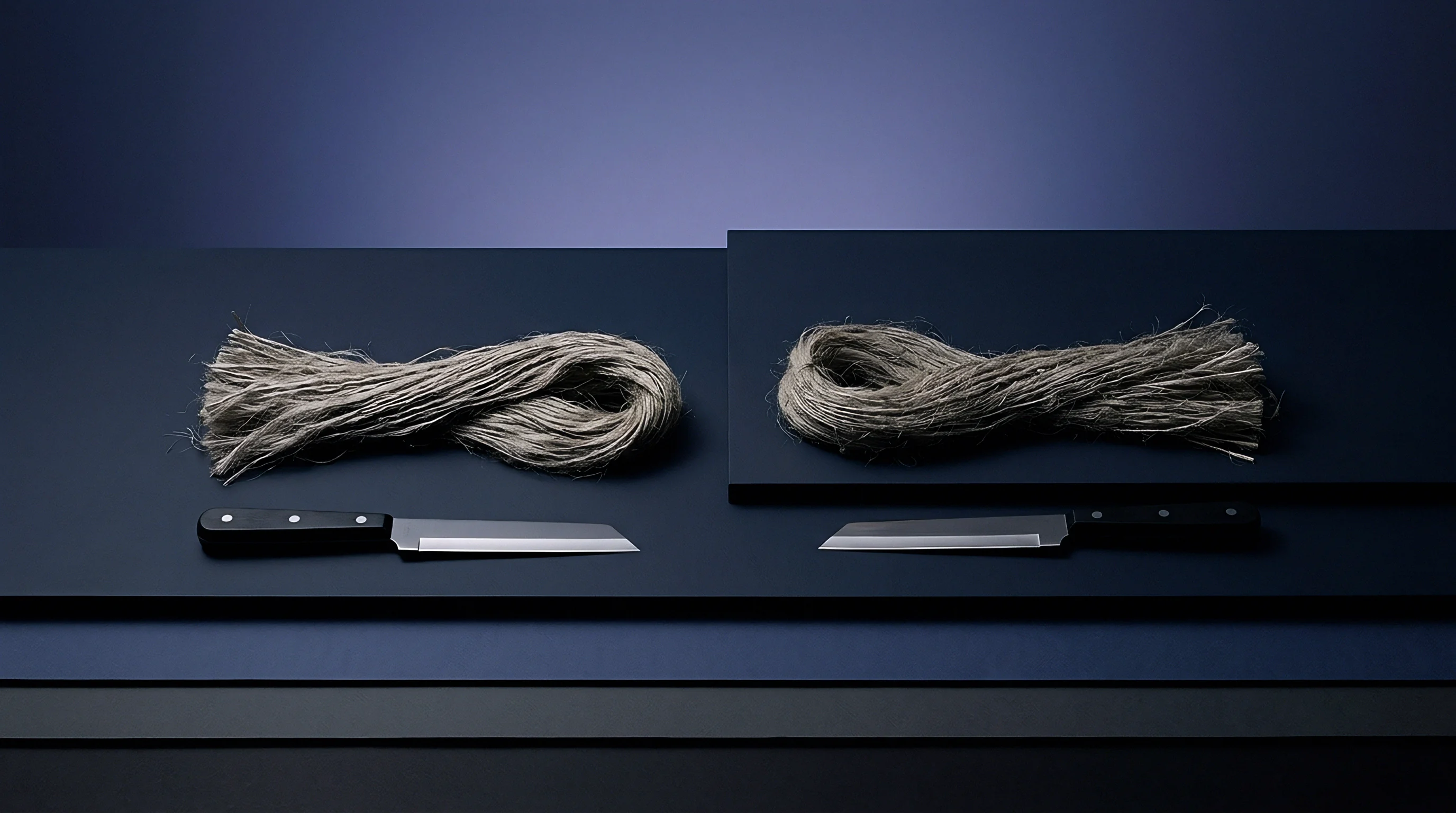
Quantifying fine down diameter and residual coarse hair content requires specialized optical instruments. Manual projection microscopy remains the reference standard under ISO 17751-1, but automated optical image analysis devices like the Optical Fibre Diameter Analyser speed up testing across commercial transactions. Testing laboratories analyze thousands of individual fibre cross-sections or longitudinal images to generate diameter distribution curves, mean fibre diameter, coefficient of variation, and coarse hair counts.

Optical Image Analysis versus Manual Microscopy
Projection microscopes magnify cut fibre snippets at five hundred times linear magnification. Technicians manually measure fibre widths using scaled grids, classifying each fibre as non-medullated down, medullated coarse hair, or intermediate fibre. This manual method provides precise morphological distinction, allowing human operators to distinguish true cashmere down from fine sheep wool or yak down based on scale structure and margin height.
Automated instruments, including OFDA2000 and OFDA4000, pass snippet slides under digital cameras to measure thousands of fibres in seconds. Automated systems generate complete histograms showing the distribution of fibre diameters from four micrometres out to one hundred micrometres. These automated optics measure diameter accurately but require optical calibration against certified wool standards prior to testing cashmere lots.
| Standard Code | Testing Methodology | Sample Size (Fibres) | Primary Target Parameters | Measurement Tolerance |
|---|---|---|---|---|
| ISO 17751-1 | Light Projection Microscopy | 1,000 – 2,000 | Morphology, Fibre Diameter, Coarse Hair Count | ± 0.2 µm MFD |
| ISO 17751-2 | Scanning Electron Microscopy (SEM) | 500 – 1,000 | Scale Height, Surface Structure, Fibre Identity | ± 0.1 µm MFD |
| IWTO-47 | Optical Fibre Diameter Analyser (OFDA) | 4,000 – 10,000 | MFD, Distribution Histogram, Coarse Content | ± 0.15 µm MFD |
| IWTO-58 | Air-Flow Fineness Measurement | Bulk Plug (2.5g) | Specific Surface Area, Average Micron Value | ± 0.3 µm MFD |

Is Optical Diameter Testing Accurate for Low Coarse Hair Counts?
Automated optical analyzers measure high fibre numbers rapidly, but low sampling rates in the coarse tail limit their precision for tiny residual hair percentages. A standard four-thousand-fibre OFDA test might capture only two or three coarse fibres in a high-purity dehaired lot. This small capture rate generates wide statistical variance when converting counts into mass percentages.
Accurate determination of low coarse hair percentages demands specialized sampling techniques. Laboratories prepare large-area snippet slides or perform combined gravimetric separation prior to optical evaluation. Combining physical separation with optical measurement ensures that low coarse hair percentages reflect true lot purity rather than statistical sampling noise.
IWTO-47 testing protocols require a four-point calibration run before any commercial lot evaluation.
Threshold
Commercial contracts define rigid thresholds for mean fibre diameter and residual coarse hair content. Standard dehaired cashmere contracts limit coarse hair content to zero point two percent by weight, with premium spinning grades capping coarse hair at zero point one percent. Coarse hair determination evaluates two metrics: the total count of fibres exceeding thirty micrometres and the presence of medullated guard hair fragments.
Quantitative Limits for Fibres Exceeding Thirty Microns
Standard test rules convert fibre count distributions into mass percentages using specific gravity and diameter values. Guard hair possesses a lower density than solid down due to its hollow air-filled medulla. Calculations adjust for this density reduction using empirical correction factors based on the ratio of medulla diameter to outer fibre diameter.
Fibres exceeding thirty micrometres contribute disproportionately to total mass even at low numerical counts. A single seventy-micrometre guard hair carries forty-nine times the cross-sectional area of a ten-micrometre down fibre. Neglecting the mass contribution of large-diameter guard hairs alters the calculated purity of a cashmere shipment.

Worked Example of Dehaired Lot Hair Count Arithmetic
Take a ten-tonne batch of dehaired cashmere down under test for contract compliance. Assume a test sample of four thousand fibres analyzed via light microscopy according to ISO 17751-1. The laboratory counts three thousand nine hundred and ninety-two fine fibres with a mean diameter of fifteen point zero micrometres, five intermediate fibres at twenty-eight micrometres, and three coarse guard hairs measuring sixty micrometres, eighty micrometres, and ninety micrometres respectively.
Calculate the relative volume of fine down and coarse hair to find the true weight percentage. The fine fibre mean volume scales with the square of its radius multiplied by count. Using fifteen micrometres diameter, fine volume equals four thousand multiplied by the square of seven point five, yielding two hundred and twenty-five thousand arbitrary volume units.
Calculate the coarse hair volume. The three coarse hairs have radii of thirty, forty, and forty-five micrometres. Their squared radii are nine hundred, sixteen hundred, and two thousand and twenty-five.
Summing these values gives four thousand five hundred and twenty-five volume units. Applying a medulla correction factor of zero point eight5 for guard hair density yields three thousand eight hundred and forty-six corrected volume units.
The coarse mass percentage equals coarse volume divided by total volume. Three thousand eight hundred and forty-six divided by two hundred and twenty-eight thousand eight hundred and forty-six yields zero point zero one six8, or one point six eight percent coarse hair by weight. This batch exceeds the zero point two percent maximum limit, triggering rejection under standard purchasing contracts.
Failing to catch excess coarse hair early leads to high fabric rejection rates, needle breakage during knitting, and severe financial losses across the supply chain.
Standard quality verification protocols track specific failure points during coarse hair determination:
- Sample Bias caused by drawing snippets exclusively from the outer layers of compressed dehaired bales.
- Medulla Misclassification resulting from mistaking flattened down fibres for medullated coarse hair under light microscopy.
- Inadequate Fibre Counts where testing fewer than two thousand individual fibres fails to catch sparse coarse hair distribution.
- Uncalibrated Optical Sensors that misread dark coarse hair shadows as double-wrapped fine fibres.

Settlement
Commercial valuation of cashmere lots rests entirely on test certificates specifying mean fibre diameter, coarse hair content, length distribution, and clean yield. Landed cost calculations combine raw fibre pricing with processing loss allowances and penalty structures for out-of-spec deliveries. Buyers structure purchase orders with clear price adjustment schedules tied to lab results returned by accredited independent testing facilities.
Contract Clauses and Defect Penalties
Cashmere trade contracts write exact tolerances around micron limits and hair counts. A standard specification sets target parameters alongside upper rejection limits. Exceeding target mean fibre diameter by zero point two micrometres triggers automatic price discounts, while exceeding limits by half a micrometre gives the buyer complete right of rejection.
Residual coarse hair content carries severe monetary penalties. Contracts often apply a one percent price deduction for every zero point zero five percent coarse hair above the agreed limit. Buyers invoke complete shipment rejection when coarse hair content passes zero point five percent by weight, as such lots cannot be spun into high-grade yarns without extensive reprocessing.
- Primary Sampling takes representative core samples from ten percent of bales in a lot following IWTO-0 sampling standards.
- Dual Laboratory Verification splits core samples between buyer and seller accredited laboratories for independent testing.
- Arbitration Thresholds require a third test run if mean fibre diameter results diverge by more than zero point two micrometres.
- Invoice Adjustment applies calculated penalty factors directly against the net dry scoured weight of the lot.
Tariff Lines and Customs Blend Verification
Customs authorities classify cashmere under Harmonized System tariff line 5102.11 for fine animal hair. Import duties vary dramatically between fine animal hair and standard wool or coarse hair lines. Misdeclaring coarse hair content or blending fine cashmere with wool alters tariff classification, exposing importers to seizure, retroactive duty payments, and severe penalties.
Customs laboratories verify composition using combined optical testing and DNA analysis. DNA testing identifies species content, catching wool or yak adulteration that optical diameter measurements might miss. Importers maintain detailed test dossiers connecting each customs declaration directly to origin lot certificates and laboratory reports.
The invoice value drops by two percent for every tenth of a micrometre exceeding contract fineness limits.
Commercial agreements specify exact moisture regain standards, setting dry clean weight at thirteen percent regain for raw lots and eighteen point two five percent for scoured and dehaired stock. Inconsistent moisture content alters invoice weights significantly on multi-tonne shipments. Payment formulas multiply clean dry weight by agreed base price, applying penalty deductions before final bank clearance.
Will advancing image recognition algorithms eventually replace manual microscopy for commercial coarse hair arbitration?