Thermodynamic Equilibrium in Supercritical Fluid Extraction Systems
Supercritical carbon dioxide extraction at tuned pressures strips fiber lubricants cleanly to ensure accurate ISO 1833 blend analysis and tariff compliance.


Matrix

Thermodynamic Phase States in Supercritical Extraction
Supercritical carbon dioxide operates above its critical point of 31.1 °C and 7.38 MPa, exhibiting gas-like mass transfer rates alongside liquid-like solvation density. In textile laboratory testing and fiber processing, target extracts include spin finishes, paraffin oils, synthetic knitting lubricants, and natural lipids. Quantitative extraction depends on establishing thermodynamic equilibrium between the dense fluid phase and the solid polymer substrate.
Pressure and temperature directly govern fluid density, which controls solvent power. At 40 °C and 12 MPa, carbon dioxide density reaches approximately 0.72 g/cm³, whereas elevating pressure to 25 MPa at the same temperature increases fluid density to 0.88 g/cm³. This density shift modifies the solubility parameters of targeted surface finishes without swelling the underlying fiber backbone.
Analytical extraction methods for fiber composition verification, such as pre-treating samples ahead of chemical separation under ISO 1833-1, rely on complete removal of non-fibrous matter. Conventional Soxhlet extraction using petroleum ether requires six to eight solvent cycles over four hours. Supercritical fluid extraction reaches phase equilibrium within twenty minutes inside a high-pressure vessel, stripping finish oils down to residual levels below 0.02% by weight.
The thermodynamic state must remain precisely within the single-phase supercritical region throughout the extraction vessel. Dropping pressure below 7.38 MPa inside the extraction bed causes phase separation into liquid and vapor CO2, dropping solute carrying capacity and redepositing dissolved lubricants back onto the fiber surface.
Supercritical fluid density at 25 MPa and 40 °C achieves complete lubricant stripping from synthetic filament yarns within twenty minutes.

Substrate Mass Transfer and Solute Dissolution Mechanics
Solute transfer from a fiber matrix into supercritical carbon dioxide involves three distinct thermodynamic steps: film diffusion through the boundary layer, desorption from the polymer surface, and dissolution into the bulk fluid phase. The equilibrium partition coefficient defines the mass fraction ratio of solute in the fluid phase relative to the solute remaining on the substrate. Temperature changes create opposing thermodynamic effects on solute extraction.
Raising temperature at a constant pressure lowers fluid density, which reduces solubility. Conversely, raising temperature increases solute vapor pressure, which enhances dissolution. The crossover pressure marks the point where solute vapor pressure effects overtake fluid density degradation.
For typical paraffin-based spin finishes on polyester staple fiber, the crossover pressure occurs near 15 MPa. Operating below this boundary means higher temperatures depress extraction yield, while operating above 15 MPa causes temperature increases to accelerate extraction rates. Processing cotton-polyester yarn blends requires careful balancing of bed temperature to protect natural cotton waxes while selectively removing synthetic spinning lubricants.
Quantitative fiber analysis returns inaccurate blend ratios when thermal or pressure fluctuations alter the solubility boundary during sample preparation.
| Substrate Class | Target Solute | Pressure (MPa) | Temperature (°C) | Fluid Density (g/cm³) | Residual Extract (%) |
|---|---|---|---|---|---|
| Polyester Filament | Ethoxylated Ester Finish | 22.0 | 45.0 | 0.84 | 0.015 |
| Raw Wool Clip | Lanolin Lipids | 28.0 | 50.0 | 0.86 | 0.080 |
| Cotton Staple | Paraffin Wax Blend | 16.0 | 40.0 | 0.79 | 0.040 |
| Nylon 6,6 Yarn | Silicone Needle Oil | 25.0 | 60.0 | 0.78 | 0.020 |
Incomplete removal of non-fibrous lubricants distorts the initial dry weight figure of test swatches during quantitative fiber identification. An unextracted finish loading of 0.8% on a 50/50 wool and polyester blend distorts the quantitative balance after solvent stripping, skewing the reported composition beyond the 1.0% tolerance permitted by commercial specification standards.


Isotherm

Density Tuning and Solubility Modeling
Mathematical modeling of equilibrium solubility in supercritical extraction systems relies on semi-empirical density-based equations. The Chrastil model expresses solute solubility as a function of fluid density and absolute temperature. The association number in the Chrastil equation reflects the number of supercritical solvent molecules that cluster around a single solute molecule.
Paraffin finishes on synthetic fibers yield association numbers between 4.2 and 6.1. Accurately plotting solubility isotherms requires empirical mass-loss data generated across a matrix of pressure and temperature coordinates.
Peng-Robinson state equations calculate phase equilibria for complex mixtures containing organic cosolvents. When extracting polar finishes like polyoxyethylene fatty esters, pure carbon dioxide exhibits limited solubility due to its zero quadropole moment. Introducing ethanol as a modifier at 2% to 5% molar concentration alters fluid polarity, increasing solute equilibrium solubility by two orders of magnitude.
Temperature shifts within the vessel alter the fluid mixture’s critical point, shifting the isotherm boundary and altering target solute solubility curves.
Standard ISO 1833 sample preparation mandates non-fibrous extractables fall below 0.05% of dry fiber weight prior to chemical dissolution.
The thermodynamic equilibrium state determines the maximum solute concentration achievable in the fluid stream before fluid saturation occurs. System efficiency drops when gas velocity through the extraction bed exceeds the rate of solute mass transfer. Dynamic extraction testing determines the minimum solvent-to-feed ratio required to clear target contaminants without wasting energy or carbon dioxide volume.
- Substrate Conditioning ~ Swatches undergo desiccator drying at 105 °C for two hours to establish dry baseline mass before vessel charging.
- Vessel Pressurization ~ High-pressure pumps drive carbon dioxide into the extraction cell until system pressure reaches the target isobar.
- Thermal Stabilization ~ Heated jacket loops bring internal cell temperature to specified isothermal conditions within a 0.5 °C tolerance band.
- Equilibrium Soak ~ Static hold period permits solute partitioning between fiber matrix and supercritical fluid phase prior to dynamic venting.
- Dynamic Extraction ~ Flowing fluid sweeps dissolved solute out of the vessel into a depressurization trap for gravimetric recovery.
Selecting an extraction pressure above target solute solubility limits risks dissolving low molecular weight oligomers from synthetic fibers. Polyethylene terephthalate contains cyclic trimer oligomers capable of leaching out at extraction pressures exceeding 30 MPa at 80 °C. Oligomer stripping changes the thermal baseline of the polymer, altering melting point verification figures during differential scanning calorimetry testing.
The precise point where density-driven solubility gains lose efficiency against the energetic cost of high-pressure compression remains a subject of active thermodynamic measurement in recycling operations.


Loop

Vessel Geometry and Fluid Recirculation Dynamics
Extraction bed geometry dictates fluid distribution and prevents fluid channeling through compressed fiber masses. Uniform packed bed density prevents preferential flow paths that leave core fibers unextracted. A high height-to-diameter vessel ratio promotes plug flow behavior, maximizing contact time between dense carbon dioxide and fiber surfaces.
Dense packing of raw wool clips or loose staple fiber creates pressure drops across the vessel bed, altering fluid density between the inlet and outlet ports. A pressure drop of 2 MPa across a dense fiber bed reduces fluid density by 0.06 g/cm³, shifting the local phase equilibrium and causing premature solute precipitation inside the bed.
Recirculation loops utilize separator vessels operating at lower pressures to isolate extracted compounds while reclaiming carbon dioxide gas. Lowering separator pressure to 5.0 MPa converts carbon dioxide into vapor, dropping solubility to zero and dropping dissolved lubricants into the collection flask. Chilled condenser units liquefy the gas stream before high-pressure pumps re-compress fluid back to extraction pressure.
Heat exchanger capacity governs system cycle efficiency. Insufficient cooling at the pump inlet causes fluid cavitation, leading to pressure instability and inconsistent flow rates through the extraction vessel.
Why Does Cosolvent Addition Shift Phase Boundary Mechanics?
Pure carbon dioxide non-polar character limits its capacity to dissolve high-molecular-weight polar finishes or ionic lubricants. Adding polar modifiers, such as methanol, ethanol, or isopropanol, introduces hydrogen bonding capabilities to the solvent phase. This polar interaction alters the phase boundary, shifting mixture critical temperature and pressure higher than pure carbon dioxide values.
A 5% ethanol addition increases mixture critical pressure from 7.38 MPa to approximately 8.5 MPa at 40 °C. Operating near the mixture critical point requires strict pressure maintenance to prevent fluid phase split inside the extraction bed.
Cosolvent concentration shifts modify fiber moisture regain characteristics. Natural fibers like cotton and wool contain bound moisture that interacts with polar cosolvents. Removing bound moisture alongside fats and waxes alters fiber regain values, changing commercial mass calculations under ISO 6741.
Commercial fiber transactions settle payment based on invoice mass adjusted for standard moisture regain. Extracting structural water during finish removal yields an artificially low dry weight figure, altering landed cost per kilogram upon commercial clearance.
Commercial fiber transactions under ISO 6741 settle landed invoices against conditioned mass adjusted for standard moisture regain.
Suppliers often attribute residual finish traces in delivered yarn lots to localized channeling across dense packed beds inside high-capacity extraction vessels.
Partition

Solvent Partitioning and Quantitative Fibre Verification
Accurate quantitative analysis of fiber blend ratios requires complete separation of component fibers without degrading structural polymer mass. When analyzing a cotton and polyester blend, pre-treating the sample via supercritical fluid extraction eliminates non-fibrous finishes that would otherwise be miscalculated as fiber mass. Conventional solvent extractions using chlorinated solvents carry regulatory compliance burdens and long drying cycles.
Supercritical carbon dioxide extractions leave no liquid solvent residues on the sample, eliminating extended desiccation steps and preventing thermal degradation of delicate fibers.
The partition coefficient dictates solute distribution between the fiber phase and the fluid phase at equilibrium. High partition coefficients favor solute transfer into the supercritical fluid, clearing the fiber matrix rapidly. Low partition coefficients demand higher fluid volumes or elevated extraction pressures to achieve clean separation.
The table below presents quantitative composition variations observed when analyzing fiber blends before and after supercritical fluid pre-treatment.
| Declared Blend Composition | Pre-treatment Method | Measured Fiber Ratio (%) | Standard Deviation (%) | Customs Tolerance Margin |
|---|---|---|---|---|
| 60% Cotton / 40% Polyester | None (Raw Swatch) | 58.6 / 41.4 | 0.45 | Exceeds 1.0% Variance Limit |
| 60% Cotton / 40% Polyester | Soxhlet (Petroleum Ether) | 59.8 / 40.2 | 0.18 | Within Tolerance |
| 60% Cotton / 40% Polyester | Supercritical CO2 (22 MPa) | 60.0 / 40.0 | 0.08 | Within Tolerance |
| 50% Wool / 50% Acrylic | Supercritical CO2 (25 MPa) | 49.9 / 50.1 | 0.11 | Within Tolerance |
Chemical verification procedures depend on clean starting samples to ensure dissolution reagents react strictly with target fiber polymers. Residues of silicone softeners or paraffin lubricants inhibit acid reagent penetration during wool dissolution under ISO 1833-4, leaving unreacted wool fragments in the insoluble polyester residue. Pre-cleaning test specimens with supercritical extraction restores full chemical access to polymer chains, returning true compositional balances.
- Unextracted Lubricant Errors ~ Residual surface oils weigh down insoluble residue fractions, artificially inflating synthetic fiber percentages in natural blend declarations.
- Thermal Degradation Risks ~ High-temperature conventional Soxhlet drying degrades heat-sensitive acrylic fibers, causing dry weight losses that distort calculated ratios.
- Solvent Swelling Interference ~ Aggressive liquid organic solvents penetrate semi-crystalline polymer regions, trapping solvent molecules inside fiber structure and skewing tare calculations.
- Cross-Contamination Anomalies ~ Recirculated dirty Soxhlet solvent deposits dissolved waxes back onto adjacent test swatches, creating artificial sample-to-sample mass variations.
Extraction conditions that fail to dissolve surface lubricants completely cause test reports to return synthetic content figures that exceed true composition values.

Purity
Commercial Decontamination of Recycled Substrates
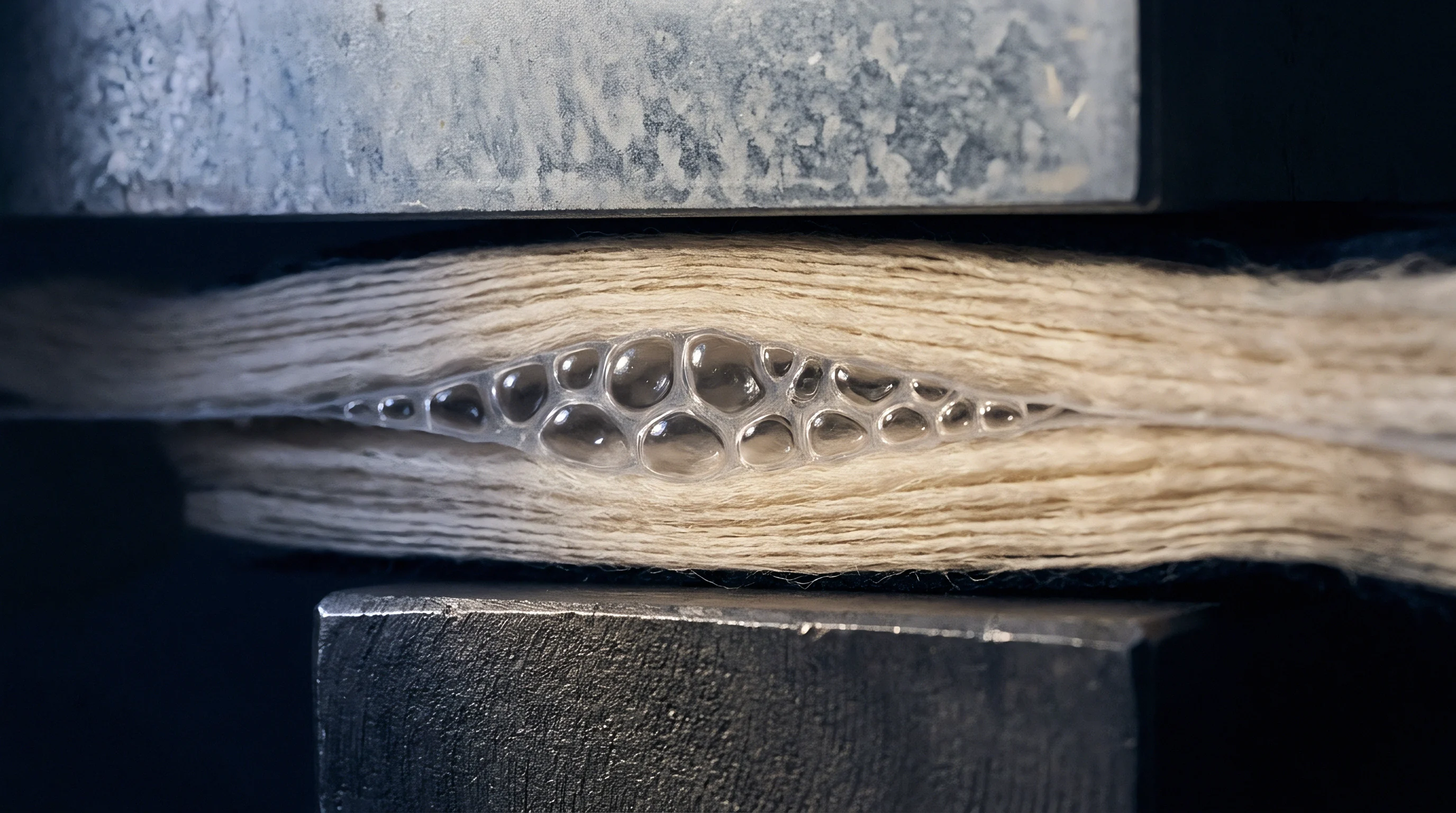
Recycling post-consumer synthetic textiles into high-tenacity yarn requires removing non-polymeric impurities, volatile organic compounds, and dyestuff residues. Melt spinning recycled polyester flakes contaminated with residual spin oils leads to filament breakage and variable draw ratios on spinning frames. Supercritical fluid extraction cleans shredded post-consumer flake at a commercial scale, stripping surface contaminants and deep-seated oils prior to re-extrusion.
Operating extraction columns at 28 MPa and 70 °C drives carbon dioxide deep into expanded polymer matrices, extracting volatile contaminants down to parts-per-million levels.
Decontamination efficacy determines whether recycled polyester chips meet food-contact standards or high-spec filament spinning requirements. Residual oil levels above 50 ppm cause thermal degradation in the extruder throat, generating smoke, clogging melt-blown filter packs, and causing intrinsic viscosity drops. Maintaining optimal thermodynamic equilibrium within commercial purification towers ensures continuous extraction without melting polymer flakes or causing particle agglomeration.
Customs Duty and Tariff Line Mechanics
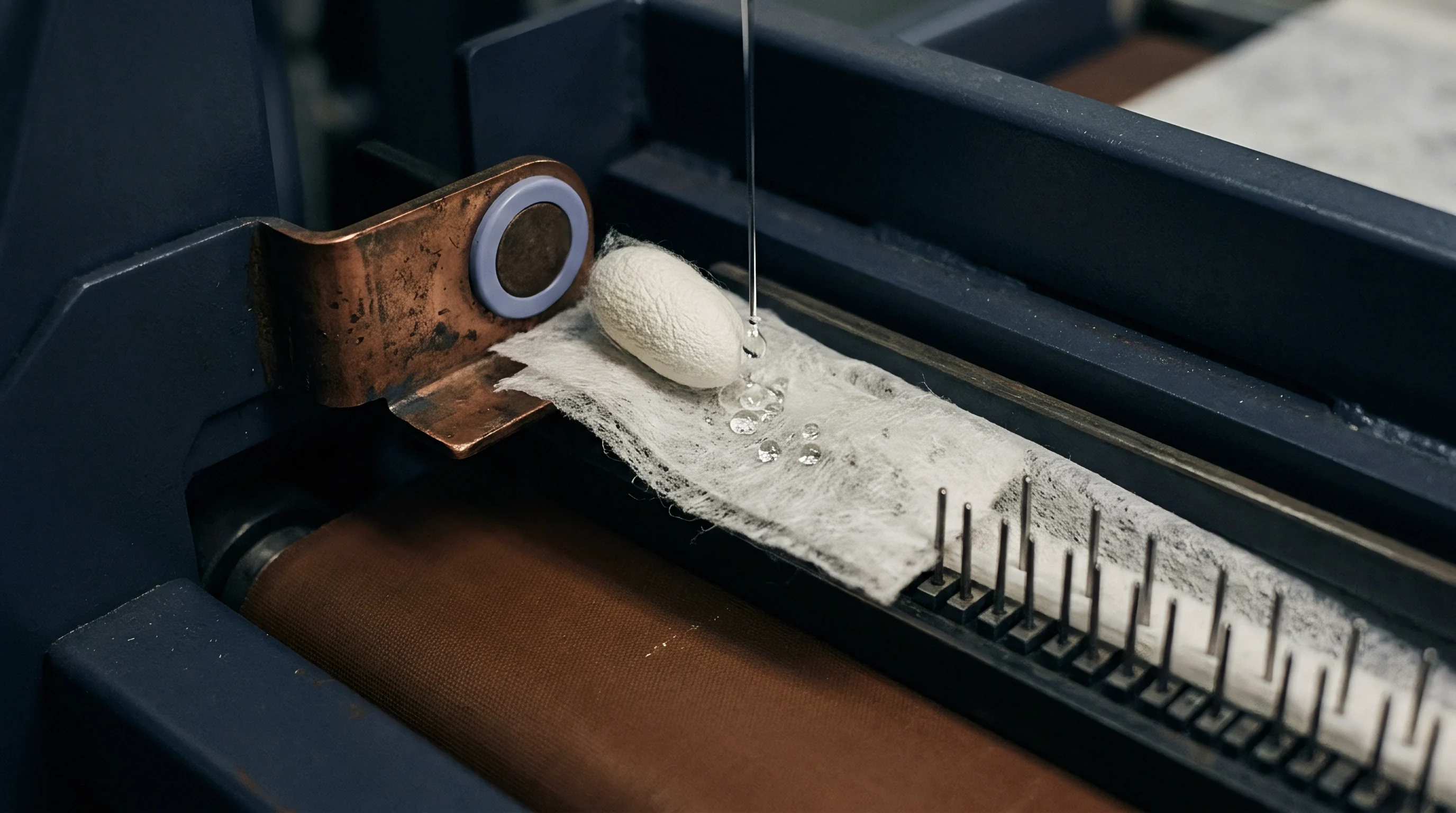
Fibre composition declared on international shipping documentation establishes the Harmonized System tariff classification code. A knitted fabric declared as 85% synthetic staple fiber and 15% cotton enters under a different tariff heading than a fabric containing 84% synthetic fiber. Under customs audit rules, a composition deviation as small as 1.1% reclassifies the shipment, altering applied import duty rates.
Quantitative test swatches extracted via supercritical carbon dioxide provide accurate dry-mass figures that stand up to customs laboratory cross-examination.
Landed cost calculations incorporate base fiber commodity prices, processing surcharges, freight rates, and customs duties. Consider a 20,000-kilogram shipment of polyester-wool blended yarn declared at a contract baseline of 55% polyester and 45% wool. Customs testing that reveals unextracted finish oils altering the true balance to 53% wool and 47% polyester triggers reclassification, subjecting the importer to duty reassessments and administrative penalty surcharges.
- Harmonized System Chapter 55 ~ Synthetic staple fibers dictate duty lines based on chief weight boundaries at the 85% threshold.
- Standard Conditioned Mass ~ Invoice adjustments apply commercial moisture regain values to dry fiber masses determined post-extraction.
- Laboratory Retest Protocols ~ Disputed tariff declarations trigger official re-testing requiring certified solvent extraction preparation under ISO 1833.
- Landed Cost Exposure ~ Misdeclared composition ratios alter duty rates by up to 12% ad valorem alongside potential customs clearance holds.
The contract specification clause mandates that quantitative blend analysis results must rest on dry fiber masses obtained after full extraction of non-fibrous matter per ISO 1833-1 using supercritical carbon dioxide at 22 MPa.