Standard Test Method
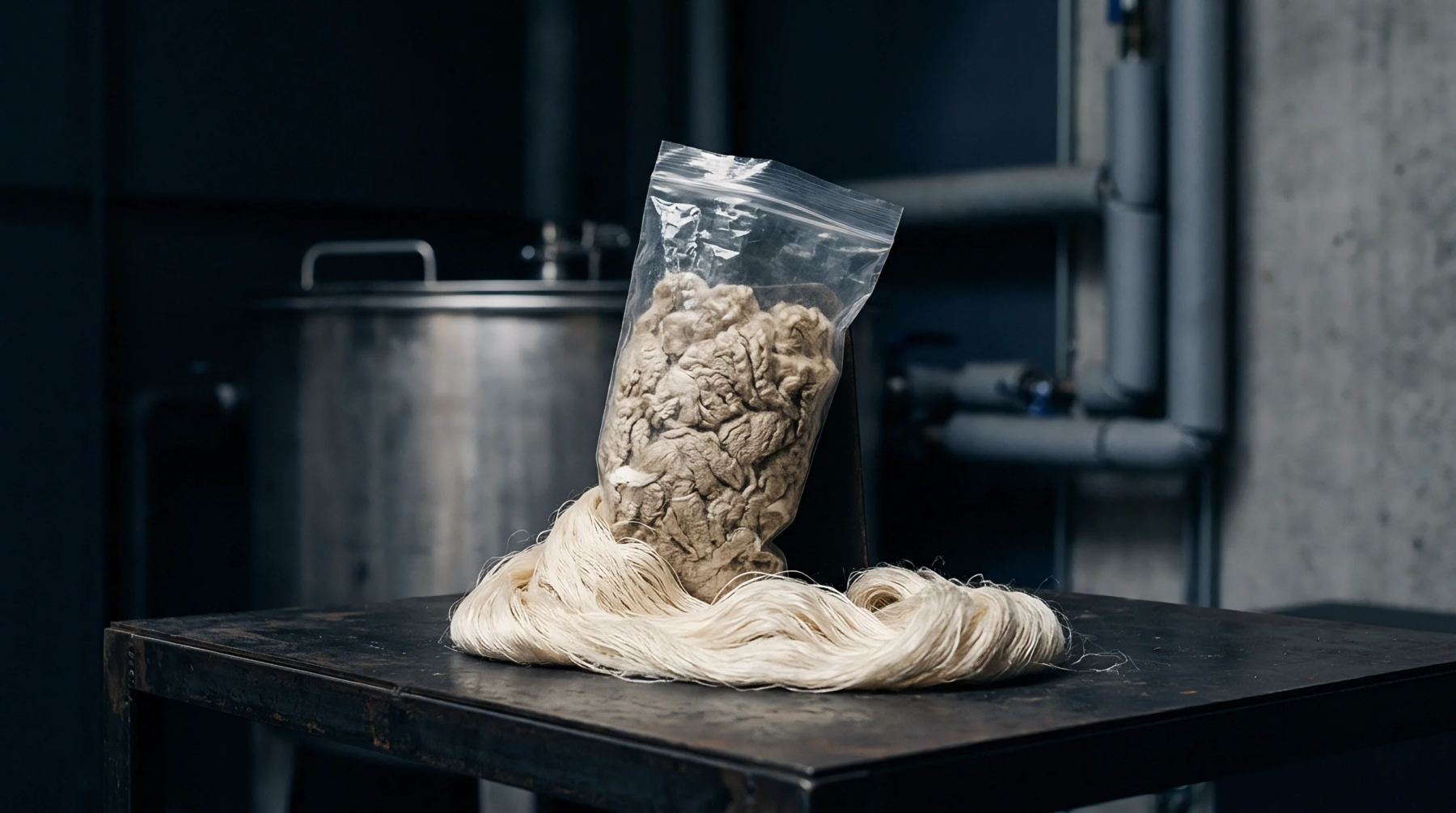
Moisture determination in wool products by oven drying governs the quantitative evaluation of water content in scoured fleece, tops, yarns and fabric samples. This standardized laboratory procedure, formally designated as ASTM D1576, isolates the mass fraction of volatile matter expelled when specimens undergo convective heat exposure at 105 degrees Celsius until mass stabilization occurs. Commercial wool valuations require an empirical basis to distinguish clean animal protein mass from atmospheric water vapour, because ambient relative humidity fluctuates across processing regions.
The scope terminates at clean scoured stock and processed wool textiles, excluding greasy fleeces containing unrefined suint, vegetable impurities or solvent-extractable wax compounds.
Drying Mechanism
Weighing bottles containing conditioned test specimens remain in an unsealed state inside forced-draft ovens maintained between 105 and 110 degrees Celsius until two successive weighings show an invariant specimen mass. ASTM D1576 relies on mass differential tracking, defining moisture content through initial wet mass minus absolute dry mass divided by initial mass. Rapid desiccation removes unbound capillary and hygroscopic water held within the amorphous keratin matrix.
Specimen transfer from the heated chamber into an airtight weighing enclosure prevents hygroscopic absorption from ambient air before mass recording. Heating times extend beyond four hours for dense woven lots, whereas combed slivers reach equilibrium faster.
Commercial Recalculation
Invoice calculations convert measured oven-dry values into legally defined billing weights via standard commercial moisture regains. Wool bought under astm d1576 protocols undergoes an upward recalculation where contractual regain allowances, traditionally set between 13.6 and 18.25 percent depending on raw sliver or yarn structure, get added back to the dried base mass. Water weight adjustments prevent mill buyers from paying textile fiber prices for evaporated atmospheric humidity absorbed during oceanic transit.
Invoicing disputes arise whenever laboratories omit the adjustment factor or apply fabric-specific regain percentages to combed top shipments. Correct execution reconciles discrepancies between factory intake scales and container departure documents.
Matrix Boundary
Blended textile assemblies containing synthetic polymers or regenerated cellulosics fall outside the pure analytical provisions of astm d1576. Chemically unstable finishes, sizing agents and residual spin finishes degrade under prolonged exposure to 105 degrees Celsius, creating false moisture readings through volatile polymer decomposition. Moisture determinations conducted on greasy raw fleece fail completely under this standard due to mass losses caused by volatilized lanolin fractions.
Processors handling elastane blends or treated worsted wools turn to selective solvent extraction before drying to isolate natural fiber moisture from volatile finishing oils. Inaccurate regain applications directly skew subsequent spinning yield balances throughout bulk processing.