Dyeing Sequence
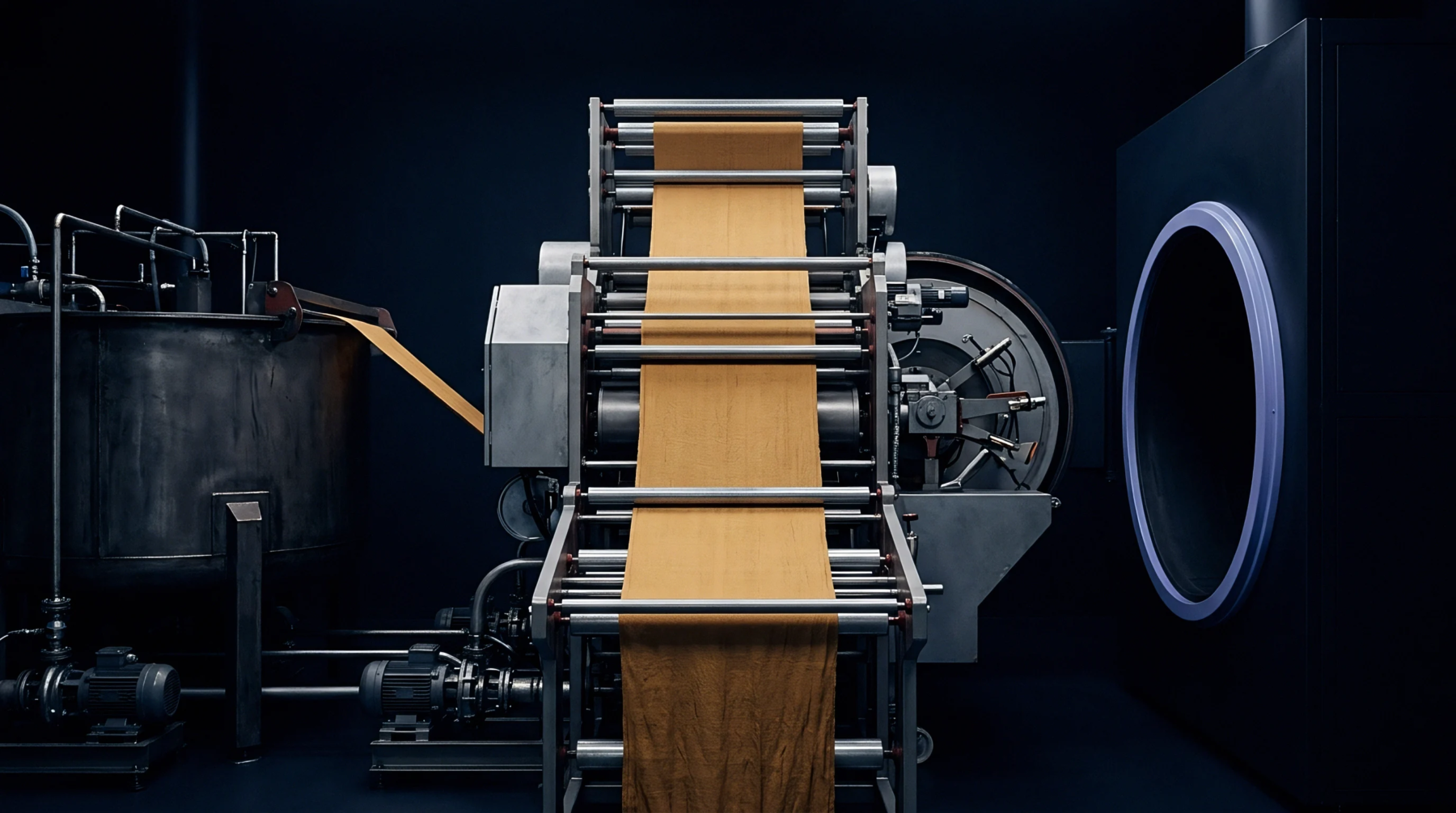
Continuous thermal fixation of disperse dyes on synthetic fabrics allows for rapid and uniform coloring of polyester blends. The pad-thermosol process involves saturating the fabric with dye liquor before drying it and passing it through a high-heat zone. Thermal energy causes the polyester fiber to swell, allowing the dye molecules to diffuse into the polymer structure.
Fixation Stage
Temperatures ranging from two hundred to two hundred and twenty degrees Celsius are maintained for thirty to sixty seconds. During the pad-thermosol process, the dye moves from the surface of the fiber into the interior, where it becomes trapped upon cooling. Uniform airflow matters.
If the temperature varies by even five degrees, the color depth shifts across the width of the fabric roll.
Blending Efficiency
Cotton and polyester blends are frequently processed this way to color the synthetic portion before the cotton is dyed. Since the pad-thermosol process is dry and continuous, it is substantially faster than traditional high-pressure batch dyeing. Residual chemicals are removed in a subsequent washing range to ensure the fabric meets fastness standards.
Industrial Utility
Large-scale production of uniform fabrics and bed linens relies on this method for its high throughput. It represents the most efficient way to process thousands of meters of polyester-rich material.