Weft Distortion
The angular deviation of the weft yarns from a line perpendicular to the warp yarns in a woven fabric causes twisting and alignment defects. This structural weft skewing occurs during high-speed finishing operations if left uncorrected by automatic straightening devices. It leads to garment twisting after washing.
Skewing Impact
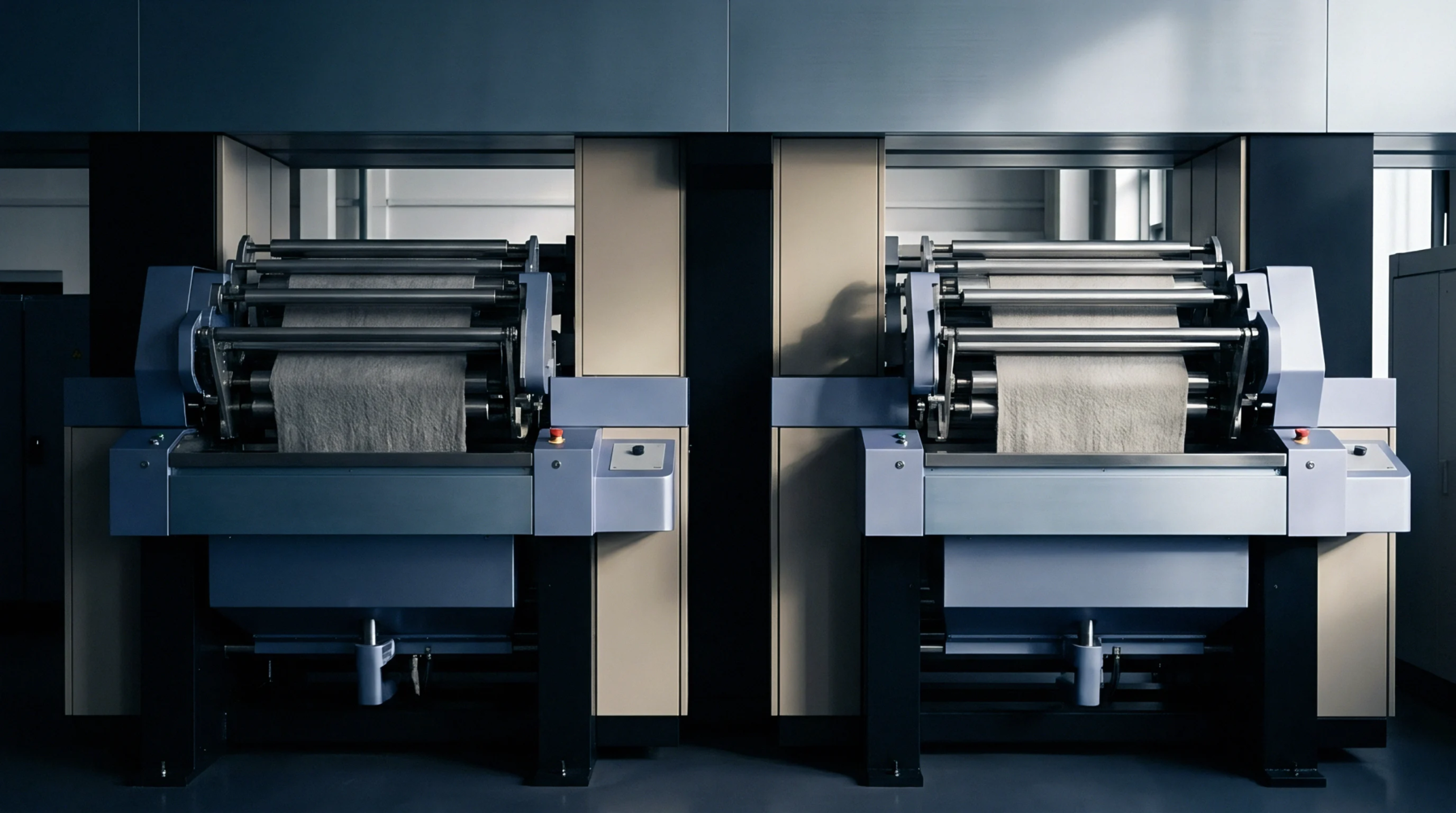
When skewed fabric is cut into panels and sewn into garments, the internal stresses cause the finished item to twist out of shape. Fabric finishing ranges use optical sensors to detect this structural weft skewing and trigger automated skew-corrector rolls to pull the fabric straight. This straightening is done while the fabric is hot and damp to allow the yarns to reset in their correct perpendicular alignment.
Checking the alignment before fabric leaves the stenter frame prevents downstream factory rejects.
Finishing Adjustment
Differential stretch applied to the left or right fabric edge can pull skewed yarns back into square alignment. Squeegee and roll pressure are regulated to ensure uniform yarn tension across the full fabric width. This alignment is verified through inspection.
Factory Quality
Garment factories measure the skew percentage of every incoming roll to avoid laying defects during the cutting process. High skew levels force rolls to be rejected. Corrective action reduces structural weft skewing to acceptable industry limits.