Crimp Balance
The transfer of yarn waviness from the warp to the weft during weaving and subsequent wet finishing processes governs fabric stretch and shrinkage. This warp crimp exchange is measured to optimize fabric dimensional stability and yarn consumption. It alters the material properties.
Exchange Mechanism
During weaving, warp yarns are held under high tension while weft yarns are laid in with high waviness, or crimp. In wet processing, as the warp tension is released, the yarns relax and transfer a portion of their waviness to the weft, which is warp crimp exchange. This process increases the weft crimp and reduces the warp crimp, changing the fabric’s directional stretch.
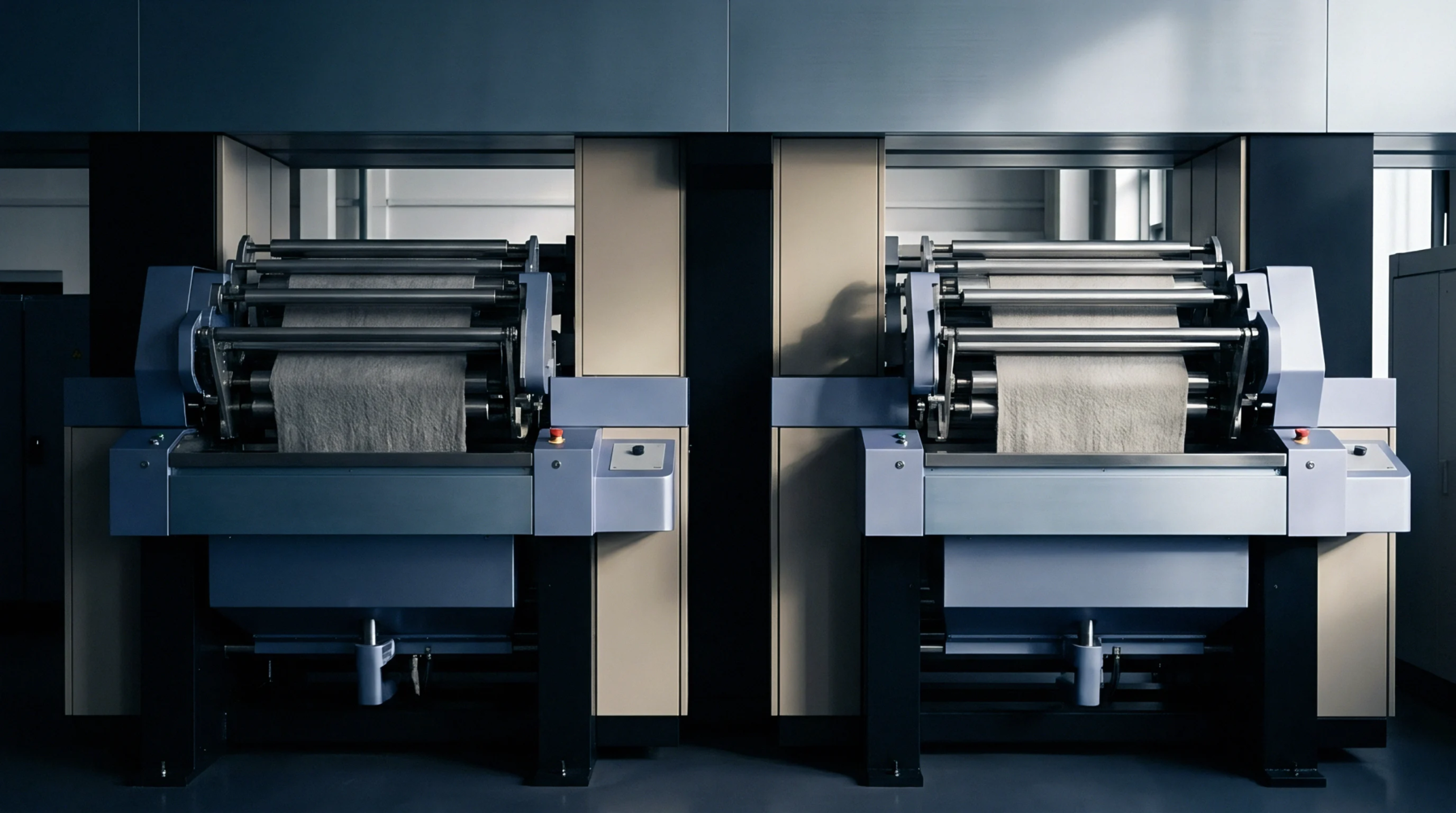
Finishing mills must control this exchange during tentering to meet the buyer’s tensile specifications.
Shrinkage Testing
Standard wash tests measure the crimp changes in both directions to verify that the fabric remains stable during subsequent laundering. High exchange rates can lead to unexpected lengthwise shrinkage. Proper tension controls limit this shrinkage.
Process Setting
Stenter frame operators adjust the overfeed rate and width settings to balance this crimp exchange before the fabric is cured. Correct settings prevent distortion. Controlling tension balances the warp crimp exchange during the final heat setting.