Liquid Chemical Parameter
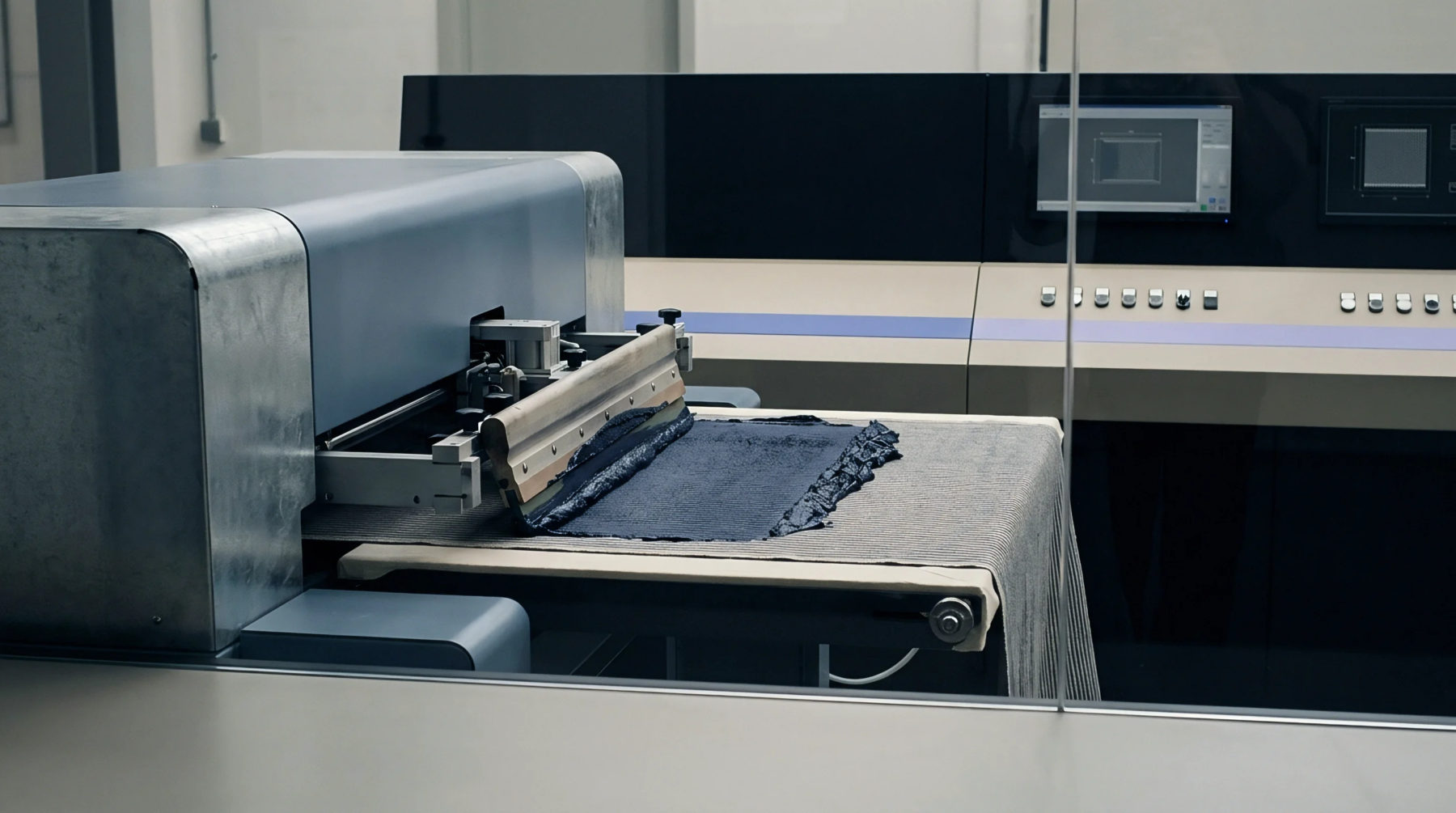
Mass ratio thresholds define the permissible variance of processing liquid retained by a dry textile substrate following passage through a saturation padder and mechanical squeeze nip. Expressed as a percentage of dry fabric mass, wet pickup tolerance establishes the operational window within which finish liquor, dye solutions, or functional chemistries must apply to guarantee uniform chemical performance without wasteful liquor runoff or incomplete fabric penetration. The metric applies across open-width continuous processing, circular knit wet finishing, and nonwoven chemical bonding lines.
Permissible variance typically restricts deviation to narrow boundaries, often between plus or minus three to five percent of specified target pickup. The parameter stops applying once the fabric enters thermal drying or curing zones where moisture evaporation dissociates liquor volume from fixed active chemical solids.
Capillary Saturation Mechanics
Mechanical liquor extraction inside the padder nip balances hydraulic hydrodynamic pressure against the internal capillary storage capacity of the textile substrate. Fabric passing through the chemistry trough displaces air from internal pore structures, achieving fiber wet-out through capillary suction and mechanical immersion. Entering the squeeze nip, excess liquid flows backward against fabric travel, generating a fluid wedge whose pressure forces liquor deep into yarn bundle cores.
Recovery of fabric thickness at nip exit creates localized negative capillary pressure that recaptures a portion of the surface liquor. The ratio of expressed fluid to absorbed fluid dictates final wet pickup, governed by roll hardness, applied line pressure, machine velocity, and incoming substrate moisture content.
Process Variation Control
Deviations outside wet pickup tolerance induce immediate downstream processing faults. Excessive liquor retention increases thermal energy consumption during drying, forcing production lines to drop process speeds to achieve complete moisture removal. Higher wet pickup also increases risks of chemical migration, where soluble dyes and finish components travel toward hot fabric surfaces during evaporation, generating two-sided color shade drift or stiff fabric hand.
Inadequate wet pickup leads to dry core areas inside tightly woven yarn structures, resulting in incomplete water-repellent performance, uneven flame-retardant barriers, and poor crocking fastness.
Instrumentation Verification Boundary
Continuous non-destructive monitoring systems measure pickup metrics in real time during production runs. High-frequency microwave absorption sensors, beta gauge transmission sensors, or near-infrared spectroscopy units track water mass per unit area across the moving web immediately after the squeeze rollers. Onboard software divides registered moisture mass by dry fabric areal weight to output live pickup percentages across edge, center, and edge positions.
Calibrating these instruments requires oven-drying physical fabric swatches according to standard test methods to verify baseline dry mass. Sensor precision drifts when ambient humidity swings violently or when fabric chemical finishes contain varying electrolyte concentrations that interfere with high-frequency microwave transmission signals.