Continuous Range Wet Processing Audit Perimeter Friction across Commission Sizing and Dyeing Facilities
Continuous wet processing audits eliminate shade drift and liability friction by verifying sizing wax removal, padder nip pressure, and ZDHC chemistry logs.

Warp
Slashing Chemistry Mismatches
Commission sizing operations focus on weaving efficiency rather than downstream dye receptivity. Slashing formulations optimized for high-speed air-jet looms rely heavily on synthetic film formers, native starches, modified starches, and hydrogenated tallow or polyethylene wax lubricants. A size recipe containing 8 percent polyvinyl alcohol, 4 percent oxidized cornstarch, and 1.5 percent tallow wax provides excellent abrasion protection during shed opening on 80-pick combed cotton constructions.
Synthetic sizing polymers coat cotton ring-spun yarns to absorb mechanical stress during high-speed insertion. Processing that same greige roll in a continuous pad-steam dyeing range requires complete removal of those synthetic polymers and hydrophobic lubricants. When commission sizers increase wax additions above 2 percent to suppress yarn fuzzing, standard enzymatic desizing temperatures between 65 and 70 degrees Celsius fail to emulsify the tallow fraction completely.
Unremoved sizing wax creates hydrophobic patches across the warp sheets. Residual wax acts as a local barrier during liquid immersion, retarding reactive or vat dye liquor absorption during short-contact padding passes. Standard grey fabric testing using the TEGEWA violet scale measures residual starch via iodine complexing, yet this colorimetric rating misses non-starch synthetic waxes entirely.
A fabric batch scoring a passing TEGEWA grade 6 can still retain 0.8 percent non-polar wax by dry weight. Chemical analysis via Soxhlet extraction using petroleum ether isolates the solvent-soluble fats that escape enzymatic degradation. Water temperature drops quickly.
Residual wax content above 0.2 percent by dry weight causes localized liquor repellency during short-contact continuous padding passes.
Enzymatic and Oxidative Desizing Constraints
Thermal histories imparted during slashing dry-can sequences alter the crystalline structure of polyvinyl alcohol size films. Over-drying warp sheets above 135 degrees Celsius induces thermal cross-linking within fully hydrolyzed polyvinyl alcohol grades. Cross-linked polymer films resist cold water swelling and require continuous alkaline washing at 95 degrees Celsius with surfactant additions to achieve dissolution.
When a commission weaver sends greige cloth directly to an independent continuous dyer without detailing the slashing sizing recipe, the dyer selects baseline desizing conditions based on nominal fabric weight rather than size chemistry. Sizing wax resists dye.
Oxidative desizing methods utilizing sodium persulfate or hydrogen peroxide break down starch and synthetic films simultaneously. High persulfate concentrations combined with sodium hydroxide degrade cellulose chain lengths if dwell times in the steam chamber exceed target thresholds. Viscosity measurements of dissolved cotton cellulose in cupriethylenediamine solution indicate degree of polymerization losses.
A reduction in fluid viscosity below 1,100 centistokes confirms cellulose chain degradation, reducing ultimate tensile strength along warp paths. Tensile losses accumulate fast.
| Sizing Polymer Base | Lubricant Additive | Desizing Chemistry Required | Temperature Boundary (°C) | Residual Removal Target |
|---|---|---|---|---|
| Fully Hydrolyzed PVA | Polyethylene Wax (1.0%) | Alkaline Wash + Surfactant | 90 – 95 | Less than 0.15% dry basis |
| Partially Hydrolyzed PVA | Tallow Wax (1.5%) | Hot Water Wash + Emulsifier | 75 – 85 | Less than 0.10% dry basis |
| Oxidized Cornstarch | Hydrogenated Fat (2.0%) | Alpha-Amylase Enzyme | 65 – 75 | TEGEWA Grade 6 or higher |
| Acrylic Co-polymer | Synthetic Ester Wax (0.8%) | Mild Soda Ash Wash | 60 – 70 | Less than 0.10% dry basis |
Disputes emerge when commission dyeing plants process greige fabric containing unannounced acrylic binder fractions. Acrylic sizes form clear, durable films that resist standard amylase enzyme baths completely. Passing grey goods through a standard enzymatic desize range leaves the acrylic film intact across the yarn crowns.
Continuous padding of water-soluble reactive dyes over unremoved acrylic size produces severe longitudinal streaking, as the dye solution pools in the open interstices between coated yarns instead of penetrating the core fibers. The dyer attributes the resulting shade blotchiness to poor greige preparation, while the commission sizer claims the slashing formulation met standard loom efficiency benchmarks. Which specific analytical protocol reliably isolates unannounced acrylic sizing binders before continuous immersion?
Padder

Nip Deflection and Squeeze Dynamics
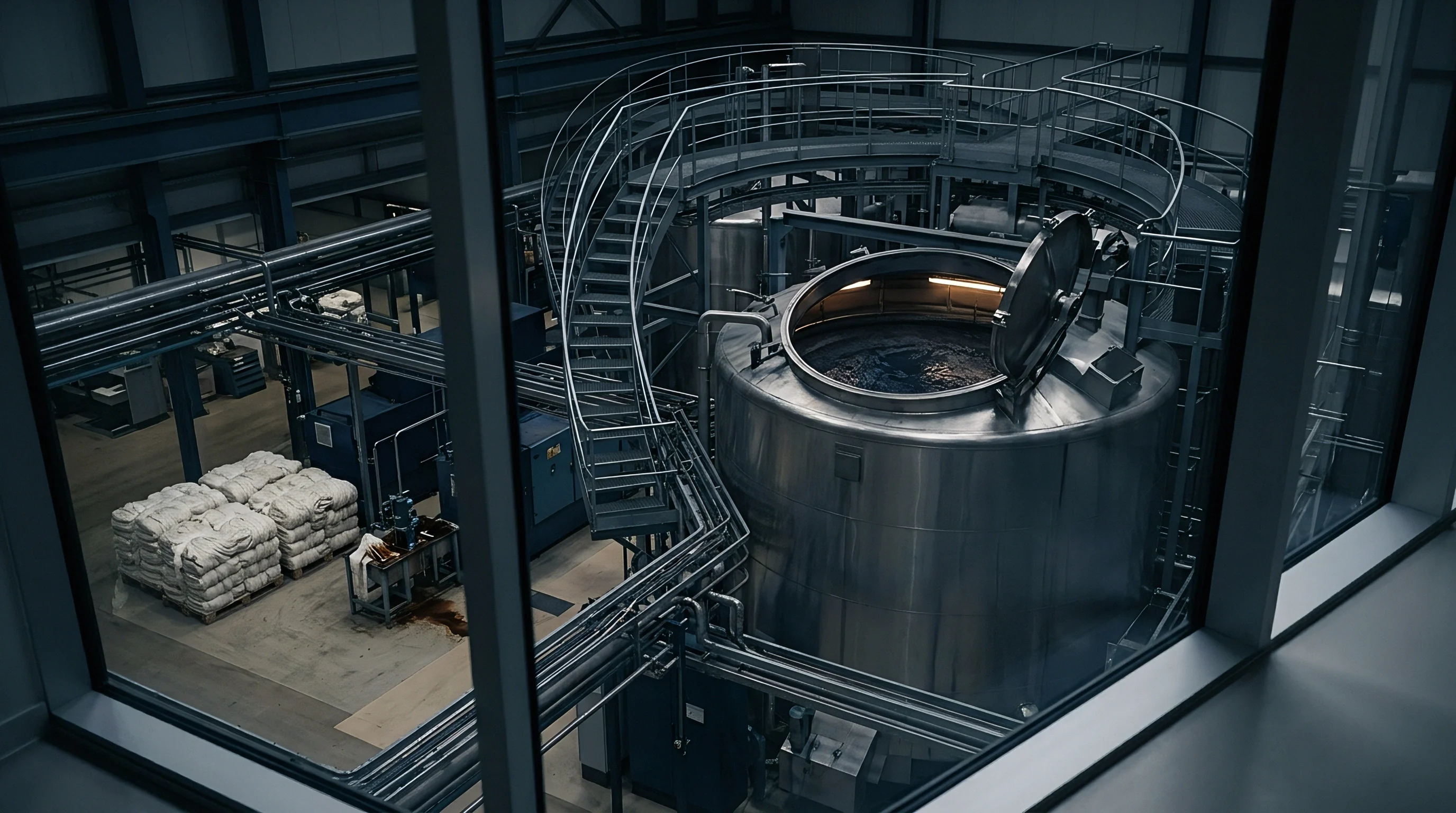
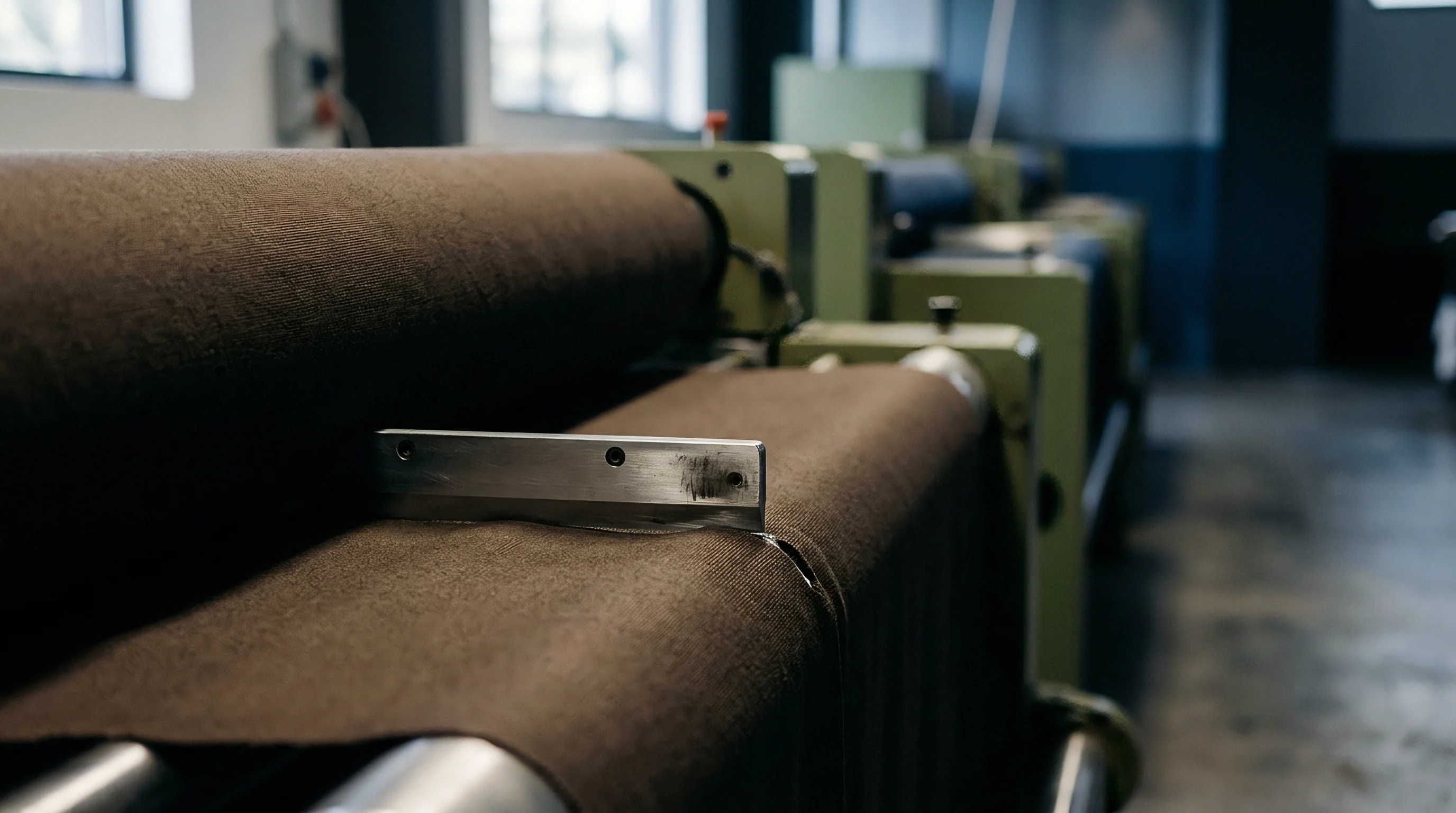
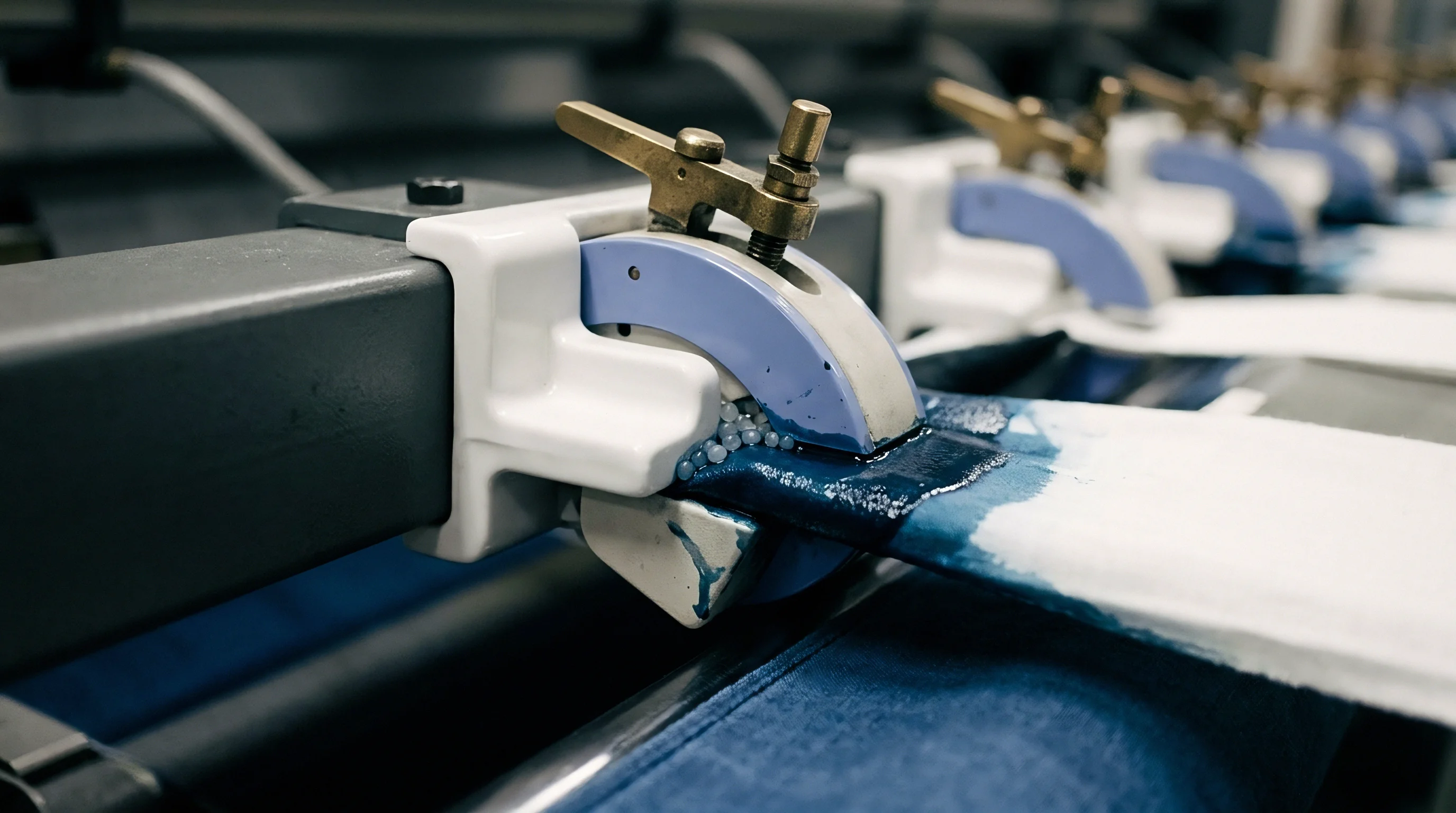
Continuous dyeing ranges depend on uniform liquor application across the width of the open-width fabric strip. The padding mangle forces dye solution into the core of the yarn structure through mechanical nip pressure between two opposing rolls. Roll construction typically features a steel core covered with synthetic elastomer, such as chloroprene or polyurethane, rated between 70 and 80 Shore A hardness.
Under heavy hydraulic loading, solid cylindrical rolls flex outward at the center, creating a pressure gradient where the center of the roll exerts less force than the outer edges. This deflection profile allows higher liquor pickup in the middle of the fabric roll, producing a dark center and light selvedges upon drying.
Variable crown rolls and swimming-roll systems counteract mechanical flex by adjusting internal hydraulic pressure zones along the roll axis. A swimming roll utilizes a hollow outer shell rotating around a stationary central shaft, supported by an internal hydraulic oil cushion. Adjusting internal hydraulic pressure from 2.0 to 5.5 bar alters the roll profile to match fabric width and weight.
Deflection corrections must match the specific mass per unit area of incoming goods. A 280 gram per square meter cotton twill requires 4.2 bar internal pressure at a machine speed of 35 meters per minute, whereas a 115 gram per square meter plain weave lawn requires 2.8 bar under identical speed settings. Squeeze rolls wear unevenly.
Calculations for wet pickup percentage evaluate the weight of wet padded fabric against dry conditioned fabric mass:
Wet Pickup Percent = ((Mass of Wet Padded Fabric – Mass of Dry Conditioned Fabric) / Mass of Dry Conditioned Fabric) 100
Target wet pickup for 100 percent cotton woven cloth processed through a conventional pad-dip machine ranges from 60 to 70 percent. Micro-polyester blends run at lower pickup levels between 40 and 50 percent due to lower synthetic fiber surface energy. High wet pickup increases predrying energy requirements and promotes dye migration during hot-air exposure.
Liquor Trough Volume and Tailing Effects
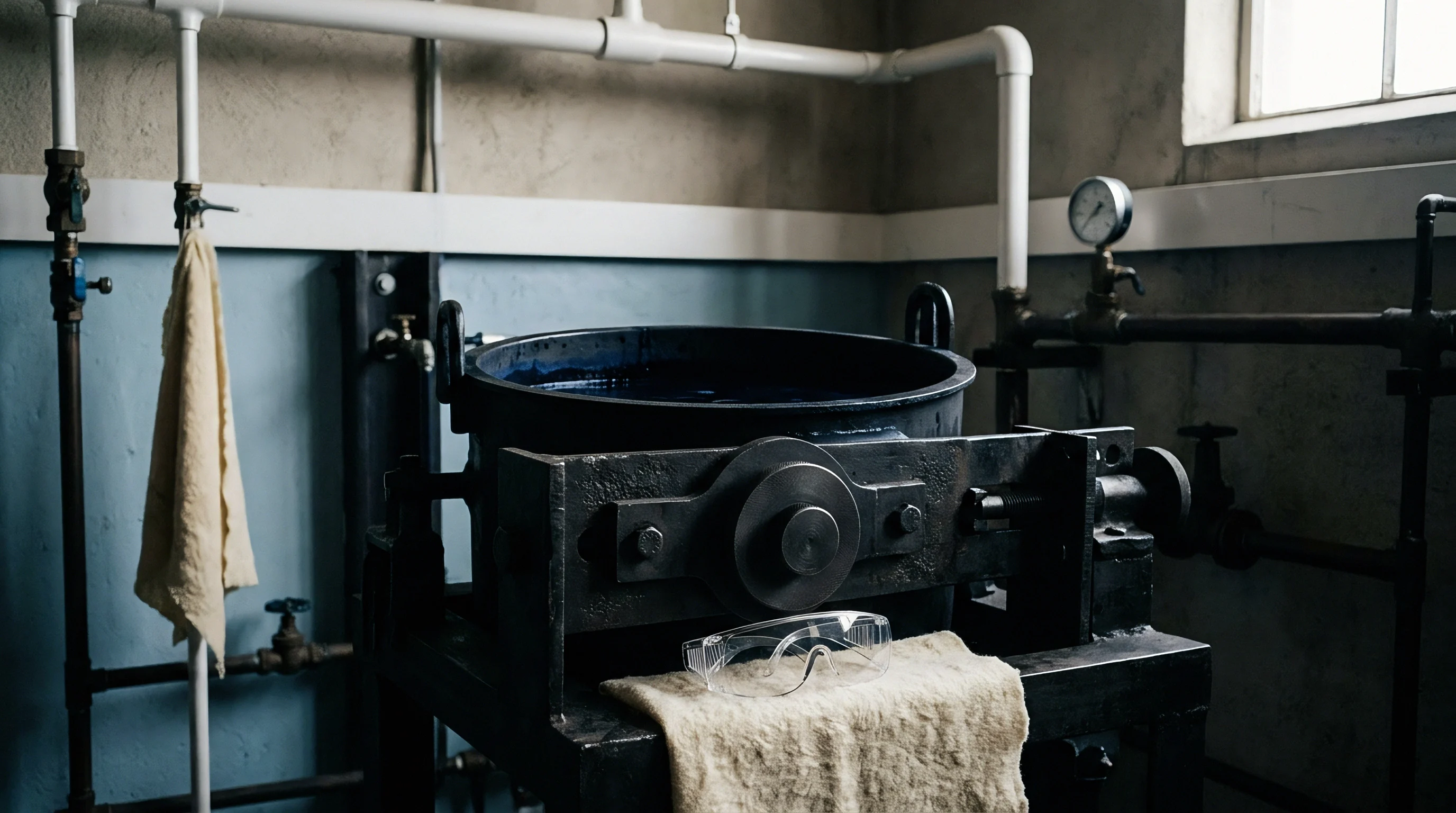
Dye liquor stability inside the pad trough directly controls shade consistency from the head to the tail of a production lot. Dye affinity causes fiber surfaces to extract dye molecules from the padding solution faster than the solvent water is absorbed, a phenomenon known as substantive tailing. High-affinity direct or vat dyes deplete the active dye concentration in low-volume troughs rapidly.
As the run progresses, the dye concentration in the trough drops below initial mix levels, resulting in a gradual shade lightened from the start of the roll to the end.
Trough design minimizes hold-up volume through displacement bodies. Reducing trough volume from 60 liters to 15 liters accelerates liquor turnover rate, matching dye liquor feed rates precisely to fabric absorption velocity. Replenishment liquor dosing pumps must deliver dye stock solution at a rate equal to the mass of fabric passing per minute multiplied by the target pickup percentage.
Machine speed alters pickup.
Low-volume padding troughs with displacement inserts prevent substantive tailing by maintaining liquor turnover times below ninety seconds.
Substantive tailing balances against reverse tailing, where low-affinity dyes are rejected by hydrophobic fiber surfaces, leading to dye accumulation in the trough and progressively darker shades over time. Establishing dynamic liquor equilibrium requires selecting dye combinations with matched exhaustion kinetics and controlling trough residence times strictly.
- Trough Volume Control minimizes liquor residence time to prevent differential dye depletion across extended continuous production runs.
- Nip Pressure Calibration enforces uniform Shore A hardness testing across the entire roll face at quarterly operational maintenance intervals.
- Immersion Path Length regulates chemical dip time through adjustable lower guide rollers inside the active liquor trough.
- Dosing Pump Precision links liquid feed volumes directly to main drive tachometers to preserve constant liquor pickup ratios during speed changes.
Continuous pad-steam ranges operating with high substantive dyes require low-volume, high-turnover liquor troughs to keep head-to-tail shade drift below human visual detection thresholds.

Friction

Interface Boundary Disputes between Facilities
Commission processing networks split responsibility across independent corporate entities. A commission sizer prepares warp beams, a weaving mill weaves the grey cloth, and a commission wet processing facility carries out preparation, dyeing, and finishing operations. When finished goods display defects such as shade bandings, reed marks, or localized fastness failures, determining financial liability causes significant friction between mill managers.
Gray fabric incoming inspection protocols serve as the primary defensive barrier for wet processing plants. Accepting grey rolls onto the dyehouse floor without documenting incoming defect levels transfers implicit liability to the dyer.
Standard inspection procedures evaluate greige cloth under ISO 4598 or ASTM D5430 four-point inspection standards. Penalty points assign values from 1 to 4 based on defect length. A fabric lot exceeding 40 penalty points per 100 square meters qualifies as second-quality material.
When a commission dyer processes cloth exceeding this point threshold without formal written liability waivers from the converter, downstream claims for finished shade blotchiness or warp-way streaks rest entirely on the dyehouse.
Thermal history variations generated during commission sizing and weaving introduce latent stress into cotton and synthetic yarns. Uneven warp tension during sizing creates differential crimp levels across the warp beam. Yarns subjected to excessive tension during drying undergo structural crystallization, reducing their dye uptake capacity during continuous pad-steam operations.
The resulting fabric exhibits tight warp ends that dye lighter than adjacent yarns. The weaving mill blames the wet processing facility for uneven tensioning during stenter drying, while the dyer points to slashing tension logs proving the yarn arrived with pre-existing tension variations.
Where Does Commission Sizing Liability Shift to the Continuous Dyer?
Responsibility transfers formally once the wet processing facility passes grey cloth through the initial singer or desizing bath. If an incoming fabric lot contains hidden chemical contamination, such as silicone loom lubricants or heavy mineral oil spots from shuttleless loom drives, standard visual inspection frame audits fail to detect the flaw. Spot contamination becomes visible only after padding with dye liquor, where silicone residue prevents dye fixation and creates pale, un-dyed rings across the fabric surface.
Proving grey fabric oil contamination after continuous dyeing requires analytical solvent extraction and infrared spectroscopy on un-dyed greige retain samples. Maintaining physical greige swatches from every incoming roll head-end establishes an evidentiary trail. If solvent extraction of the greige swatch yields mineral oil levels above 0.5 percent by weight, liability shifts back to the weaving facility for machine maintenance oversights.
Off-shade rolls multiply rapidly.
| Observed Defect | Physical Mechanism | Responsible Facility | Verification Test Method |
|---|---|---|---|
| Warp-Way Light Streaks | Over-tensioned warp yarns with crystal orientation | Commission Sizer | ASTM D2256 Single Strand Tensile / Crimp Analysis |
| Resist Spots (Pale Rings) | Silicone oil dropped from loom drive mechanisms | Weaving Mill | FTIR Spectroscopy of Hexane Extract |
| Center-to-Selvedge Shade Shading | Uneven nip roll pressure profile in dye padder | Continuous Dyeing Mill | ISO 105-J03 Spectrophotometric Delta E Mapping |
| Head-to-Tail Shade Drift | Substantive dye depletion in pad trough | Continuous Dyeing Mill | Trough Dosing Volume Audit / Spectrophotometry |
| Patchy Desize Blotches | Incomplete removal of tallow wax fractions | Commission Sizer / Dyer Shared | Soxhlet Solvent Extraction / TEGEWA Scale |
Processing grey fabric containing unannounced silicone warp lubricants destroys dye bath levelling, ruining thousands of meters of continuous production before machine operators detect the resist pattern.


Drift

Thermal Fixation and Stenter Dynamics
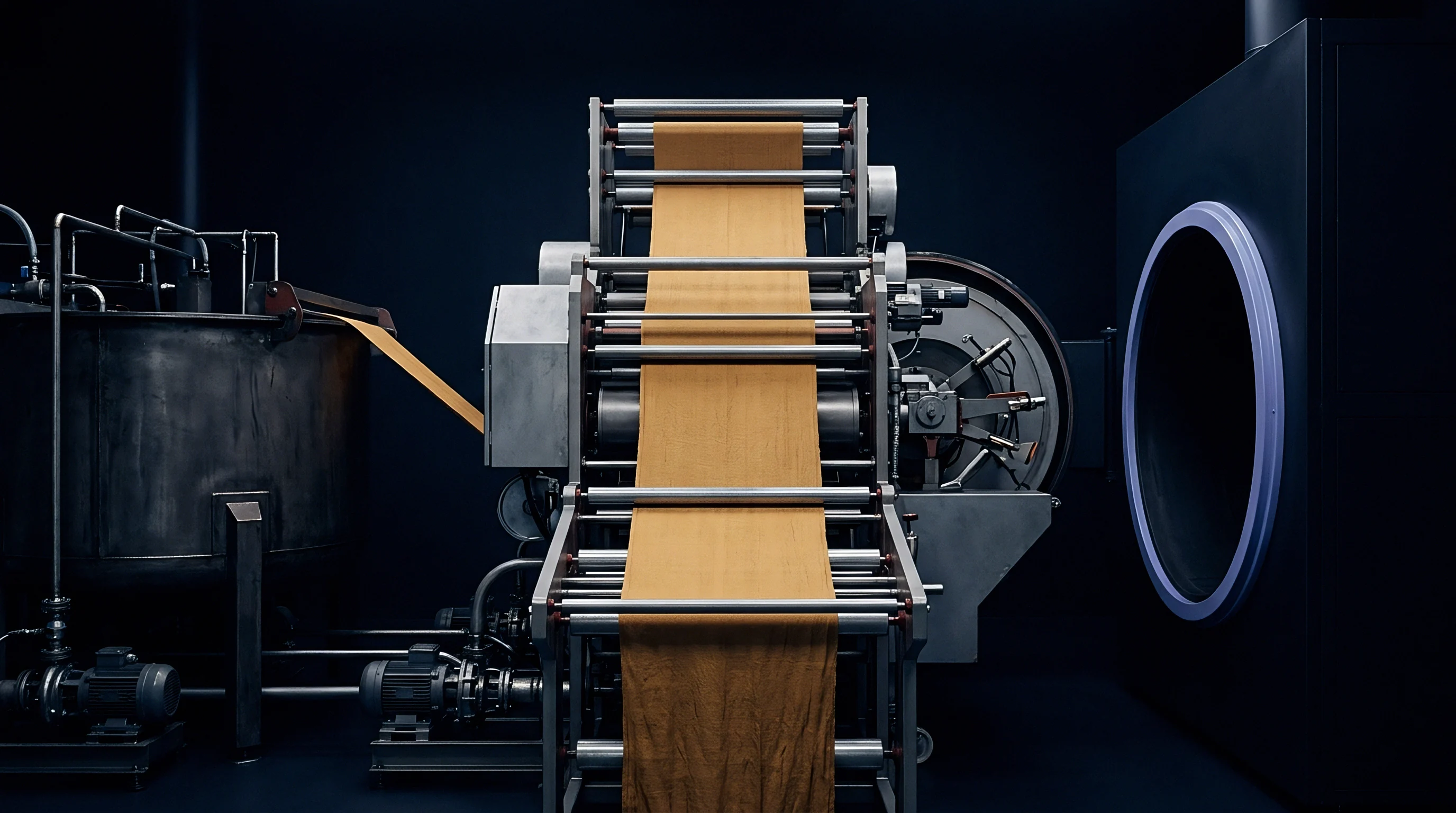
Continuous range thermofixation, or thermosoling, relies on elevated temperatures to drive disperse dyes into synthetic fibers or fix resin finishes on cellulose. A continuous stenter frame utilizes heated air jets directed at both top and bottom fabric faces while hold-down pins or clips control lateral width. Temperature variations across the stenter width must remain within plus or minus 1.5 degrees Celsius of setpoint to prevent side-to-center shade variations.
Thermofixation of disperse dyes on polyester occurs between 200 and 210 degrees Celsius over a 30 to 45 second exposure window. A 3-degree drop in air temperature across the center chamber reduces dye diffusion rates into the polyester matrix by up to 12 percent, producing a pale center band along the entire fabric lot.
Exhaust air volume control prevents volatile chemical buildup inside the stenter drying zones. Inadequate exhaust air rates cause carrier chemical or residual lubricant vapors to re-condense onto incoming fabric webs. Re-condensed oils yellow under high temperatures, altering the final color hue.
Unbound dye bleeds downstream.
Overfeed settings on the stenter entrance rail dictate fabric relaxed dimensional stability. Feeding fabric onto stenter pins at 5 to 10 percent overfeed allows warp-way shrinkage during heat setting, balancing residual tensions imparted during commission weaving and desizing. Insufficient overfeed forces the fabric to dry under warp tension, causing high residual wash shrinkage when tested under ISO 6330 laundering standards.
Continuous Spectrophotometric Control
Inline spectrophotometers monitor color drift across the moving fabric web in real time. Traversing optical heads measure spectral reflectance across three to five points across the width, calculating color differences in CIELAB space using the ISO 105-J03 formula. Delta E values exceeding 0.8 against the approved master lab dip trigger automatic alarm conditions for operator intervention.
Color measurement parameters compare values across three standard illuminants: D65 representing average daylight, TL84 representing commercial store fluorescent lighting, and Illuminant A representing domestic tungsten illumination. Metamerism occurs when two colored samples match under one illuminant but diverge under another. Dye recipes formulated with incompatible dye components exhibit high metameric index values.
Thermal stress weakens yarns.
Metamerism Index calculations evaluate color difference shifts across illuminants:
Metamerism Index = Sky-Blue Delta E (TL84) – Sky-Blue Delta E (D65)
A metamerism index exceeding 0.5 indicates that the continuous dye recipe relies on dye combinations with mismatched spectral absorption curves. Rebalancing the dye formula with identical dye bases eliminates illuminant-dependent color shifts across global retail distribution networks.
Inline color measurement systems calculating continuous Delta E values prevent full-roll off-shade scrap by alerting operators to thermal drift within two minutes of emergence.
When questioned about center-to-selvedge shade variation across a 5,000-meter lot, dyehouse managers frequently cite thermal airflow turbulence within older three-zone gas-fired hot-flue dryers.
Dossier

Audit Protocols and Process Documentation
Audit dossiers provide the formal technical chain of custody required for continuous wet processing validation across commission supply chains. A complete dossier consolidates raw yarn test certs, sizing chemical safety sheets, greige fabric inspection logs, continuous range machine parameter recordings, and spectrophotometric shade records. Establishing strict documentation boundaries ensures that chemical safety and physical performance compliance can be traced back to individual production lots.
Restricted Substance List compliance requires complete verification of all chemical auxiliaries introduced at the commission sizing and continuous dyeing stages. The ZDHC Manufacturing Restricted Substance List Level 3 guidelines dictate that sizing agents, wetting auxiliaries, and dye fixatives contain no detectable alkylphenol ethoxylates, heavy metal impurities, or organotin compounds. Audit teams sample active chemical drums directly from the padder supply lines rather than relying on manufacturer-supplied certificate of analysis documents.
Chemical residues impede fixation.
- Verify raw sizing chemical safety data sheets against ZDHC MRSL conformance databases to ensure zero alkylphenol ethoxylate surfactants enter the slashing trough.
- Audit commission sizing plant machinery logs for squeeze roll pressure calibrations, bath temperature charts, and total size pick-up calculations per yarn beam lot.
- Inspect incoming greige fabric rolls using ISO 4598 four-point scoring procedures, logging all pre-existing oil spots, reed marks, and selvage defects.
- Execute laboratory desize efficiency testing via Soxhlet solvent extraction to confirm residual total fats and waxes remain below 0.2 percent by weight.
- Record continuous dyeing range operating parameters including speed, padder nip pressure, pre-dryer infrared power output, and stenter zone temperature profiles.
- Generate spectrophotometric color passports measuring head, middle, and tail swatches across D65, TL84, and A illuminants under ISO 105-J03 standards.
Machine operational logs must validate that pad-steam ranges maintain minimum steaming times of 60 seconds at 102 degrees Celsius for reactive dye fixation on cellulosic fibers. For vat dyes requiring reduction, steam chamber conditions require saturated steam environments completely free of atmospheric oxygen to prevent premature oxidation of the leuco dye form. Audit trails demand proofs.
Under section 4.2 of standard international fabric purchase contracts, any unannounced modification to the sizing chemical recipe or dye bath auxiliary formulation without prior written buyer approval invalidates all shade continuity guarantees and transfers full financial re-dye indemnity to the processing mill.

Margin
Yield Mathematics and Scrap Overhead
Yield calculations define the financial viability of continuous wet processing operations. Processing fabric through multiple continuous stages—singeing, desizing, bleaching, mercerizing, pad-steam dyeing, and stenter finishing—introduces cumulative length loss and width contraction. Warp tension throughout continuous ranges stretches fabric longitudinally while reducing fill width.
Mercerization under tension increases width recovery but requires strict caustic soda concentration control at 28 to 30 degrees Baumé.
Calculations for net finished yield evaluate raw greige input meters against final inspection table output:
Yield Loss Percent = ((Greige Input Length – Finished Pass Length) / Greige Input Length) 100
Baseline yield loss across a full continuous wet processing sequence for woven cotton averages 3.5 to 5.0 percent. Excess tension stretching cloth beyond structural limits produces artificial yield gains that collapse into severe dimensional change during downstream garment laundering. Yield losses hit margins.
Re-dye operations destroy production profitability. Stripping and re-dyeing off-shade continuous fabric consumes additional thermal energy, chemical reductants, and water, while degrading cotton tensile strength by 15 to 20 percent. Reprocessing costs average 1.40 USD per meter compared to a primary continuous dyeing cost of 0.55 USD per meter.
A 3 percent re-dye rate across a 100,000-meter monthly commission contract eliminates net operating margin for the continuous dyeing facility entirely.
Minimum color quantities set the financial floor for continuous range setups. Continuous dyeing ranges require 150 to 300 meters of fabric leader cloth to thread the machine before active dye liquor is padded onto bulk goods. A color changeover generates 200 meters of off-shade tailing fabric while fresh liquor reaches equilibrium inside the pad trough.
For order quantities below 3,000 meters per colorway, setup scrap and leader fabric losses inflate unit production cost exponentially compared to exhaust jet dyeing alternatives.
Commission sourcing strategies must evaluate total landed cost by integrating greige yarn pricing, sizing surcharges, weaving converting fees, continuous range processing tariffs, and scrap risk allowances. Splitting operations across independent commission sizing, weaving, and wet processing facilities introduces perimeter friction that requires strict audit oversight to maintain target fabric specs and preserve thin operating margins.