Determining Fabric Thread Count Using ISO 7211 Standard Methods
ISO 7211-2 dictates fabric thread count via optical magnification or manual dissection, requiring strict ISO 139 conditioning to deliver verified ends and picks.


Glass
Direct optical verification under ISO 7211-2 provides the standard benchmark for determining yarn density per unit length in woven structures. The standard establishes two distinct optical techniques for non-destructive analysis: Method A utilizes a rigid counting glass with a defined square aperture, while Method B employs a travelling microscope mounted on a graduated micro-metric lead screw. Selecting between these optical instruments depends entirely on the spatial frequency of the structural elements within the finished web.
Optical Precision in Standard Sett Determination
Standard counting glasses frame a fixed field of view over the fabric surface. The operator aligns the base plate parallel to the warp or weft yarns, tallying individual structural elements across the open aperture. Optical magnification ranging from four to ten diameters illuminates single alignment points, preventing visual fatigue during repetitive counting runs.
Visual inspection using a fixed frame works efficiently on open weaves, medium poplins, and standard twills where individual structural elements remain clearly separated under ambient white light.
Travelling microscopes remove the parallax error inherent to simple magnification lenses. The mechanical crosshair moves across the fabric plane via a fine-pitch thread, allowing precise positioning over high-density constructions. High-density down-proof taffetas and technical filter fabrics require this mechanical tracking because adjacent yarn boundaries overlap under standard stationary lenses.
Microscopic tracking ensures individual filaments within texturized continuous yarns are not miscounted as separate structural units.
| Yarn Density Range (Elements per cm) | Minimum Test Length (mm) | Recommended ISO 7211-2 Method | Aperture / Field Width (mm) |
|---|---|---|---|
| Fewer than 10 | 100 | Method B (Traversing Microscope) | 100 |
| 10 to 25 | 50 | Method A or B | 50 |
| 25 to 50 | 20 | Method A (Counting Glass) | 20 |
| Greater than 50 | 10 | Method B or Method C (Dissection) | 10 |

Aperture Selection Thresholds for Linear Counting
Measurement accuracy relies on matching the aperture scale to yarn frequency. ISO 7211-2 mandates specific minimum counting distances to reduce statistical variance across uneven yarn spacings. When fabric structures contain fewer than ten ends or picks per centimetre, the inspection field extends across a minimum length of one hundred millimetres to capture slub variations and spacing irregularities.
ISO 7211-2 mandates testing five distinct test areas spanning a minimum distance of ten centimetres each when yarn density drops below twenty-five elements per centimetre.
Dense fabric constructions with counts exceeding fifty elements per centimetre allow smaller measurement windows. A ten-millimetre window suffices for high-density weaves, provided five spatially separated regions undergo evaluation across the fabric width. Edge distortion skews counts.
Spacing measurements taken too close to the selvedge reflect loom temple grip distortion rather than the true body sett. Higher pick densities observed under magnification consistently correlate with reduced air permeability after continuous pad dyeing.

Specimen
Analytical validity under ISO 7211-2 requires rigorous sampling discipline long before an optical glass touches the cloth. Test swatches cut directly from a bulk roll carry residual mechanical stresses from winding tension, stenter chains, and batching rollers. Unconditioned textile samples yield inaccurate density figures because environmental moisture fluctuations cause synthetic and cellulosic yarns to swell or contract across their longitudinal axes.

Atmosphere Control and Moisture Equilibrium Limits
Standard testing environments follow ISO 139 specifications, setting atmospheric conditions to twenty degrees Celsius, plus or minus two degrees, and a relative humidity of sixty-five percent, plus or minus four percent. Cellulosic materials such as cotton, linen, and viscose reabsorb ambient moisture until reaching equilibrium, altering both yarn diameter and structural crimp geometry. Conditioning takes four hours.
Synthetic polymers like polyamide and polyester stabilize faster, yet still demand thermal stabilization before dimensional measurement.
Mounting fabric specimens flat on the viewing table eliminates structural curvature. The operator lays the conditioned cloth without applied tension, avoiding hand pressure that might temporarily open up the weave structure. Specimen preparation dictates trimming clean edges along true warp and weft lines, preventing frayed ends from skewing alignment grids.
Tension causes count drift.
Failure to maintain standard atmospheric relative humidity within four percent during conditioning invalidates dimensional count verification under international commercial arbitrations.

Spatial Sampling Patterns across the Fabric Web
Structural density varies across both width and length due to loom reed dynamics and stenter airflow variations. Sampling procedures require taking measurements across a diagonal stepped path, ensuring no two count zones share identical warp ends or weft picks.
- Selvedge Clearance Boundary guarantees test zones sit at least one hundred millimetres inward from edge threads to exclude temple roller distortion.
- Diagonal Stepping Layout positions test zones progressively across the usable fabric width to average out reed line variations.
- Full Repeats Inclusion aligns aperture boundaries to encompass complete pattern repeats when evaluating complex Jacquard or dobby structures.
- Tensionless Laying Technique relaxes internal storage stresses by resting swatches flat on smooth, non-magnetic surfaces prior to evaluation.
Measure five distinct zones. ISO 7211-2 Clause 6 specifies that non-conditioned laboratory readings alter certified ends per unit length figures on official certificates of analysis.
Fray
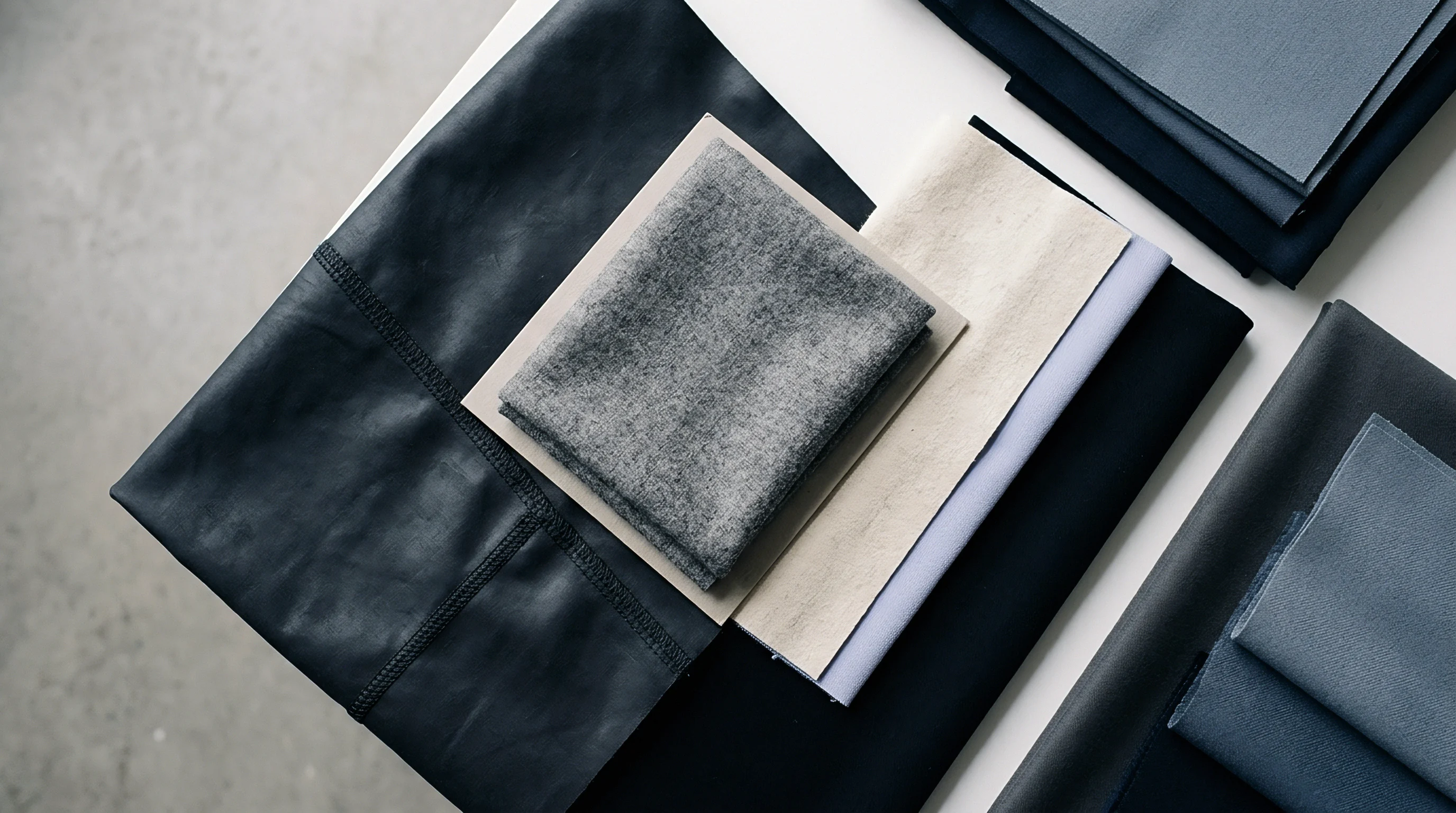
Heavy finishing treatments, dark pigment coatings, intense raised napping, and dense felting completely obscure yarn boundaries under standard optical lenses. When optical counting becomes impossible, technicians turn to ISO 7211-2 Method C. This destructive procedure physically unravels specimen edges to isolate individual structural yarns for direct manual counting.
What Triggers Method C Dissection over Optical Counting?
Complex weaves like multi-layer satins, double cloths, or heavily milled woolens present hidden internal yarn pathways. Optical devices capture only surface floats, missing buried binder yarns or internal stuffer picks. Method C dissection physically separates each yarn system, providing absolute numerical accuracy regardless of surface opacity or finish thickness.
Dense weaves demand dissection.
Elastomeric fabrics containing covered spandex cores also necessitate manual dissection. Visual evaluation of stretched elastic webs distorts natural yarn resting states, whereas careful unraveling under relaxed conditions exposes exact elastomeric end counts per unit measure.
Execution Steps for Destructive Manual Extraction
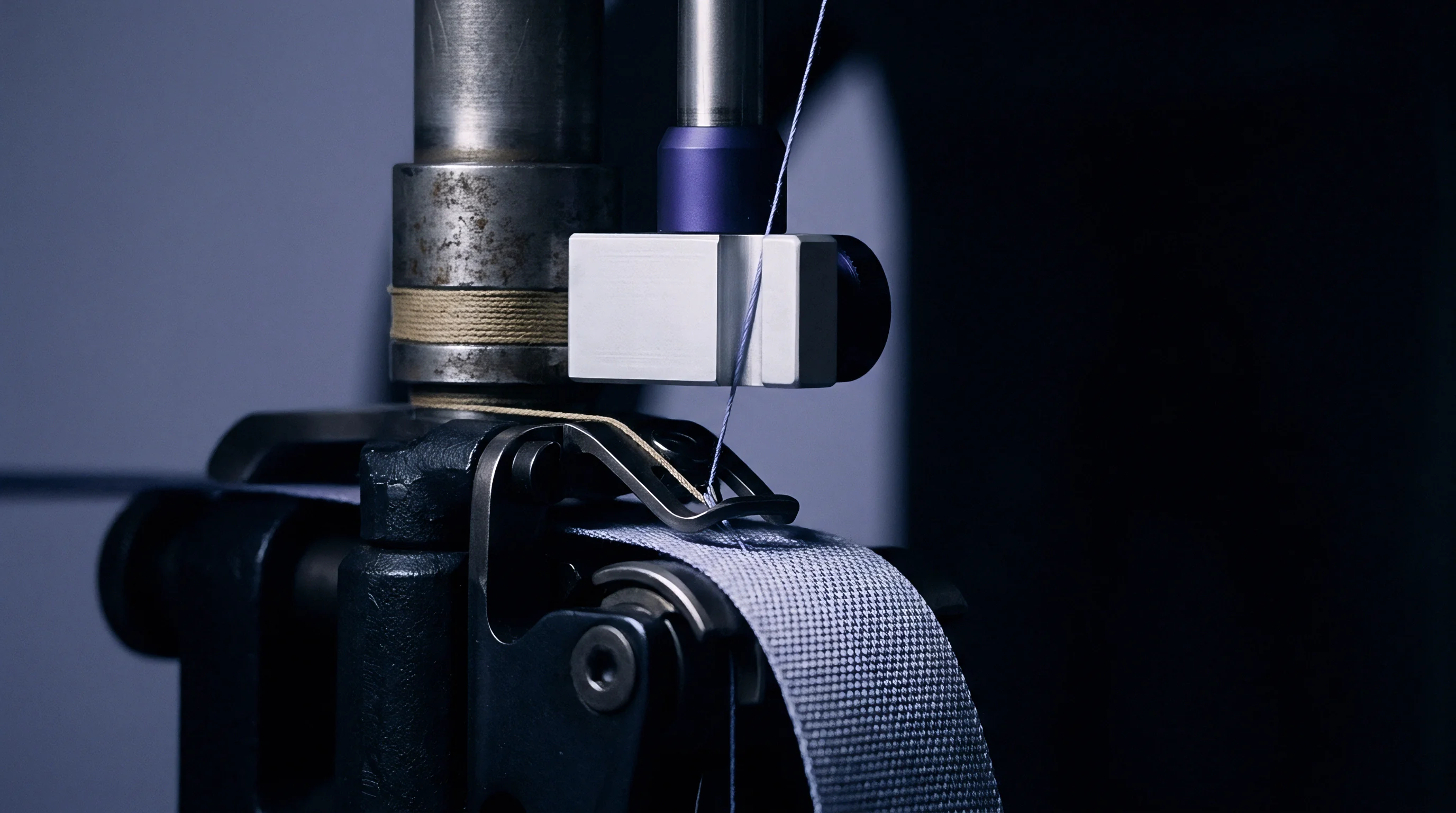
Precise physical dissection demands a systematic laboratory sequence to prevent yarn breakage and count errors during extraction:
- Cut a rectangular specimen measuring exactly fifty millimetres by fifty millimetres parallel to warp and weft axes using a precision steel die.
- Fray away outer yarns along one edge until a clean, continuous yarn extending the full specimen length is exposed.
- Grip the isolated yarn using fine-tipped laboratory tweezers, pulling it gently away from the opposing yarn system.
- Mount extracted yarns onto a high-contrast mounting card, counting each unit sequentially as it leaves the main weave structure.
- Repeat the extraction process across fifty millimetres, recording total count figures for conversion into standard linear metrics.
Dissection guarantees exact counts. Optical magnification fails here. Mills often claim that optical count discrepancies stem entirely from yarn migration during jet scouring rather than improper reed density on the loom.
Contraction
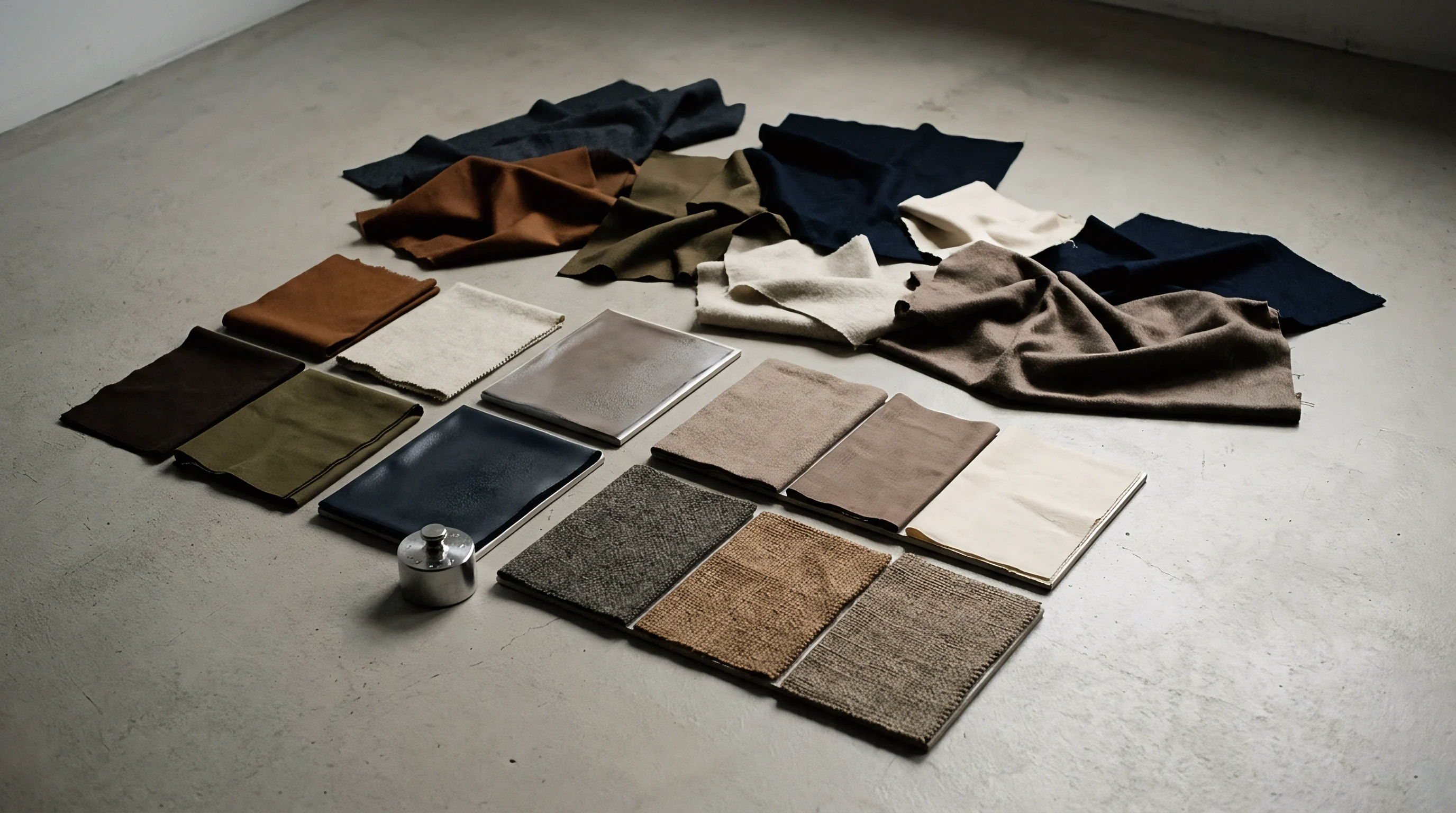
Greige sett figures taken directly off the loom shed never match finished fabric construction metrics. As gray goods pass through desizing, scouring, bleaching, dyeing, and thermal setting, yarn relaxation occurs alongside dimensional compaction. Warp ends squeeze closer together as weft picks shrink in length, while weft density increases as stenter chains apply longitudinal tension.

Greige to Finished Sett Structural Evolution
Loom tension holds warp yarns under extreme mechanical strain during weaving. Once released from the harness and beam, structural relaxation takes place immediately. Subsequent wet processing amplifies this effect.
Aqueous bath temperatures dissolve temporary size materials, enabling yarns to swell transversely and increase internal crimp angles. Wet processing drives compaction.
Finishing mills adjust stenter overfeed settings to deliberately alter finished pick density. Feeding greige fabric into a stenter frame at a five percent overfeed rate forces weft yarns closer together, raising finished picks per centimetre and boosting overall mass per unit area. Sanforizing adds pick density.
| Fabric Construction Type | State | Warp Ends (per cm) | Weft Picks (per cm) | Mass (g/m²) | Yarn Crimp Warp (%) |
|---|---|---|---|---|---|
| Standard Plain Poplin (40s Ne) | Loom State (Greige) | 44.0 | 28.0 | 118 | 7.2 |
| Standard Plain Poplin (40s Ne) | Finished (Sanforized) | 46.5 | 30.5 | 132 | 10.8 |
| 3/1 Heavy Cotton Twill (20s Ne) | Loom State (Greige) | 38.0 | 20.0 | 225 | 6.5 |
| 3/1 Heavy Cotton Twill (20s Ne) | Finished (Resin Treated) | 40.0 | 22.0 | 250 | 11.5 |
| 5-Harness Cotton Satin (60s/2 Ne) | Loom State (Greige) | 68.0 | 36.0 | 165 | 5.8 |
| 5-Harness Cotton Satin (60s/2 Ne) | Finished (Mercerized) | 71.5 | 39.0 | 184 | 9.4 |
Worked Calculation of Finished Mass from Structural Sett
Calculating finished mass requires integrating warp sett, weft sett, yarn linear density under ISO 7211-5, and crimp percentages derived from ISO 7211-3. Assume a target production batch of plain poplin woven from 14.77 Tex (40s Ne) 100% cotton yarns in both directions. The greige reed setup provides 44.0 ends per centimetre and 28.0 picks per centimetre, with a greige width of 165 centimetres off the loom.
During continuous finishing, warp crimp increases from 7.2 percent to 10.8 percent due to relaxed wet compaction, while weft crimp drops from 8.5 percent to 5.2 percent under stenter chain lateral clip tension. Finished fabric width contracts to 150 centimetres, forcing warp ends closer together. Calculate finished warp ends per centimetre as:
Finished Warp Ends = Greige Warp Ends × (Greige Width / Finished Width) = 44.0 × (165 / 150) = 48.4 ends per cm.
Simultaneously, sanforizing overfeed increases weft density by 8.9 percent, moving picks from 28.0 to 30.5 picks per centimetre. Mass calculations per square metre combine yarn Tex, finished sett, and final crimp factor allowances:
Warp Mass Contribution = (Finished Ends/cm × 100 cm/m) × (1 + Warp Crimp) × (Tex / 1000) = (48.4 × 100) × 1.108 × 0.01477 = 79.21 g/m².
Weft Mass Contribution = (Finished Picks/cm × 100 cm/m) × (1 + Weft Crimp) × (Tex / 1000) = (30.5 × 100) × 1.052 × 0.01477 = 47.39 g/m².
Total calculated finished mass equals 126.60 grams per square metre, excluding chemical finish add-on. Adding a 3.5 percent starch and softener add-on brings total finished mass to 131.03 grams per square metre. Greige numbers flatter density.
Unwashed swatches shrink later. Calendering flattens individual yarns.
Tighter pick counts restrict dye liquor circulation inside the jet tube, requiring longer dwell cycles to achieve level coloration across heavy canvas weaves.
Underestimating finished pick compaction leads to landed goods failing target weight specifications, forcing unrecoverable re-dyeing cycles or fabric rejection.

Contract
Sourcing dossiers must translate raw lab count data into enforceable commercial purchase terms. Converting measured metric counts (ends and picks per centimetre) into traditional imperial figures (ends and picks per inch) requires multiplying metric values by 2.54. Total fabric thread count specifications often sum warp ends and weft picks per inch into a single combined value.
However, combined values conceal construction imbalances where a mill reduces expensive weft picks while increasing cheaper warp ends.
Commercial Tolerance Bands and Standard Conversions
Commercial contracts dictate permissible variance limits between approved pre-production samples and delivered bulk shipments. Standard buyer-supplier frameworks grant a plus or minus one.five percent tolerance on warp end count, reflecting rigid reed spacing constraints on modern air-jet looms. Weft pick density allows a slightly wider tolerance of plus or minus two.five percent due to variable insertion dynamics and stenter tension fluctuations.
| Variance Range from Target Sett | Warp Status | Weft Status | Commercial Action / Penalty Tier |
|---|---|---|---|
| Within ±1.0% | Compliant | Compliant | Full batch approval, no invoice adjustment. |
| ±1.1% to ±2.5% | Acceptable | Compliant | Standard delivery accepted without penalty. |
| ±2.6% to ±4.0% | Non-Compliant | Acceptable | Two percent invoice deduction applied to affected rolls. |
| Greater than ±4.0% | Rejected | Rejected | Full lot rejection; mill pays remaking or airfreight costs. |

Financial Impact of Pick Density on Loom Efficiency
Loom speed directly dictates weaving costs. Air-jet looms operate at high insertion speeds, running up to twelve hundred picks per minute. Reducing weft density by two picks per centimetre cuts required insertion cycles significantly across a twenty-thousand-metre production run.
Mills facing tight profit margins may drop pick counts slightly to boost daily loom yield while attempting to pass weight inspections by applying heavy chemical stiffeners during finishing.
Greige yarn counts measured directly on the loom beam reflect structural tension that disappears once the web undergoes wet relaxation.
Verification protocols must catch construction substitutions before goods leave the exporting mill:
- Combined Sum Illusion hides missing structural picks behind elevated warp end density on lab certification documents.
- Finishing Add-On Masking uses chemical resins to compensate for reduced fabric mass caused by lower pick counts.
- Imperial Metric Rounding creates artificial tolerance disputes when converting ends per centimetre to ends per inch without declaring decimal rounding thresholds.
- Unaccredited Testing Reports present mill-internal visual counts performed without standard ISO 139 atmospheric equilibrium controls.
Standardized verification protects buyers against intentional construction degradation. Mill contracts tying landed payment terms to ISO 7211-2 test dossiers ensure absolute compliance across every shipped container. Independent testing labs verify density before export authorization documents are released.