Hydrostatic Pressure Requirements in Woven Fabric Dyeing
Dynamic hydraulic pressure during dyeing drives shade levelness in dense wovens, but residual bath surfactants ruin post-finishing hydrostatic head ratings.
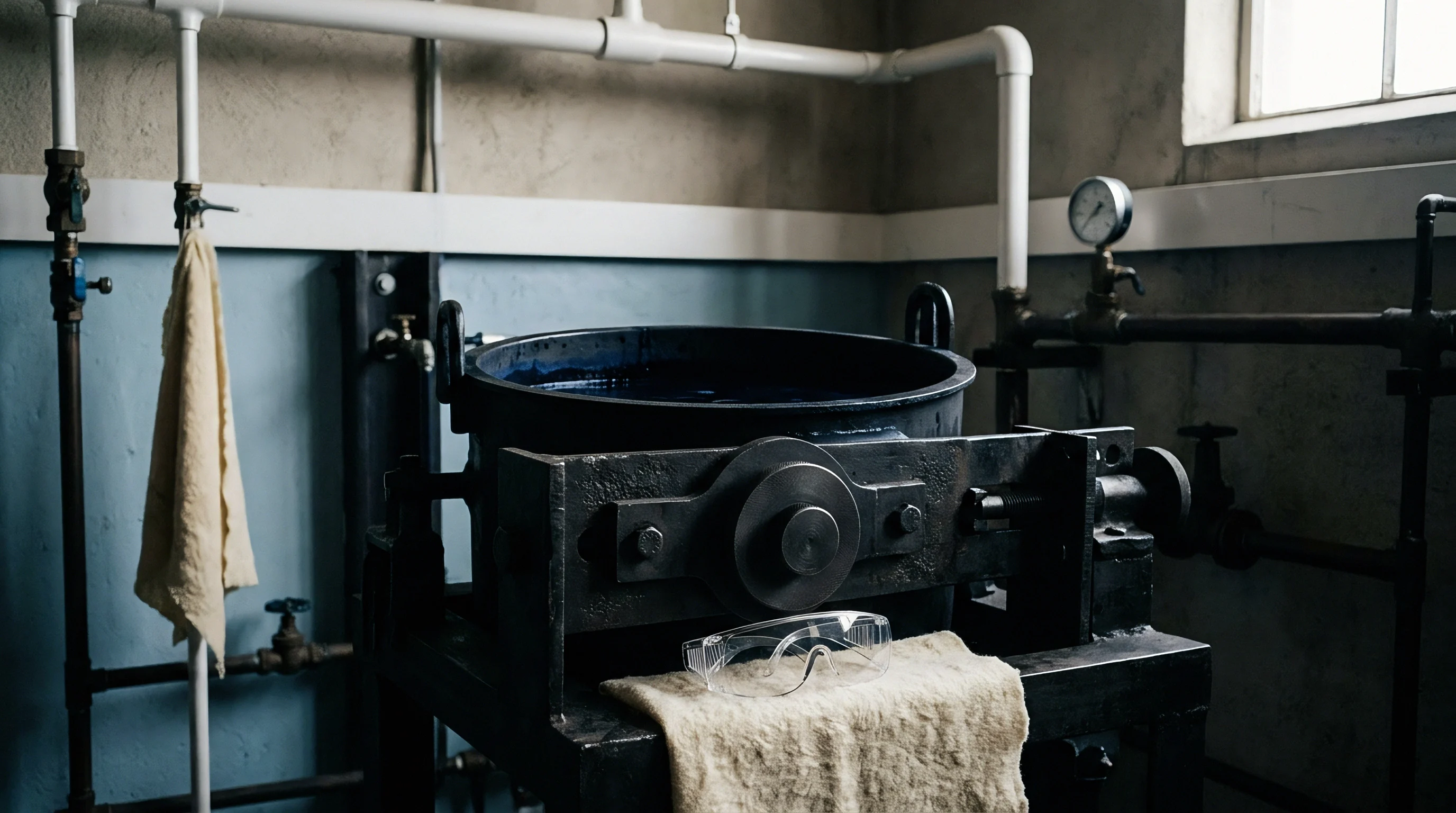
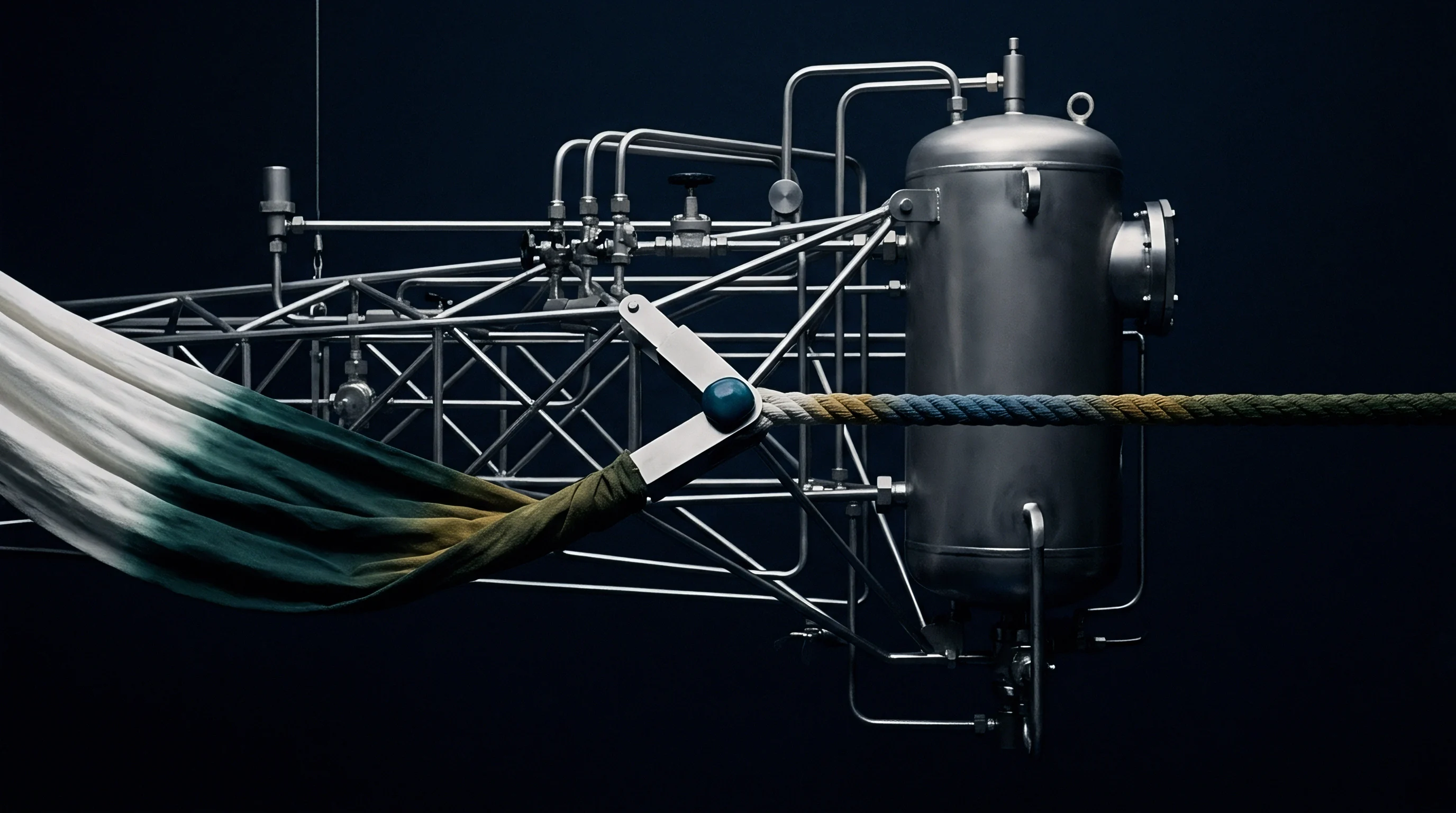
Nozzle
High-temperature jet machines force liquor through fluid restrictors to drag woven fabric ropes through the dye tube at velocities between 200 and 500 metres per minute. The mechanical force driving dye penetration relies on differential hydraulic head generated across the throat of the venturi pump. In dense woven constructions where inter-yarn voids restrict liquid passage, differential pressure settings dictate whether dye molecules migrate evenly into yarn cores or remain deposited on the filament surfaces.
Operating jet dyeing machinery on tight woven fabrics demands exact calibration of pump frequency and nozzle gap settings. Standard liquor pressures for light spun poplins range from 1.2 to 1.8 bar, whereas high-density filament weaves require pump pressures between 2.5 and 3.6 bar to achieve complete liquor interchange. Insufficient differential pressure permits the fabric rope to decelerate inside the transport tube.
The fabric rope collapses. Tangling, severe surface chafing, and unlevel dye strike follow immediately.
Liquor penetration requires dynamic force. In beam dyeing, where woven cloth remains wound under tension on a perforated stainless steel cylinder, hydrostatic pressure acts unidirectionally from the inside of the roll to the outside. The pump drives heated liquor through hundreds of fabric layers.
If pump pressure falls below 2.0 bar on a 150-centimetre diameter beam of dense nylon taffeta, inner layers absorb dyestuff rapidly while outer layers receive depleted liquor. Shade unlevelness results. Dynamic pressure must balance structural resistance across the entire package depth.
| Machine Configuration | Differential Pressure Range (bar) | Liquor-to-Cloth Ratio | Target Fabric Construction Density | Primary Mechanical Risk |
|---|---|---|---|---|
| Overflow Jet Dyeing | 0.5 to 1.2 | 1:8 to 1:12 | Low to medium sett spun cotton weaves | Rope stalling and dye creasing |
| High-Temperature Soft-Flow Jet | 1.5 to 2.4 | 1:5 to 1:8 | Medium sett polyester twills and plain weaves | Surface pilling from fluid shear |
| High-Pressure Venturi Jet | 2.5 to 3.8 | 1:4 to 1:6 | High-density micro-denier synthetic filament | Filament breakage and face abrasion |
| Pressurized Beam Dyeing | 1.8 to 3.2 | 1:6 to 1:10 | Ultra-dense nylon down-proof fabrics | Inner layer crushing and core unlevelness |
Excessive hydraulic pressure creates distinct physical destruction on woven surfaces. When nozzle pressure exceeds the structural stability threshold of fine filament yarns, individual micro-denier filaments split away from the yarn bundle. Fine yarns split under shear.
The resulting surface degradation manifests as fuzziness, altered light reflectance, and reduced tear strength in the finished cloth.
- System purging eliminates entrained air from pump housings and delivery pipes before heating liquor to 130 degrees Celsius, preventing cavitation spikes that crush wet fabric ropes.
- Nozzle diameter selection matches fabric weight per linear metre, establishing an aperture gap that maintains constant hydraulic coupling without compressing the woven structure.
- Pump frequency ramping coordinates with heating curves at rates of 1.5 degrees Celsius per minute, elevating differential pressure as synthetic fibres expand and open internal dye sites.
- Differential pressure monitoring tracks pressure drop across beam rolls throughout the hold cycle, signaling dye migration completion or progressive filter clogging.
Higher pressure damages filament structure. Dyehouses attempting to correct shade unlevelness by elevating pump pressure past recommended machine limits face total lot rejection when structural fabric damage drops tear strength below product specifications.
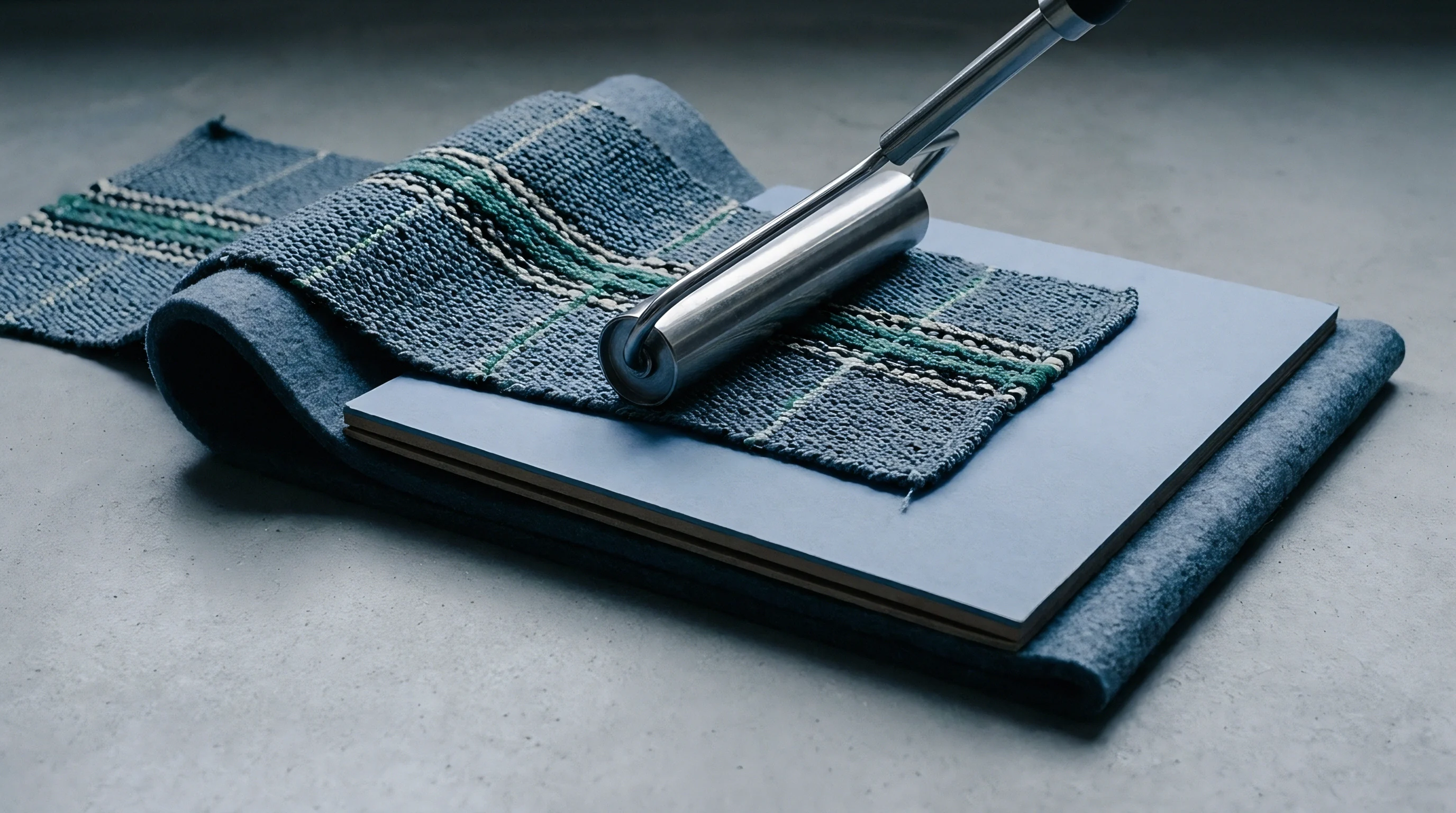
Pore
Interstitial gaps between warp and weft yarn systems define the initial hydraulic resistance of raw woven goods. Tight weave structures, such as down-proof micro-taffetas or high-density ballistic canvases, present extremely small open cross-sectional areas. The geometric arrangement of threads determines how freely fluid moves through the fabric thickness during wet processing.
Peirce cover factor calculations illustrate the physical barrier dense weaves present to dye liquor. A woven construction featuring 140 ends per inch of 70-denier nylon in the warp and 100 picks per inch of 70-denier nylon in the weft yields a fractional cover factor exceeding 0.88. Inter-yarn void dimensions in this build average less than 12 micrometres across.
Dynamic fluid flow through apertures of this scale requires exponential increases in hydraulic pressure compared to standard shirtings.
Lab dips mask bulk distortion. During grey preparation, heat setting alters void geometry prior to pressurized dyeing. Thermal stenter treatment at 190 degrees Celsius shrinks synthetic yarns, closing inter-yarn spaces and increasing structural resistance to liquid movement.
If greige goods enter the dye vessel without uniform heat setting, differential shrinkage occurs under pressurized liquor flow, creating permanent structural streaks along the warp direction.
Tighter weave cover factors reduce liquor throughput inside beam dyeing, increasing the differential pressure needed to reach shade levelness across inner and outer package layers.
Fluid dynamics within micro-porous woven fabrics follow Darcy Law governing flow through porous media. The flow velocity of dye liquor varies directly with applied pressure differential and inversely with fluid viscosity and fabric bed resistance. As temperature rises during high-temperature dyeing, dye liquor viscosity decreases, allowing improved flow through tight inter-yarn gaps.
However, fabric swelling caused by fibre absorption counteracts this effect by narrowing the effective radius of each inter-yarn channel.
Balancing weave density against machine pressure capabilities dictates commercial success. Selecting a high-density construction without adjusting wet-processing parameters leads to surface shade buildup, where dye molecules aggregate on surface yarns rather than penetrating the core of warp intersections. A fabric build featuring maximum warp ends requires lower yarn twist multipliers to grant dye liquor physical access into internal fibre capillaries under standard pump pressures.
Fabric structures constructed with high-twist yarns demand greater hydraulic pressure for deep dye penetration than low-twist spun structures.
Bath
Chemical additives within wet-processing vessels directly modify the surface energy of dye liquor and the rate of fluid transport into woven structures. Wetting agents, levelling auxiliaries, and defoamers alter liquid surface tension, allowing water to overcome capillary resistance inside tight yarn networks. The interaction between chemical formulations and applied hydraulic force governs shade uniformity.
Surfactants lower liquid surface energy. Non-ionic wetting agents reduce dye bath surface tension from approximately 72 millinewtons per metre down to 28 millinewtons per metre. This reduction enables dye liquor to enter micro-porous voids at lower pump pressures.
However, residual surfactants remaining inside woven structures after dyeing create severe performance failures during subsequent finishing steps.
- Residual surfactant entrapment occurs when high-density weave structures trap wetting agents in inter-yarn junctions, lowering post-dyeing hydrostatic head performance.
- Defoamer silicone deposition arises when high-shear pump action breaks defoamer emulsions under high pressure, leaving hydrophobic spots that block uniform dye uptake.
- Incomplete reduction clearing leaves unattached disperse dye molecules on synthetic yarn surfaces, which migrate under heat and degrade both color fastness and coating adhesion.
- Alkali retention in yarn cores causes local pH variations during post-dye washing, interfering with fluorocarbon or polyurethane durable water repellent chemical cross-linking.
Pressurized dye vessels running at 130 degrees Celsius force chemical auxiliaries deep into yarn bundles under hydraulic head. During the cooling and rinse phases, high-density wovens impede the outward diffusion of these bulky organic molecules. Rinsing efficiency drops precipitously as weave tightness increases.
Standard three-stage overflow rinses fail to remove entrapped surfactants from high-sett nylon fabrics, requiring specialized hot-extraction washes with surfactant-scavenging chemistry.
ISO 811 hydrostatic head drops below 1500 mm when residual non-ionic surfactant levels exceed 0.05 grams per kilogram of finished fabric.
Residual alkali ruins water repellency. Dyehouse chemistry choices directly impact functional performance metrics required by end-use specifications. When buyers demand water-column resistance alongside specific shade tolerances, the dyehouse must select low-foaming, easily cleared leveling agents that do not remain inside the yarn core after wet processing concludes.
Finishing mills frequently claim that post-dyeing hydrostatic head failures stem entirely from raw greige yarn variation rather than residual bath chemistry.
Head
Hydrostatic head resistance measures the ability of a finished woven fabric to withstand liquid water pressure without leaking. Test standards ISO 811 and AATCC 127 clamp a fabric specimen over an orifice, subject one face to increasing hydrostatic pressure at a controlled rate, and record the pressure in millimetres of water column at which water droplets penetrate three distinct locations. Wet-processing decisions directly govern this ultimate performance metric.

What Hydrostatic Head Loss Triggers Bulk Rejection?
Dyeing operations that leave chemical residues on woven surfaces systematically ruin hydrostatic head ratings achieved after durable water repellent or coating application. Non-ionic leveling agents trapped within tight weave structures act as wetting agents when exposed to test water, pulling liquid through inter-yarn channels via capillary action. A dense woven nylon shell capable of reaching 2,000 millimetres of hydrostatic head performance often drops below 600 millimetres if dyehouse rinsing fails to remove residual surfactants.
| Performance Tier | Target Hydrostatic Head (ISO 811 mm H2O) | Maximum Residual Surfactant (g/kg fabric) | Required Rinsing Protocol | Post-Dyeing Finishing Compatibility |
|---|---|---|---|---|
| Light Rain / Showerproof | 600 to 1,500 | 0.12 | Standard two-stage ambient rinse | Fluorocarbon or C0 DWR padding |
| Weatherproof Outerwear | 2,000 to 5,000 | 0.05 | Hot reduction clear and two-stage hot extraction | High-density DWR with light polyurethane coating |
| Technical Alpine Shell | 10,000 to 15,000 | 0.01 | Multi-stage hot extraction with acid neutralization | Microporous membrane lamination |
| Extreme Marine / Industrial | 20,000+ | 0.005 | Deionized water hot extraction and total organic carbon verification | Heavy hydrophilic polyurethane transfer coating |
Mechanical actions within jet dyeing vessels also degrade hydrostatic head potential by damaging the integrity of protective yarn structures. High nozzle pressure forces yarn bundles to flatten and spread, altering the uniform distribution of inter-yarn pore sizes. Larger localized voids emerge where warp and weft yarns shift.
These widened pore dimensions create weak points where water breaks through at low applied hydrostatic pressures during ISO 811 testing.
AATCC Test Method 127 compliance invalidates moisture-barrier guarantees if wet-rub fastness falls below Grade 3.5.
Coating adhesion directly depends on clean fabric chemistry following pressure dyeing. Polyurethane coatings and breathable membrane laminates bond mechanically and chemically to woven substrates. Surfactant films, silicone defoamer spots, and unattached dye particles weaken interfacial bond strength.
Under hydrostatic stress, water forces its way between the coating film and the woven substrate, causing localized delamination, blistering, and immediate water entry.
Standard sales contracts for technical outdoor fabrics explicitly incorporate ISO 811 minimum pressure thresholds, assigning financial liability for rejections to mills that fail post-finishing hydrostatic head targets due to residual wet-processing chemistry.
Ledger
Subcontracting woven fabric dyeing demands total clarity regarding how wet-processing parameters affect final landed costs and physical specifications. Operating high-temperature jet equipment at elevated pump pressures increases electrical energy consumption by up to 25 percent and extends processing cycle times. Dyehouses incorporate these energy demands into per-metre pricing structures for high-density constructions.
Rework costs escalate rapidly. When unlevel dyeing occurs under low hydrostatic pressure settings, stripping and re-dyeing the lot consumes additional chemicals, steam, and water. A single re-dye cycle reduces fabric tensile strength by 8 to 15 percent and degrades ultimate hydrostatic head ratings by up to 40 percent due to cumulative fibre damage and residual chemical accumulation.
Severe shade off-quality events transform prime fabric inventory into discounted off-spec rolls.
Jet nozzle pressure adjustments made to cure dye unlevelness frequently produce surface filament breakage on fine denier synthetic yarns.
Commercial qualification protocols must audit dyehouse machinery hydraulic capabilities before issuing bulk production purchase orders. A mill operating outdated atmospheric jet vessels cannot process high-density synthetic wovens requiring 3.0 bar differential pump pressure. Specifying tight weaves without auditing processing equipment guarantees bulk shade variance, surface chafing, and failed hydrostatic performance.
- Verify mill jet machinery pump pressure specifications, differential pressure monitoring systems, and heating ramp rate precision.
- Establish residual surfactant concentration testing limits on dyed greige prior to padding durable water repellent finishes.
- Require ISO 811 hydrostatic head testing on initial bulk dye lots before approving full production runs.
- Define financial remedies and rework authorization thresholds for lots failing tear strength or water resistance standards.
How can sourcing practices structure purchasing terms to prevent dyehouses from sacrificing post-finishing hydrostatic head performance to minimize machine cycle times?