Woven and Knitted Greige Fabric Structural Specification Rules
Greige fabric specifications require precise target values for thread density, yarn count, moisture regain, and dimensional shrinkage before wet processing.
Shed
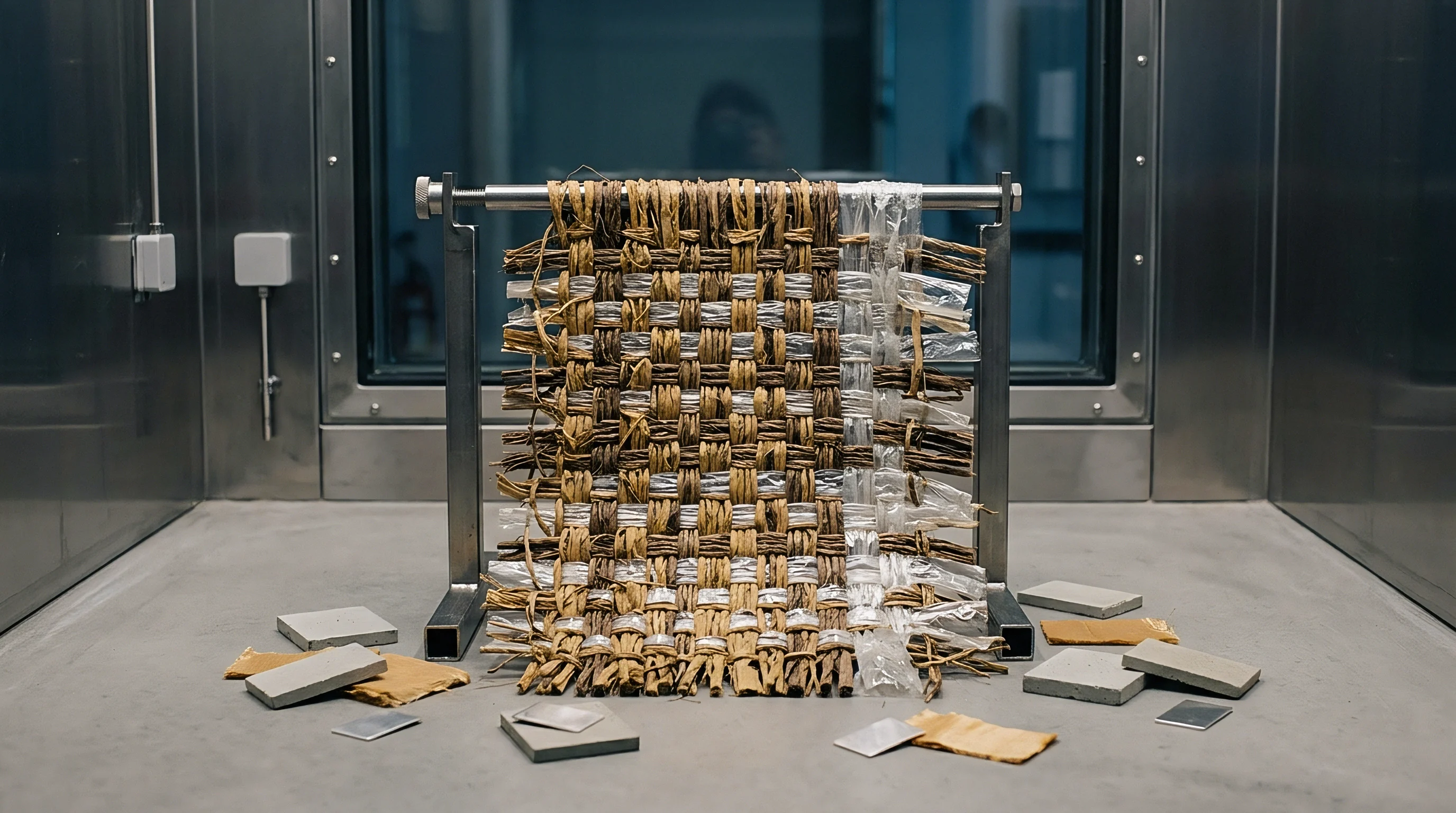
On shuttleless rapier looms, primary structural parameters determine how warp threads interlace with weft insertions. The greige fabric specification forms the legally binding baseline for all downstream conversion operations. Specifying grey cloth involves defining reed width, ends per inch, picks per inch, yarn linear density, and fiber content.
A failure to specify greige parameters with exact physical tolerances invites structural defects that wet processing cannot correct.

Warp Geometry and Reed Selection
Calculating the exact distribution of ends across the reed width forms the baseline for woven fabric geometry. High-speed air-jet and rapier looms operate under constant warp tension, which pulls warp threads into a tight parallel orientation. The reed count dictates the off-loom width of the grey cloth before relaxation occurs.
When the reed density is set too high for a given yarn linear density, warp threads collide during shed opening, generating excessive fuzz, float defects, and loom stops.
Yarn linear density dictates loom speed.
Off-loom woven cloth undergoes immediate longitudinal and lateral contraction upon tension release. This off-loom relaxation shrinks the fabric width while increasing the picks per inch relative to the reed calculation. Fabric engineers express this structural transformation through crimp percentage, which measures the path length difference between the yarn as woven and the yarn as extracted from the cloth.
- Warp Tension Levels dictate beat-up resistance during weaving operations. High tension minimizes reed marks but increases end breakage rates.
- Reed Width Settings determine the maximum unrelaxed cloth width. Setting the reed too wide causes excessive selvedge draw-in.
- Sizing Starch Additions protect warp yarns from abrasive friction. Sizing agents add temporary mass that disappears during wet desizing operations.

Cover Factor and Yarn Crimp Calculations
Peirce structural equations establish the relationship between yarn diameter and thread spacing in plain weaves. Fractional cover factor evaluates the area of fabric occupied by yarns compared to the open space between them. For a plain woven fabric constructed from ring-spun cotton yarns, fractional cover factor equals the yarn count density product derived from yarn diameter and thread density.
Excessive warp sizing increases greige fabric stiffness and masks underlying yarn unevenness prior to wet processing.
To calculate the fractional cover factor, one determines the individual warp cover factor and weft cover factor using yarn count in tex and thread density in threads per centimeter:
Warp Cover Factor = (Ends per cm) × sqrt(Warp Tex) / 10
Weft Cover Factor = (Picks per cm) × sqrt(Weft Tex) / 10
Total Cover Factor = (Warp Cover Factor + Weft Cover Factor) – (Warp Cover Factor × Weft Cover Factor)
Higher reed density reduces width.
Consider a 200 grams per square metre greige plain weave targeted for industrial apparel. Assume a warp yarn of 30 tex at 24 ends per centimeter and a weft yarn of 30 tex at 20 picks per centimeter. The warp cover factor calculates to 13.14, while the weft cover factor calculates to 10.95.
The total fractional cover factor reaches 22.65 on the standard cotton cover scale. If the weaving factory reduces weft density to 16 picks per centimeter to increase loom output by twenty percent, the weft cover factor drops to 8.76, bringing total cover to 20.75. This structural reduction opens the weave matrix, causing post-finishing dimensional instability and severe seam slippage during garment assembly.
Greige Construction Dossier Parameters
Formal engineering documentation specifies yarn linear density, ends per inch, picks per inch, and target grey width. Sourcing agreements must explicitly state whether thread counts reflect off-loom greige dimensions or fully relaxed greige state dimensions. Off-loom grey specifications measured under loom tension yield lower ends per inch than swatches measured after twenty-four hours of relaxed conditioning.
Specifying warp density without enforcing greige crimp bounds leads to severe fabric width loss, cut-table marker inefficiency, and unrecoverable garment sizing failures at the assembly plant.

Loop
Circular and flatbed knitting machines transform continuous yarn strands into interlocking structures whose physical behavior differs fundamentally from woven cloth. Greige knitted fabric specifications dictate machine gauge, needle cut, stitch length, course count, and wale count. Because knitted structures deform easily under mechanical strain, specifying stitch length forms the central control parameter for weight, width, and dimensional recovery.
Stitch Length Dynamics and Gauge Matrix
Machine needle density dictates the structural limit for yarn linear density in circular single jersey production. Stitch length defines the length of yarn contained within a single knitted loop, expressed in millimeters. Altering stitch length shifts every physical property of the finished knit fabric, including bursting strength, air permeability, and relaxed mass per unit area.
Knitted loops dictate fabric elasticity.
Tightness factor represents the ratio of yarn diameter to stitch length. A high tightness factor indicates a compact structure with small loops, yielding stiff hand feel and low elongation. A low tightness factor creates a loose, open structure prone to severe spirality, excessive dimensional shrinkage, and pilling during laundering cycles.
| Knit Structure | Machine Gauge (E) | Stitch Length (mm) | Greige Density (courses/cm) | Target Weight (g/m²) |
|---|---|---|---|---|
| Single Jersey 30s Ne | 28 | 2.78 | 18.5 | 145 |
| Single Jersey 40s Ne | 32 | 2.52 | 22.0 | 120 |
| 1×1 Rib 30s Ne | 18 | 2.90 | 14.0 | 210 |
| Interlock 40s Ne | 24 | 2.65 | 16.5 | 230 |
| 3-Fleece 20s/30s/10s | 20 | 3.20 | 12.0 | 320 |

Course and Wale Density Balances
Counting the number of vertical and horizontal yarn formations per linear inch establishes the off-machine fabric density. Machine speed, yarn delivery tension, and takedown roller tension directly alter off-machine course density. Unless greige knits undergo complete dry relaxation before physical testing, measured course counts reflect mechanical stretching from machine takedown rather than true structural equilibrium.
Course count increases after scouring.
Higher stitch density in circular knits generally reduces spirality and improves dimensional stability after washing.
Mass
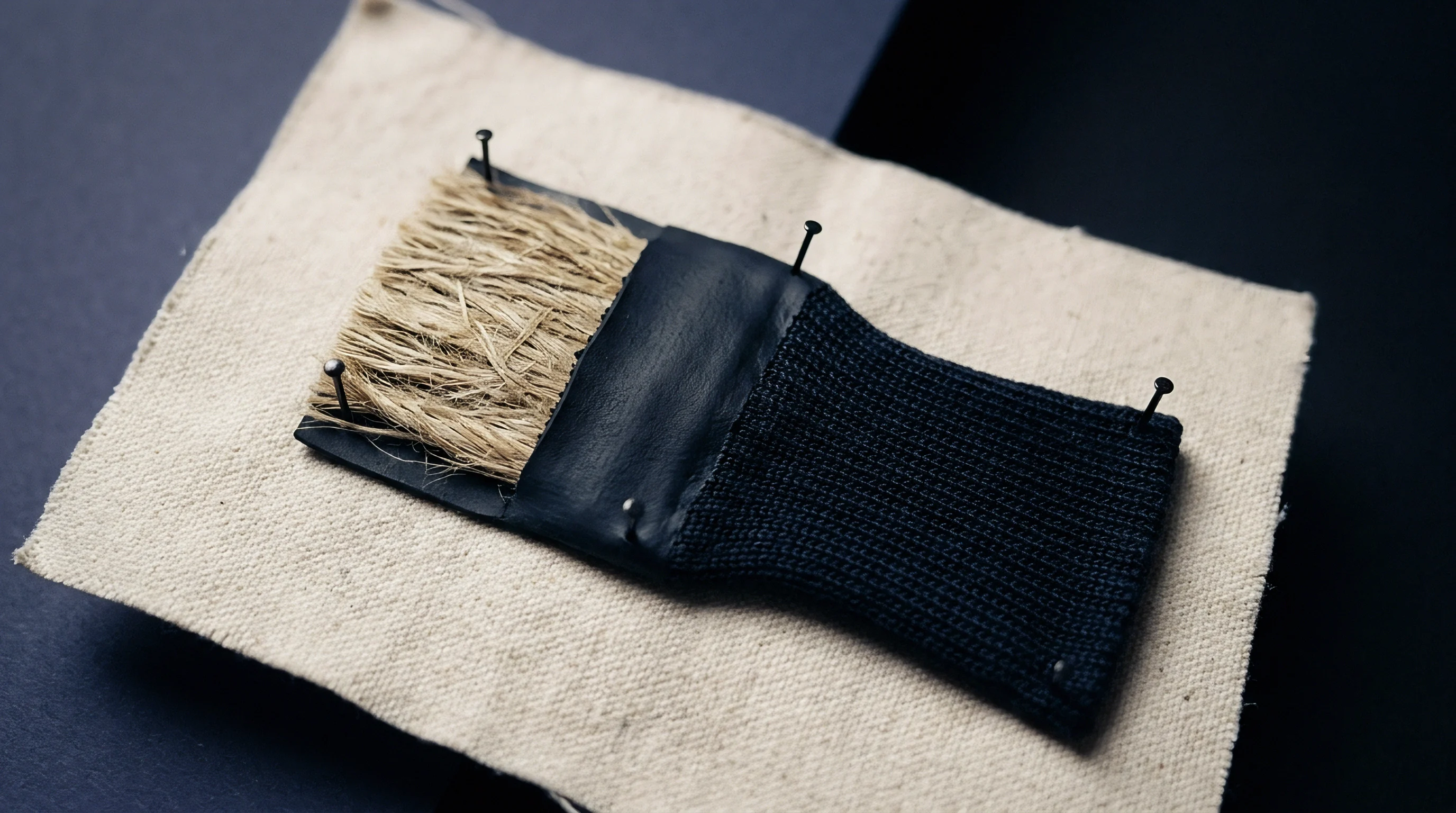
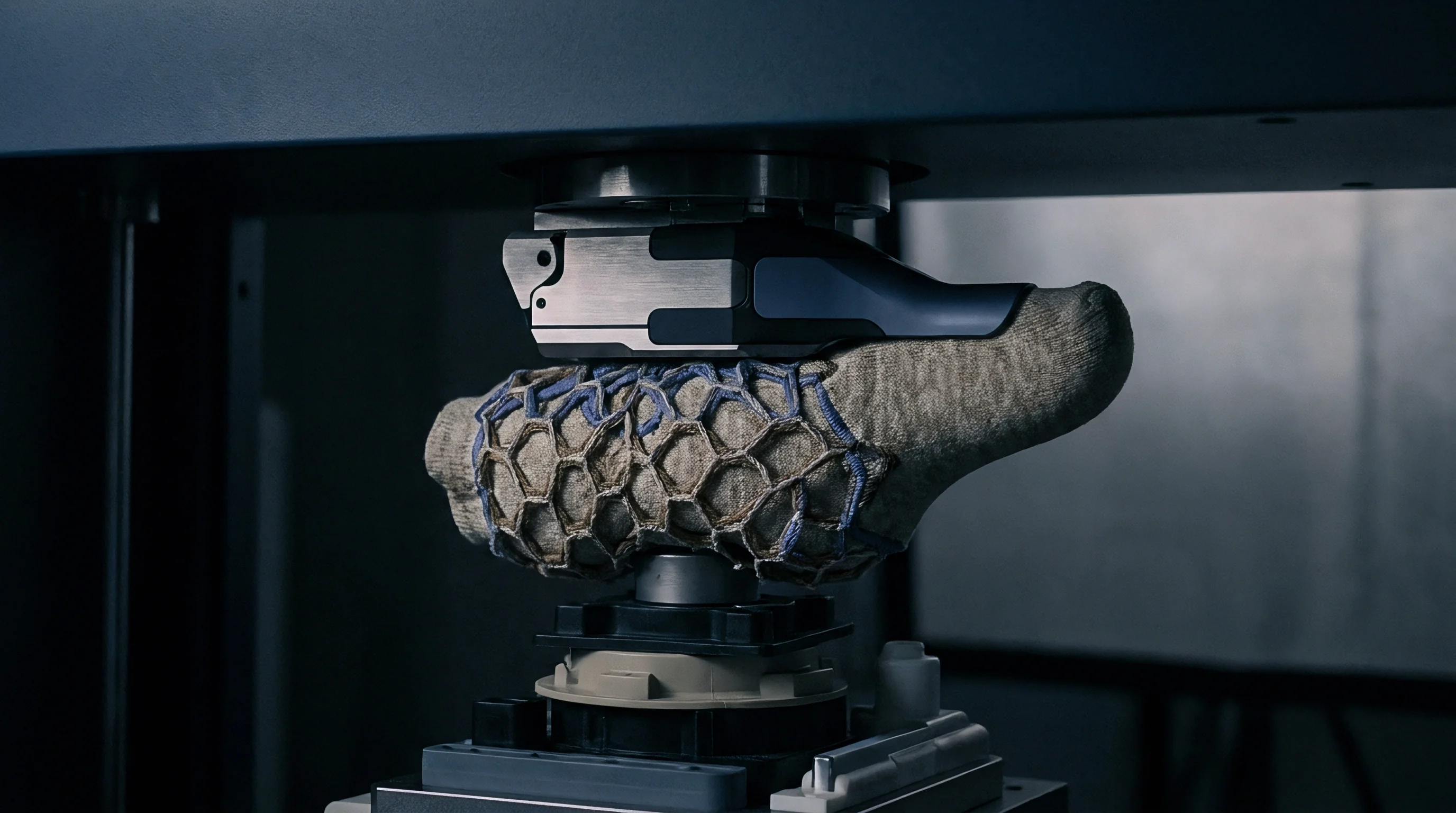
Determining fabric weight per unit area requires strict conditioning under ISO 139 standard atmospheric testing environments. Greige fabric weight includes natural fiber moisture, spinning lubricants, synthetic wax residues, and protective warp sizing starches. Buyers specifying grey cloth weight must differentiate between total raw greige mass and net desized dry fiber mass to ensure accurate delivery verification.
Dry Basis Weight and Moisture Regain Standard
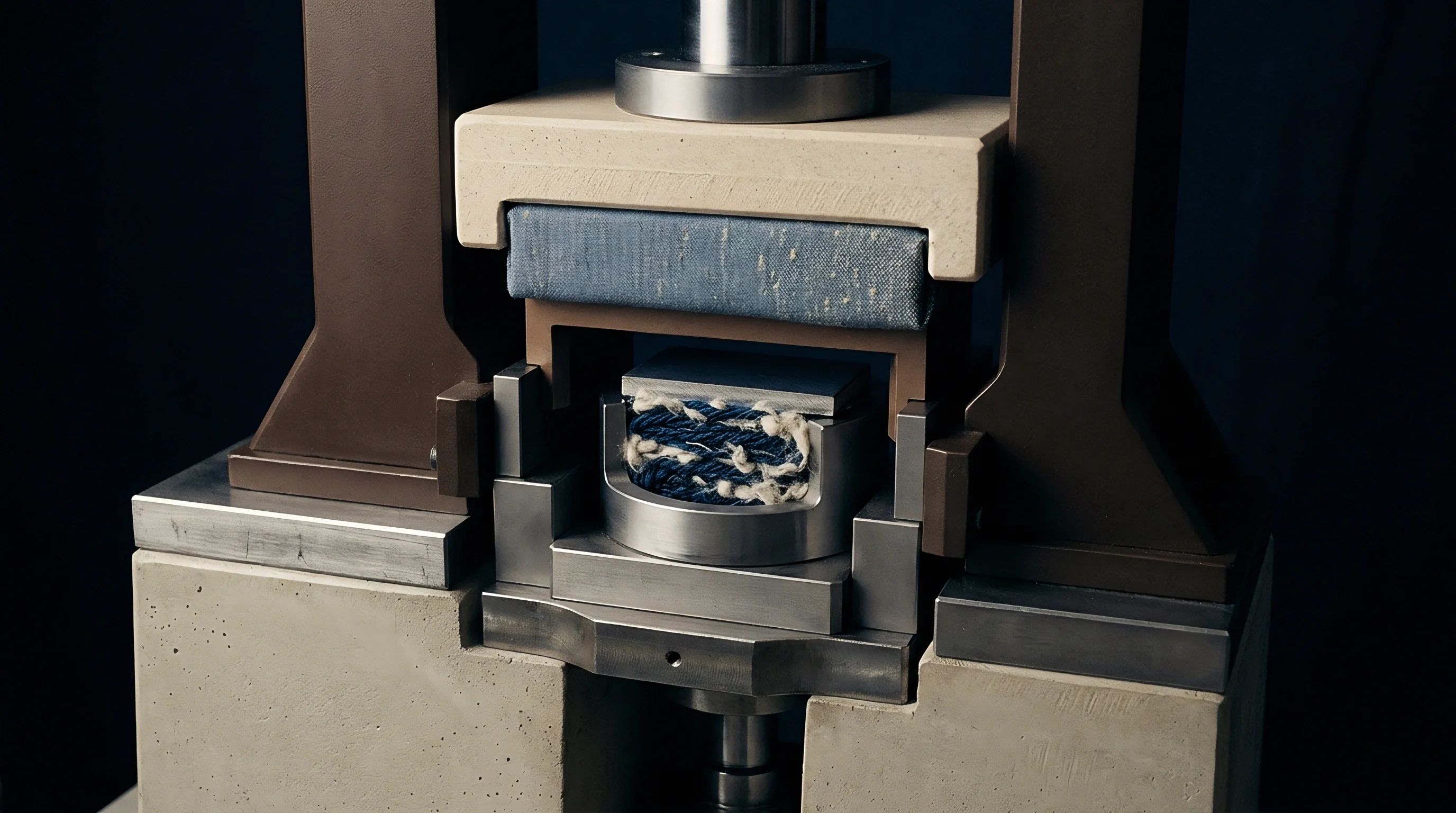
Raw cotton fibers retain standard moisture regain levels near eight and a half percent under standard testing conditions. Synthetic fibers like polyester hold less than zero point four percent moisture under identical atmospheric parameters. Greige specifications must account for these fiber-specific moisture regain rates when verifying commercial shipment weights against delivery invoices.
Sizing agents add temporary mass.
Warp sizing starches add between five percent and fifteen percent temporary mass to woven grey cloth depending on yarn construction and weaving machine type. Simple weighing of incoming greige rolls without solvent extraction or enzymatic desizing generates false mass readings. A high sizing application masks lightweight yarn or insufficient warp thread counts, creating severe weight discrepancies when sizing chemicals wash out during wet processing.

Woven Greige Mass Calculation Method
Determining target grey fabric weight involves summing warp yarn material, weft yarn material, and added starch solids. The mathematical formulation converts yarn counts, thread densities, and structural crimp factors into net fabric mass per unit area.
Greige cotton woven fabric exhibits up to eight percent warp contraction following continuous wet desizing and scouring operations.
Calculate total greige woven mass using the following sequence:
Unwashed greige retains spinning oils.
Warp Yarn Weight (g/m²) = (Ends/cm × 100) × ×
Weft Yarn Weight (g/m²) = (Picks/cm × 100) × ×
Net Dry Fiber Mass = Warp Yarn Weight + Weft Yarn Weight
Gross Greige Mass = Net Dry Fiber Mass × ×
Assume a greige cotton fabric built with 20 tex warp (24 ends/cm, 8% crimp, 10% size add-on) and 20 tex weft (20 picks/cm, 5% crimp). Warp yarn weight calculates to 51.84 g/m². Weft yarn weight calculates to 42.00 g/m².
Net dry fiber mass equals 93.84 g/m². Adding 10% size add-on increases mass to 103.22 g/m². Applying 8.5% cotton moisture regain yields a target gross greige mass of 111.99 g/m².
Standard purchasing terms stipulate that off-loom greige weight deviations exceeding two percent against specified targets trigger mandatory laboratory desizing assays prior to lot acceptance.

Relaxation
Greige fabrics carry internal mechanical stress generated during high-tension spinning, warping, weaving, or knitting operations. When grey cloth encounters water or thermal energy during wet processing, locked-in strains release rapidly. Structural specifications must define maximum allowable dimensional change to prevent finished fabric from distorting beyond commercial tolerances.

Dimensional Stability and Wash Shrinkage Rules
Standardized laundering protocols under ISO 6330 establish the magnitude of fabric contraction following stress release. Dimensional change results from two distinct mechanisms: structural relaxation shrinkage and fiber swelling shrinkage. Relaxation shrinkage occurs permanently during initial wet relaxation, while fiber swelling causes reversible thickness changes.
Relaxed state measurements define spec.
Executing accurate dimensional stability testing requires strict adherence to standardized measurement sequences:
- Condition unwashed fabric swatches at twenty degrees Celsius and sixty-five percent relative humidity for four hours.
- Mark benchmark square distances of five hundred millimeters along warp and weft directions using indelible fabric ink.
- Subject marked specimens to specified laundering cycles according to ISO 6330 procedure 4N at forty degrees Celsius.
- Flat dry test specimens on smooth horizontal surfaces to prevent tension deformation.
- Remeasured distances between benchmarks reveal structural dimensional change percentage.
| Fabric Type | Test Method | Warp Shrinkage (%) | Weft Shrinkage (%) | Maximum Skew (%) |
|---|---|---|---|---|
| Plain Weave Cotton Greige | ISO 6330 4N (40°C) | -6.0 to -8.0 | -2.0 to -3.5 | 1.5 |
| Twill Weave Cotton Greige | ISO 6330 4N (40°C) | -7.5 to -9.5 | -2.5 to -4.0 | 2.5 |
| Single Jersey Cotton Greige | ISO 6330 4N (40°C) | -10.0 to -14.0 | -4.0 to -6.0 | 5.0 |
| Interlock Cotton Greige | ISO 6330 4N (40°C) | -8.0 to -11.0 | -3.0 to -5.0 | 2.0 |
Spirality and Torque Control
Single jersey knits exhibit a natural structural bias when yarn twist liveliness forces stitch columns to skew. Unbalanced Z-twist or S-twist single yarns create internal torque that rotates wales away from perpendicular alignment. Greige specifications define maximum spirality angles to prevent twisted side seams in finished T-shirts.
ISO 3801 compliance mandates that fabric sample mass determination occurs only after full atmospheric conditioning at standard relative humidity.
Mills frequently attribute excessive greige fabric length loss to unexpected yarn tension fluctuations on high-speed circular knitting machinery during humid production runs.

Audit
Incoming grey fabric inspection relies on standardized roll evaluation systems to establish physical compliance before dyehouse commitment. The inspection protocol quantifies visual structural defects, width consistency, roll length accuracy, and selvage integrity. Technical audits prevent non-conforming grey cloth from entering continuous wet processing lines where structural flaws cause costly machinery downtime and batch rejections.

Defect Grading and Four Point Protocol
ASTM D5430 provides the quantitative scoring methodology for assigning penalty values to fabric imperfections. Inspectors examine greige rolls on illuminated inspection frames operating at controlled speeds between ten and fifteen meters per minute. Defect severity determines point values ranging from one to four points per linear yard.
Defect points accrue per roll.
- Structural Slubs represent localized yarn thickness variations exceeding target diameters. These imperfections cause uneven dye uptake in subsequent wet processing steps.
- Broken Ends leave distinct longitudinal gaps across the fabric length. Automatic stop mechanisms detect broken warp threads before weaving continues.
- Knitted Fly Marks occur when loose fiber clumps become trapped in needle latches. Contaminated knitted loops create visible spots after dye application.
- Holes and Tears represent severe structural failures penalizing four points regardless of linear length. Physical breaks halt garment cutting markers entirely.
Total penalty points calculate per one hundred square yards of inspected cloth:
Points per 100 sq yd = (Total Points Scored × 3600) / (Inspected Yards × Fabric Width in Inches)
Commercial acceptance thresholds for first-quality greige woven fabric typically cap defect points at twenty-eight points per one hundred square yards. Rolls exceeding this limit face immediate commercial debit notes or rejection back to the weaving factory.
| Defect Length | Penalty Points | Severity Assessment | Action Limit |
|---|---|---|---|
| Up to 3 inches | 1 Point | Minor flaw | Acceptable in moderation |
| 3 to 6 inches | 2 Points | Moderate structural flaw | Track frequency per roll |
| 6 to 9 inches | 3 Points | Major structural defect | Flag for cutting room bypass |
| Over 9 inches | 4 Points | Severe structural damage | Reject roll if repeated |
| Holes and broken yarns | 4 Points | Critical operational failure | Immediate mill notification |
What Test Methods Govern Greige Width Tolerances?
Measuring usable fabric width between selvages adheres to ISO 22198 procedures using calibrated steel rules under standard tension. Narrow fabric width reduces cutting efficiency, forcing garment manufacturers to redesign cutting markers. Greige specifications define overall width and usable width, restricting negative deviations to less than one percent of specified target values.
Width variance alters garment yield.
The technical threshold at which incoming greige width variations justify total lot rejection remains an open dispute between commission weavers and garment manufacturing facilities.
Contract
Commercial purchasing agreements for grey cloth specify binding structural tolerances, physical testing standards, and clear rejection criteria. Legally sound fabric procurement dossiers combine structural parameters, laboratory test methods, sampling frequencies, and financial penalty schedules into unified technical contracts.
Commercial Specification Boundaries and Dispute Resolutions
Legal disputes regarding greige fabric non-compliance usually center on unannounced yarn substitution or excessive weight variations. Sourcing documentation must mandate lot-by-lot verification of yarn fiber composition using ISO 1833 quantitative chemical analysis protocols. Substituting carded ring-spun cotton yarns for specified combed yarns reduces tensile strength and increases abrasion pilling in finished goods.
Crimp imbalance creates fabric skew.
Unfinished cloth exhibits variable shrinkage.
Contractual agreements define mandatory sampling rates following ISO 2859-1 single sampling plans for normal inspection. When incoming greige lots fail physical testing thresholds for bursting strength (ISO 13938) or tensile strength (ISO 13934), financial adjustment tables establish automatic price reductions proportional to performance deficits.
Procurement Dossiers and Mill Tolerances
Technical specification sheets attached to purchase orders govern delivery acceptance, price adjustments, and claim settlements. Greige specifications must establish clear acceptable quality limits (AQL) for physical properties, moisture content, and visual defect scores.
Tighter greige constructions restrict yarn mobility during finishing and reduce overall dimensional shrinkage in finished garments.
Clear contract limits on greige density variance protect buyers against uncompensated weight shifts introduced during wet processing.