Warp Density Changes during Woven Fabric Wet Finishing
Finished warp density rises when wet processing contracts fabric width, requiring greige reed adjustments and precise stenter overfeed to hit weight targets.
Contraction
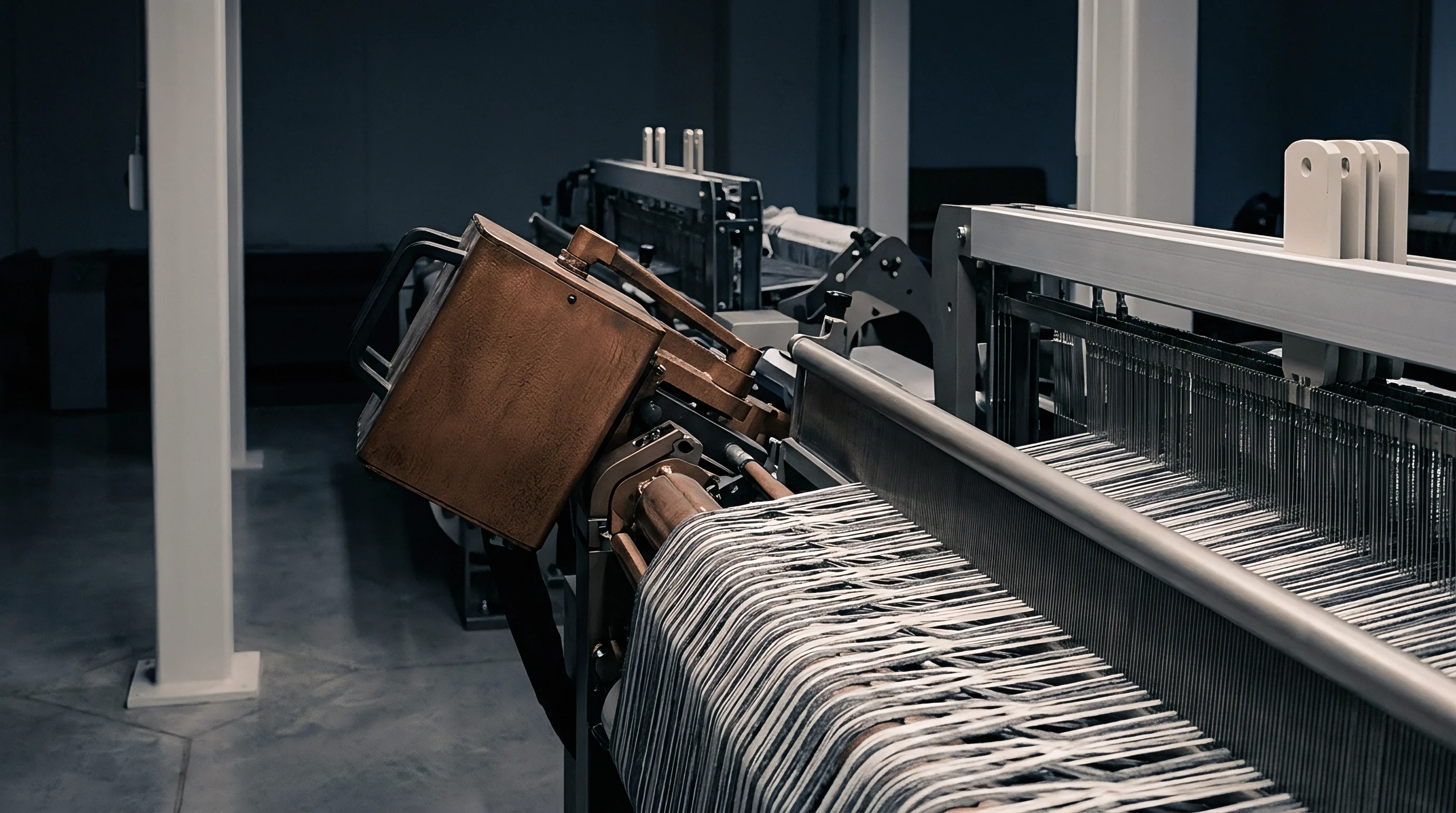
Off-loom grey goods shift dimensionally when submerged in aqueous baths during desizing, scouring, and bleaching. As internal yarn tensions from shedding and beat-up relax in the bath, the fabric moves toward thermodynamic equilibrium. This movement shrinks the cloth in both directions unless machinery restrains the selvedges.
As width contracts, the fixed number of warp ends across the reed concentrates into a narrower space, raising the finished warp density per centimetre above the greige reed count.
As width drops, thread density rises across the remaining space.
Structural Drivers of Density Shift
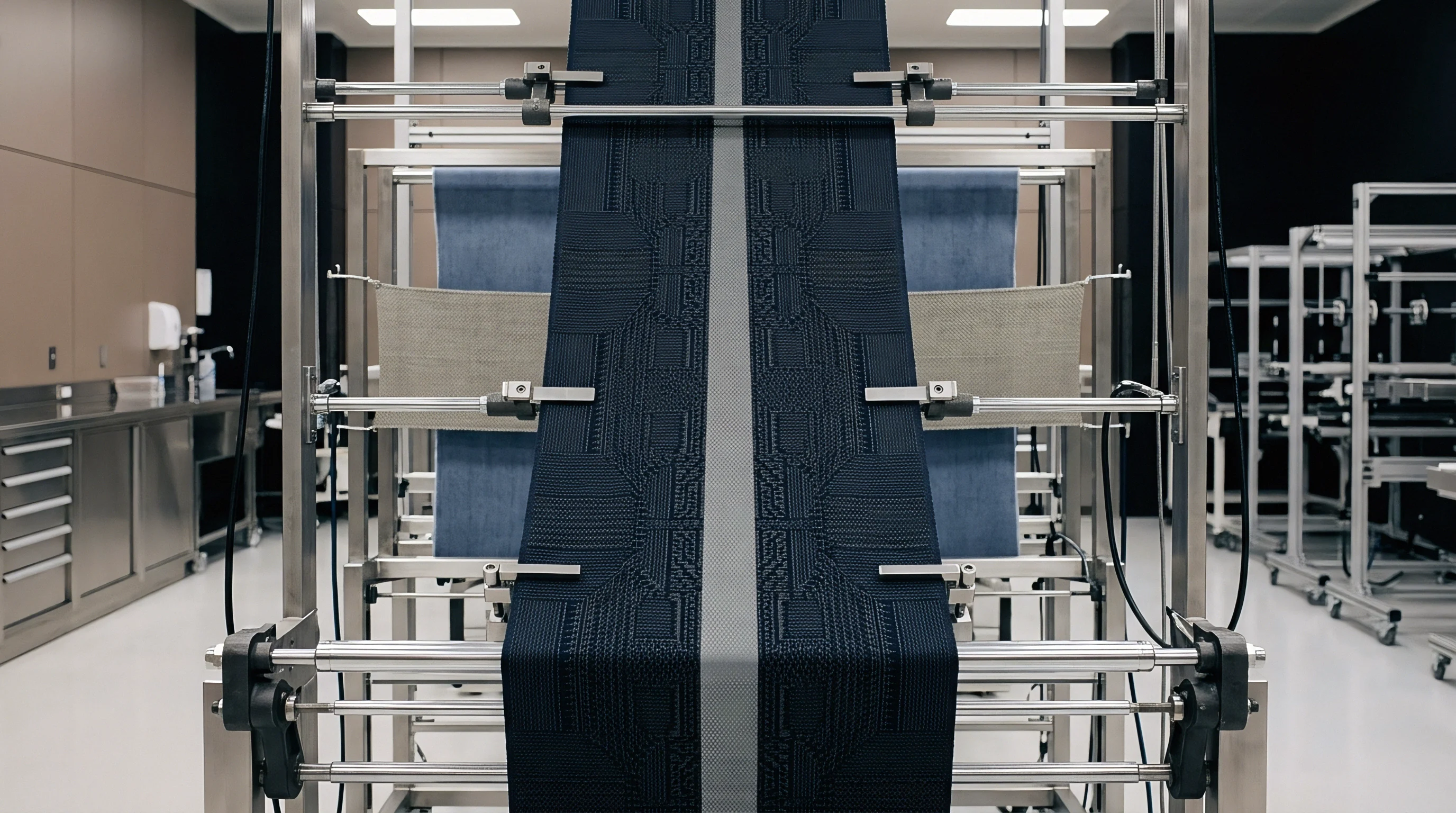
Fibre swelling during immersion changes the internal geometry of warp and weft yarns. Cellulosic fibres like cotton and viscose expand in diameter when wet, forcing the weft yarn to take a steeper path around the warp threads. This displacement increases warp crimp, pulling ends closer together laterally.
Synthetics tend to undergo thermal relaxation instead of heavy swelling, releasing stresses locked in during high-speed air-jet or water-jet weaving.
Fabric structure determines how far lateral contraction goes. A loose plain weave with frequent interlacings behaves differently than a dense warp-faced twill. In heavy twills, crowded warp ends limit how much the weft can swell before jamming.
Once jamming occurs, lateral movement stops, setting a ceiling on the maximum achievable end count per centimetre.
Woven fabric lateral contraction during desizing always forces warp yarns closer together unless mechanical tension restricts the width.

Crimp Exchange and Thread Count Balance
Warp and weft crimp maintain a coupled physical balance during wet processing. High longitudinal tension in continuous bleaching flattens the warp path, stripping warp crimp and transferring it to the weft. This extension spreads the warp ends, reducing the count per centimetre.
Without longitudinal tension, wet processing lets the warp relax and increase crimp while the weft straightens, pulling selvedges inward and driving warp density up.
| Fabric Construction Type | Greige Reed Density (ends/cm) | Target Finished Width (cm) | Finished Warp Density (ends/cm) | Net Warp Density Change (%) |
|---|---|---|---|---|
| Cotton Poplin 40s x 40s / 133 x 72 | 52.4 | 148 | 56.2 | +7.25% |
| Cotton/Spandex Twill 30s x 150D / 110 x 60 | 43.3 | 142 | 48.8 | +12.70% |
| Polyester/Viscose 32/2 x 32/2 / 88 x 64 | 34.6 | 150 | 36.1 | +4.33% |
| Nylon Ripstop 40D x 40D / 120 x 90 | 47.2 | 152 | 49.0 | +3.81% |
Engineers specifying greige parameters count ends on the loom beam to predict finished density. Ignoring wet contraction leaves finished cloth underweight or below specified thread density, invalidating garment pattern markers and causing waste in the cutting room.
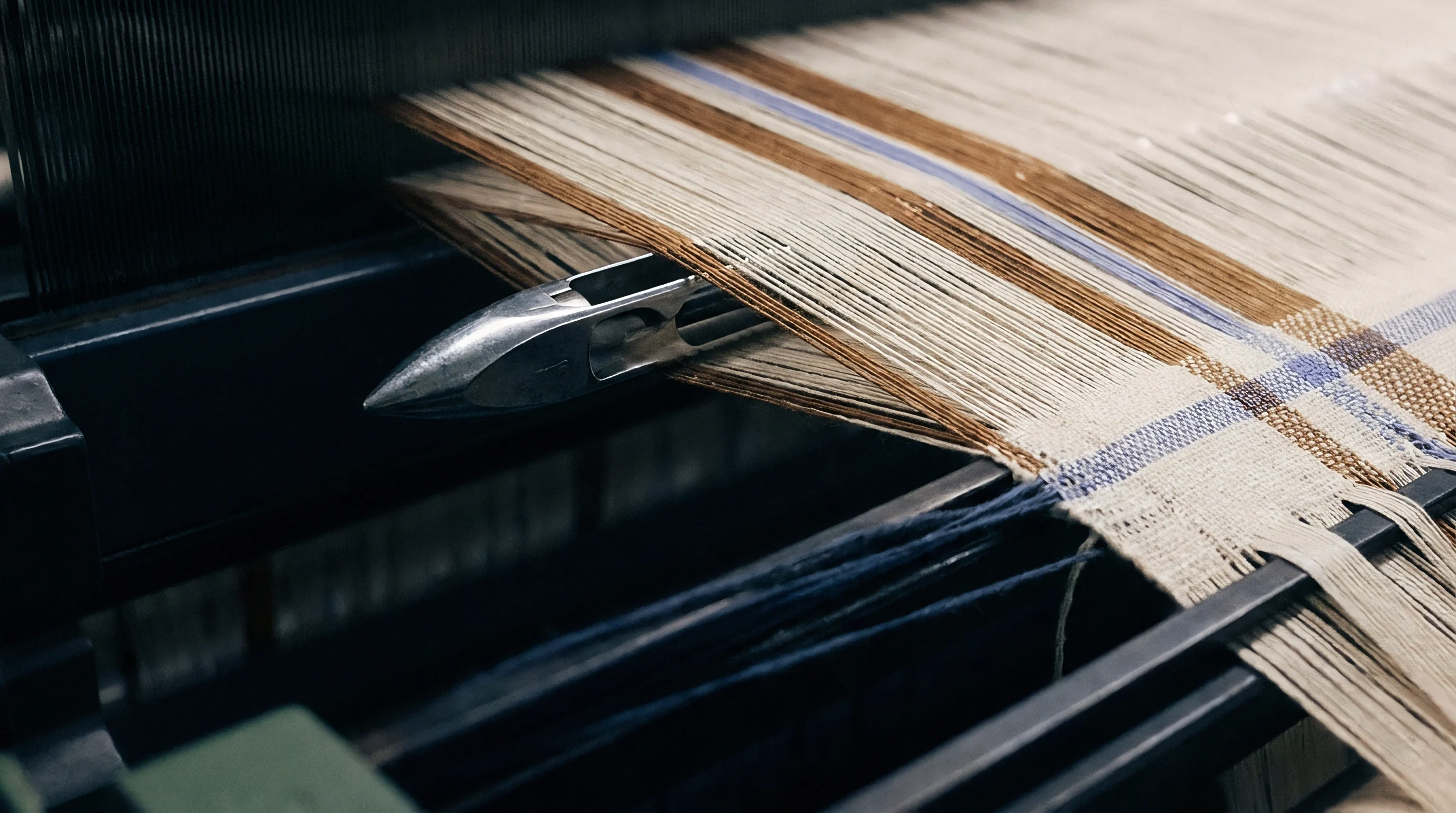
Kinetics
Continuous and batch processing machinery exert forces that alter thread alignment during dyeing and washing. Dyehouse equipment operates under varied tension regimes: jig dyeing units run under heavy axial tension to keep rolls straight, while jet dyeing machines circulate fabric ropes in low-tension liquid streams. Each machine setup applies a distinct force profile to the wet substrate, setting the final ratio of length stretch to width contraction.
Applying axial tension elongates the warp yarns during processing.
Wet-Processing Equipment Tension Profiles
Longitudinal pull on continuous pad-steam ranges stretches warp yarns during hot alkaline exposure. This extension permanently reduces warp crimp if temperatures cross the glass transition point of synthetics, or if cellulosic hydrogen bonds reform under load while drying. As the warp elongates, weft threads pull inward, increasing warp density per unit width while cutting linear yield per woven metre.
A continuous desizing range operating under five hundred newtons of tension reduces warp end density by three percent prior to stenter entering.
Machine choices determine whether fabric finishes dense or loose in the warp. Winch washers and tensionless relaxed dryers permit full stress release, yielding fabric with higher warp density, greater weight per square metre, and better dimensional stability in laundering.
Continuous Range Mechanics
Speed differentials between driven rollers along a continuous processing line generate draft. Positive draft stretches the wet fabric web between treatment compartments. If dancer rolls or load cells fail to regulate motor speeds accurately, cumulative line tension distorts the geometry of the cloth.
Hydrodynamic forces inside dye jets draw warp ends under tension.
- High Jig Drive Tension elongates the warp web across multi-hour dyeing cycles, expanding warp thread spacing permanently and narrowing finished width.
- Uncalibrated Jet Nozzle Pressure creates excessive longitudinal draft inside the transport tube, pulling warp ends tight and preventing natural crimp recovery.
- Scouring Range Dancer Roll Drag subjects hydrated yarns to continuous axial loads, forcing weft contraction while keeping warp density below target limits.
- Asymmetric Squeezer Nip Pressure shifts end distribution unevenly across the roll face, creating localized density spikes near the selvedges.
Low end-counts on finished goods are often attributed to insufficient warp ends in the grey loom state. However, audits of grey weaving records usually show that the mill delivered accurate reed density, while the dyehouse pulled the warp long to maximize billable linear metres.
Frame
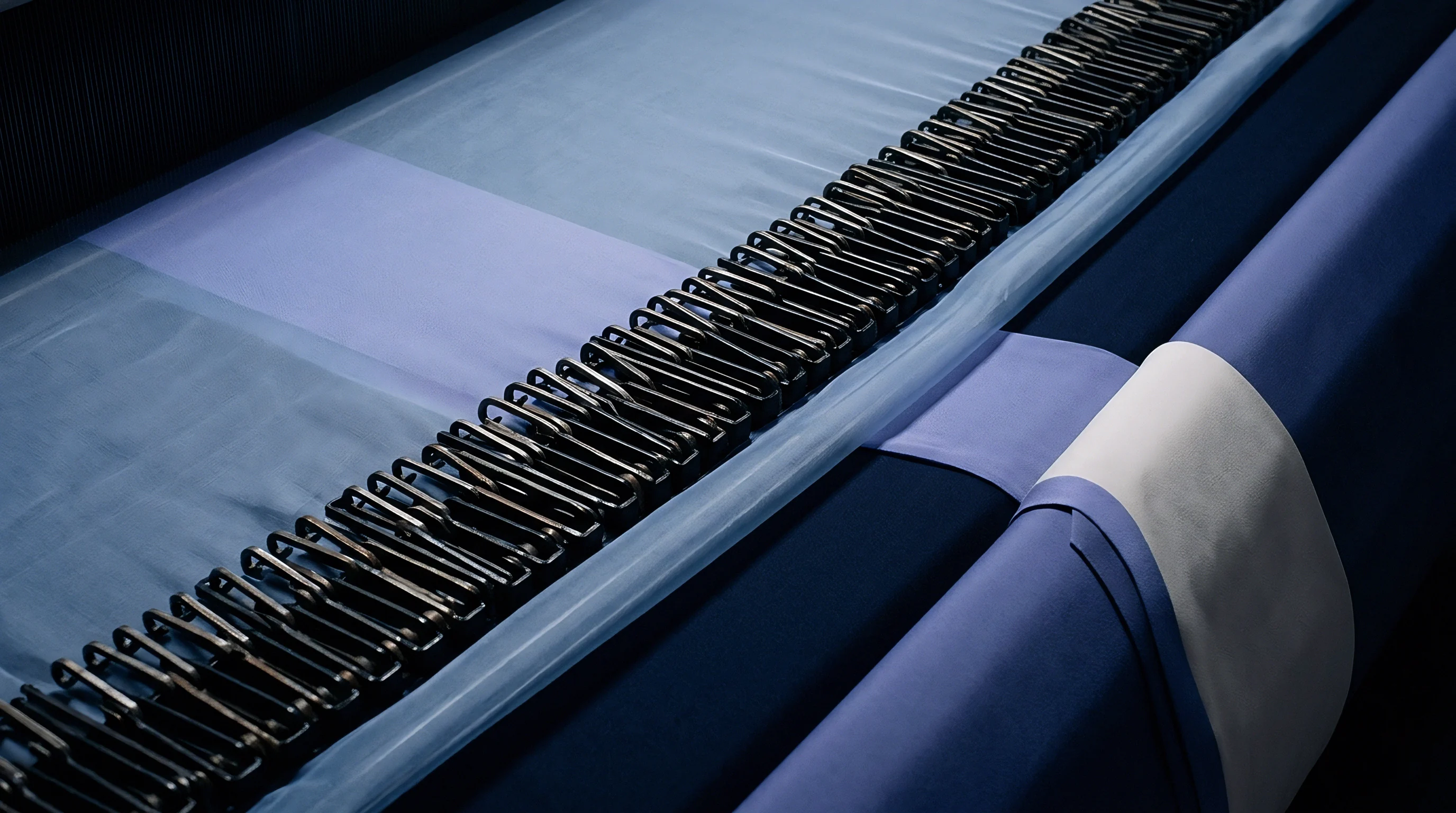
Stenter frames are the primary tool for establishing final fabric width and stabilizing warp density. As wet fabric enters the stenter, mechanical pins or clips grip the selvedges, pulling the web to its target dimension before it enters the drying zones. Setting both lateral chain width and longitudinal overfeed controls how tightly warp ends cluster across usable cuttable width.
Pinning the selvedges locks the lateral dimensions during drying.

Pinning Width Interplay with Ends per Centimetre
Mechanical force from stenter chain rails overrides earlier wet processing contraction. Setting rail width wider than the relaxed state of the wet fabric stretches the weft laterally, spreading warp yarns across a wider distance and immediately lowering the warp end count per centimetre. Pinning the cloth narrower leaves warp ends dense, increasing mass per unit area.
How Does Stenter Overfeed Mandate Warp Density Adjustments?
Stenter overfeed feeds fabric onto pin chains faster than the chain transport speed. This speed difference ~ ranging from zero to plus thirty percent ~ slackens warp yarns longitudinally, allowing warp crimp to form freely during hot-air drying. Higher overfeed values raise weft density while maintaining the warp end arrangement set by rail width.
| Stenter Rail Width Setting (cm) | Overfeed Setting (%) | Drying Temperature (°C) | Finished Warp Density (ends/cm) | ISO 5077 Warp Shrinkage (%) |
|---|---|---|---|---|
| 154 (Over-stretched) | +2% | 160 | 51.0 | -6.2% |
| 150 (Nominal Target) | +8% | 160 | 52.5 | -2.1% |
| 146 (Under-stretched) | +15% | 160 | 54.1 | -0.4% |
| 150 (Heat-set synthetic) | +10% | 195 | 52.8 | -0.8% |
To lock in warp density, finishing lines follow specific procedures based on yarn composition and target shrinkage.
- Greige Reed Calibration matches the intended stenter chain setting to prevent excessive mechanical lateral stretching during final drying cycles.
- Overfeed Matching compensates for longitudinal yarn tension generated during upstream continuous dyeing and washing operations.
- Moisture Sensing Control ensures drying exhaust rates prevent fabric from exiting the chamber over-dried, which causes post-process moisture regain and latent density drift.
- Temperature Profiling establishes accurate thermal dwell times necessary to lock synthetic warp yarn crimp without degrading natural fibre components.
Heat Setting Fixation Dynamics
Synthetic fibres like polyester and nylon require high-temperature heat setting inside the stenter to relax internal polymer orientation. Heating above the crystallization temperature lets amorphous polymer regions reform around the existing thread layout. Once cooled below the heat-set threshold, warp end spacing is set; laundering will not alter warp density unless water temperatures exceed the original heat-setting peak.
Over-stretching fabric on the stenter to gain width degrades warp density and compromises dimensional stability.

Mensuration
Measuring finished warp density accurately requires adherence to standardized test methods. ISO 7211-2 specifies international procedures for determining thread count per unit length in woven fabrics, using counting glasses, traversing thread counters, or digital image analyzers across representative fabric samples.

Test Methods and Tolerances for Finished Thread Count
Verification requires proper sample conditioning under ISO 139 protocols, which specify twenty-four hours at twenty degrees Celsius and sixty-five percent relative humidity. Cotton absorbs moisture and swells with humidity shifts, changing yarn dimensions; counting threads on unconditioned rolls fresh off a warm stenter yields inaccurate density readings.
ISO 7211-2 section six dictates that counting must occur at least one hundred millimetres away from the selvedge to prevent edge-binding distortion from invalidating the shipment yield.
Accurate thread counts require systematic focus across representative sample areas.
Quality protocols require systematic roll sampling across large production lots to verify density distribution before cutting starts.
- Condition fabric rolls inside the testing room at standard atmosphere for twenty-four hours before unrolling.
- Lay the fabric flat on a smooth inspection table without applying manual tension along either grain line.
- Position the counting apparatus at five distinct locations across the usable width, excluding the outer ten centimetres near both selvedges.
- Record the number of warp ends within a twenty-five millimetre optical field for light fabrics or fifty millimetres for heavy constructions.
- Calculate the mean warp density in ends per centimetre across all test points and compare the result against the approved engineering dossier.
Edge-to-Center Warp Density Variation
Warp density is rarely uniform across the width of a finished roll. Edge regions experience higher lateral restraint from stenter clips, making warp ends cluster tighter near selvedges than in the centre. This density gradient can produce structural shade variation across dyed lots, as tightly packed warp areas reflect light differently than looser central zones.
Under ISO 7211-2 section eight, a lot complies with specification when average warp density stays within plus or minus two percent of the agreed technical buyer card, provided no single roll deviates by more than three and a half percent from the master production approval sample.
Tolerance
Mathematical modeling lets engineers calculate finished warp density from greige inputs and known wet processing contraction factors. Predictive equations rely on thread crimp ratios, yarn count shifts from dye pick-up, and width shrinkage metrics. Establishing these variables early avoids recalculations after grey cloth delivery.
Mathematical Modeling of Thread Density Shifts
Structural balance equations link greige density to finished density. Consider a 20,000-metre production run of 3/1 heavy cotton workwear twill. The grey fabric leaves the loom at a reed width of 168 centimetres with an off-loom warp density of 42.0 ends per centimetre in 20s single cotton yarn.
| Process Phase / Scenario | Fabric Width (cm) | Warp Density (ends/cm) | Calculated Mass (g/m²) | Linear Fabric Yield per 10,000 Garments (m) |
|---|---|---|---|---|
| Greige Loom State | 168.0 | 42.0 | 215.0 | N/A |
| Wet Processed / Relaxed | 144.0 | 49.0 | 250.8 | 14,285 |
| Finished Target (Nominal) | 150.0 | 47.0 | 240.1 | 13,714 |
| Over-stretched Scenario (+2cm) | 152.0 | 46.4 | 236.9 | 13,533 |
| Under-stretched Scenario (-2cm) | 148.0 | 47.6 | 243.3 | 13,900 |
Allowing the structure to relax restores natural yarn crimp.
Weight Balance Calculations
During continuous desizing and pad-steam dyeing, the grey cloth undergoes a six percent length extension from machine draft alongside a twelve percent width contraction from wet crimp interchange. Total warp ends remain constant at 7,056 threads across the width (168 cm multiplied by 42 ends/cm).
A two-end increase in warp density per centimetre elevates total fabric weight by twelve grams per square metre on heavy twill constructions.
Dividing 7,056 total ends by the 150-centimetre target width yields a theoretical finished density of 47.04 ends per centimetre. Over-stretching the frame to 152 centimetres to gain square metres drops finished warp density to 46.42 ends per centimetre. That reduction pulls finished mass per unit area below the 240 gram per square metre contractual minimum, exposing the supplier to total shipment rejection.
Analytical models must also account for transient yarn diameter changes caused by micro-encapsulation or specialized water-repellent topical finishes applied at the stenter padder.

Costing
Commercial contracts link warp density directly to fabric yield, landed cost per linear metre, and garment unit economics. Sourcing managers must specify whether pricing is based on linear metres delivered or net weight per square metre, as variations in finished warp density alter these economics across buying programs.
Commercial Yield Impact of Finished Width Decisions
Finishing fabric wider than designed reduces warp density and increases linear yield while sacrificing mass per unit area. Factories buying by the linear metre gain cuttable width, but risk garment failure from lower seam strength and tear resistance. Finishing narrow increases warp density and weight, but reduces usable area on the cutting table.
Changes in linear yield directly shift unit profitability.
Relying on off-loom greige specifications leaves buyers vulnerable to density variations.
To ensure consistent parameters across dye lots, purchase contracts set structural compliance bounds within the master sourcing dossier.
- Density Bound Specifications establish absolute minimum and maximum allowable warp ends per centimetre on finished goods.
- Width Tolerance Windows cap lateral variance to plus or minus one centimetre from approved cuttable patterns.
- Weight Floor Clauses mandate mass per unit area validation on conditioned samples prior to custom clearance.
- Shrinkage Penalty Terms enforce financial rebates if insufficient overfeed leaves residual warp shrinkage above three percent.
Structuring Purchase Order Specifications
Procurement agreements should define finished-state metrics under standard ISO atmospheres rather than greige loom parameters. Loom parameters serve as internal mill guidance; specifying ends per centimetre on finished cloth places technical responsibility for wet finishing contraction on the converter, protecting the buyer against width-harvesting that compromises fabric structure.