Managing Hydrodynamic Pressure and Wet Pickup Variations in High Speed Padding
Dynamic hydrodynamic lift expands padder nip clearance at high line speeds, increasing wet pickup; controlling roll durometer and liquor viscosity stabilizes add-on.
Wedge
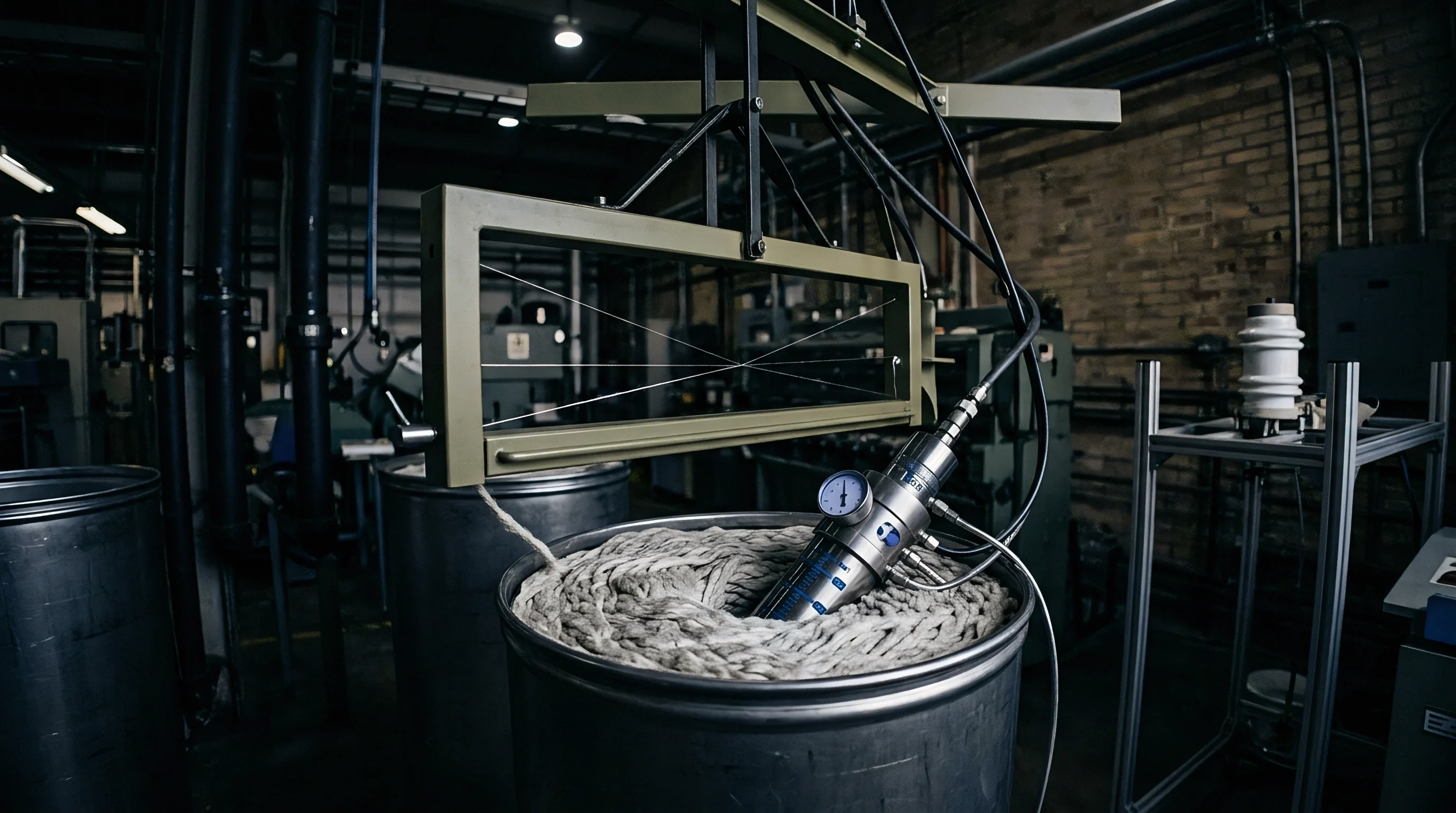
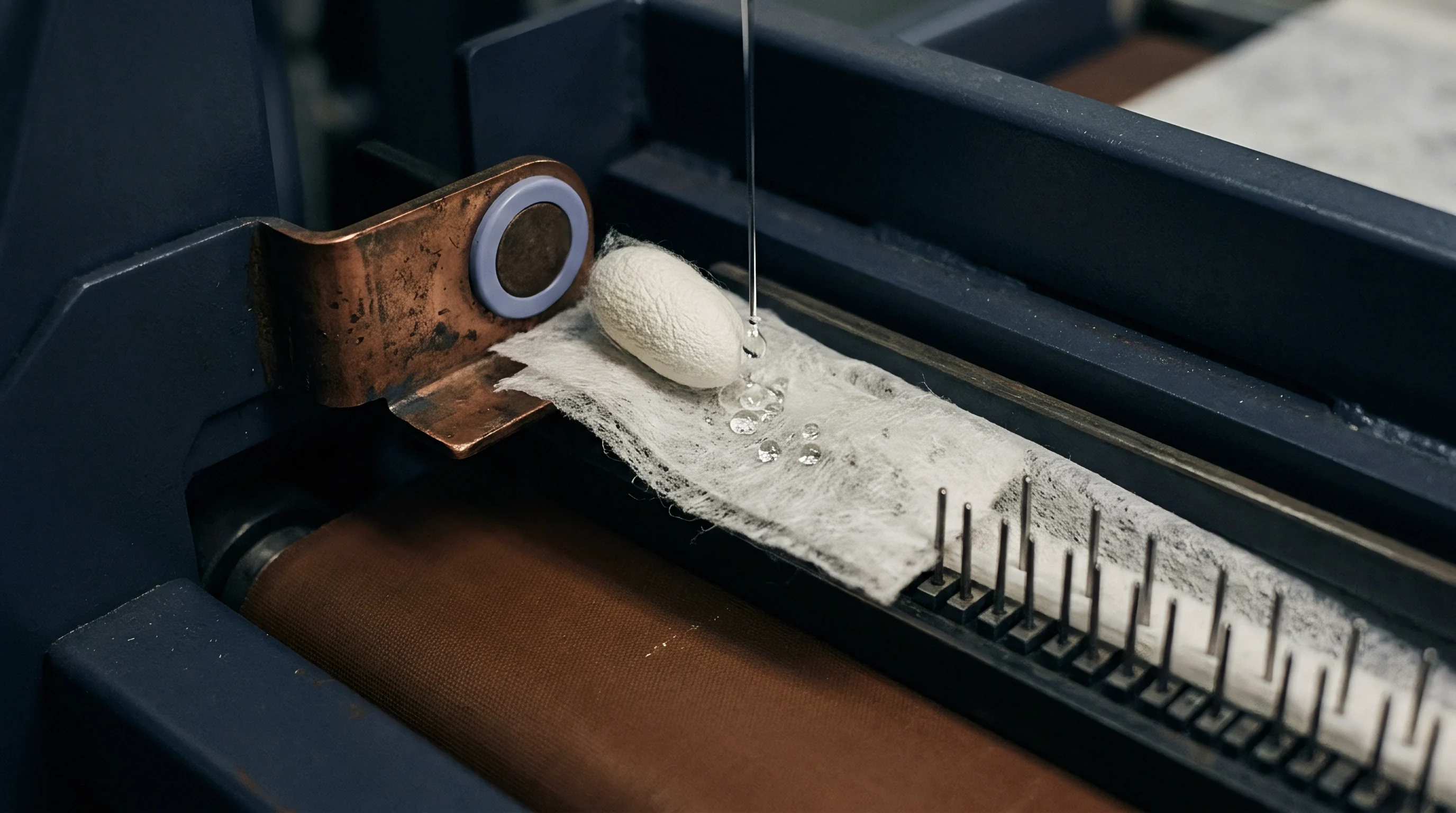
Fluid dynamic forces inside a continuous padding nip rise sharply once fabric line velocity exceeds sixty metres per minute. When continuous woven or knitted goods enter a two-roll padder at high speed, the textile substrate carries a boundary layer of bath liquor directly into the converging geometry preceding the roll contact zone. This geometric constriction forces incoming fluid into a restricted volume, generating dynamic pressure distributions governed by hydrodynamic lubrication mechanics.
Across the nip entrance, the fluid velocity profile creates positive pressure peaks that act directly against the external mechanical force applied by pneumatic cylinders. As line speed accelerates from forty to one hundred and twenty metres per minute, this hydrodynamic pressure peak scales with the square of line speed and directly proportional to fluid dynamic viscosity. The hydrodynamic lifting force pushes the elastic roller covers apart, expanding the clearance gap between the bowls and altering the target wet pickup percentage.
In high-speed foulard applications, squeezing efficiency depends on balancing mechanical loading forces against fluid pressure built up within the fluid wedge. If linear pneumatic pressure remains constant while machine velocity doubles, fluid hydrodynamic pressure expands the nip-width profile, reducing mechanical liquid expulsion efficiency. Consequently, wet pickup increases unexpectedly at elevated line speeds despite uniform nip roll settings.
The elevated liquid retention increases stenter drying energy requirements and introduces shade depth discrepancies across the lot length.
| Line Speed (m/min) | Peak Hydrodynamic Pressure (kPa) | Nip Clearance Expansion (μm) | Target Wet Pickup (%) | Measured Wet Pickup (%) | Pickup Deviation (%) |
|---|---|---|---|---|---|
| 40 | 12.4 | 1.2 | 65.0 | 65.2 | +0.3 |
| 60 | 28.1 | 3.8 | 65.0 | 66.4 | +2.1 |
| 80 | 51.6 | 7.5 | 65.0 | 68.9 | +6.0 |
| 100 | 84.2 | 12.8 | 65.0 | 72.1 | +10.9 |
| 120 | 126.5 | 19.4 | 65.0 | 76.5 | +17.7 |
When padding formulations contain high-molecular-weight thickeners, anti-migration agents, or high dye concentrations, fluid dynamic resistance within the nip zone rises sharply. The increased dynamic viscosity elevates hydrodynamic pressure generation at lower operational speeds. When processing dense, low-porosity fabrics, incoming liquor cannot penetrate yarn interiors fast enough during the brief dwell time within the squeeze zone.
Dwell time inside a standard twenty-millimetre nip contact zone at one hundred metres per minute measures twelve milliseconds. Within this millisecond window, fluid must displace trapped air within fiber interstices, distribute evenly across the yarn surface, and surrender excess volume under mechanical force.
Linear pneumatic loading of 30 N/mm yields a 17.7 percent wet pickup increase when line speed rises from 40 to 120 metres per minute on 210 gsm cotton twill.
Hydraulic lift forces cause localized fluid accumulation near roll entrances, inducing non-uniform squeeze profiles and liquor reject waves. Left unchecked, hydrodynamic pressure inside the entry wedge leads to severe processing disruptions across continuous dyeing and finishing ranges:
- Hydrodynamic roll lifting expands the mechanical nip gap beyond specified tolerances, elevating total wet pickup and increasing downstream evaporation costs.
- Liquor splashing and foam generation occur when excess fluid rejected by high wedge pressures cascades backward down the incoming fabric web.
- Transverse liquor migration occurs when hydrodynamic pressure pushes unabsorbed liquor toward fabric selvedges, creating center-to-edge wet pickup gradients.
- Yarn structure distortion develops when localized hydraulic pressure spikes displace weak weft threads or open knitted loop structures during high-speed nip entry.
Automated pneumatic pressure boosters are intended to resolve high-speed wet pickup variances by increasing external cylinder load proportional to velocity. However, increasing mechanical force on solid rubber rolls shifts the peak pressure position forward without eliminating the hydrodynamic wedge effect, leading to premature roll cover fatigue and accelerated bearing wear.
Porosity
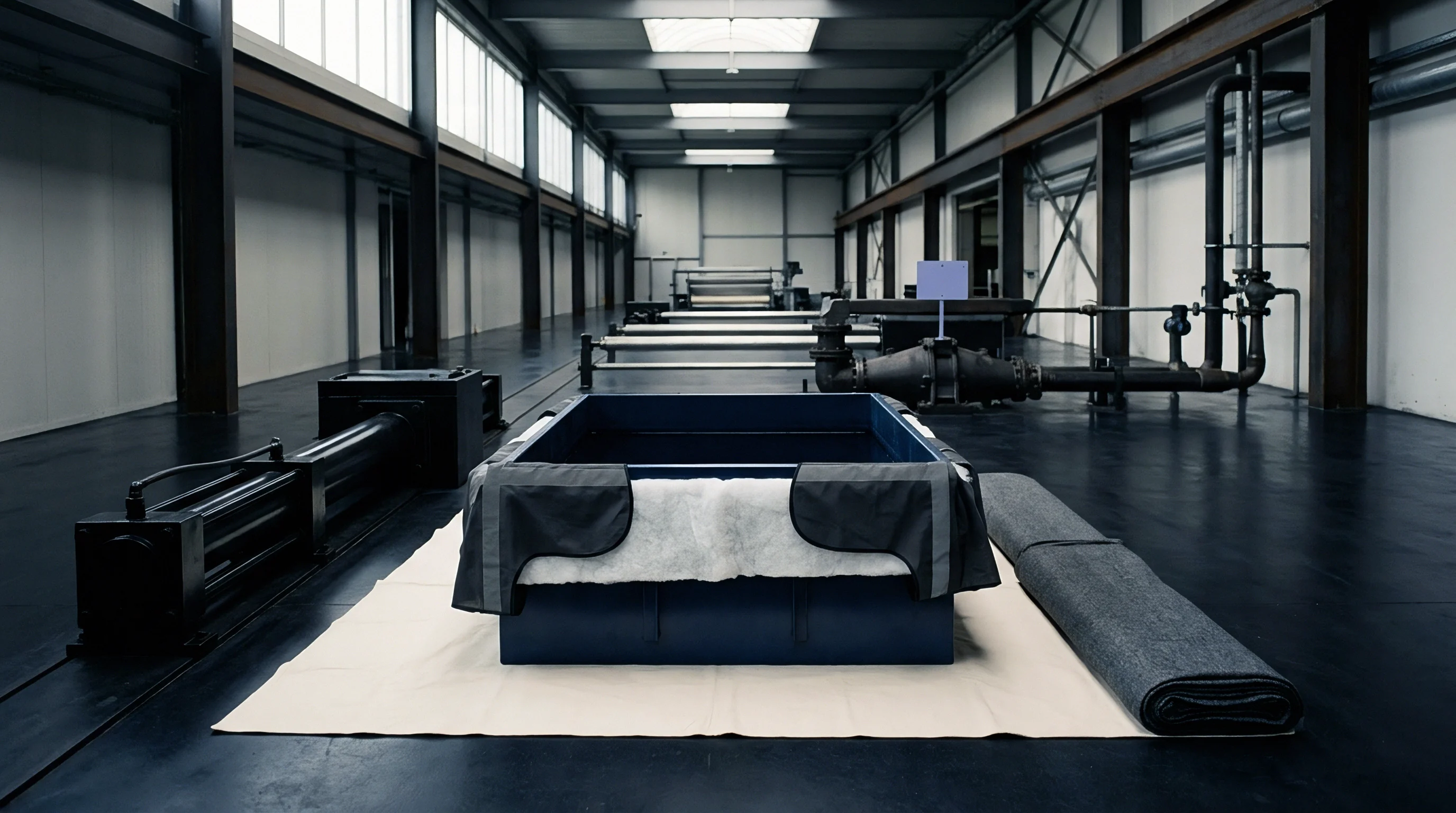
Structural voids in woven and knitted fabrics determine how rapidly fluid moves from the outer nip layer into yarn core interiors during squeeze compression. Substrate geometry governs fluid acceptance through three distinct physical mechanisms: interfiber capillary wicking, interyarn void filling, and surface film adhesion. High-density woven constructions with elevated cover factors restrict liquid passage under dynamic compression.
When a compact 40s/1 combed cotton poplin enters the nip at eighty metres per minute, the low permeability of the tightly interlocked warp and weft system resists rapid fluid displacement. Fluid remains trapped on the fabric exterior surface, forming a thick surface layer that experiences extreme shear stress within the nip entry point.
Loose constructions with low cover factors, such as light single jersey knits or open plain weaves, exhibit higher initial liquor absorption volumes but permit rapid fluid expulsion under low pneumatic pressures. In these permeable substrates, hydrodynamic pressure builds less rapidly because excess liquid flows backward through open fabric pore spaces prior to reaching the primary nip compression point. The ratio of closed surface area to total open pore area dictates whether the incoming substrate behaves as a solid hydraulic barrier or a porous drainage sheet.
| Fabric Construction | Weight (gsm) | Air Permeability (mm/s at 100 Pa) | Warp/Weft Cover Factor (%) | Hydrodynamic Resistance Index (kPa·s/m) | Retained Exterior Liquor Ratio (%) |
|---|---|---|---|---|---|
| Plain Weave Poplin (40s x 40s) | 115 | 185.0 | 86.4 | 4.82 | 68.5 |
| 3/1 Warp-Face Twill (20s x 16s) | 245 | 82.0 | 92.1 | 8.45 | 81.2 |
| 2/2 Satin Weave (30s x 30s) | 165 | 310.0 | 78.5 | 2.15 | 42.0 |
| Single Jersey Knit (30s Combed) | 140 | 620.0 | 64.2 | 0.95 | 22.4 |
Fiber surface chemistry further modifies hydrodynamic squeeze performance through contact angle interaction. Hydrophobic synthetic fibers, including textured polyester and polyamide filaments, exhibit minimal spontaneous capillary uptake within the dip trough. When these synthetic substrates enter the pad squeeze zone, liquid absorption relies entirely on externally forced hydraulic pressure.
The high contact angle prevents fluid from wetting fiber surfaces smoothly, encouraging fluid to bead on yarn perimeters. High-speed padding of hydrophobic substrates requires specialized low-foaming wetting agents to depress dynamic surface tension below twenty-eight millinewtons per metre within millisecond dwell intervals.
Contractual quality specifications matching ISO 3801 mass determination rules mandate wet pickup verification within plus or minus 1.5 percent of nominal standard across speed transitions.
Pore size distribution controls fluid displacement paths during compression. Microporous spun yarn structures absorb liquor via micro-capillaries between individual staple fibers, holding liquid tightly against mechanical expulsion. Macroporous spaces between adjacent warp and weft threads release liquid freely under squeeze forces.
During high-speed processing, macro-pore fluid expels rapidly into the nip entrance zone, adding directly to the hydrodynamic wedge volume. Fine yarn counts with high filament density retain a larger fraction of absorbed liquor within micro-capillaries, reducing total hydrodynamic lift generation while maintaining stable pickup values across varying line speeds.
Substrate thickness variations across width create non-uniform flow paths inside squeezed fabric structures. Selvedges built with heavy warp reeding or thick Leno structural bindings present greater mechanical resistance to rubber bowl contact. Thicker selvedge zones absorb higher mechanical loads, reducing effective nip pressure across the central fabric body and allowing hydrodynamic pressure to push excess liquor toward center panels.
Pre-wetting dense fabrics prior to main chemical application eliminates air entrapped within inner yarn voids, establishing consistent hydraulic resistance across variable machine speeds.
Flow
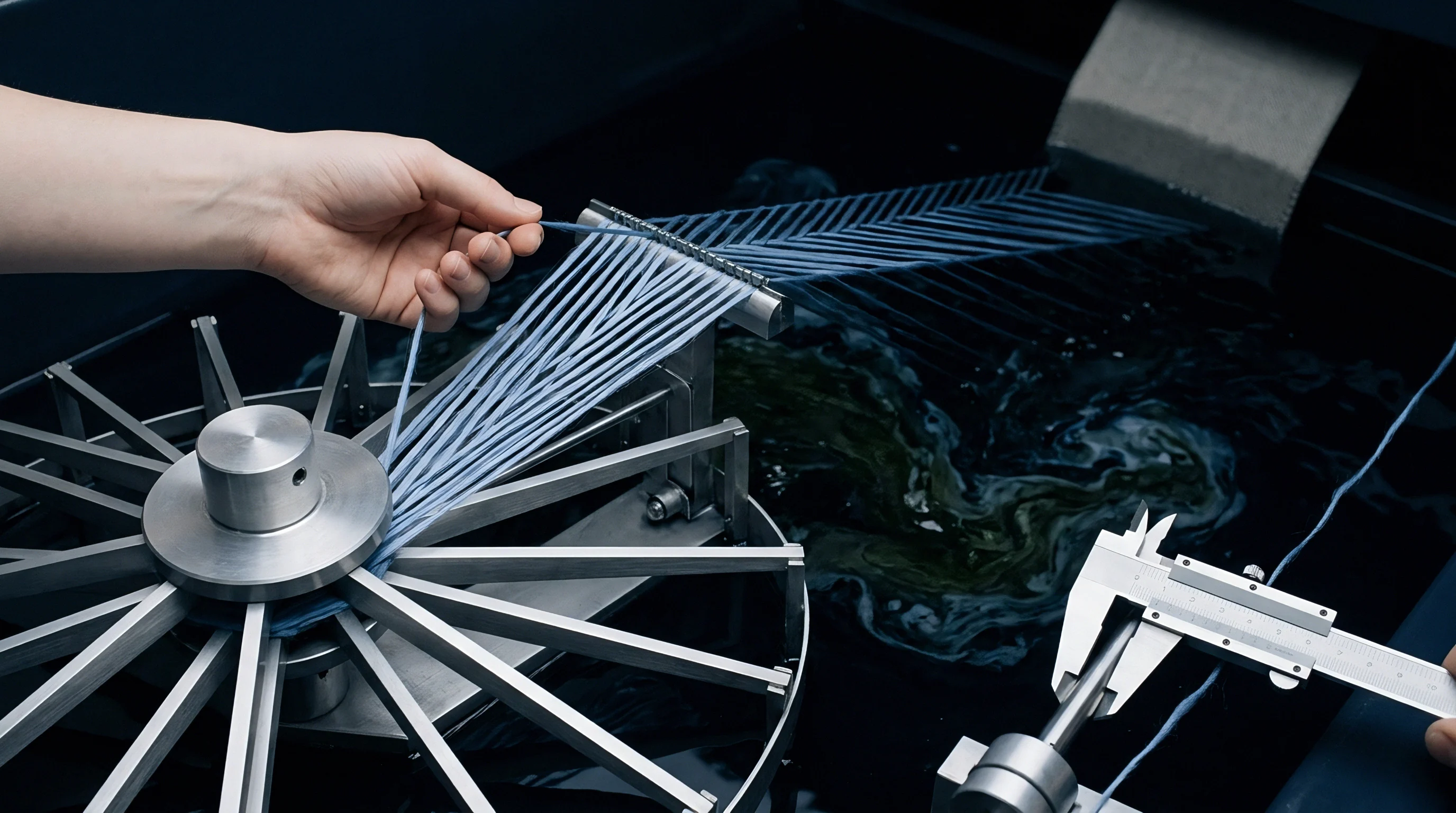
Bath fluid migration profiles reveal distinct longitudinal and transverse pickup variations when processing speeds fluctuate across production shifts. Differential liquor pickup across the fabric width compromises color consistency, water-repellent performance, and flame-retardant distribution. During continuous runs, two distinct velocity-dependent phenomena disrupt application uniformity: transverse squeeze liquor migration and longitudinal bath tailing.
Transverse migration occurs when hydrodynamic pressure at the fabric center exceeds pressure at the margins, forcing liquid outward toward low-resistance edge regions.
Uneven liquor pickup degrades fastness properties, while bath tailing shifts shade along the length of the fabric roll. When padding chemical formulations containing reactive dye mixtures, differential pickup between warp yarns and fabric center panels creates visible listing defects. Selective absorption of specific chemical components over others alters bath concentrations inside low-volume pad troughs during extended production runs.
Why Does Wet Pickup Drop at High Line Speeds?
While hydrodynamic pressure generally increases overall wet pickup by lifting pad rolls apart, certain tightly woven hydrophobic constructions experience an opposite physical response known as pickup drop. At running speeds exceeding ninety metres per minute, extremely short nip dwell times prevent incoming fluid from penetrating tight inter-yarn pores. Liquid carried on the fabric surface gets stripped away mechanically by the entry roll surface before capillary absorption occurs.
The incoming web acts as an impermeable barrier, deflecting liquid back into the trough and reducing net chemical add-on by eight to fifteen percent compared to slow-speed calibration runs.
- Run a five-hundred-metre calibration lot across five speed steps from forty to one hundred and twenty metres per minute in twenty-metre increments without altering cylinder loading.
- Extract three full-width swatches at each speed tier immediately after the padder, sealing swatches instantly in moisture-proof containers to prevent evaporation losses.
- Weigh wet samples on a calibrated analytical balance within two minutes of sampling, calculate dry weight after complete oven drying at one hundred and five degrees Celsius, and plot wet pickup percentages against running speed.
- Inspect transverse pickup curves across left, center, and right positions to identify localized hydrodynamic pressure spikes caused by roll deflection or uneven bowl crowning.
- Adjust liquor dynamic viscosity using specialized polymeric rheology modifiers if the speed-to-pickup slope exceeds zero point two percent wet pickup per metre per minute speed increase.
Non-Newtonian pad formulations present dynamic viscosity variations when subjected to high shear rates inside the narrow nip clearance gap. Shear-thinning polymer mixtures experience reduced effective viscosity under extreme mechanical shear (>104 s-1), allowing rapid fluid expulsion and lower wet pickup. Dilatant fluids exhibit sharp viscosity increases under shear, generating massive hydrodynamic lifting forces that push pad rolls apart and multiply wet pickup unpredictably.
Viscosity stabilization prevents transverse liquor migration across high-speed padding ranges.
Inadequate control of fluid flow dynamics within the nip region leads to severe shade variations, batch rejections, and unrecoverable substrate inventory losses across commercial dyeings.
Roll
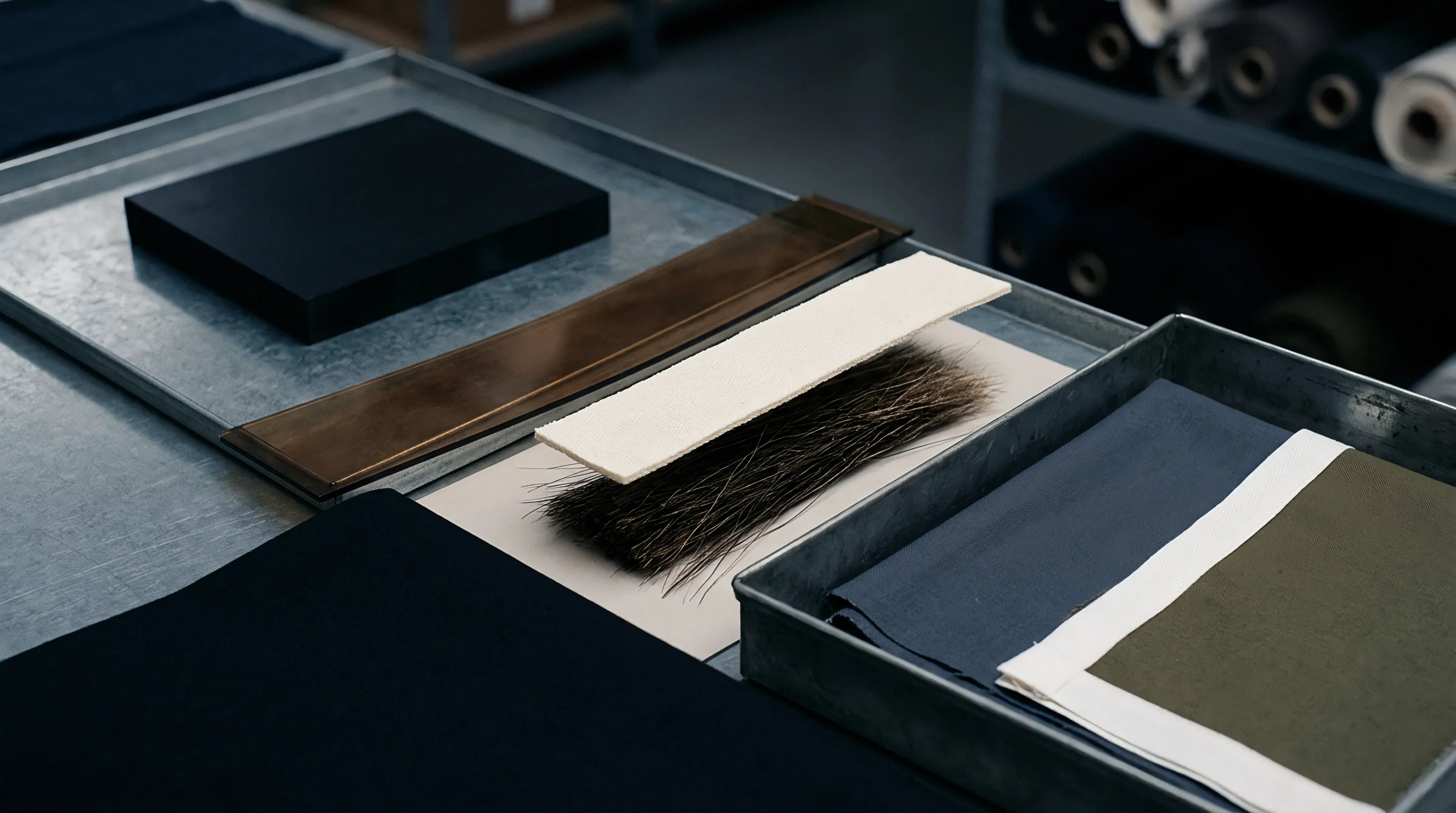
Elastomeric cylinder cover properties govern mechanical deflection and contact area dynamics under high linear squeezing pressures. Mechanical performance depends on cover thickness, rubber durometer hardness, roll core diameter, and internal deflection-compensation mechanics. Standard padder configurations utilize synthetic rubber covers, typically composed of carboxylated nitrile, EPDM, or polyurethane formulations.
Soft rubber covers (65 to 70 Shore A) deform substantially under pneumatic load, creating a wide contact footprint that distributes mechanical force across a broader surface area. Hard rubber covers (80 to 85 Shore A) yield narrow contact footprints, concentrating mechanical force to achieve high peak nip pressures necessary for maximum liquor expulsion.
Under high linear pressures, conventional solid rolls bend along their longitudinal axis, causing maximum deflection at the roll center and peak mechanical pressure at the journal ends. This bending phenomenon creates edge-to-center wet pickup variations, yielding high pickup in the fabric center and low pickup at selvedges. To offset bending, conventional bowls are manufactured with a fixed parabolic crown, increasing rubber cover thickness toward the roll midpoint.
Fixed crowns provide uniform pressure at one specific pneumatic load setting. Operating outside that target loading alters the pressure profile across the working width.
| Bowl Cover Material | Hardness (Shore A) | Nip Contact Width (mm) | Maximum Linear Load (N/mm) | Thermal Hysteresis Limit (°C) | Speed Cap (m/min) |
|---|---|---|---|---|---|
| Standard Nitrile (Solid) | 68 ± 2 | 28.5 | 35.0 | 65 | 60 |
| High-Density EPDM (Crowned) | 78 ± 2 | 19.2 | 45.0 | 80 | 85 |
| Polyurethane (Controlled S-Roll) | 85 ± 1 | 12.5 | 60.0 | 110 | 140 |
| Synthesized Fiber Composite | 92 ± 1 | 8.0 | 80.0 | 130 | 180 |
Continuous high-speed operation generates internal friction within elastomeric covers due to mechanical hysteresis loss. As synthetic rubber deforms and recovers thousands of times per hour, viscoelastic friction converts mechanical energy into internal heat. Rubber temperature rises toward sixty to eighty degrees Celsius during extended production runs.
Thermal buildup lowers cover Shore A hardness, softens the elastomer matrix, expands contact nip width, and lowers peak squeezing pressure. Pickup drift develops gradually over hours of continuous running as rolls heat up.
Deflection-controlled systems, such as Küsters floating S-rolls, resolve load-dependent bending by supporting the rotating outer tubular shell on a stationary core using internally pressurized hydraulic oil zones. Adjusting hydraulic oil pressure inside specific core chambers allows precise control over transverse pressure profiles, compensating dynamically for line speed variations and hydrodynamic lifting forces without stopping the machine line.
- Durometer verification involves checking cover hardness at ten equidistant points across the roll face using a calibrated Shore A durometer prior to initiating bulk runs.
- Grinding schedule enforcement mandates precision cylindrical or parabolic regrinding after every two thousand operating hours to remove surface oxidation and restore concentricity.
- Bearing alignment checks require measuring radial runout on roll journals using dial indicator gauges to prevent high-frequency pressure pulsations across the nip gap.
- Cooling system inspection requires verifying internal water circulating flow rates through hollow roll cores to maintain cover surface temperatures below fifty degrees Celsius.
Standard purchase contracts mandate roll cover concentricity tolerances within plus or minus 0.015 millimetres across total face width to prevent periodic pickup striping.
Failure to maintain strict roll maintenance protocols compromises transverse squeeze uniformity, invalidating laboratory dye formulations and forcing expensive continuous line speed reductions.
Dossier
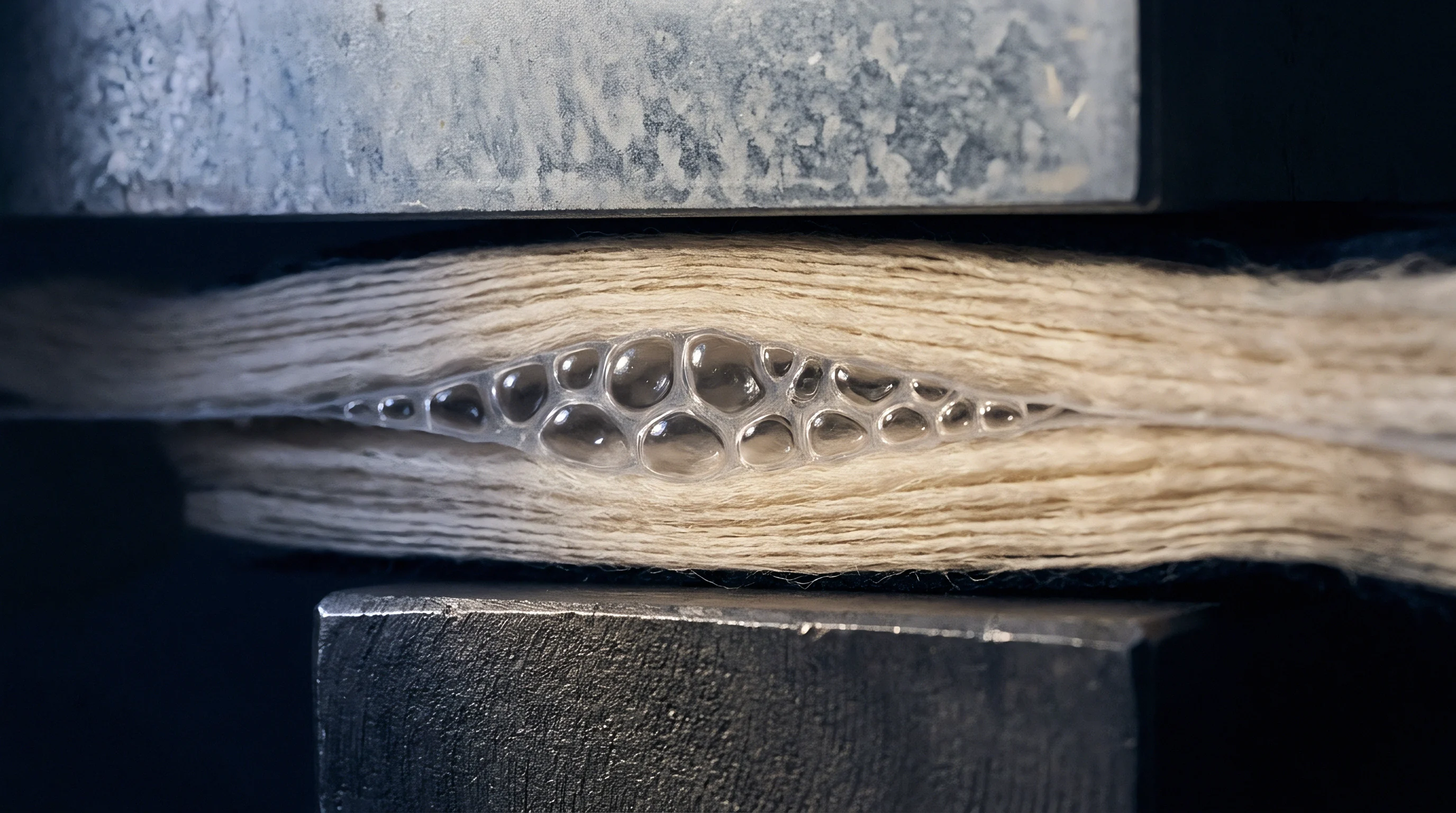
Commercial purchase specifications for high-speed wet processing mandate strict speed-pickup verification matrix protocols prior to bulk lot sign-off. Operational success requires precise alignment between greige fabric geometry, chemical bath rheology, padder mechanical capabilities, and downstream thermal drying capacity. When contracting wet processing orders across external converting mills, buyers must establish rigorous technical dossiers defining maximum allowable pickup drift across specified machine speed ranges.
Relying on static nominal pickup figures guarantees shade variations, handle discrepancies, and energy cost overruns during commercial production scaling.
Wet pickup tolerances dictate line speed caps, while S-rolls restore uniform transverse pressure profiles. Consider a continuous dyeing operation processing fifty thousand metres of a 240 gsm 65/35 polyester/cotton workwear twill at a target line speed of one hundred metres per minute. Nominal target wet pickup is set at sixty-five percent, requiring the application of 156 grams of dye liquor per linear metre of fabric.
The stenter drying range evaporative capacity is rated at twelve hundred kilograms of water removal per hour under maximum natural gas burner output.
If uncontrolled hydrodynamic pressure increases wet pickup from sixty-five percent to seventy-four percent when line speed ramps from forty to one hundred metres per minute, the liquid burden increases to 177.6 grams per linear metre. At one hundred metres per minute, total water load entering the dryer reaches 1,065.6 kilograms per hour. Combined with the baseline dry fabric throughput, total thermal energy required for water evaporation rises by thirteen point8 percent.
To maintain complete fabric drying without thermal moisture residual, the finishing plant must drop machine speed to eighty-seven metres per minute, forfeiting thirteen percent of daily production capacity and adding 0.042 USD per finished metre in fixed facility overhead costs.
Shade depth variations emerge directly from this velocity-dependent pickup increase. In disperse/reactive continuous dyeing, a nine percent increase in wet pickup delivers nine percent more active dye solids per unit mass of fiber, shifting target color space coordinates far beyond acceptable buyer tolerances. Color difference values (Δ Eab ) between low-speed tail-in fabric and high-speed running fabric frequently exceed two point zero, forcing total shade sorting, panel remake costs, or outright lot rejection at the garment cutting facility.
- Speed-pickup calibration matrix establishing approved wet pickup limits across line speeds from twenty to maximum range velocity in ten-metre-per-minute increments.
- Rheological profile documentation specifying dynamic viscosity parameters, surfactant dynamic surface tension caps, and shear stability thresholds for all bath chemistry formulations.
- Mechanical padder qualification records including recent roll grinding certificates, Shore A hardness maps, internal S-roll hydraulic pressure setting tables, and pneumatic cylinder calibration curves.
- Downstream energy balance verification detailing maximum stenter evaporative limits, burner capacities, and automatic exhaust moisture control sensor calibration data.
What structural modifications inside high-density multi-layer woven constructions will allow complete liquid saturation within ten-millisecond nip dwell windows without forcing reductions in commercial finishing line speeds?